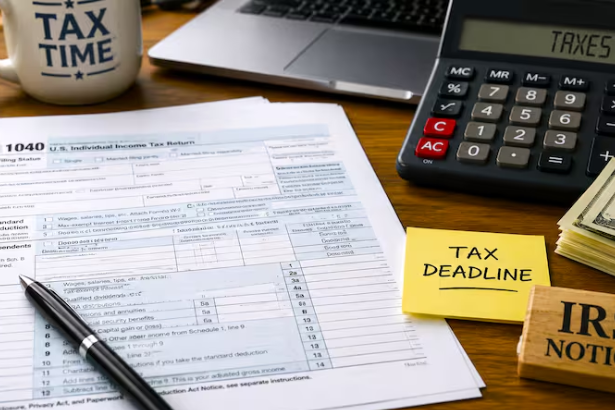
The IRS COVID tax refund deadline July 10 2026 is now two days away, and the IRS has just made it marginally easier to file with a new online option launched July 1 for individual taxpayers. At the center of this story is Kwong v. United States, a November 2025 Court of Federal Claims decision holding that the COVID-19 disaster declaration automatically extended every federal tax filing and payment deadline from January 20, 2020, through July 10, 2023. If you paid failure-to-file penalties, failure-to-pay penalties, or related interest on a 2019, 2020, 2021, or 2022 tax return, you may be entitled to a refund of those amounts, but only if you file Form 843 by the July 10 deadline. Missing this date could permanently forfeit your right to that money regardless of how the case ultimately resolves.
What Is the Kwong Decision and Why Does It Matter
The legal foundation for this refund opportunity begins with a federal court ruling issued in November 2025.
In Kwong v. United States, 179 Fed. Cl. 382 (November 2025), the U.S. Court of Federal Claims held that IRC Section 7508A(d) automatically postponed every federal tax filing and payment deadline from January 20, 2020, through July 10, 2023, due to the COVID-19 disaster declaration. The IRS is appealing the decision and has not begun issuing refunds. The case is likely to take years to fully resolve through the appellate courts.
The practical consequence is this: under the court’s reasoning, any penalties or interest the IRS charged you for late filing or late payment during that COVID disaster window may have been improper. If you paid those penalties and interest and want to preserve your right to get that money back, you must file a protective claim by July 10, 2026. A protective claim locks in your place in line. If the IRS ultimately loses the appeal, you are already eligible. If you miss the deadline, you lose that right permanently, regardless of the case outcome.
The IRS’s New Online Filing Option: What It Is and Who Can Use It
The IRS launched a new electronic filing option on July 1, three days before the July 4 holiday weekend, that gives some taxpayers a faster path to submitting their claim before the deadline.
The IRS added an online option on its mobile-friendly forms page for individual taxpayers to electronically file Form 843 for protective refund claims related to the Kwong decision before the Friday July 10 deadline. Certain individual taxpayers who have an IRS Online Account may submit their Form 843 electronically through a new secure application available on IRS.gov located on the mobile-friendly forms web page.
There are critical restrictions on who can use the online tool. Online filing of Form 843 for a Kwong-related refund claim is open only to individuals and not to businesses, which must file a Form 843 on paper. Individuals filing Form 843 electronically must have an existing IRS Online Account and must write “Kwong vs. United States” across the top of the form. The tool is only open for claims related to fully paid interest and penalties.
On the online tool, taxpayers must make two separate selections: on the “Why You’re Here” screen choose “Protective claim based on mandatory COVID-19 disaster tax relief and/or Kwong v. United States,” and on the “Reason For Filing” screen choose “Refund of assessed penalties and interest based on pending litigation.” Both selections are required. Selecting one does not automatically select the other.
How to File on Paper: The Mail Option Still Works
For those who cannot or prefer not to use the IRS online tool, the paper Form 843 remains fully available and is the only option for business taxpayers.
For paper filings, write “Kwong vs. United States” across the top of Form 843 so the IRS routes it correctly. Mail the completed form to: Internal Revenue Service, 1973 N Rulon White Blvd., Ogden, UT 84201. You and your spouse, if applicable, must sign and date Form 843 before mailing. The form must be postmarked by July 10, 2026. Tax professionals recommend sending the paperwork by certified mail to document timely delivery.
One important technical note: the IRS redesigned Form 843 in December 2024, so the current version is Form 843 (Rev. 12-2024). The line numbers and checkboxes differ from older copies you may find online. Always use the current version available at IRS.gov. You must file a separate Form 843 for each affected tax year and each type of tax. Do not combine multiple years on one form.
Who Is Eligible: The Five Categories of Qualifying Taxpayers
The Kwong decision potentially affects tens of millions of Americans, and the National Taxpayer Advocate has specifically flagged concern about unrepresented and low-income taxpayers who may not know they are eligible.
You should consider filing a protective claim if you fall into one of these categories. Anyone who paid a failure-to-file or failure-to-pay penalty on a Form 1040 for tax years 2019 through 2022 that was filed or paid late during the COVID disaster window from January 20, 2020, through July 10, 2023. Anyone who paid estimated tax penalties (IRC §6654 for individuals, §6655 for corporations) during that window. Anyone who paid IRS interest charges during the COVID disaster period that were related to penalties or late payments. Businesses, estates, and trusts that paid penalties or interest on business returns filed during the COVID disaster window. Some taxpayers who overpaid taxes for tax years 2019 through 2022 may also need to consider filing original returns, amended returns, or protective claims for overpaid tax, not just penalties and interest.
Certain complex situations, including FBAR penalties under Title 31 authority, do not fall within the Kwong ruling and are outside its scope. For Form 5471, Form 3520, and Form 8938 filers, the analysis is more complex and requires professional review before filing.
The Difference Between a Formal Claim and a Protective Claim
Understanding which type of Form 843 filing applies to your situation is critical to submitting it correctly.
If you have already paid the penalties or interest at issue, you are requesting a refund and should file a formal or protective claim on Form 843. If the IRS has assessed tax including penalties and interest but you have not yet paid it, you are requesting an abatement, which is not subject to the same refund claim deadline but taxpayers should still act promptly.
A protective claim does not require the taxpayer to calculate the exact amount of the refund. The minimum requirements for a valid protective claim are that it identifies the taxpayer, the tax year or years involved, the penalties, interest, payments, or refund items at issue, and the legal basis for the claim under IRC §7508A and Kwong. The IRS typically holds protective claims in suspense until the underlying issue is resolved by the courts, then the claim is perfected based on the final numbers from the court’s decision.
If you do not know the exact amount you paid in penalties versus interest, you can still file a protective claim referencing approximate amounts and requesting a refund. Filing a protective claim preserves your legal rights without requiring the IRS to immediately issue any payment.
The National Taxpayer Advocate’s Concerns: This System Is Failing Unrepresented Taxpayers
National Taxpayer Advocate Erin Collins has been unusually outspoken about the inequity of the July 10 deadline, and her concerns deserve direct coverage.
In a blog post published Thursday July 3, National Taxpayer Advocate Erin Collins said the deadline is “not a fair result” for taxpayers who may be prevented from receiving a refund to which they may ultimately be entitled. “When potential relief exists but taxpayers must know to ask for it, unrepresented taxpayers, low-income taxpayers, and taxpayers who cannot easily obtain transcripts or professional help are at special risk of losing refunds,” Collins said. “In fact, I suspect only a tiny fraction of potentially eligible taxpayers will file timely claims.”
Collins had separately called on the IRS to create an electronic portal for Kwong-related claims, a request that was partially fulfilled with the July 1 online tool launch, though with the restrictions described above that exclude business filers and those without IRS Online Accounts.
The IRS Appeal and What It Means for Your Claim
The protective nature of the July 10 filing is directly tied to the IRS’s decision to fight the Kwong ruling in court.
The IRS has appealed the Kwong decision and has until July 20 to file its brief with the Federal Circuit Court of Appeals. The IRS is not currently issuing refunds. The appeal is likely to take years to fully resolve through the appellate courts. The final outcome is not certain.
What filing by July 10 does is preserve your legal right to a refund if the IRS ultimately loses the appeal. Without a timely filing, the statute of limitations closes permanently. No court victory for taxpayers, however comprehensive, can reopen the window for taxpayers who failed to file by July 10, 2026.
Glen Frost of Frost Law Firm described the situation directly in a statement to the Journal of Accountancy: “There’s a narrow window for taxpayers who haven’t filed a claim yet. This new electronic portal creates a shortcut for people to get their refund request in before the deadline. If people paid penalties or interest during the pandemic, this is a last-minute chance to quickly file a claim.”
Latest Update: Online Portal Live, Two Days Remaining
The IRS COVID tax refund deadline July 10 2026 clock is running. The IRS online Form 843 tool launched July 1 is live and functional. The paper mail option remains open for all filers. Thursday July 10 is the hard deadline for both electronic and paper submissions.
The IRS announced the online tool on July 1. The National Taxpayer Advocate published her final reminder on July 5. Tax preparation services including H&R Block and TurboTax have published step-by-step Form 843 guides. The AICPA has published a resource page at aicpa-cima.com with updated FAQs and a checklist for CPAs advising clients.
For the full filing details, follow USA Today, NewsNation, and Journal of Accountancy.
Broader Implications: A Complex Court Case With Simple Personal Finance Consequences
The IRS COVID tax refund deadline July 10 2026 story is unusual because it requires ordinary taxpayers to take a specific action before a hard legal deadline based on a court ruling most of them have never heard of, about a tax code provision almost none of them know exists.
That gap, between a potentially significant refund right and the taxpayer awareness required to claim it, is precisely what Erin Collins has been raising concerns about for months. The NTA’s blog series on Kwong, her public requests for an electronic portal, and her final pre-deadline reminder on July 5 represent an unusual level of direct advocacy from the office created to represent taxpayers within the IRS structure.
For any taxpayer who paid penalties or interest on a 2019 through 2022 return during the COVID period, Wednesday and Thursday are the final two days to take action. The cost is low: a completed Form 843, a postage stamp or an IRS Online Account. The potential upside, if the courts ultimately uphold Kwong, could be hundreds or thousands of dollars for individual filers.
For more personal finance and tax guidance, visit The Tech Marketer.
What Happens Next
The July 10, 2026 deadline closes at end of business Thursday. The IRS appeal brief is due July 20 to the Federal Circuit Court of Appeals. The appellate process is expected to take years. The IRS will hold all protective claims in suspense until the case is fully resolved. Taxpayers who file before July 10 preserve their rights. Taxpayers who miss the deadline lose them permanently regardless of the eventual court outcome.
FAQ
What is the IRS COVID tax refund deadline in July 2026?
The deadline is July 10, 2026, which is Thursday. Taxpayers who paid failure-to-file penalties, failure-to-pay penalties, or related interest on 2019 through 2022 returns must file Form 843 by that date to preserve their right to a potential refund stemming from the Kwong v. United States court ruling. Missing the deadline permanently forfeits that right regardless of how the case resolves.
Can I file Form 843 online for the IRS COVID tax refund before July 10?
Yes, if you are an individual taxpayer, not a business, with an existing IRS Online Account and your claim relates to fully paid interest and penalties. The IRS launched an online electronic Form 843 tool on July 1 at its mobile-friendly forms page on IRS.gov. Business taxpayers and individuals who prefer not to e-file must submit Form 843 on paper, mailed to IRS, 1973 N Rulon White Blvd., Ogden, UT 84201, postmarked by July 10.
Who qualifies for the IRS COVID tax refund from the Kwong decision?
You may qualify if you paid failure-to-file penalties, failure-to-pay penalties, estimated tax penalties, or related IRS interest on any federal return for tax years 2019 through 2022 that were filed or paid late during the COVID disaster period from January 20, 2020, through July 10, 2023. Businesses, estates, and trusts are also potentially eligible. FBAR penalties under Title 31 are excluded from the Kwong ruling.
Is the IRS COVID tax refund guaranteed if I file Form 843 by July 10?
No. Filing a protective claim by July 10 preserves your legal right to a refund but does not guarantee payment. The IRS is appealing the Kwong decision and has not begun issuing refunds. If the IRS wins the appeal, no refunds will be issued. If the IRS ultimately loses the appeal, taxpayers who filed timely protective claims before July 10 will be eligible; those who did not file will not be eligible regardless of the outcome.
What should I write on Form 843 for the IRS COVID tax refund claim?
Write “Kwong vs. United States” across the top of the paper form. Complete a separate form for each affected tax year. If filing online, on the “Why You’re Here” screen select “Protective claim based on mandatory COVID-19 disaster tax relief and/or Kwong v. United States,” and on the “Reason For Filing” screen select “Refund of assessed penalties and interest based on pending litigation.” Both online selections are required. Use the current December 2024 version of Form 843 as the form was redesigned and older versions have different line numbers.
Sources and References
- USA Today (original submission, blocked): https://www.usatoday.com/story/money/personalfinance/2026/07/07/covid-tax-refund-irs-claim-deadline/90832823007/
- NewsNation (original submission, blocked): https://www.newsnationnow.com/business/your-money/covid-tax-refund-when-to-claim/
- Journal of Accountancy (fully accessed): https://www.journalofaccountancy.com/news/2026/jul/irs-adds-online-option-details-for-kwong-related-refund-claims/