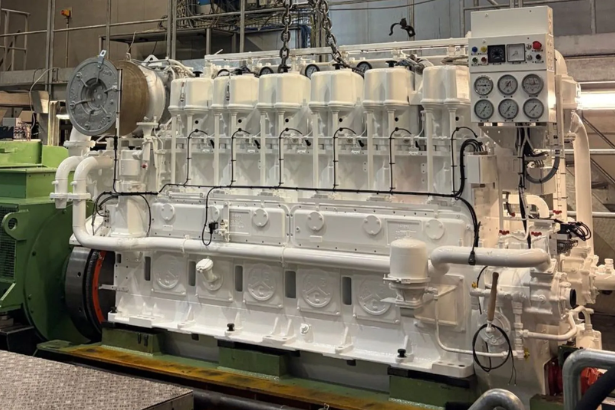
A hydrogen marine engine breakthrough was confirmed this week as Lloyd’s Register granted a Type Approval Certificate for the world’s first marine engine that runs entirely on hydrogen fuel using a spark-ignition system. The classification society issued the certification to BeHydro after concluding the machinery complies with all regulatory standards for operational performance, safety parameters, and mechanical reliability. The certified engine line spans a power range from 900 kilowatts to 2,670 kilowatts and eliminates the need for conventional pilot fuels entirely, a milestone announced the same week that a separate UK research vessel, the Prince Madog, secured its own hydrogen retrofit certification.
What Lloyd’s Register Just Certified
Lloyd’s Register has issued the first Type Approval Certificate for a 100% hydrogen-fueled, spark-ignited marine engine. The approval has been awarded to the hydrogen engine developed by BeHydro and confirms the design meets LR’s requirements for safety, performance and reliability in marine applications.
“For shipowners and operators, independent certification is essential in building confidence that emerging fuel technologies can meet the industry’s expectations for safety, reliability and operational performance,” said Claudene Sharp-Patel, Global Technical Director, Lloyd’s Register.
According to Lloyd’s Register representatives, the issuance of the official certificate indicates that internal combustion machinery using hydrogen fuel has advanced to a stage where it can serve as a practical alternative in industrial shipping. The engine has been developed and tested at ABC Engines’ facility in Ghent, Belgium.
How BeHydro’s Engine Works: No Pilot Fuel Required
The defining technical achievement of BeHydro’s engine is its ability to run on hydrogen alone, without the secondary fuel sources that earlier hydrogen marine propulsion systems have typically required.
This mechanical design operates exclusively on hydrogen and eliminates the need for conventional pilot fossil fuels during operation. By removing the need for a secondary fuel source, the architecture reduces the total number of subsystems required on board a vessel. The configuration stops the generation of carbon compounds during the combustion process, presenting a clear mechanical option for fleet operators seeking alternatives to carbon-heavy propulsion plants.
This represents a meaningful evolution beyond dual-fuel hydrogen engines, which still require a small amount of diesel or another fuel to initiate combustion. BeHydro itself previously achieved Type Approval for a hydrogen-powered dual-fuel engine back in 2023, which was the first Type Approval for that earlier category of technology, making this new 100% hydrogen certification the company’s second major class approval milestone in three years.
The Power Range: From 900kW to 2,670kW
The newly certified engine line is designed to serve a meaningful range of vessel sizes and propulsion configurations, rather than targeting a single narrow application.
The certified machinery line covers a power spectrum ranging from a minimum of 900 kilowatts to a maximum of 2,670 kilowatts. This capacity allows the units to be deployed across multiple maritime segments, functioning either as the primary propulsion unit or configured alongside an electrical generator to provide auxiliary onboard power.
Management at ABC Engines stated that the formal certification validates the technological framework of the hardware line for shipowners globally. That range of deployment options, from main propulsion to auxiliary generation, gives fleet operators considerable flexibility in how they integrate the technology into new vessel designs or future retrofit projects.
Zero Emissions: Water Vapor Is the Only Exhaust
The environmental case for the technology rests on a combustion process that produces fundamentally different exhaust output compared to conventional marine engines running on fossil fuels.
The combustion cycle of these units does not produce standard maritime pollutants, completely preventing the release of carbon dioxide, nitrogen oxides, sulfur oxides, or particulate soot into the atmosphere. The resulting exhaust gas consists solely of water vapor mixed with regular atmospheric air.
For an industry facing mounting regulatory pressure to decarbonize, an engine technology that eliminates the full suite of standard maritime pollutants at the point of combustion, rather than simply reducing them, represents a structurally different proposition than incremental efficiency improvements to existing diesel and dual-fuel systems.
No Rare Minerals: A Different Supply Chain
Beyond the emissions profile, BeHydro’s engine design avoids a supply chain constraint that has become an increasingly significant consideration for clean technology manufacturers more broadly.
The manufacturing process for these power plants does not require the use of rare or highly limited mineral resources. The supply chain excludes materials such as lithium, zinc, cobalt, platinum, and various rare-earth elements. This material selection avoids the environmental damage associated with mining operations for rare minerals.
That distinction separates the hydrogen combustion engine approach from battery-electric or fuel-cell propulsion alternatives, both of which typically rely more heavily on the rare and geopolitically concentrated mineral supply chains that BeHydro’s design specifically avoids.
Beyond Ships: Stationary Power and Rail Applications
While developed primarily for maritime propulsion, the engine’s design tolerances open potential applications well beyond ships themselves, a detail that broadens the commercial relevance of the certification considerably.
The mechanical systems are built to tolerate small amounts of impurities inside the incoming hydrogen gas stream, meaning they can be integrated into heavy stationary power generation facilities or land-based railway transport networks. Beyond standard maritime environments, the engineering parameters make the power units adaptable for alternative industrial uses.
The mechanical design relies on traditional engineering principles to extend the operational lifespan of the components, which simplifies the regular maintenance procedures carried out by crew members. Consequently, the reduced maintenance complexity lowers the long-term operational expenditures and reduces the total downtime for vessel owners, a practical consideration that matters considerably for commercial fleet operators evaluating the technology’s total cost of ownership.
The Prince Madog: A Second Hydrogen Milestone the Same Week
BeHydro’s certification was not the only significant hydrogen marine engineering milestone announced in the same period, with a separate UK project reaching its own important regulatory approval the same week.
The UK-flagged research vessel Prince Madog has received certification from Lloyd’s Register for its hydrogen fuel cell retrofit project, following approval under LR’s ShipRight Risk Based Certification framework. The certification covers the vessel’s hydrogen storage system and the integration of fuel cells, batteries, and associated equipment. The project is being delivered by UK-based vessel owner and engineering company O.S. Energy in partnership with hydrogen propulsion specialist Ecomar Propulsion.
“The Prince Madog will be the first sea-going, manned hydrogen retrofit of its kind, and the project is helping to establish a pathway for the adoption of hydrogen propulsion on workboats and larger commercial vessels, supporting the maritime industry’s transition towards Net Zero 2050,” said Oliver Cornforth, Head of Projects at O.S. Energy. The project, launched in 2023 as part of the £5.5 million Transship II initiative, has taken three years to reach this certification milestone, with the vessel based at Bangor University in Wales set to receive hydrogen from the Holyhead Hydrogen Hub on Anglesey once the retrofit is complete.
Why This Matters for Maritime Decarbonization
Together, the BeHydro engine certification and the Prince Madog retrofit approval represent two distinct but complementary pathways toward zero-carbon maritime propulsion, addressing different segments of an industry under growing pressure to reduce its environmental footprint.
The International Maritime Organization’s Net Zero 2050 framework has put sustained pressure on shipowners, classification societies, and engine manufacturers to develop and certify viable alternative fuel technologies at commercial scale. BeHydro’s new-build engine line addresses vessels designed from the outset for hydrogen propulsion, while the Prince Madog project demonstrates that existing vessels can be successfully retrofitted with hydrogen-electric hybrid systems.
Nik Lekkas, CTO at Ecomar Propulsion, characterized the Prince Madog milestone in terms that apply broadly to both achievements: “This certification is an important milestone, having helped drive the scope from system development through to integration and certification from the ground up. The recognition this brings to the wider project team reflects the effort required to take hydrogen technology from concept towards safe, certified vessel operation.”
Latest Updates
Both hydrogen marine engineering certifications were confirmed in the week of June 18, 2026. Interesting Engineering confirmed the full technical details of BeHydro’s 100% hydrogen engine, including the 900kW to 2,670kW power range, the zero-emission combustion profile, the rare-mineral-free supply chain, and Claudene Sharp-Patel’s statement on behalf of Lloyd’s Register. Marine Link confirmed the Type Approval Certificate details, the development and testing location at ABC Engines’ Ghent facility, and BeHydro’s earlier 2023 dual-fuel hydrogen engine certification. Ocean News and Clean Shipping International confirmed the separate Prince Madog certification under LR’s ShipRight Risk Based Certification framework, presented at Seaworks 2026 in Southampton, along with statements from Oliver Cornforth of O.S. Energy and Nik Lekkas of Ecomar Propulsion.
Full sources: Interesting Engineering | Motorship | Marine Link
Broader Implications
The certification of BeHydro’s 100% hydrogen marine engine represents a meaningful advance for an industry that has spent years searching for genuinely zero-carbon propulsion alternatives capable of meeting commercial reliability standards. Unlike dual-fuel systems that still depend partially on fossil fuels, an engine running entirely on hydrogen with water vapor as its only exhaust product addresses the full scope of maritime emissions regulation rather than offering an incremental reduction.
The parallel timing of the Prince Madog retrofit certification underscores that hydrogen propulsion technology is advancing simultaneously across both new-build and retrofit application pathways, giving the broader maritime industry multiple viable routes toward decarbonization rather than a single narrow technical solution. For an industry where vessel lifespans often extend several decades, the retrofit pathway demonstrated by the Prince Madog matters as much as new engine technology, since most of the global fleet currently in operation will need conversion options rather than waiting for full replacement.
For shipowners and operators evaluating their own decarbonization strategies ahead of the International Maritime Organization’s Net Zero 2050 deadline, these certifications provide concrete, independently verified evidence that hydrogen combustion technology has moved from experimental concept to commercially deployable solution, a distinction that matters considerably for fleet investment decisions made over the coming years.
For more maritime technology, clean energy, and engineering coverage, visit The Tech Marketer.
Frequently Asked Questions
1. What is the world’s first 100% hydrogen marine engine?
BeHydro’s engine, developed and tested at ABC Engines’ facility in Ghent, Belgium, is the first marine engine to receive a Lloyd’s Register Type Approval Certificate for running entirely on hydrogen fuel using a spark-ignition system, without requiring any conventional pilot fuel. The certified power range spans 900 kilowatts to 2,670 kilowatts.
2. What makes BeHydro’s engine different from earlier hydrogen marine engines?
Earlier hydrogen marine engines, including BeHydro’s own 2023 dual-fuel design, required a small amount of conventional pilot fuel to initiate combustion. The new engine operates exclusively on hydrogen with no pilot fuel needed, simplifying onboard systems and eliminating carbon emissions from the combustion process entirely, producing only water vapor as exhaust.
3. What is the Prince Madog and how does it relate to BeHydro’s certification?
The Prince Madog is a UK-flagged research vessel based at Bangor University in Wales that received a separate Lloyd’s Register certification the same week for its hydrogen fuel cell retrofit, part of the £5.5 million Transship II project. While BeHydro’s certification covers a new hydrogen combustion engine for new-build vessels, the Prince Madog demonstrates a hydrogen-electric retrofit pathway for existing vessels.
4. What materials does BeHydro’s hydrogen engine avoid using?
The manufacturing process excludes rare or highly limited mineral resources including lithium, zinc, cobalt, platinum, and various rare-earth elements, distinguishing it from battery-electric and fuel-cell propulsion alternatives that typically rely more heavily on these materials.
5. Can hydrogen marine engines be used outside of ships?
Yes. The mechanical systems are designed to tolerate small amounts of impurities in the incoming hydrogen gas stream, meaning they can also be integrated into stationary power generation facilities and land-based railway transport networks, broadening the technology’s potential applications beyond maritime propulsion alone.
Sources and References
- Interesting Engineering: World’s First 100% Hydrogen-Fuelled Marine Engine Delivering 2670kW Power Gets Class Approval
- Motorship: Prince Madog H2 Retrofit Certified
- Marine Link: BeHydro Receives Lloyd’s Register First Class Approval for Hydrogen Marine Engine