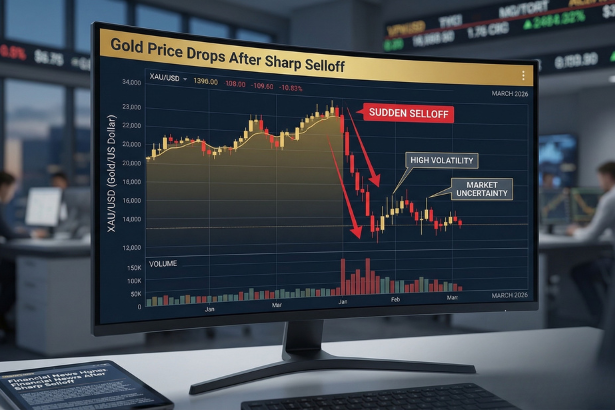
A rapid decline followed by rebound highlights how macroeconomic pressure, liquidity shifts, and investor sentiment are reshaping gold markets
Introduction
Gold price movements are back in focus after a sharp selloff wiped out gains in a matter of hours, triggering global concern and renewed debate about the metal’s role as a safe-haven asset.
Background and Context
Gold has long been viewed as a hedge against inflation, geopolitical instability, and currency devaluation. When uncertainty rises, investors typically flock to gold as a store of value.
However, in modern markets, gold prices are increasingly influenced by:
- Interest rate expectations
- U.S. dollar strength
- Central bank policy
- Global liquidity conditions
Unlike equities, gold does not generate yield. This makes it highly sensitive to shifts in bond yields and monetary tightening cycles.
Latest Update or News Breakdown
Recent reports from financial outlets including The Wall Street Journal and market platforms indicate:
- Gold prices dropped sharply, with some reports noting declines of up to 8% in a single session
- The selloff was linked to liquidity pressures and forced selling
- Silver and other precious metals experienced similar declines
- Prices showed partial recovery shortly after the drop
- Market volatility increased significantly within a short time window
The sudden nature of the decline suggests a combination of algorithmic trading, margin calls, and macroeconomic triggers rather than a single isolated cause.
Expert Insights or Analysis
Market analysts point to several key drivers behind the selloff:
1. Rising Interest Rate Expectations
Higher interest rates increase the opportunity cost of holding gold. Investors shift toward yield-bearing assets like bonds.
2. Stronger U.S. Dollar
Gold is priced in dollars. When the dollar strengthens, gold becomes more expensive globally, reducing demand.
3. Liquidity Crunch
Rapid price drops often indicate forced liquidation, where investors sell assets to cover losses elsewhere.
4. Algorithmic Trading Amplification
Modern markets are heavily influenced by automated trading systems that can accelerate both upward and downward price movements.
Broader Implications
Safe Haven Narrative Under Pressure
Gold’s reputation as a stable hedge is being tested in an environment dominated by fast-moving capital and algorithmic trading.
Increased Market Fragility
Sharp intraday swings highlight how interconnected global markets have become. A shock in one asset class can quickly spread.
Retail Investor Risk
Volatility increases risk for retail investors who may enter positions based on outdated assumptions about gold’s stability.
Related History or Comparable Technologies
Gold has experienced similar volatility during:
- The 2008 financial crisis (liquidity-driven selloffs)
- The 2020 COVID market crash (initial drop before rally)
- Recent tightening cycles by central banks
What has changed is the speed. High-frequency trading and global digital markets now compress what used to take days into minutes.
What Happens Next
Looking ahead, several factors will determine gold’s trajectory:
- Federal Reserve policy signals
- Inflation data releases
- Geopolitical developments
- Central bank gold purchases
If interest rates stabilize or decline, gold could regain upward momentum. However, continued tightening may keep pressure on prices.
Conclusion
The recent gold price selloff underscores a critical shift in how safe-haven assets behave in modern financial systems. While gold remains a long-term store of value, short-term volatility is increasingly driven by macro forces and automated trading dynamics.
For investors, the key takeaway is clear: gold is no longer immune to rapid market swings. Understanding the broader economic context is essential before making allocation decisions.
FAQ
Why did gold prices drop suddenly?
Gold prices fell due to rising interest rates, a stronger dollar, and liquidity-driven selling.
Is gold still a safe-haven asset?
Yes, but it is now more volatile in the short term due to modern market dynamics.
How much did gold fall?
Some reports indicate drops of up to 8% in a single trading session.
Will gold prices recover?
Recovery depends on interest rates, inflation trends, and global economic conditions.
Should investors buy gold now?
That depends on risk tolerance and macroeconomic outlook. Volatility remains high.
Sources and References
- Wall Street Journal – Gold and silver selloff analysis
- Moomoo – Market volatility report
- EastMoney – Precious metals market update