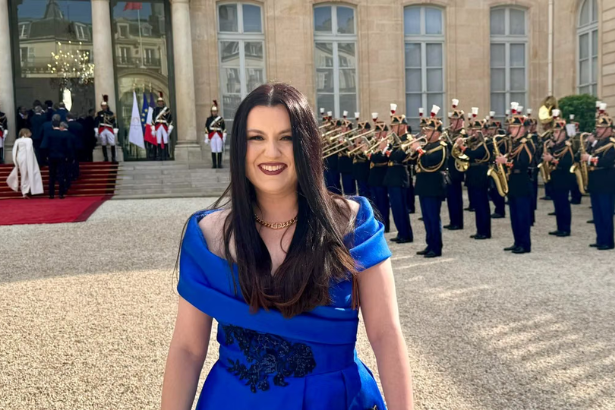
Fidji Simo OpenAI stepping down 2026 is the most significant leadership departure at the $852 billion company since it began preparation for its IPO, and it arrives on one of OpenAI’s busiest news days of the year. On Thursday, July 9, Simo announced on X that she will step down from her full-time role as CEO of Applications, the No. 2 position at OpenAI that she had held since May 2025, following a three-month medical leave triggered by a severe exacerbation of Postural Orthostatic Tachycardia Syndrome, or POTS, a chronic neuroimmune condition she was diagnosed with in 2019. Her responsibilities will be divided among OpenAI President Greg Brockman, Chief Financial Officer Sarah Friar, and Chief Strategy Officer Jason Kwon. Simo will remain at OpenAI as a part-time advisor focused on consumer products, advertising, and health applications.
Who Is Fidji Simo and What Was Her Role at OpenAI
Understanding the significance of Simo’s departure requires understanding both the role she held and what her appointment in 2025 signaled about Sam Altman’s ambitions for the company.
Simo joined OpenAI in May of last year, leaving Instacart, where she was CEO. OpenAI hired Simo in May 2025 to lead the company’s applications business. OpenAI CEO Sam Altman said in a memo at the time that Simo would focus on “enabling our traditional company functions to scale as we enter a next phase of growth.” Her appointment came with a broader reporting shift that represented a meaningful delegation of authority: COO Brad Lightcap, CFO Sarah Friar, and CPO Kevin Weil all began reporting to her, while Altman stepped back to focus on research, compute, and safety.
Simo previously served as CEO of Instacart, where she took the company public and helped break the longest tech IPO drought in three decades. She also spent more than a decade in leadership roles at Meta, acting as the head of Facebook from 2019 until 2021. Her background in scaling consumer platforms was the specific expertise Altman cited when hiring her.
The Wall Street Journal reported that Simo joined OpenAI in August, took on many managerial responsibilities from Altman, and was expected to take on an even larger role at the company after its planned IPO. Her departure is therefore not only a personnel loss but a structural shift in who owns OpenAI’s commercial scaling in the pre-IPO period.
The Medical Reality: Seven Years of POTS, Three Months of Leave
Simo’s X post about her departure was unusually candid, describing the full arc of her experience with chronic illness from diagnosis through the decision to step back.
Simo said she was stepping down as OpenAI’s head of product and business after a “severe exacerbation” of Postural Orthostatic Tachycardia Syndrome, a chronic condition she was diagnosed with in 2019. She went on medical leave in April.
“Three months ago, I had to go on medical leave after a severe exacerbation of a chronic illness I’ve lived with for seven years,” she wrote on X. “During that time, it became clear that the road to recovery would be much longer and more complex than I had anticipated, and that I needed to focus on it fully.” She noted she had spent countless hours in doctors’ offices, dealing with symptoms, treatments, insurance, uncertainty, and all the invisible work that comes with being a patient.
She reflected candidly on the pattern that led to this moment. “For my entire time here, I’ve postponed medical tests and new therapies to stay completely focused on the job and not miss a single day of work,” she wrote in an internal memo reviewed by Axios at the time of her April leave. “It’s now clear that I’ve pushed a little too far and I really need to try new interventions to stabilize my health.”
The Zuckerberg Moment She Wished She Had Listened To
One of the most personally resonant passages in Simo’s departure statement involved a conversation with her former boss at Meta.
Simo recalled that two years after getting sick, Mark Zuckerberg had offered her a full year of medical leave. “I immediately said no,” Simo wrote. “At the time, Zuck told me I should play the long game. I wish I had listened.”
The statement reflects a pattern Simo identified explicitly in her X post: “When I went on leave, many people told me I was courageous for prioritizing my health. The truth is that I am only making this decision now because I failed to make it many times before.” She connected her experience to the broader challenge facing millions of people with chronic illness: “Like millions of others living with chronic illness, I’ve experienced firsthand how difficult healthcare can be to navigate, even when you have every possible advantage.”
Her conclusion, that the most important opportunities for AI lie in helping people navigate health, finances, and the everyday burdens of human experience, is simultaneously a personal conviction and a strategic observation that will inform her part-time advisory focus on consumer, advertising, and health applications.
OpenAI’s Leadership Reshuffling: A Wave of Departures
Simo’s departure is the latest in a series of leadership changes that began cascading through OpenAI in April.
Simo’s surprise leave in April, one spurred by a neuroimmune condition, precipitated a wave of corporate departures from and reshufflings within the ChatGPT creator just as it prepared to make its public debut. Just as Simo announced her leave in April, Chief Marketing Officer Kate Roach also left her role to recover from cancer, while COO Brad Lightcap stepped down from his title to focus on “special projects.”
OpenAI’s executive ranks appear, from the outside, to be on the thin side for a company that was most recently assigned an $852 billion valuation. According to Bloomberg, Simo’s responsibilities will be divided up between Brockman, Chief Financial Officer Sarah Friar, and Chief Strategy Officer Jason Kwon. As a part-time advisor, Simo will focus on the company’s consumer products, advertising, and health products.
OpenAI President Greg Brockman had already assumed responsibility for product during Simo’s three-month absence, meaning the transition to the new structure has effectively been underway since April.
The IPO Context
Simo’s departure comes at a particularly sensitive moment in OpenAI’s corporate evolution.
Last month OpenAI confidentially filed for an IPO, a week after rival Anthropic did the same. However, the company has not offered a timeline for a public market debut and is reportedly putting off those plans until at least next year. Simo had been brought in specifically to prepare the commercial and operational infrastructure for an IPO transition. Her departure before that event means the person who was expected to be one of the architects of OpenAI’s public market debut will not be in a full-time role when it occurs.
OpenAI’s shifting approach to employee equity provides additional context. The company eliminated vesting cliffs for new hires in December, letting equity start vesting from day one, in the midst of an escalating AI talent war. The company was projected to spend $6 billion on stock-based compensation in 2025 alone.
The Same Day: GPT-5.6 and ChatGPT Work Launch
Simo’s announcement landed on a day when OpenAI was already generating significant technology news.
Simo’s announcement lands on a busy news day for OpenAI. Earlier Thursday, the company launched its new GPT-5.6 family of models, including Sol, Terra, and Luna, alongside a new agent called ChatGPT Work, designed to handle multistep office tasks like drafting documents, spreadsheets, and presentations. Both releases were framed by OpenAI as directly targeting Anthropic, OpenAI’s primary competitor heading into the IPO period.
The contrast between OpenAI’s aggressive product expansion and its thinning executive bench underlines a tension that investors and board members are likely monitoring closely as the company approaches its public market debut.
Latest Update: Altman’s Response and What Comes Next
The Fidji Simo OpenAI stepping down 2026 announcement prompted an immediate personal response from Sam Altman that was notably emotional for a corporate communication.
In his own X post, Altman said he was “really sad about this” and was “very grateful for all Fidji has done for OpenAI” and “for her friendship and who she is as a person.” “We all wish her the best for a speedy recovery,” he wrote. “This sucks.”
For full coverage, follow CNBC, The New York Times, and The Wall Street Journal.
Broader Implications: OpenAI’s Leadership Bench Heading Into Its IPO
The Fidji Simo OpenAI stepping down 2026 announcement raises a legitimate question about the depth of OpenAI’s commercial leadership bench at the most consequential moment in the company’s history.
OpenAI is preparing for an IPO that would value it at a level comparable to some of the largest technology companies in the world. The person hired specifically to prepare its commercial and operational infrastructure for that transition is stepping back to a part-time advisory role three months before that process was expected to intensify. Her responsibilities are being divided among three people who already carry significant organizational burdens of their own.
None of this means OpenAI cannot execute its plans. Greg Brockman is one of the company’s co-founders and among the most experienced people in AI at any company in the world. Sarah Friar is a seasoned CFO who has navigated public markets before. Jason Kwon brings strategic depth that Altman has trusted with sensitive matters for years.
But the specific experience Simo brought, the ability to scale a consumer platform from growth stage to public company as an operator, is not easily replicated by distributing her responsibilities across three people with existing portfolios. That gap is the one OpenAI will need to address before its IPO becomes an executable reality.
For more technology and AI industry coverage, visit The Tech Marketer.
What Happens Next
Simo transitions to a part-time advisory role focused on consumer products, advertising, and health applications. Brockman, Friar, and Kwon absorb her operational responsibilities. OpenAI’s confidential IPO filing remains in process, with no public timeline confirmed. The GPT-5.6 model family and ChatGPT Work agent launched on the same day as Simo’s announcement represent the product strategy she helped build, now being executed without her full-time presence.
FAQ
Why is Fidji Simo leaving OpenAI in 2026?
Fidji Simo is stepping down from her full-time role as CEO of Applications at OpenAI due to a severe exacerbation of Postural Orthostatic Tachycardia Syndrome, or POTS, a chronic neuroimmune condition she was diagnosed with in 2019. She went on medical leave in April 2026, and after three months determined that the road to recovery would be longer and more complex than anticipated, requiring her full focus.
What was Fidji Simo’s role at OpenAI?
Simo was CEO of Applications at OpenAI, the company’s No. 2 executive role, reporting directly to Sam Altman. In this role, she oversaw OpenAI’s product, business, and commercial operations, with COO Brad Lightcap, CFO Sarah Friar, and CPO Kevin Weil all reporting to her. She joined OpenAI in May 2025 from Instacart, where she had been CEO and led the company’s IPO.
Who is taking over Fidji Simo’s responsibilities at OpenAI?
Simo’s responsibilities are being divided among three OpenAI executives: President Greg Brockman, who had already assumed product responsibilities during Simo’s April medical leave; CFO Sarah Friar; and Chief Strategy Officer Jason Kwon. Simo will remain as a part-time advisor focused on consumer products, advertising, and health applications.
What is Postural Orthostatic Tachycardia Syndrome (POTS)?
POTS is a chronic neuroimmune condition that affects the autonomic nervous system. It is characterized by an abnormal increase in heart rate when transitioning from a lying-down position to standing, causing symptoms including dizziness, fatigue, palpitations, and difficulty concentrating. Simo was diagnosed with POTS in 2019 and has been managing the condition for seven years. It affects an estimated one to three million Americans and is significantly more common in women.
How does Fidji Simo’s departure affect OpenAI’s IPO plans?
OpenAI confidentially filed for an IPO last month, a week after rival Anthropic did the same. Simo had been hired specifically to prepare OpenAI’s commercial and operational infrastructure for the transition to a public company. Her departure to a part-time advisory role removes the executive most directly responsible for that preparation, with responsibilities now distributed across Brockman, Friar, and Kwon heading into the IPO process.
Sources and References
- CNBC (original submission, blocked — full details confirmed via search): https://www.cnbc.com/2026/07/09/openai-exec-fidji-simo-says-she-will-step-down-and-transition-to-part-time-advisor.html
- New York Times (original submission, blocked): https://www.nytimes.com/2026/07/09/technology/openai-fidji-simo-exit.html
- Wall Street Journal (original submission, blocked): https://www.wsj.com/tech/openai-top-executive-fidji-simo-to-step-down-c3daca47