Introduction
CAT stock is back in the spotlight after Caterpillar reported third-quarter 2026 earnings that beat analyst expectations but failed to reassure investors about the company’s growth trajectory.
The industrial equipment manufacturer reported revenue of approximately $20.7 billion for the quarter ended September 2026, up 17% from $17.6 billion a year earlier. Adjusted earnings reached $7.20 per share, compared with $4.95 in the same quarter of 2025.
Those are substantial gains. Demand for construction equipment, power-generation systems, and other industrial products remains strong, particularly as technology companies and utilities invest in the infrastructure required to support artificial intelligence.
However, the market reaction was negative. Reuters reported that Caterpillar shares fell sharply in premarket trading on October 29, while investors focused on the company’s unchanged full-year sales-growth outlook and questions about the durability of the data-center investment boom.
The reaction highlights an important distinction for investors: a company can deliver better-than-expected financial results and still see its stock fall.
Stock prices reflect expectations about the future, not just what happened in the previous quarter. When investors have already priced in strong growth, even impressive results may disappoint if they do not suggest that the next phase of expansion will be stronger.
For Caterpillar, the challenge is especially interesting because the company sits at the intersection of traditional industrial activity and one of the technology sector’s most important investment cycles: the construction and powering of AI data centers.
The latest results suggest that demand remains robust. The market’s question is whether that demand can continue supporting Caterpillar’s earnings at the pace investors have come to expect.
Background and Context: Why Caterpillar Has Become an AI Infrastructure Stock
Caterpillar has spent decades building equipment for construction, mining, energy, transportation, and other industrial markets.
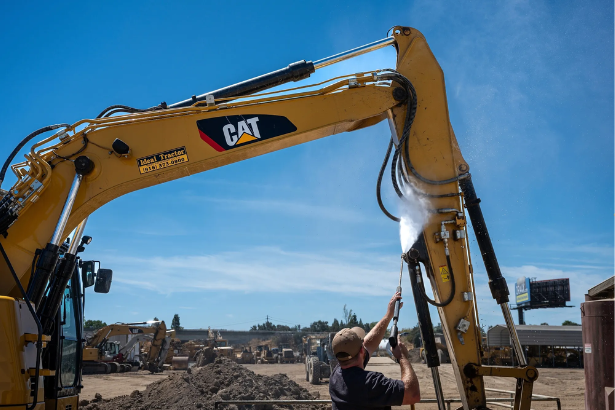
Its yellow excavators, bulldozers, mining trucks, engines, and power-generation systems are familiar symbols of the global industrial economy.
But the investment case for Caterpillar has evolved as the growth of artificial intelligence has created new demand for physical infrastructure.
AI models require computing capacity. Computing capacity requires data centers. Data centers require land, buildings, electrical infrastructure, backup power, cooling systems, and extensive construction work.
That creates opportunities for companies far beyond the traditional technology sector.
Caterpillar benefits from several parts of this infrastructure chain.
Power Generation and Backup Systems
Large data centers need reliable electricity. Backup generators and other power systems help facilities maintain operations when grid supply is interrupted or when additional resilience is required.
Caterpillar’s Power & Energy business supplies equipment used in power generation and related applications.
As AI infrastructure expands, demand for these systems can increase alongside spending on data-center construction.
Construction Equipment
Building a data center requires site preparation, excavation, earthmoving, and other construction work.
Caterpillar’s Construction Industries segment supplies machinery used in those activities.
Demand also comes from roads, commercial buildings, industrial facilities, housing, and public infrastructure. That diversification matters because Caterpillar’s results do not depend entirely on data centers.
Mining and Resource Industries
AI infrastructure also requires materials, metals, and industrial supply chains.
Caterpillar’s Resource Industries segment serves mining and related markets. Its performance is influenced by commodity demand, mining investment, equipment replacement cycles, and global economic conditions.
These different business lines give Caterpillar exposure to several industrial trends at once.
The AI boom is important, but it is only one part of the company’s investment story.
The latest quarter demonstrates the strength of that broader business. The question is whether the unusually strong demand associated with data centers will remain an incremental growth driver or become a source of volatility if technology companies moderate their spending.
Latest Update: Caterpillar Reports Third-Quarter 2026 Results
Caterpillar released its third-quarter financial results on October 29, 2026.
According to the company’s official third-quarter earnings announcement, sales and revenues rose 17% year over year to $20.7 billion.
Adjusted profit per share increased to $7.20, while reported profit per share reached $7.13.
The company also reported $4.4 billion in enterprise operating cash flow and ended the quarter with $7.9 billion in enterprise cash.
Caterpillar Q3 2026 Earnings at a Glance
| Financial Metric | Q3 2026 | Q3 2025 | Year-Over-Year Change |
|---|---|---|---|
| Sales and revenue | $20.7 billion | $17.6 billion | +17% |
| Reported profit per share | $7.13 | $4.88 | Increased |
| Adjusted profit per share | $7.20 | $4.95 | Increased |
| Operating profit margin | 20.4% | 17.3% | +3.1 percentage points |
| Adjusted operating profit margin | 20.6% | 17.5% | +3.1 percentage points |
| Enterprise operating cash flow | $4.4 billion | Not shown in this comparison | Not directly comparable |
| Enterprise cash at quarter-end | $7.9 billion | Not shown in this comparison | Not directly comparable |
Source: Caterpillar’s official Q3 2026 earnings release. Figures are rounded where appropriate.
The headline numbers show strong growth in both revenue and profitability.
Caterpillar attributed the revenue increase primarily to higher sales volume, which contributed approximately $2.2 billion, and favorable price realization, which contributed approximately $663 million.
Higher equipment sales to end users were an important factor.
The company also deployed approximately $2.0 billion toward shareholder returns during the quarter, including $1.2 billion in share repurchases and $0.7 billion in dividends.
Those figures suggest that Caterpillar continues to generate significant cash while investing in its operations and returning capital to shareholders.
However, strong quarterly performance did not eliminate questions about the next stage of growth.
Why CAT Stock Fell After the Earnings Beat
The market’s reaction centered on the difference between Caterpillar’s actual results and the expectations embedded in its share price.
According to Reuters’ October 29 earnings report, the company benefited from demand for backup power equipment, turbines, and construction equipment.
Despite the stronger results, investors were concerned that Caterpillar left its full-year sales-growth outlook unchanged at the mid-to-high-teens range.
That outlook appeared less aggressive than some investors had anticipated.
The company’s results also arrived during a period of uncertainty around the scale and sustainability of AI infrastructure spending.
Technology companies are committing substantial capital to data centers and computing infrastructure. Caterpillar benefits when that spending translates into orders for generators, engines, and construction machinery.
But investors must determine whether current demand represents a durable expansion or a particularly strong phase of the investment cycle.
The distinction matters because Caterpillar’s valuation can change quickly if expectations for future growth weaken.
A strong quarter can support a stock’s long-term investment case without necessarily producing a positive short-term market reaction.
A Record Backlog Provides Support, but the Details Matter
Caterpillar reported a record order backlog of approximately $78.1 billion, according to Reuters.
A backlog represents orders that have been received but have not yet been fulfilled. It can provide visibility into future demand and help management plan production and capacity.
For investors, a large backlog is generally encouraging because it indicates that customers have committed to purchasing equipment.
However, backlog is not the same as recognized revenue.
Orders may be delivered over several quarters, and the timing of delivery depends on production capacity, customer schedules, supply chains, and other operating conditions.
The pace at which the backlog grows also matters. Reuters noted that the quarterly increase had slowed, raising questions about whether demand was accelerating as quickly as investors wanted.
The backlog therefore offers two signals at once: a substantial base of existing demand and a reason to monitor the rate of new orders.
CAT Stock and the Market Reaction: Why Good News Wasn’t Enough
The reaction to Caterpillar’s results illustrates a recurring feature of equity markets: earnings surprises matter, but so do expectations.
Investors do not value a company solely on its most recent revenue or earnings. They also consider future growth, profit margins, cash generation, capital spending, competition, and valuation.
When a stock has already risen substantially, expectations can become difficult to exceed.
Caterpillar entered the latest earnings report after a period of strong investor interest in industrial companies associated with AI infrastructure and power demand.
The supplied Google Trends screenshot shows increased search interest for “CAT stock” around the earnings announcement. Its associated news results focus on the earnings release and the share-price decline.
That supports the view that the report became a major subject of public attention. However, Google Trends measures relative search interest rather than trading volume, investor positioning, or the direction of future returns.
The Difference Between an Earnings Beat and a Positive Stock Reaction
An earnings beat means a company has reported results above a relevant analyst consensus or market expectation.
It does not mean that the company has exceeded every important expectation.
Investors may be looking for stronger guidance, higher margins, faster order growth, or more evidence that demand will remain elevated.
In Caterpillar’s case, adjusted earnings of $7.20 per share exceeded the expectations cited in contemporaneous market coverage.
Revenue also increased sharply from the prior year.
Yet the unchanged sales-growth outlook and questions about AI spending were important enough to overshadow those gains.
This is why investors should read the earnings release alongside management’s commentary, forward guidance, and details about order trends.
Why Valuation Matters
A strong company can still be a disappointing stock if investors pay too much for its expected future earnings.
Conversely, a stock can rise when results are weak if the market had expected something worse.
Caterpillar’s valuation reflects not only its established industrial business but also expectations about future demand for power-generation equipment, construction machinery, and other products linked to infrastructure investment.
If those expectations are high, investors may require increasingly strong evidence that the growth trajectory can continue.
The relevant question is not simply whether Caterpillar is performing well today.
It is whether the company’s future earnings and cash flows can justify the price investors are willing to pay.
Expert Analysis: Three Forces Shaping Caterpillar’s Investment Outlook
1. AI Data-Center Spending Has Become a Major Demand Driver
The expansion of AI infrastructure has created demand for equipment needed to build and power data centers.
Caterpillar’s Power & Energy business is positioned to benefit from investment in generators, engines, and related power systems.
The company’s Q3 results showed that Power & Energy sales and revenues rose 18% year over year to approximately $8.8 billion.
That increase reinforces the importance of the segment to Caterpillar’s recent growth.
However, the relationship between AI investment and Caterpillar’s revenue is indirect.
Technology companies invest in computing capacity, data-center developers build facilities, utilities and other providers supply electricity, and industrial equipment manufacturers receive orders as projects move through the construction process.
Each stage has its own timing and constraints.
A slowdown in new data-center commitments could eventually affect equipment demand, although the effect might not appear immediately because existing projects can continue to generate orders.
Investors should therefore monitor both current revenue and the pipeline of future projects.
2. Industrial Diversification Could Help Cushion a Technology Slowdown
Caterpillar is not a pure-play AI company.
Its construction, resource, power, and financial products businesses serve a variety of customers and economic conditions.
That diversification can help the company navigate changes in individual markets.
For example, construction activity outside the technology sector may continue to support equipment sales even if data-center investment moderates.
Mining demand can also provide a separate source of business activity, depending on commodity prices and customer investment plans.
But diversification does not eliminate cyclical risk.
Construction equipment demand can weaken when economic growth slows, borrowing costs rise, or customers delay major projects.
Mining companies can reduce spending when commodity prices fall. Power-generation demand can also change with energy markets and project schedules.
The strength of Caterpillar’s business therefore depends on a combination of long-term infrastructure demand and shorter-term economic cycles.
3. Tariffs and Costs Remain Important Risks
Caterpillar has highlighted tariff-related costs as a financial consideration.
Reuters reported that the company maintained its estimate of approximately $2.2 billion in annual tariff costs.
The third-quarter operating profit also included $128 million in tariff-recovery benefits associated with the International Emergency Economic Powers Act.
That detail matters because reported operating profit can be affected by items that may not recur at the same level in future periods.
Investors should distinguish between underlying operating performance and temporary benefits or costs.
Higher sales volumes and favorable pricing can support profitability, but the effects of tariffs, labor, materials, logistics, and manufacturing costs can influence margins.
The key question is whether Caterpillar can preserve its pricing power and operating efficiency if cost pressures remain elevated.
Broader Implications: What Caterpillar’s Results Say About the AI Economy
Caterpillar’s earnings report offers a useful reminder that the AI boom is not confined to chipmakers, software companies, and cloud platforms.
AI requires a physical infrastructure layer.
That includes land, buildings, electrical equipment, backup power, cooling, networking, and construction services.
The companies supplying those systems can benefit when technology companies increase capital expenditure.
Caterpillar has become an important part of that discussion because it supplies machinery and power equipment used in industrial and infrastructure projects.
AI Growth Depends on More Than Computing Demand
The long-term growth of AI infrastructure depends on several connected factors.
Technology companies need to justify their spending on computing capacity. Data-center developers need access to land and electricity. Utilities must expand or adapt power infrastructure. Equipment manufacturers need to deliver products on schedule.
Delays or constraints in any part of that chain can affect project timing.
Even if demand for AI computing remains strong, the pace of equipment orders can vary as customers work through existing projects or adjust their investment plans.
That creates a more complicated investment environment than simply assuming that rising AI usage will always produce rising industrial stock prices.
Power Availability Is Becoming a Competitive Issue
Data centers require reliable electricity, and some facilities need backup power to maintain operations.
As computing demand grows, power availability, grid capacity, and infrastructure costs become more important to project planning.
This creates opportunities for companies supplying generators, engines, electrical equipment, and related infrastructure.
But demand is not unlimited.
Projects can be delayed by permitting, interconnection constraints, construction timelines, financing, or changes in customer investment plans.
Investors should therefore consider the practical limits on infrastructure deployment, not just projected AI demand.
The Industrial Sector Is Becoming More Closely Linked to Technology Valuations
Caterpillar’s market performance illustrates how industrial companies can become sensitive to developments in the technology sector.
If investors believe that AI infrastructure spending will remain strong, they may assign higher valuations to equipment manufacturers that stand to benefit.
If concerns about AI returns, financing, or capital expenditure increase, those same stocks can face pressure.
That does not mean Caterpillar’s underlying business is identical to a technology company.
Its products, customers, revenue drivers, and capital requirements remain different.
But investor expectations can increasingly reflect the same broad question: how durable is the current wave of AI-related spending?
For The Tech Marketer, this creates a useful internal-link opportunity to existing coverage of AI data centers, semiconductor investment, and the infrastructure supporting generative AI.
Suggested internal anchor text includes “the AI data-center infrastructure boom,” “how AI is changing power demand,” and “the industrial companies benefiting from AI investment.” Use these only where matching articles exist on the website.
Related History: Caterpillar’s Traditional Business Meets a New Growth Cycle
Caterpillar’s business has historically moved with global industrial activity.
Construction projects, mining investment, commodity prices, infrastructure spending, and equipment replacement cycles have all influenced demand.
The company’s recent exposure to data-center construction adds a newer source of growth to that established business model.
There are important similarities between the current AI infrastructure cycle and earlier periods of major infrastructure investment.
In each case, companies supplying essential physical equipment can benefit from spending that extends beyond a single industry.
But infrastructure investment cycles can also produce periods of excess optimism.
Customers may accelerate orders when demand is strong, while equipment manufacturers invest in production capacity to meet expected growth. If demand later slows, the industry can face longer delivery cycles, excess capacity, or weaker new orders.
That is why backlog, margins, and cash flow deserve close attention.
Caterpillar’s current results are encouraging, but the long-term investment case depends on whether the company can convert demand into profitable deliveries over time.
The lesson is not that the AI infrastructure boom must end soon. It is that investors should separate a genuine structural growth opportunity from assumptions about how quickly that opportunity will translate into future earnings.
What Happens Next? Five Things Investors Should Watch
The next phase of Caterpillar’s story will depend on whether its strong operating performance can be sustained and whether the company can provide greater confidence about future growth.
1. New Orders and Backlog Growth
The order backlog is a useful indicator of future demand, but investors should also monitor how quickly it grows.
A large backlog is more encouraging when new orders remain healthy and customers continue committing to future projects.
If backlog growth slows materially, investors may question whether the current revenue trajectory can continue.
2. Power & Energy Demand
Caterpillar’s Power & Energy segment is central to the AI infrastructure investment thesis.
Investors should monitor sales, orders, operating profit, and management commentary about data-center demand.
It is also important to determine whether growth is broad-based across power generation and energy markets or concentrated in a smaller number of large projects.
3. Full-Year Sales Outlook
Caterpillar maintained its mid-to-high-teens sales-growth outlook.
Future updates to that outlook could influence investor confidence.
Stronger demand or improved order trends might support the company’s ability to sustain growth. Conversely, weaker orders, project delays, or economic headwinds could put pressure on expectations.
4. Operating Margins and Tariff Costs
Higher revenue does not automatically translate into proportional profit growth.
Investors should assess pricing, production costs, tariffs, and operating efficiency.
The company’s ability to protect margins will help determine how much of its sales growth reaches the bottom line.
5. Cash Flow and Shareholder Returns
Caterpillar generated $4.4 billion in enterprise operating cash flow during the quarter and used approximately $2.0 billion for share repurchases and dividends.
Investors should continue monitoring cash generation, capital requirements, debt, and shareholder distributions.
Strong cash flow can support investment and shareholder returns, but capital allocation must remain sustainable across different phases of the industrial cycle.
CAT Stock: Investor Watchlist
| Factor | Why It Matters | What to Monitor |
|---|---|---|
| Earnings growth | Shows whether Caterpillar is converting demand into profits | Revenue, adjusted earnings, and operating margins |
| Backlog | Provides visibility into future deliveries | New orders, cancellations, and backlog growth |
| AI infrastructure | Supports demand for power-generation and construction equipment | Data-center investment, power projects, and segment sales |
| Tariffs and costs | Can affect profitability | Tariff expenses, pricing, materials, and manufacturing costs |
| Valuation | Determines how much future growth is already reflected in the share price | Forward earnings expectations and valuation relative to historical levels |
| Cash flow | Supports capital spending and shareholder returns | Operating cash flow, capital allocation, dividends, and buybacks |
| Economic conditions | Influences construction and mining demand | Industrial activity, commodity markets, and customer investment plans |
This framework is intended to help readers organize their research, not to provide a buy or sell recommendation.
Conclusion
CAT stock is facing a familiar challenge for companies that have benefited from strong growth expectations: delivering good results is not always enough to satisfy the market.
Caterpillar’s third-quarter 2026 performance was strong. Revenue rose 17% year over year to $20.7 billion, adjusted earnings reached $7.20 per share, and the company reported a record backlog of approximately $78.1 billion.
Demand for power-generation equipment and construction machinery continues to benefit from investment in AI infrastructure and other industrial projects.
Yet investors are looking beyond the latest quarter.
The unchanged full-year sales-growth outlook, the pace of backlog growth, tariff costs, and uncertainty about the durability of data-center spending have all become important parts of the stock’s investment story.
The most important distinction is between a strong operating business and a stock whose valuation already assumes continued strength.
Caterpillar may remain well positioned to benefit from long-term infrastructure investment. But its shares could remain sensitive to changes in expectations, particularly if investors become less confident about the pace of AI-related spending.
The next few quarters should provide more evidence about whether the company’s backlog translates into sustained revenue growth and whether its margins can remain resilient.
For investors, the key is to track the business rather than interpret a single day’s share-price movement as a complete verdict on Caterpillar’s future.
Frequently Asked Questions
1. Why is CAT stock falling today?
CAT stock fell after Caterpillar reported third-quarter 2026 results that beat earnings expectations but left its full-year sales-growth outlook unchanged. Investors also questioned the pace of backlog growth and the sustainability of AI-related infrastructure spending.
2. Did Caterpillar beat earnings expectations in Q3 2026?
Yes. Caterpillar reported adjusted earnings of $7.20 per share, compared with $4.95 a year earlier. Revenue increased 17% year over year to approximately $20.7 billion.
3. How much revenue did Caterpillar report in Q3 2026?
Caterpillar reported approximately $20.7 billion in sales and revenue for the third quarter of 2026, compared with $17.6 billion in the same quarter of 2025.
4. Why is Caterpillar benefiting from AI data-center spending?
Data centers require construction equipment, reliable power systems, backup generators, and other infrastructure. Caterpillar supplies equipment used in these areas, allowing it to benefit indirectly from investment in AI computing capacity.
5. What is Caterpillar’s order backlog?
An order backlog represents orders received but not yet fulfilled. Caterpillar’s backlog reached approximately $78.1 billion, according to Reuters’ October 29, 2026 reporting. The backlog provides visibility into potential future demand, although it does not guarantee the timing or profitability of future sales.
6. Is Caterpillar an AI stock?
Caterpillar is primarily an industrial equipment manufacturer, not an AI software or semiconductor company. However, it has become relevant to AI-related investment themes because its power-generation systems and construction machinery can support data-center development.
7. What are the main risks facing CAT stock?
Key risks include slower industrial activity, weaker equipment orders, a slowdown in AI data-center spending, tariffs, cost pressures, changes in customer investment plans, and a valuation that assumes continued earnings growth.
8. What does Caterpillar’s Q3 earnings report mean for its long-term outlook?
The report demonstrates strong current demand and profitability, but the long-term outlook depends on future order growth, backlog conversion, margins, and the durability of infrastructure investment. A single quarter cannot establish whether the current growth rate will continue.
9. Does a strong earnings report mean CAT stock will rise?
No. Stock prices reflect expectations about future results as well as reported performance. A company can beat earnings estimates and still see its shares fall if investors expected stronger guidance or believe future growth may slow.
10. Should investors buy CAT stock after the earnings decline?
The earnings decline alone is not enough to determine whether Caterpillar is an appropriate investment. Investors should assess the company’s valuation, growth outlook, cash flow, risk factors, and their own financial circumstances. This article is informational and does not provide personalized investment advice.
Sources & References
- Caterpillar Investor Relations: Caterpillar Reports Third-Quarter 2026 Results. October 29, 2026.
Official results, revenue, profit per share, segment performance, cash flow, and shareholder returns. - Reuters: Caterpillar Third-Quarter Profit Rises on Power Equipment Demand. October 29, 2026.
Independent reporting on earnings, power-equipment demand, the share-price reaction, and the outlook for industrial growth. - Yahoo Finance: Caterpillar: The Dow’s Best Stock of 2026 Is Unraveling, and an Earnings Beat Couldn’t Stop It. October 29, 2026.
Market commentary on investor expectations and the stock’s reaction to the earnings report. - Caterpillar: Caterpillar Inc. to Announce Third-Quarter 2026 Financial Results on October 29. October 15, 2026.
Official earnings announcement schedule and investor webcast information. - Caterpillar Investor Relations: Caterpillar Reports Second-Quarter 2026 Results. August 4, 2026.
Earlier quarterly performance for context on the company’s recent growth trajectory.