Introduction
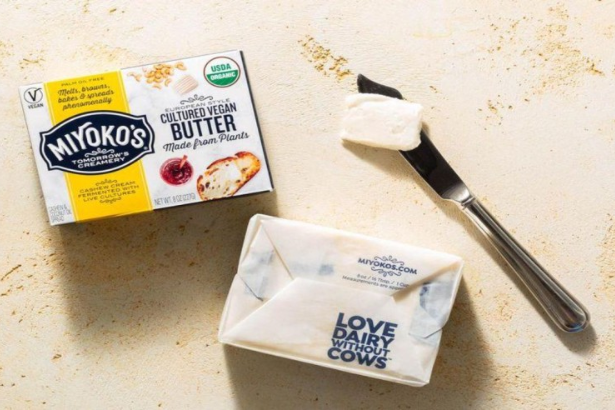
The butter recall 2026 has attracted renewed attention after the U.S. Food and Drug Administration classified a recall involving Miyoko’s Creamery European Style Salted Plant Milk Butter over concerns about possible contamination with yeast, mold and E. coli.
The recall affects a specific product and production lot, not every butter brand or every Miyoko’s Creamery product. According to the FDA information cited by Health and EatingWell, 1,304 cases were included in the recall. The affected product was distributed to 10 U.S. states.
The FDA classified the recall as Class II on October 23, 2026. That classification means the product may cause temporary or medically reversible health consequences, while the probability of serious adverse health consequences is considered remote.
The issue is receiving fresh attention online. A Google Trends screenshot supplied for this article shows searches for “butter” rising sharply before declining and then climbing again toward the end of the displayed 24-hour period. News results accompanying the graph include reports about the Miyoko’s Creamery recall.
The immediate priority for consumers is practical: identify the affected packaging, avoid consuming the recalled product, and consult official recall information if there is any uncertainty.
Background and Context: What Triggered the Butter Recall?
The recall concerns Miyoko’s Creamery European Style Salted Plant Milk Butter, a plant-based butter alternative distributed by Prosperity Organic Foods Inc., based in Boise, Idaho.
According to reporting by Health and EatingWell, the company initiated the voluntary recall on September 11, 2026. The FDA subsequently classified it on October 23.
The recall identifies possible contamination involving three categories:
- E. coli: A group of bacteria that includes strains capable of causing gastrointestinal illness and, in some cases, more serious complications.
- Yeast: Microorganisms that can cause food spoilage and may indicate a product quality problem when present at unacceptable levels.
- Mold: Fungi that can spoil food, with some molds capable of producing substances harmful to health.
The published reporting identifies these contamination concerns but does not establish that every package in the recalled lot contains all three contaminants.
It is also important to distinguish a recall from an outbreak announcement. The available reports describe a product recall over contamination concerns. They do not establish that the product caused a confirmed multistate outbreak.
Consumers should therefore focus on the precise product identifiers rather than assume that all plant-based butter products are affected.
Latest Update: Which Butter Product Has Been Recalled?
The affected product is Miyoko’s Creamery European Style Salted Plant Milk Butter.
Health.com reports the following identifying details from the FDA enforcement information.
Product identification table
| Product Detail | Information |
|---|---|
| Brand | Miyoko’s Creamery |
| Product | European Style Salted Plant Milk Butter |
| Package size | 8 ounces, or 227 grams |
| UPC | 857554005773 |
| Lot number on individual carton | 07871 |
| Lot number on outer shipping case | 1007871 |
| Best-by date | November 5, 2026 |
| Recalling distributor | Prosperity Organic Foods Inc. |
| Number of cases affected | 1,304 |
| Number of individual products reported | 7,824 |
| Storage | Refrigerated or frozen |
| FDA classification | Class II |
Important: Match the brand, product name, UPC, lot number and date against the official notice. Do not rely on the product name alone.
The outer shipping case uses a different lot code from the individual carton. Consumers checking an individual package should look for lot number 07871 and the November 5, 2026, best-by date.
The best-by date matters, but it is not sufficient by itself. A product should be treated as affected when its identifying details match the recall notice.
The recall covers a defined batch. It should not be interpreted as a warning against every product made by Miyoko’s Creamery or every plant-based butter on the market.
Where was the recalled butter distributed?
The FDA information reported by Health identifies distribution in the following 10 states:
- Connecticut
- Florida
- Georgia
- Iowa
- Illinois
- Indiana
- Maryland
- New Jersey
- New Hampshire
- Wisconsin
The reported distribution list does not mean that every retailer in these states sold the affected product.
Retailer-specific notices may provide additional information about individual store locations and sales. Consumers who purchased the identified product should check the recall information even if they bought it several weeks ago or placed it in the freezer.
For the latest product identifiers, consult the FDA enforcement report associated with this recall.
Why Is the Butter Being Recalled?
The recall is associated with possible contamination involving yeast, mold and E. coli.
Each concern has different implications.
E. coli contamination
E. coli is a broad group of bacteria. Some strains are harmless, while others can cause illness.
Symptoms of a gastrointestinal E. coli infection can include diarrhea, stomach cramps, nausea, vomiting and fever. Certain strains can cause more serious complications.
The available recall reporting does not establish the specific E. coli strain associated with this product. It would therefore be inaccurate to claim that a particular strain has been confirmed.
Anyone who has consumed a potentially affected product and develops concerning symptoms should contact a healthcare professional and explain the possible food exposure.
Yeast and mold
Yeast and mold can cause food spoilage. Their presence in a food product can indicate that it does not meet the required quality or safety standards.
The health implications depend on the organism, its concentration, the product and the circumstances of exposure. Some molds can produce toxins, but the available reporting does not establish that specific toxins were identified in this butter.
Consumers should not attempt to determine whether the recalled product is safe by smelling it, tasting it or checking whether visible mold is present.
What does an FDA Class II recall mean?
A Class II recall means exposure to the affected product may cause temporary or medically reversible adverse health consequences, or that the probability of serious adverse health consequences is remote.
It does not mean the product is guaranteed to cause illness. It also does not mean the product is safe to consume.
The appropriate response is to follow the recall instructions and avoid using any product that matches the affected identifiers.
What Consumers Should Do if They Have the Recalled Butter
If you have Miyoko’s Creamery European Style Salted Plant Milk Butter in your refrigerator or freezer, check its packaging before using it.
Step 1: Check the product label
Look for all of the following:
- Miyoko’s Creamery European Style Salted Plant Milk Butter
- 8-ounce package
- UPC 857554005773
- Lot number 07871
- Best-by date November 5, 2026
The outer shipping case may display lot number 1007871.
Step 2: Do not consume a matching product
If your product matches the recalled identifiers, do not eat it or use it as an ingredient in cooking or baking.
Heating food should not be treated as a substitute for following a recall notice.
Step 3: Dispose of it or return it
The safest practical course is to follow the official recall instructions and the retailer’s return policy. Published guidance recommends discarding the product or returning it to the store where it was purchased.
Do not give the recalled product to someone else or donate it for consumption.
Step 4: Clean surfaces if necessary
If the recalled butter has leaked or directly contacted a food preparation surface, clean the affected area thoroughly. Wash your hands after handling the packaging and follow ordinary food hygiene practices.
Avoid spreading residue to other foods or utensils.
Step 5: Seek medical advice if symptoms develop
If you consumed the affected butter and subsequently develop symptoms such as diarrhea, abdominal cramps, vomiting or fever, contact a healthcare professional.
Seek urgent medical attention for severe symptoms, signs of dehydration, bloody diarrhea or other alarming changes.
This article provides general consumer information, not an individual medical diagnosis.
Google Trends Analysis: Why Is “Butter” Trending?
The supplied Google Trends screenshot shows a noticeable rise in interest for the search term “butter.”
The curve remains relatively low early in the displayed period, rises sharply to a peak, falls, and then begins climbing again toward the right-hand edge of the graph. The interface also displays a trend breakdown for “butter recalled” and news headlines about the Miyoko’s Creamery recall.
This makes the recall a plausible explanation for at least some of the visible attention. However, the screenshot does not establish that the recall alone caused the search spike.
The term “butter” is broad and can attract searches related to food products, cooking, recipes, prices, nutrition and breaking news. The graph does not provide enough information to separate those motivations.
Google Trends presents normalized search interest rather than a direct count of all searches. The supplied screenshot also does not show a full geographic breakdown or a detailed comparison with other food safety stories.
For publication, the most defensible interpretation is that interest in butter increased during the displayed 24-hour period while recall-related stories were appearing in the news.
Suggested Google Trends image
Image title: Butter Recall 2026: Google Trends Search Interest
Alt text: Google Trends chart showing increased search interest for butter alongside news about the October 2026 butter recall.
Caption: Search interest for “butter” rose sharply in the supplied 24-hour snapshot as news outlets reported on a plant-based butter recall.
Description: Use the original screenshot supplied for this article. Crop it to emphasize the search term, graph and recall-related trend breakdown. Do not add invented search volumes or imply that the chart proves a direct causal relationship.
Google Trends tags and keywords
- butter recall 2026
- butter recalled
- Miyoko’s Creamery recall
- plant-based butter recall
- E. coli food recall
- yeast and mold contamination
- FDA food safety alert
- recalled butter October 2026
- food recall news
- food safety update
Three authoritative reference links
- FDA enforcement information for the recall.
- FDA guidance explaining recall classifications.
- FoodSafety.gov’s recall and outbreak information.
These sources should be used to establish the recall details and explain the classification. They should not be presented as independent measurements of Google Trends data.
Broader Implications: What This Recall Means for Consumers
The recall highlights an important principle of food safety: a product category can remain available even when a specific batch is subject to a recall.
Consumers should not assume that every product carrying the same brand name is affected. Equally, they should not dismiss a recall because the product looks normal or has been stored in a freezer.
The correct response is to identify the specific product and batch covered by the official notice.
Plant-based products need clear recall information too
Plant-based alternatives are a routine part of grocery shopping for people who avoid dairy, follow vegan diets or prefer certain ingredients.
Like other perishable foods, plant-based products require appropriate manufacturing controls, storage and handling. The fact that a product is plant-based does not remove the need to check recall notices.
Clear product identifiers help shoppers act quickly
A useful recall notice identifies the brand, product name, package size, UPC, lot number, date and distribution area.
These details help shoppers distinguish affected products from other items that may look similar.
Online attention can help spread safety information
The search-interest spike in the supplied screenshot illustrates how a food recall can become a rapidly discussed topic.
For publishers, the challenge is to make information easy to find without exaggerating the danger. A clear headline, an identification table and practical instructions are more useful than broad claims that all butter is unsafe.
The Tech Marketer could explore this broader issue in a related article about how Google Trends helps publishers identify emerging consumer safety stories.
Suggested internal link: The Tech Marketer’s consumer technology and digital trends coverage.
Related History: How Food Recalls Work
Food recalls can begin when a company identifies a potential problem, when a retailer reports an issue, or when a regulatory investigation identifies a concern.
The exact process depends on the product, the risk and the applicable regulations.
In the United States, the FDA publishes recall and enforcement information for products under its jurisdiction. The agency’s classification system helps communicate the potential health consequences associated with a recall.
A Class II classification is different from a Class I classification, which is used when there is a reasonable probability that exposure to a product will cause serious adverse health consequences or death.
The classification is not a prediction that every consumer will become ill. It is a regulatory assessment of the risk associated with the recalled product.
FoodSafety.gov also explains that recall identification is specific. Consumers should compare the details on their product with the details in the official notice rather than relying on a general headline.
This is why the UPC and lot number are so important in the Miyoko’s Creamery case.
What Happens Next?
The immediate concern is whether consumers still have affected packages in their refrigerators or freezers.
Retailers and distributors may provide further information about returns and refunds. Readers should monitor the FDA’s recall information and any relevant retailer notice for updates.
Three developments are worth watching:
- Recall status: Whether the FDA or the recalling company publishes additional information about the affected product.
- Consumer guidance: Whether retailers clarify return, refund or disposal procedures.
- Health updates: Whether authorities report additional information about illness associated with the product.
The available reporting cited for this article does not establish that a confirmed outbreak occurred. Any new claims about illnesses should be checked against authoritative sources before publication.
Readers should not wait for another news update before avoiding a product that matches the recall identifiers.
Conclusion
The butter recall 2026 concerns Miyoko’s Creamery European Style Salted Plant Milk Butter distributed by Prosperity Organic Foods Inc. The reported recall covers 1,304 cases, with possible contamination involving yeast, mold and E. coli.
The affected individual packages can be identified by UPC 857554005773, lot number 07871 and a best-by date of November 5, 2026. The reported distribution covered 10 U.S. states.
The FDA classified the recall as Class II on October 23, indicating the possibility of temporary or medically reversible health consequences while serious consequences are considered unlikely.
Consumers should check their refrigerators and freezers, avoid consuming any product that matches the recalled identifiers, and follow official instructions for disposal or return.
The Google Trends screenshot shows increased interest in “butter” during the same general news period. It offers a useful illustration of the attention food safety stories can receive, but it does not establish the exact cause or number of searches.
The central message is simple: check the label, verify the lot, and rely on official recall information rather than assumptions about the entire product category.
Frequently Asked Questions
1. Which butter is being recalled in 2026?
The recall covers Miyoko’s Creamery European Style Salted Plant Milk Butter, distributed by Prosperity Organic Foods Inc. The affected product is an 8-ounce package with UPC 857554005773, lot number 07871 and a November 5, 2026, best-by date.
2. Why was Miyoko’s Creamery butter recalled?
The recall concerns possible contamination involving yeast, mold and E. coli. Consumers should consult the official recall notice for the exact product details and current instructions.
3. Which states received the recalled butter?
The reported distribution includes Connecticut, Florida, Georgia, Iowa, Illinois, Indiana, Maryland, New Jersey, New Hampshire and Wisconsin.
4. Is all Miyoko’s Creamery butter recalled?
The reported recall concerns a specific product and lot. It should not be interpreted as a recall of every Miyoko’s Creamery product.
5. What does a Class II recall mean?
An FDA Class II recall means exposure may cause temporary or medically reversible health consequences, or that the probability of serious adverse health consequences is remote.
6. What should I do if I have the recalled butter?
Do not consume a product that matches the recall identifiers. Follow official instructions and the retailer’s policy for returning or discarding it.
7. Can I cook with the recalled butter if I heat it first?
No. Do not try to make a recalled product safe by cooking or baking with it. Follow the recall instructions instead.
8. What symptoms can E. coli cause?
Depending on the strain, E. coli can cause diarrhea, stomach cramps, nausea, vomiting and fever. Some infections can lead to serious complications. Seek medical advice if symptoms develop after possible exposure.
9. Has the recalled butter caused a confirmed outbreak?
The sources cited in this article describe a recall over contamination concerns. They do not establish a confirmed multistate outbreak linked to the product.
10. Where can consumers find official information about the recall?
Consumers should consult the FDA enforcement information and official recall guidance. They can also check FoodSafety.gov for broader information about food recalls and outbreaks.
Sources & References
- U.S. Food and Drug Administration: Enforcement Report for the Miyoko’s Creamery butter recall. The FDA record is the primary source for the recall classification and product identifiers.
- Health: “FDA Announces Butter Recall in 10 States Due to Yeast, Mold, and E. Coli.” Published October 27, 2026. The article summarizes the affected product, distribution states and recall classification.
- EatingWell: “Butter Recalled for Yeast, Mold and E. Coli Contamination: Here’s What to Know.” Published October 27, 2026. The article explains the consumer precautions and potential contamination concerns.
- PIX11: “Butter Recalled for Yeast, Mold and E. Coli: FDA.” The report provides additional details on the affected product and distribution.
- FoodSafety.gov: Recalls and Outbreaks. A general government resource explaining how consumers can find food recall information.
- Google Trends screenshot: User-supplied image showing the search-interest curve for “butter” and associated recall-related news results. The screenshot is used as visual context, not as a verified search-volume dataset.