

By using this site, you agree to the Privacy Policy and Terms of Use.
Accept
The Tech MarketerThe Tech MarketerThe Tech Marketer
  • Home
  • Technology
  • Entertainment
    • Memes
    • Quiz
  • Marketing
  • Politics
  • Visionary Vault
    • Whitepaper
Reading: Augmented Reality and the Internet of Things
Share
Notification Show More
Font ResizerAa
The Tech MarketerThe Tech Marketer
Font ResizerAa
  • Home
  • Technology
  • Entertainment
  • Marketing
  • Politics
  • Visionary Vault
  • Home
  • Technology
  • Entertainment
    • Memes
    • Quiz
  • Marketing
  • Politics
  • Visionary Vault
    • Whitepaper
Have an existing account? Sign In
Follow US
© The Tech Marketer. All Rights Reserved.
The Tech Marketer > Blog > IOT > Augmented Reality and the Internet of Things
IOT

Augmented Reality and the Internet of Things

Last updated:
8 years ago
Share
SHARE

Augmented Reality (AR) and the Internet of Things (IoT) are two emerging technologies that are rapidly gaining popularity in various industries. AR is the technology that overlays digital information on top of the physical world, while IoT refers to the network of interconnected devices that can communicate with each other and exchange data. In this blog, we will explore the basics of AR and IoT, their applications, and the potential benefits of combining these two technologies.

Augmented Reality (AR) is a technology that allows digital information to be superimposed onto the real world. AR can be experienced through a variety of devices, such as smartphones, tablets, smart glasses, and headsets. AR technology uses cameras, sensors, and other devices to track the user’s position and movement in the physical world and then overlays digital information, such as images, text, or video, onto the user’s view. AR has a wide range of applications, such as entertainment, gaming, education, and retail.

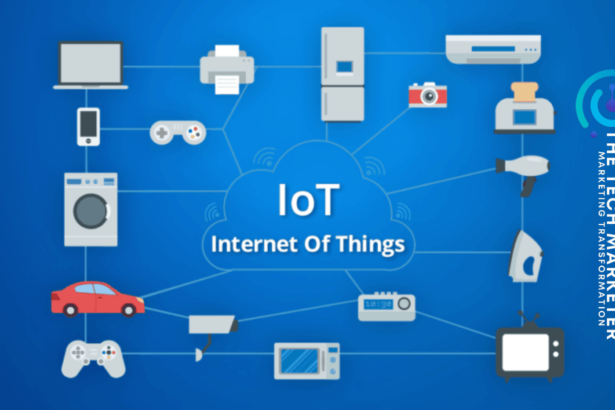
The Internet of Things (IoT) is the network of interconnected devices that can communicate with each other and exchange data. IoT devices can be sensors, cameras, smart home appliances, and other devices that are connected to the internet. IoT devices can collect and share data in real-time, which can be analyzed using artificial intelligence (AI) and machine learning (ML) algorithms to provide insights and make predictions. IoT has a wide range of applications, such as smart homes, healthcare, transportation, and industrial automation.

When combined, AR and IoT can create a powerful tool for enhancing user experience and providing real-time information. For example, AR can be used to display real-time data from IoT devices, such as temperature, humidity, or air quality, on top of the physical world. This can help users make informed decisions, such as adjusting the thermostat or opening a window to improve air quality. AR can also be used to enhance training and education by overlaying digital information on top of real-world objects, such as machinery or equipment. This can help users understand complex concepts and procedures more easily.

In retail, AR and IoT can be used to create immersive shopping experiences that allow customers to try products virtually and receive personalized recommendations based on their preferences and behavior. AR can be used to overlay digital information, such as product information, reviews, or pricing, on top of physical products, making it easier for customers to make informed purchasing decisions. IoT devices can be used to collect data on customer behavior, such as browsing history and purchase history, which can be used to provide personalized recommendations and offers.

In conclusion, the combination of AR and IoT has the potential to create a powerful tool for enhancing user experience and providing real-time information. This technology can be used in various industries, such as healthcare, retail, education, and entertainment, to create immersive and interactive experiences that can improve the quality of life for users. As AR and IoT continue to evolve, it is essential to stay up-to-date with the latest trends and developments in these technologies to stay competitive and relevant in today’s digital world.

You Might Also Like

Kalodata: Elevating TikTok E-Commerce with Advanced Data Analysis

Unlocking Marketing Potential with Hockeystack: The Future of Analytics and Attribution

Unlocking Sales Organization Insights: The Power of RepVue in Strategic Market Analysis

Transforming Wellness and Marketing Using Health Monitoring Rings as a Key to Business Strategy

From Fields to Pixels: How Designtemplate.io Became the Western IT Hub’s Premier Graphic Design Solution

Share This Article
Facebook LinkedIn Email Copy Link Print
What do you think?
Love0
Sad0
Happy0
Sleepy0
Angry0
Dead0
Wink0
Previous Article AI, Machine Learning, and the Internet of Things
Next Article Blockchain and the Internet of Things

Latest News

  • Google Search AI Mode can use Gmail and Photos to get to know you

    Google is helping AI Mode to provide more personalized responses in Search by allowing the chatbot to analyze your Gmail and Google Photos accounts. After launching for Gemini AI last week, "Personal Intelligence" is now coming to tailor AI Mode search results to your interests and daily life by gathering information from your emails and

  • Lenovo wants other companies to make accessories for its modular laptops.

    Two years ago, Lenovo introduced a collection of modular Magic Bay accessories for its ThinkBook 16p. They attached to a magnetic pin connector at the top of the laptop's display and added functionality like an improved 4K webcam, or LTE connectivity. The company has since expanded Magic Bay compatibility to more of its laptops and

  • AMD’s faster Ryzen 7 9850X3D CPU arrives on January 29th for $499

    AMD announced an improved version of its popular Ryzen 7 9800X3D processor at CES earlier this month, and it's now confirming a release date and pricing today. The new Ryzen 7 9850X3D will debut on January 29th, priced at $499. That's $20 more than the initial retail pricing of the 9800X3D, and this faster 9850X3D

  • This plugin uses Wikipedia’s AI-spotting guide to make AI writing sound more human

    A new tool aims to help AI chatbots generate more human-sounding text - with the help of Wikipedia's guide for detecting AI, as reported by Ars Technica. Developer Siqi Chen says he created the tool, called Humanizer, by feeding Anthropic's Claude the list of tells that Wikipedia's volunteer editors put together as part of an

  • Nintendo is following up Alarmo with a weird Talking Flower in March

    After sharing a brief look at its new Talking Flower toy during a Nintendo Direct showcase last September that generated more questions than answers, Nintendo has finally revealed more details about what the interactive toy actually does. It shares some functionality with Nintendo's Alarmo alarm clock, but the Talking Flower seems more like a talkative

- Advertisement -
about us

We influence 20 million users and is the number one business and technology news network on the planet.

Advertise

  • Advertise With Us
  • Newsletters
  • Partnerships
  • Brand Collaborations
  • Press Enquiries

Top Categories

  • Artificial Intelligence
  • Technology
  • Bussiness
  • Politics
  • Marketing
  • Science
  • Sports
  • White Paper

Legal

  • About Us
  • Contact Us
  • Privacy Policy
  • Affiliate Disclaimer
  • Legal

Find Us on Socials

The Tech MarketerThe Tech Marketer
© The Tech Marketer. All Rights Reserved.
Join Us!

Subscribe to our newsletter and never miss our latest news, podcasts etc..

Zero spam, Unsubscribe at any time.
Welcome Back!

Sign in to your account

Lost your password?
