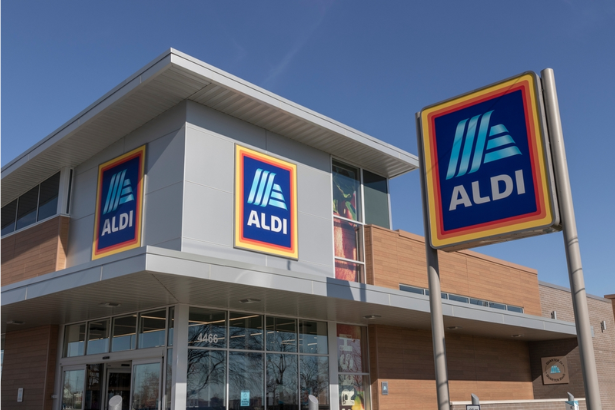
ALDI just turned 50 in the US. To celebrate, it is rebuilding its stores from scratch — and Florida is where the experiment starts.
The ALDI new US store format is live and being tested right now at the Promenade Shoppes in Aventura, Florida, and a second Miami location, with shopper response data being collected throughout 2026 before a potential nationwide rollout. The redesign is the product of a 14-year collaboration between ALDI and Landini Associates, the design firm that previously rebuilt ALDI’s stores in Australia and China. What is coming is a shift from the chain’s traditionally utilitarian, warehouse-style layout toward something closer to a modern boutique grocery experience, with more fresh produce, organic options, grab-and-go meals, and a modular design system that can flex to fit any store footprint from a compact urban shop to a large suburban location. ALDI is not changing what it sells. It is changing how it feels to shop there.
Background and Context
ALDI has operated in the United States since 1976 and built its entire brand around a single proposition: high-quality private label products at the lowest possible prices, delivered through an aggressively efficient store model. The quarter-deposit shopping cart. The bring-your-own-bag policy. The limited SKU count. The lack of a traditional deli counter. Every operational choice was designed to strip cost from the system and pass the savings to shoppers.
That model worked extraordinarily well. ALDI grew to become one of the most shopped grocery chains in America, attracting customers who would once have been embarrassed to admit they shopped there and eventually becoming a cultural touchstone for value-conscious consumers across every income bracket.
But the grocery market has shifted. Whole Foods, Trader Joe’s, and an expanding range of specialty and natural food chains have educated a generation of shoppers to expect a more curated, visually appealing store experience alongside competitive pricing. The Aldi shopper of 2026 is not the same as the Aldi shopper of 2006, and the store design that felt like smart efficiency to one generation can feel like spartan austerity to the next.
The aim of the store redesign is to “recalibrate” how ALDI operates in the current US grocery marketplace, where topics such as value and expanding private label assortments are top of mind with consumers and changing the competitive landscape.
The redesign is the culmination of a 14-year collaboration targeted at modernizing ALDI’s physical retail presence while keeping the operational simplicity that underpins its low-price strategy.
Latest Update
Coverage of the Florida test and the potential nationwide implications intensified over the past week, with consumer and trade publications both picking up the story.
Full reporting from the ALDI store format story:
- ALDI Just Announced a Big Change to US Stores — Allrecipes
- Your Palm Beach County ALDI Could Look Different Soon. Here’s Why — The Palm Beach Post
- ALDI Is Testing Out a New Store Format in Florida — Here’s What’s Changing — Southern Living
Key confirmed details from the rollout:
- ALDI began testing a new global store format in Aventura, Florida, at the Promenade Shoppes at 20417 Biscayne Blvd, in September 2025, with further testing and expansion planned through 2026
- The new format features modular, adaptable layouts developed with Landini Associates, designed to work across store types from compact urban locations to large suburban formats while maintaining a consistent global look Yahoo!
- The redesign shifts ALDI from a utilitarian feel toward a more modern boutique-style experience, with more space for fresh produce, organic items, and grab-and-go meals Yahoo!
- Refinement of the new format by local teams is scheduled to begin in the second quarter of 2026, with Landini Associates confirming further experimentation with new store formats will continue this year
- ALDI plans to operate 3,200 stores in the US by the end of 2028, with more than 180 new stores planned for 2026 alone, including the ongoing conversion of Winn-Dixie locations Massmarketretailers
What Exactly Is Changing in the New Store Format
The physical changes coming to ALDI locations under the new design are meaningful and deliberate.
Modular layouts are the foundational innovation. The layouts are designed to adapt to various retail spaces, from compact urban sites to larger suburban stores, while maintaining a consistent global look. Yahoo! This is a significant operational change for a chain that has historically built stores to a fairly standard template. Modular design means ALDI can now customize floor plans to fit converted Winn-Dixie locations, urban storefronts, and large-footprint suburban boxes without losing brand coherence.
Fresh produce and organic expansion is the most visible consumer-facing change. ALDI has always carried produce, but the new format allocates significantly more floor space to fresh items, organic selections, and the grab-and-go meal category that has become one of the fastest-growing segments in grocery retail. This positions ALDI more directly against Trader Joe’s and Whole Foods’ prepared food sections rather than simply against traditional discount grocers.
Boutique aesthetic and updated branding round out the in-store changes. To celebrate its 50th birthday in the US, ALDI also announced a new website and a total overhaul of in-store ALDI brands and packaging. Massmarketretailers The combined effect of new packaging, updated store design, and expanded fresh categories is an attempt to shift ALDI’s visual identity without abandoning the price leadership that defines its competitive position.
Expert Insights and Analysis
The strategic logic behind the redesign is clear: ALDI wants to compete on experience as well as price, and the Florida test is designed to answer the question of whether its existing customers will accept that shift and whether new customers will be attracted by it.
The new format aligns with growing consumer demand for healthier and more convenient options, potentially attracting a broader customer base. Yahoo!
ALDI’s timing is also notable. The company acquired approximately 400 Winn-Dixie and Harvey Supermarket stores from Southeastern Grocers in 2024, giving it a large number of existing locations to retrofit and convert. The initiative runs concurrently with massive expansion in Florida, including the ongoing conversion of Winn-Dixie stores into the new ALDI format, with more than 180 new stores planned for 2026. A modular design system that can adapt to the varied footprints of those acquired stores is not just aesthetically interesting. It is operationally essential.
Refinement will be undertaken by ALDI’s local teams across remaining territories beginning in the second quarter of 2026. The design for ALDI’s new global model was managed through the company’s International Real Estate Committee, under the leadership of ALDI USA and the day-to-day stewardship of ALDI Australia, with input from each of the five territories. Chain Store Age That global coordination signals this is not a US-only experiment. It is the American implementation of a global rebrand, making Florida’s pilots the leading edge of a worldwide store transformation.
Broader Implications
What ALDI is doing in Aventura and Miami represents something larger than a single chain’s store redesign. It is a signal about how the discount grocery segment is responding to the post-pandemic consumer environment.
The pandemic permanently accelerated several grocery trends: online ordering, prepared meal consumption, health-conscious shopping, and a general expectation of more curated, less chaotic in-store experiences. Discount grocers that succeeded on the pure efficiency model before 2020 are now navigating a customer base that wants that efficiency but also wants to enjoy the experience of shopping.
If the Florida pilots succeed, ALDI could rapidly deploy the modular format to new stores, accelerating its $9 billion expansion and reinforcing brand consistency globally. Alternatively, if feedback reveals challenges such as higher costs or customer resistance, the chain might adopt a hybrid approach, blending elements of the new design with existing layouts. Yahoo!
The $9 billion expansion figure is the number that puts this in context. ALDI is not tweaking a few store layouts. It is deploying significant capital to become a fundamentally different kind of grocery chain, one that can credibly compete for the weekly shop of a customer who also shops at Trader Joe’s, while retaining the price-sensitive customer who has always been the core.
For deeper analysis of how major retailers are redesigning their physical footprints to respond to changing consumer behavior and what it means for the grocery industry in 2026, The Tech Marketer covers the business and retail technology stories driving the market forward.
Related History and Comparable Redesigns
ALDI is not the first discount retailer to attempt a premium-adjacent redesign without abandoning its low-price positioning. Target executed a version of this strategy through the 2010s, investing heavily in store aesthetics, private label design, and fresh food expansion while maintaining price competitiveness that separated it from Whole Foods and other premium chains.
Trader Joe’s, which is owned by ALDI Nord (a separate family-owned company from ALDI South, which operates US ALDI stores), has demonstrated for decades that a curated, limited-SKU grocery model can feel premium and joyful despite its fundamentally efficient structure. The warm wood tones, hand-painted signs, and friendly nautical branding are all deliberate design choices that communicate warmth rather than austerity.
The new ALDI store design was first applied to its Australia and China stores, as well as the small-format ALDI Corner Store concept, before being adapted for the US market. Chain Store Age That international track record gives the Landini Associates design system real-world validation across very different retail markets, which strengthens the case for the US pilot.
ALDI recently entered its 40th US state with the opening of a new store in Portland, Maine, and a 41st state entry into Colorado is planned within the next five years. Chain Store Age The geographic expansion and the store redesign are being executed simultaneously, which is either a bold operational bet or a well-coordinated growth strategy depending on how the Florida data comes back.
What Happens Next
The Aventura and Miami pilot stores will run through 2026, generating customer response data that will determine whether and how quickly the new format rolls out nationally. Refinement of the new store format by local teams across remaining territories begins in the second quarter of 2026. Chain Store Age
ALDI plans to operate 3,200 US stores by 2028. Massmarketretailers At that scale, a consistent, attractive, and operationally flexible store design is not optional. It is a requirement for managing a network of that size across dozens of market types, building footprints, and regional consumer expectations.
The Florida results will also inform how ALDI handles the Winn-Dixie conversion pipeline. Converting hundreds of legacy supermarket buildings into ALDI locations is itself a major design challenge, and the modular system being tested now is likely the template that will govern how those conversions look and function.
Shoppers in the Southeast, particularly in Florida, will be the first to see the new format arrive in their neighborhood stores. Everyone else is watching the data.
Conclusion
The ALDI new US store format is not a cosmetic refresh. It is a strategic repositioning that asks whether the chain can modernize its shopping experience without sacrificing the operational efficiency that makes its prices possible. The Aventura and Miami pilots are the proving ground for an answer that will affect thousands of stores and millions of weekly shoppers across the country.
At 50 years in the US market, ALDI has earned the right to evolve. The question is whether its customers want it to, and whether the new format can attract new shoppers without alienating the regulars who came for the quarter carts and the Kirkland-style private label bargains.
The data is being collected now. The national rollout decision is coming. And Florida shoppers are the first to vote with their feet.
FAQ
1. What is the ALDI new US store format and where is it being tested? ALDI is testing a new modular store format developed with Australian design firm Landini Associates at two Florida locations: the Promenade Shoppes in Aventura and a Miami location. Testing began in September 2025 and will continue through 2026. The new format features a boutique-style aesthetic, expanded fresh produce, organic products, grab-and-go meals, and layouts that adapt to different store footprints.
2. Will the ALDI new store format come to all US locations? If the Florida pilot produces positive customer response data, ALDI plans to deploy the modular format broadly as part of its $9 billion US expansion. The company is targeting 3,200 US stores by 2028 and converting more than 180 new locations in 2026 alone. A nationwide rollout is the goal, but depends on what the Florida data shows.
3. What exactly is changing inside the new ALDI store format? The new format adds more floor space for fresh produce, organic items, and grab-and-go prepared meals. It introduces a modular layout system that can be customized to any store footprint. The overall aesthetic shifts from utilitarian and warehouse-style to a more modern boutique look. ALDI is also updating its in-store brand packaging and launching a new website as part of its 50th anniversary overhaul.
4. Who designed the new ALDI store format? The new format was designed by Landini Associates, the firm that previously redesigned ALDI’s stores in Australia and China and created the ALDI Corner Store small-format concept. The project was managed globally through ALDI’s International Real Estate Committee, with ALDI Australia leading the day-to-day design process and input from each of ALDI’s five global territories.
5. How does the new ALDI store format affect the chain’s expansion plans? The timing of the redesign aligns directly with ALDI’s most aggressive US expansion period. The modular design system is specifically intended to accommodate the wide variety of building footprints ALDI is inheriting through its conversion of former Winn-Dixie and Harvey Supermarket locations, which it acquired from Southeastern Grocers in 2024 across Alabama, Florida, Georgia, Louisiana, and Mississippi.
Sources & References
- ALDI Just Announced a Big Change to US Stores — Allrecipes
- Your Palm Beach County ALDI Could Look Different Soon. Here’s Why — The Palm Beach Post
- ALDI Is Testing Out a New Store Format in Florida — Here’s What’s Changing — Southern Living
- Aldi Tests New Store Format — Store Brands
- Aldi Testing New Store Format in US — Chain Store Age
- Aldi Tests Modular Store Design in US Revamp — MSN/Forbes