Introduction
US manufacturing automation is gaining momentum as American factories look for new ways to increase productivity, control operating costs and strengthen domestic production.
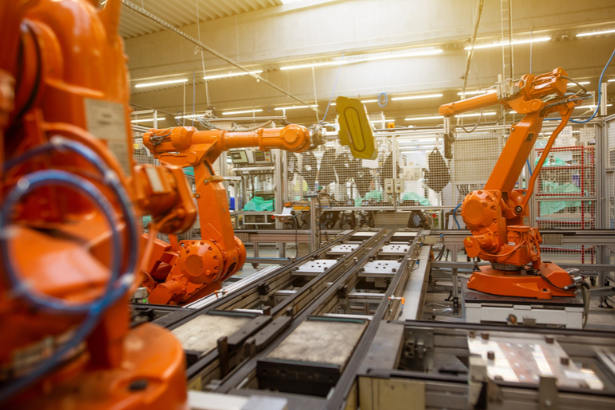
Industrial robots are no longer limited to large automotive assembly plants. They are increasingly finding applications in electronics manufacturing, pharmaceuticals, metalworking, plastics, food processing and other industrial sectors.
The latest industry figures offer a clear indication of this changing landscape.
According to the Association for Advancing Automation (A3), North American companies ordered 10,989 industrial robots during the third quarter of 2026, representing a 24.8% increase compared with the same period last year. The total value of those orders reached $723.5 million.
Collaborative robot orders also recorded significant growth, increasing approximately 56% year over year.
These developments point toward a broader shift in industrial investment. Manufacturers are exploring automation not simply to replace repetitive manual work, but to improve production consistency, increase operational flexibility and respond more effectively to changing customer demand.
For American businesses, the opportunity is significant.
Manufacturers face pressure from international competitors, changing supply chains, rising operating expenses and shortages of workers with specialized technical skills. Automation offers one way to address several of these challenges.
However, installing industrial robots is not a simple solution. Companies must consider investment costs, workforce training, cybersecurity, maintenance and the ability to integrate new technology into existing factories.
The next phase of American manufacturing may depend on how successfully businesses balance automation with human expertise.
Background and Context: Why American Factories Are Investing in Automation
Manufacturing has always evolved alongside technological developments.
From mechanized production lines to computer-controlled machinery, each major industrial transformation has changed how factories operate.
Today, robotics, artificial intelligence, machine vision and connected industrial systems are driving another shift.
Traditional manufacturing facilities often depend on workers to perform repetitive tasks such as material handling, welding, packaging, inspection and assembly.
These processes can be physically demanding, time-consuming and difficult to scale when production volumes increase.
Industrial robots can perform many of these tasks with a high degree of repeatability.
For manufacturers, this creates several advantages:
- Higher production consistency.
- Faster completion of repetitive tasks.
- Improved workplace safety in hazardous environments.
- Better utilization of production equipment.
- Reduced dependence on manual handling.
- More predictable manufacturing processes.
The growing interest in automation is also connected to the changing economics of American manufacturing.
Businesses are evaluating whether advanced production technology can help them operate more competitively within the United States.
This is particularly relevant for industries such as semiconductors, electronics, pharmaceuticals and automotive components, where production precision and consistency are important.
The Latest Robotics Numbers: North American Orders Increase 24.8%
The strongest evidence of the current automation momentum comes from A3’s third-quarter 2026 robotics market report.
North American companies ordered 10,989 robots worth approximately $723.5 million during Q3 2026.
Compared with Q3 2025:
- Robot orders increased 24.8% in units.
- Order value increased 26.1%.
- Collaborative robot orders increased approximately 56%.
- Total orders for the first nine months reached 28,984 units.
The collaborative robot category recorded 1,831 orders during the quarter, accounting for 16.7% of all robot units ordered.
These numbers make Q3 the strongest quarter of 2026 so far for North American robot orders.
The growth also extends beyond traditional automotive manufacturing.
A3 reported particularly strong increases in automotive components, semiconductors, electronics, plastics, life sciences and metals.
This suggests that industrial automation is becoming increasingly diversified across the manufacturing economy.
Latest Update: Industrial Robot Orders Surge Across North America
The October 28, 2026 announcement from A3 provides an important look at where manufacturers are investing.
The data shows that the latest growth is not coming from a single industrial segment.
Instead, different manufacturing industries are increasing their demand for robotics for different operational reasons.
1. Automotive Component Manufacturers Lead the Growth
Automotive component manufacturers recorded a 90.4% increase in robot orders during Q3 2026 compared with the same quarter in 2025.
These suppliers produce components used in vehicle manufacturing, including structural parts, mechanical systems and other assemblies.
Automation can help suppliers improve manufacturing precision, increase production capacity and meet the requirements of automotive customers.
The increase is particularly interesting because automotive original equipment manufacturers (OEMs) recorded a much smaller 7.5% increase in quarterly robot orders.
This suggests that investment momentum is developing differently across the automotive production ecosystem.
2. Semiconductor and Electronics Manufacturing Accelerates
The semiconductor, electronics and photonics category recorded a 97.6% increase in robot orders during Q3.
This is one of the strongest industry-level increases in the A3 report.
Electronics manufacturing often requires highly controlled production environments and precise handling of delicate components.
Robotics can support:
- Component placement.
- Material handling.
- Automated inspection.
- Precision assembly.
- Packaging and testing.
- Repetitive production operations.
As manufacturers invest in electronics and semiconductor capacity, automation becomes an important part of production planning.
3. Life Sciences and Pharmaceutical Manufacturing Expands
Robot orders in life sciences, pharmaceuticals and biomedicine increased 38.7% year over year.
Manufacturers in these industries operate under strict requirements for quality, consistency and process control.
Automation can help companies manage repetitive production tasks, material handling and packaging while supporting more consistent manufacturing processes.
4. Plastics, Rubber and Metals Also See Strong Demand
The report identified additional growth across several industrial categories.
| Manufacturing industry | Q3 2026 robot order growth |
|---|---|
| Automotive components | +90.4% |
| Semiconductors, electronics and photonics | +97.6% |
| Plastics and rubber | +67.7% |
| Life sciences, pharma and biomedicine | +38.7% |
| Metals | +37.0% |
| Automotive OEMs | +7.5% |
| Food and consumer goods | -23.7% |
These figures show why factory automation is becoming a broader manufacturing investment rather than an exclusively automotive technology.
Importantly, these are North American robot order growth figures, not US-only installation statistics.
Source: A3 Q3 2026 Robotics Market Results.
Collaborative Robots: Why Cobots Are Becoming Important for American Factories
One of the most interesting developments in the 2026 manufacturing market is the growth of collaborative robots, commonly known as cobots.
Traditional industrial robots are often designed to operate inside dedicated work cells, with physical barriers separating machines from workers.
Cobots are designed to support work alongside people in applications that are specifically engineered and assessed for safe human-robot interaction.
They can be used for tasks such as:
- Machine tending.
- Assembly assistance.
- Packaging.
- Material handling.
- Product inspection.
- Repetitive component placement.
The latest A3 figures show that collaborative robot orders increased approximately 56% in Q3 2026.
Manufacturers ordered 1,831 collaborative robots during the quarter, worth approximately $63.8 million.
Cobots represented 16.7% of all robot units ordered.
This growth is important because collaborative robots can offer a more flexible entry point into automation.
For smaller manufacturers, a conventional industrial robot installation may require extensive facility changes, dedicated safety systems and significant integration work.
Cobots can sometimes be deployed in more adaptable configurations, depending on the application and its safety requirements.
That flexibility makes them particularly interesting for manufacturers with changing production requirements.
However, collaborative does not automatically mean safe without additional controls. Proper risk assessments, safety systems and application-specific safeguards remain essential.
Why US Manufacturing Automation Is Accelerating
Several factors are contributing to the growing interest in factory automation.
1. Workforce Challenges Are Encouraging Automation
Finding and retaining skilled manufacturing workers remains a major concern for many American businesses.
Factories need employees who can operate machinery, maintain equipment, inspect products and manage production systems.
Some manufacturing tasks are physically demanding or repetitive, making recruitment and retention more difficult.
Robots can help manufacturers automate selected activities while allowing employees to concentrate on more complex responsibilities.
For example, a robotic arm might handle repetitive material loading while an operator supervises production quality and equipment performance.
This changes the nature of manufacturing work rather than necessarily eliminating every position connected to the process.
However, automation can reduce demand for certain repetitive production tasks. Its effect on employment will depend on the industry, the type of technology adopted and how companies reorganize their workforce.
2. Manufacturers Want Higher Production Capacity
Increasing production capacity without constructing an entirely new factory can be an attractive proposition.
Robotics can help manufacturers increase the amount of work completed within an existing facility.
Automated systems can perform repetitive processes consistently and operate across multiple shifts when supported by appropriate maintenance and supervision.
This can help businesses respond to customer demand without relying exclusively on additional manual labour.
3. American Companies Want Stronger Domestic Manufacturing
Supply chain disruptions and international competition have encouraged businesses to reconsider where products and components are manufactured.
Reshoring and domestic manufacturing investment have become important strategic considerations.
Automation can support this strategy by improving the productivity of US-based manufacturing facilities.
If a factory can produce more efficiently, companies may find domestic production more commercially attractive.
However, robotics alone cannot eliminate the cost differences between countries. Energy, materials, labour, logistics, taxes and access to skilled workers remain important factors.
4. Artificial Intelligence Is Making Robots More Capable
Artificial intelligence is changing how industrial machines interpret their surroundings and respond to production conditions.
Traditional robots generally follow programmed instructions.
Newer AI-enabled systems can use computer vision, sensor data and machine-learning models to perform more adaptive tasks.
Potential applications include:
- Identifying defective products.
- Recognizing different components.
- Adjusting robotic movements.
- Detecting production irregularities.
- Supporting predictive maintenance.
- Improving automated quality inspection.
This creates opportunities for manufacturers that need more flexibility than conventional fixed automation can provide.
However, AI-enabled robotics still requires testing, integration and human oversight, particularly in safety-critical production environments.
5. Manufacturers Want Greater Operational Consistency
Manufacturing businesses must deliver products that meet specific quality standards.
Manual processes can introduce variability, particularly when production volumes are high.
Robotics can improve repeatability in carefully controlled applications.
For manufacturers operating in electronics, automotive components and pharmaceuticals, consistency can be a significant operational advantage.
Smart Factories: The Next Stage of Industrial Automation
Industrial robotics is only one part of the wider smart manufacturing movement.
Smart factories combine connected machines, industrial sensors, production software, analytics and automation systems.
The objective is to create manufacturing environments where equipment and production processes can share information and respond more effectively to changing conditions.
Industrial Internet of Things
The Industrial Internet of Things, or IIoT, connects manufacturing equipment through sensors and communication systems.
These sensors can monitor temperature, vibration, pressure, machine performance and other operational measurements.
Factory managers can use this information to identify equipment problems before they lead to production interruptions.
Predictive Maintenance
Traditional maintenance often follows a fixed schedule or takes place after a machine breaks down.
Predictive maintenance uses equipment data to identify signs of potential failure.
This can help manufacturers schedule repairs more efficiently and reduce unexpected downtime.
Digital Twins
A digital twin is a virtual representation of a physical machine, process or facility.
Manufacturers can use digital models to simulate production changes, examine equipment performance and test certain operational improvements before implementing them in the real factory.
AI-Powered Quality Inspection
Machine vision systems can inspect products using cameras and AI-powered image analysis.
These systems may identify scratches, dimensional irregularities, missing components and other quality problems.
This is particularly useful in production environments where large quantities of products must be inspected consistently.
Together, these technologies are moving factories toward more connected and data-driven production systems.
What Is the Difference Between Industrial Robots, Cobots and Smart Factories?
The terms are related, but they describe different parts of manufacturing automation.
| Technology | Main purpose | Example application |
|---|---|---|
| Industrial robots | Automate production tasks | Welding automotive components |
| Collaborative robots | Support human-machine collaboration | Assisting with assembly |
| Machine vision | Inspect and identify products | Detecting manufacturing defects |
| AI-powered automation | Improve decision-making and adaptability | Identifying production irregularities |
| Smart factories | Connect machines, software and production data | Monitoring an entire production facility |
| Digital twins | Simulate physical systems | Testing factory production changes |
Manufacturers do not necessarily need to implement every technology at once.
Many companies begin with one repetitive process, evaluate the results and gradually expand automation across their facilities.
The Business Case: How Robotics Can Improve Factory Productivity
Investing in robotics involves more than purchasing a machine.
Manufacturers must evaluate the full financial impact of an automation project.
Consider a factory that uses workers to perform repetitive component-loading operations.
An automated system could potentially improve production consistency, reduce manual handling and allow employees to perform other tasks.
However, the initial investment may include:
- Robot hardware.
- Installation and integration.
- Safety equipment.
- Software.
- Employee training.
- Maintenance.
- Facility modifications.
The business case should compare these expenses with measurable operational benefits.
Important performance indicators include:
Production output: How many additional units can the factory produce?
Cycle time: Does automation reduce the time required to complete each production task?
Equipment utilization: Can the factory use its production equipment more effectively?
Quality: Does automation reduce defects and rework?
Downtime: Does the new system improve production availability?
Labour productivity: Can employees concentrate on higher-value activities?
Manufacturers should also consider the total cost of ownership rather than focusing only on the initial purchase price.
A robot that appears inexpensive may require costly integration or specialized maintenance.
The most successful automation projects are usually those that solve a clearly identified production problem.
The Challenges: Why Not Every American Factory Is Automating
Despite the growth in robot orders, industrial automation is not without obstacles.
1. High Initial Investment
Industrial robots can require significant capital expenditure.
Small and medium-sized manufacturers may struggle to justify large investments without predictable production volumes.
Companies must carefully calculate the expected return before committing to an automation project.
2. Shortage of Skilled Technicians
Automated factories need employees who understand robotics, electrical systems, programming, maintenance and industrial controls.
Manufacturers may find it difficult to recruit workers with the necessary technical experience.
This creates a growing need for vocational training, apprenticeships and partnerships with technical colleges.
3. Integration With Older Equipment
Many American factories operate machinery that was installed years or even decades ago.
Connecting modern robots to older production systems can require additional engineering work.
Manufacturers may need to upgrade software, communication infrastructure and safety systems before automation can be implemented successfully.
4. Cybersecurity Risks
Connected factories create additional cybersecurity considerations.
Industrial equipment connected to business networks may become a target for unauthorized access, ransomware and operational disruption.
Manufacturers must secure industrial networks, restrict access and maintain appropriate monitoring and recovery procedures.
5. Workforce Transition
Automation can change the number and type of workers required in a factory.
Some repetitive tasks may become automated, while demand increases for technicians, programmers and equipment specialists.
Businesses need workforce transition strategies that include training, communication and opportunities for employees to develop new skills.
Broader Implications: What Automation Means for the American Economy
The growing adoption of robotics has implications beyond individual manufacturing facilities.
It could influence how American companies compete, invest and organize their supply chains.
1. Domestic Manufacturing Could Become More Competitive
Automation can improve productivity and help businesses control production costs.
This may strengthen the business case for manufacturing certain products in the United States.
However, competitiveness also depends on energy prices, material costs, infrastructure, taxes and access to skilled labour.
2. Industrial Technology Providers Could Benefit
Demand for factory automation creates opportunities for companies developing industrial robots, sensors, software, machine vision and control systems.
Manufacturers also need system integrators who can design, install and maintain automated production environments.
3. Manufacturing Jobs Could Change
The expansion of robotics will affect the skills required across the manufacturing workforce.
Some traditional production responsibilities may decline, while demand grows for maintenance technicians, automation engineers, robotics specialists and industrial software professionals.
This makes workforce development an important part of the automation discussion.
4. Supply Chains Could Become More Resilient
Automated factories may help companies improve production capacity and reduce dependence on certain external suppliers.
However, manufacturing resilience still depends on access to raw materials, components, energy and transportation.
Robotics is one part of a much larger supply chain strategy.
For more reporting on industrial technology, logistics innovation and supply chain transformation, visit The Tech Marketer.
Related History: From Industrial Robotics to AI-Powered Manufacturing
The current automation movement builds on several decades of industrial development.
The Rise of Industrial Robotics
Industrial robotics became an important part of automotive manufacturing during the second half of the twentieth century.
Robots were particularly useful for repetitive and physically demanding operations such as welding and material handling.
Over time, improvements in computing, sensors and motion control expanded their applications.
The Growth of Computer-Integrated Manufacturing
Manufacturers increasingly connected computer systems with production equipment.
This enabled more precise control of machinery, improved production planning and greater consistency across manufacturing processes.
Industry 4.0
Industry 4.0 introduced a broader vision of connected manufacturing.
It brought together industrial sensors, cloud computing, automation, data analytics and connected production systems.
The objective was to make factories more responsive and information-driven.
The AI Manufacturing Era
Today’s developments build on that foundation.
AI-powered vision, advanced robotics and predictive analytics are creating opportunities for more adaptive manufacturing operations.
Instead of simply repeating programmed movements, certain robotic systems can now interpret information and respond to changes in their environment.
The technology is still developing, but the direction is clear: manufacturers are increasingly combining robotics with software and data intelligence.
What Happens Next? The Outlook for US Manufacturing Automation
The latest robot order figures suggest that North American manufacturing automation is entering an important period of investment.
Several developments deserve attention as the industry moves toward 2027.
1. Collaborative Robots Could Gain More Applications
The 56% increase in Q3 collaborative robot orders indicates growing interest in flexible automation.
Manufacturers may increasingly evaluate cobots for assembly, packaging, machine tending and other applications.
2. Electronics and Semiconductor Manufacturing Will Remain Important
The 97.6% increase in semiconductor, electronics and photonics robot orders highlights strong demand in these industrial categories.
Future investment will depend on manufacturing expansion, customer demand and broader capital spending.
3. AI Could Make Factory Automation More Flexible
AI-powered inspection, robotics and production analytics may allow manufacturers to automate more complex tasks.
The challenge will be ensuring these systems remain reliable, secure and economically viable.
4. Technical Training Will Become More Important
The growth of automated production will increase the need for skilled workers who can install, operate and maintain industrial systems.
Manufacturers, educational institutions and workforce organizations will need to work together to address this requirement.
5. Manufacturers Will Focus on Measurable Returns
With high capital investment requirements, businesses will increasingly evaluate automation projects based on measurable productivity and financial outcomes.
The strongest investments will be those that address specific operational challenges rather than adopting technology simply because it is available.
Conclusion
US manufacturing automation is becoming an increasingly important part of the American industrial landscape.
The latest A3 figures show that North American companies ordered 10,989 industrial robots in Q3 2026, representing 24.8% year-over-year growth. Collaborative robot orders increased approximately 56%, highlighting the growing interest in flexible automation.
The investment is spreading beyond traditional automotive production into electronics, semiconductors, pharmaceuticals, plastics and metals.
For American manufacturers, robotics offers opportunities to improve production consistency, increase capacity and strengthen competitiveness.
However, technology alone will not determine the future of manufacturing.
Businesses must also address investment costs, workforce development, cybersecurity and integration with existing equipment.
The most successful factories will likely be those that combine automation with skilled employees, effective management and reliable production systems.
As manufacturers prepare for 2027, the central question is no longer whether robotics belongs in modern manufacturing. It is how effectively companies can integrate it into their operations.
The next generation of American factories will not necessarily be completely automated. Instead, they are likely to become more connected, intelligent and collaborative, with humans and machines working together to improve industrial productivity.
Frequently Asked Questions
1. What is US manufacturing automation?
US manufacturing automation refers to the use of industrial robots, automated machinery, AI, sensors and software to perform or manage production activities in American factories.
2. Why is US manufacturing automation increasing in 2026?
Manufacturers are investing in automation to improve productivity, manage workforce challenges, increase production capacity and strengthen domestic manufacturing competitiveness.
3. How many industrial robots were ordered in North America in Q3 2026?
According to the Association for Advancing Automation, North American companies ordered 10,989 industrial robots worth $723.5 million in Q3 2026, representing 24.8% growth in units compared with Q3 2025.
4. What are collaborative robots?
Collaborative robots, or cobots, are robots designed to work alongside people in applications engineered with appropriate safety measures. They are commonly used in assembly, packaging, inspection and machine tending.
5. Why are collaborative robots becoming popular?
Cobots can offer flexible automation options for manufacturers that need to automate selected tasks without necessarily redesigning an entire production facility.
6. How does AI improve manufacturing automation?
AI can support machine vision, product inspection, predictive maintenance, production analytics and more adaptive robotic operations.
7. Will industrial robots replace manufacturing workers?
Some repetitive tasks may become automated, but robotics also creates demand for technicians, engineers, programmers and maintenance specialists. The employment impact depends on the application and how companies reorganize production.
8. What is a smart factory?
A smart factory uses connected equipment, sensors, industrial software, robotics and data analytics to monitor and improve manufacturing operations.
9. Which industries are investing in industrial robotics?
The latest A3 Q3 2026 data highlights automotive components, semiconductors, electronics, plastics, life sciences, pharmaceuticals and metals among the industries recording growth in robot orders.
10. What are the biggest challenges of factory automation?
Major challenges include initial investment, integration with older machinery, cybersecurity, technical skills shortages, maintenance and workforce transition.
11. What is the difference between industrial robots and cobots?
Industrial robots typically operate in dedicated automated work areas, often with physical safety barriers. Cobots are designed for applications involving human-robot collaboration, subject to appropriate safety assessments and safeguards.
12. What is the future of US manufacturing automation?
The future is likely to involve greater integration of robotics, AI, machine vision, connected equipment and predictive maintenance, alongside continued investment in skilled manufacturing workers.
Sources & References
Primary sources
1. Association for Advancing Automation (A3)
North American Robot Orders Increase 24.8% in Third Quarter of 2026
- Published: October 28, 2026.
- Supports: 10,989 robot orders, $723.5 million in order value and 24.8% year-over-year growth.
- Also supports: 56% growth in collaborative robot orders and industry-level statistics.
2. International Federation of Robotics (IFR)
US Robot Industry Returns to Double Digit Growth
- Published: June 18, 2026.
- Supports: US industrial robot installations increased 11% to approximately 38,000 units in 2025.
- Also supports: Automotive, food and other manufacturing automation trends.
3. National Institute of Standards and Technology (NIST)
2026 Roadmap on Artificial Intelligence and Machine Learning for Smart Manufacturing
- Published: July 3, 2026.
- Supports: AI applications in smart factories, robotics, digital twins, industrial analytics and predictive maintenance.
- Useful for: The smart factory and AI manufacturing sections.
4. National Institute of Standards and Technology (NIST)
Analysis of the Manufacturing USA Occupation and Competency Framework
- Published: June 2, 2026.
- Supports: Advanced manufacturing occupations, technical competencies and workforce development.
- Useful for: Manufacturing labour challenges and employee training.
5. International Federation of Robotics (IFR)
World Robotics 2025: Global Robot Demand in Factories Doubles Over 10 Years
- Published: September 25, 2025.
- Supports: Global industrial robot installations and international manufacturing automation comparisons.
Additional industry and research sources
6. NIST
Digital Twins Workshops Summary Report
Supports digital twins, manufacturing interoperability, cybersecurity and workforce readiness.
7. NIST
Smart Manufacturing Programs and Research
Supports robotics, measurement science, manufacturing standards and industrial automation research.
8. Association for Advancing Automation
Useful for additional robot-order data and industry comparisons.