

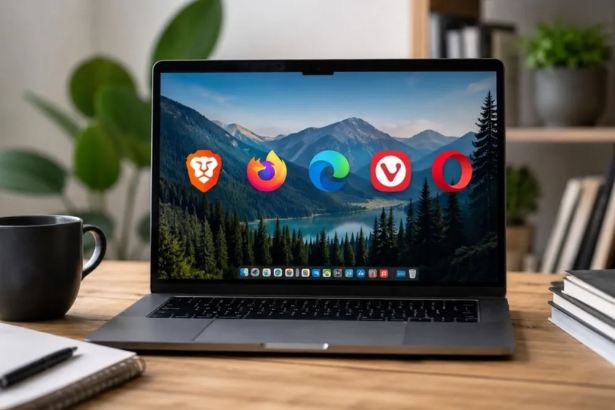
Best Chrome alternatives have emerged as formidable contenders in the browser market, as the tech landscape in 2026 increasingly emphasizes privacy and AI features. While Chrome and Safari have dominated for years, a surge in innovative browsers is now challenging the status quo. These competitors aren’t just in it for a piece of the pie; they’re redefining what users expect from a browser.
Perplexity’s Comet: AI at the Helm
Leading the charge among the best Chrome alternatives is Perplexity’s Comet. This AI-powered browser is far from just a pretty interface. It’s essentially a chatbot-based search engine that extends its capabilities into summarizing emails, browsing web pages, and even sending calendar invites. The integration of AI in such everyday tasks is a testament to the shifts underway in how we interact with the internet.
The beauty of Comet lies in its seamless user experience, where AI doesn’t just assist but anticipates needs. Imagine not having to sift through emails manually for important details or jumping between apps to schedule a meeting. Comet handles it all, making it a prime choice for users overwhelmed by information overload. But does AI-driven functionality suffice to lure users away from Chrome’s ecosystem?
Comet’s edge is its proactive AI, but it also raises questions about reliability and privacy. These AI features require access to considerable personal data, prompting users to weigh convenience against security. In a world where data breaches are news staples, Comet’s success will hinge on maintaining user trust while offering unmatched utility.
The Browser Company’s Dia: Crafting Personalized Web Experiences
Another contender in the lineup of the best Chrome alternatives is The Browser Company’s Dia. Unlike traditional browsers, Dia focuses on personalized, information-rich browsing experiences. Its AI-centric design assists users by providing contextual information, answering product queries, and even summarizing uploaded documents.
Dia’s innovative approach to browsing transforms it into more than a tool—it’s a guide that enhances user interaction with web content. The browser intelligently interprets the user’s needs, functioning almost as a digital concierge on the web. It’s not just about speed or security anymore; it’s about enhancing the way users connect with digital information.
While personalization is a strong suit, Dia must navigate the thin line between usefulness and privacy invasion. Users today demand transparency about how their data is used, and Dia’s ability to deliver personalized experiences without compromising privacy remains critical. Can Dia find the perfect balance between offering personalized services and safeguarding user data?
Opera’s Neon: A Vision for Offline AI
Opera’s Neon is carving its niche among the best Chrome alternatives with a futuristic approach. This browser excels in offline capabilities, thanks to its AI agentic design. Neon isn’t just built for browsing; it accommodates tasks like research, shopping, and even coding, all while disconnected from the internet.
This emphasis on offline utility sets Neon apart. As users tackle connectivity issues or face data constraints, accessing advanced browser features offline becomes invaluable. It’s a practical solution for users in regions with inconsistent internet access or those who prefer working in secure, offline environments.
However, the effectiveness of Neon’s offline AI features will be crucial. Its ability to perform complex tasks without an internet connection needs to be reliable and fast. Moreover, Neon’s broader success will depend on its user interface and how intuitively it integrates modern web features into the offline mode.
Brave: The Privacy Champion
Brave has long been a frontrunner in privacy-centric web browsing, making it a prominent figure among the best Chrome alternatives. Known for its stringent ad and tracker blocking capabilities, Brave also rewards users with Basic Attention Token (BAT) for engaging with its privacy-first ecosystem.
Beyond its privacy features, Brave is branching out by offering a built-in VPN service and an AI assistant. The crypto rewards program, though not new, continues to attract users who appreciate receiving tangible benefits for their online activity.
Brave’s challenge lies in expanding its market share while maintaining its core ethos of privacy. As the browser competition heats up, user preferences are shifting towards platforms that respect and secure their data. For Brave, sustaining user growth will depend on continually innovating without straying from its privacy commitments.
Jatter: AI-Powered Insight and Recommendations
Jatter is another AI-powered entrant making its mark as one of the best Chrome alternatives. Its standout feature is the ability to allow users to ask questions about any webpage and receive relevant insights. This is complemented by personalized recommendations based on browsing activity.
Jatter’s integration of a Notes app for content summarization adds another layer of utility. Users can smoothly organize and process information, which is particularly appealing for researchers, students, and professionals handling large volumes of data.
Despite its innovative features, Jatter’s journey will be shaped by its ability to provide these insights accurately and quickly. As users demand more intuitive and responsive interactions, the quality of Jatter’s AI-driven insights could be the deciding factor in its adoption.
The Best Chrome Alternatives: A Comprehensive Look
So, what makes the best Chrome alternatives truly stand out? It’s the blend of AI innovation and privacy-centric features that defines their appeal. As we move towards a more digital-focused future, these browsers offer something more than just internet access—they offer a reimagined browsing experience tailored to modern needs.
Each alternative brings something unique to the table. Whether it’s the AI-driven task automation of Comet, the personalization of Dia, the offline capabilities of Neon, the privacy-first approach of Brave, or the insightful recommendations of Jatter, users have a plethora of options to choose from. But which one will ultimately capture the hearts—and screens—of users worldwide?
As the digital landscape evolves, these browsers could redefine how we interact with the web. They each offer strengths that not only challenge Chrome’s dominance but potentially pave the way for a more feature-rich, user-centric web browsing experience.
Broader Implications
The emergence of these best Chrome alternatives signals a shift in consumer priorities towards more tailored and secure web interactions. The integration of AI and enhanced privacy features indicates a broader trend where user experience and data protection are no longer mutually exclusive. For more insights into the latest tech trends, visit The Tech Marketer.
This evolution in web browsing reflects a larger movement across the tech industry towards integrating AI into everyday tools, as noted in discussions about autonomous logistics innovations like Humble Hauler’s autonomous systems. The demand for smarter, more autonomous solutions isn’t just limited to browsers but is spreading across tech sectors.
As these trends converge, they not only enhance individual user experiences but also hint at a future where AI isn’t just an add-on but the core of digital interactions. This shift has implications for developers, businesses, and consumers alike, suggesting a need to adapt to new technologies in every aspect of digital life.
Latest Updates
TechCrunch recently highlighted the competitive landscape of emerging browsers, emphasizing the role of AI and privacy in shaping user preferences. Their overview includes insights into how these features are set to redefine what users expect from their browsers.
According to The Indian Express, the focus is on AI integration, enhanced privacy, and productivity tools, with Jatter and Brave leading the charge. This coverage underscores the growing demand for holistic solutions that cater to modern digital needs.
TechyDr delves into the nuances of the browser wars, pointing out the significant impact of AI and privacy features. Their analysis suggests these elements are central to capturing a new generation of tech-savvy users who value both functionality and security.
FAQ
What are the best Chrome alternatives in 2026?
The best Chrome alternatives in 2026 include Perplexity’s Comet, The Browser Company’s Dia, Opera’s Neon, Brave, and Jatter. Each offers unique AI and privacy features that make them attractive options for users seeking more than just basic browsing capabilities.
How does Perplexity’s Comet compare to Chrome?
Perplexity’s Comet differs from Chrome by incorporating AI to assist with tasks like email summarization and calendar management. This creates a proactive browsing experience aimed at reducing information overload, a feature not typically found in Chrome.
Can Brave be considered one of the best Chrome alternatives?
Yes, Brave is considered one of the best Chrome alternatives, especially for users prioritizing privacy. Its ad and tracker blocking, coupled with its cryptocurrency rewards system, offer a compelling package appealing to privacy-conscious users.
What makes Opera’s Neon different as a browsing option?
Opera’s Neon distinguishes itself with offline AI capabilities, allowing users to perform tasks like research and coding without an internet connection. This feature makes it a unique choice for those needing advanced offline functionality.
Why are AI features important in the best Chrome alternatives?
AI features in the best Chrome alternatives enhance user experience by automating tasks, providing personalized recommendations, and facilitating more intelligent web interactions. They cater to modern needs for efficiency and tailored browsing, setting these browsers apart from more traditional options.
Sources and References
The Indian Express: 5 Best Alternatives to Google Chrome and Safari in 2026