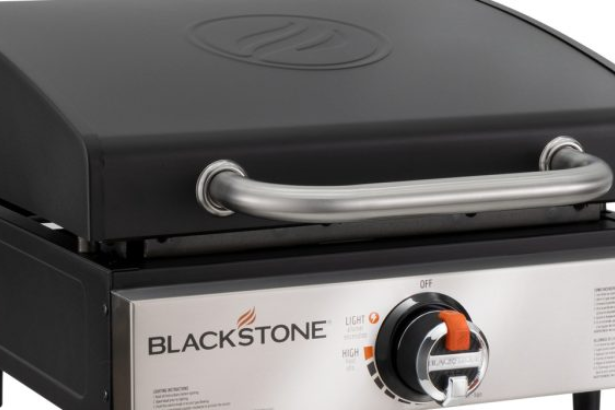
The Weber Blackstone merger 2026 is now fully complete, and the outdoor cooking industry will never look quite the same. On May 5, 2025, Weber LLC and Blackstone Products closed their combination, creating the largest outdoor cooking company in the world under the holding name Weber Blackstone. At its helm is Roger Dahle, the Cache Valley, Utah entrepreneur who founded Blackstone in 2008 with a single outdoor flat-top griddle, built it to 80 percent market share of the US outdoor griddle category in under 16 years, and now finds himself running a global outdoor cooking empire that spans 70-plus countries, encompasses charcoal, gas, pellet, smoker, and griddle categories, and pairs the world’s most recognized grill brand with the category he personally invented.
How the Deal Came Together: December 2024 to May 2025
The merger that reshaped the outdoor cooking industry moved from announcement to completion inside six months.
Weber LLC and Blackstone Products announced on December 2, 2024, that they had entered into a definitive agreement to combine their businesses. Terms of the transaction were not disclosed. The deal was expected to close in early 2025, subject to regulatory clearance and traditional diligence items. Law360
On May 5, 2025, Weber and Blackstone closed their merger. The new entity is Weber Blackstone. The CEO of the combined company is Roger Dahle, who founded Blackstone in 2008. Confused.com
Blackstone’s founder and current CEO Roger Dahle took the helm as the leader of the new outdoor cooking entity. Weber’s current CEO Alan Matula, who assumed the role in 2022 to guide the company during a period of turmoil, retired after the merger concluded. Each company continues to operate in its respective home bases of Palatine, Illinois for Weber and Logan, Utah for Blackstone. Insurance Times
BDT & MSD Partners served as the exclusive financial advisor to Weber, and J.P. Morgan served as the exclusive financial advisor to Blackstone in the transaction.
The Two Brands Stay Separate: Why That Matters
One of the most important strategic decisions embedded in the Weber Blackstone combination is the commitment to maintaining both brands as distinct identities in the market.
Going forward, the combined company is positioned to provide consumers with an expanded portfolio of high-quality outdoor cooking offerings while maintaining two distinct brands. The company will maintain a presence in both Illinois and Utah. Actuarialpost
Weber and Blackstone are family-founded products that share strong entrepreneurial cultures and rich legacies of innovation. Bringing the two together will provide consumers with an expanded lineup of offerings while maintaining two distinct brands. Weber’s global customer relationships and distribution infrastructure will support international expansion opportunities for Blackstone. law360
The strategic logic is straightforward. Weber’s 70-year brand equity in premium charcoal, gas, and pellet grills occupies a fundamentally different emotional space than Blackstone’s flat-top griddle culture. Collapsing them into a single brand would destroy value on both sides. Keeping them separate while sharing distribution, procurement, and manufacturing infrastructure creates the synergies without the brand risk.
Roger Dahle: From a Single Griddle to a Global Empire
Understanding why Dahle is the right person to lead this combined company requires understanding how he built Blackstone in the first place.
Blackstone Products was founded in 2008 by Utah State University graduate Roger Dahle. At 38 years old, he quit his job at ICON Health and Fitness, a place he had spent a decade building a career at, and embarked on his own. After stints working with infomercial companies, QVC, and selling hair dryers and flat irons, the griddle idea had been percolating in the back of his mind. One day he simply decided to do it. Consumerintelligence
Griddles themselves were not a new concept, but they were largely relegated to restaurants. Personal griddles were rare and had to be specially ordered. Dahle says the growth was really organic because griddling was new to the backyard cooking industry. “We really innovated a new way of cooking outside and we really disrupted a new way of cooking outside as well, which really kind of caught a lot of my competitors by surprise,” Dahle explains. “People discovered that cooking with a griddle is three meals a day, 365 days a year, which is very different from traditional barbecue.” Consumerintelligence
In sixteen years, he built Blackstone from a single griddle into the dominant outdoor griddle brand in the country. The playbook was aggressive pricing, massive retail distribution, and Chinese contract manufacturing. It worked. Blackstone is a genuinely good product at a genuinely accessible price. Confused.com
Blackstone’s Market Position: 80 Percent Share and a Category It Created
The numbers behind Blackstone’s dominance give context to why Weber wanted this deal.
Blackstone has a dominant market share position in outdoor griddles, pinned at 80 percent by Blackstone itself as part of an IPO filing made with the SEC. The company has also expanded into a wide range of other outdoor cooking products like pizza ovens and kitchen equipment. Blackstone has garnered attention in marketing circles for its social media savvy, particularly during the pandemic. Insurance Times
Blackstone, founded in 2008 by Chief Executive Officer Roger Dahle, is the U.S. pioneer in outdoor griddles, where its products are recognized as high-quality, easy-to-use, and affordable. The company has grown significantly as consumers continue to demonstrate their enthusiasm for Blackstone’s innovative griddle products and outdoor cooking accessories. Law360
The pandemic was the inflection point. When Americans were locked at home and looking for new backyard cooking experiences, Blackstone’s social media content exploded. Flat-top griddle cooking turned out to be extraordinarily camera-friendly, and a generation of outdoor cooks discovered that you could make smash burgers, hibachi, breakfast burritos, and pad thai on the same surface. The category Dahle created in 2008 became a cultural moment in 2020.
What This Means for Weber: The Spirit, Genesis, and Summit Outlook
The Weber Blackstone merger has materially shifted the strategic direction of Weber’s lineup, and buyers in 2026 should understand what that means.
The new strategy favors high-volume, big-box retail, which helps the entry-level lineup and hurts the top end. Blackstone’s strength was never premium. It was being on every endcap at every big box in the country. That strategy is now Weber’s strategy. For 2026, Weber updated the Spirit Smart line with a new 750-degree Sear Zone, Weber Works side tables, and Wi-Fi-enabled digital thermometers. The smart three-burner starts at $599. Confused.com
For buyers at $500 to $700 who want a reliable gas grill, the Spirit fits cleanly into the new Weber Blackstone strategy and will keep getting investment. For the first time in 30 years, however, the grill you buy at the top end might not be a Weber. The new ownership changes the recommendation at the top of the Weber lineup, where the Summit’s decline has accelerated under the combined company’s big-box-first strategy. Confused.com
This is the honest trade-off of the combination. Dahle’s operational playbook, which made Blackstone the category leader, is now being applied across the full Weber range. That helps the Spirit and hurts the Summit.
Blackstone’s International Opportunity Through Weber’s Distribution
The most significant long-term upside of the merger, in Dahle’s own framing, is what Weber’s global infrastructure does for Blackstone’s international ambitions.
Weber offers a wide portfolio of grill products and services to customers in more than 70 countries. Weber’s global customer relationships and distribution infrastructure will support international expansion opportunities for Blackstone, which had been primarily a US-focused brand before the merger. Law360
With our complementary portfolios and similar cultures, Dahle said, he could not have imagined a better partner for Blackstone than Weber. “We look forward to delivering an enhanced lineup of high-quality products to those with a passion for outdoor cooking, both here in the U.S. and abroad.” law360
The griddle category that Blackstone invented is still in the early stages of international penetration. European, Asian, and Latin American markets have barely been exposed to the flat-top outdoor cooking format that is now ubiquitous at US big-box retailers. Weber’s distribution relationships in 70-plus countries give Blackstone the infrastructure to change that.
Latest Update: Weber Blackstone in 2026, One Year After Closing
The Weber Blackstone merger 2026 picture is one of two brands in active integration, a year after the legal close of the deal.
Dahle took over as CEO of the combined company, Weber Blackstone, which continues to go to market as distinct brands. He successfully created a new outdoor cooking category with Blackstone in just over 15 years, and he brings that innovative approach to the new company. Consumerintelligence
Roger Dahle stated: “We are incredibly excited to introduce the new leader in outdoor cooking, built upon the proud legacies of both Weber and Blackstone. With our two iconic brands, a history of quality and craftsmanship, and a continued commitment to redefining the future of outdoor cooking through dedicated innovation, we have a tremendous opportunity ahead.” Actuarialpost
For the full CEO interview and company strategy breakdown, follow The Verge, Gear Patrol, and CookOut News.
Broader Implications: What the Weber Blackstone Deal Means for Outdoor Cooking
The Weber Blackstone merger 2026 is more than a corporate combination. It is a statement about where consumer culture is going.
The traditional American backyard for decades meant a Weber kettle or gas grill for weekends and special occasions. Blackstone changed that with the insight that griddle cooking is three meals a day, 365 days a year. You do not fire up a griddle for a special occasion. You use it to make eggs on a Tuesday morning, smash burgers on a Wednesday, and fried rice on a Friday. The cooking occasion is not the event. The cooking is the event.
That behavioral shift is now being backed by the world’s most recognized grill brand’s global distribution and engineering resources. What Dahle built in Logan, Utah, is now going to 70-plus countries with Weber’s sales infrastructure. And what Weber’s engineers know about premium combustion and temperature control will likely flow back into future Blackstone products.
For more consumer and business news, visit The Tech Marketer.
What Happens Next
The combined Weber Blackstone entity is continuing the integration of its two operational footprints across Palatine, Illinois and Logan, Utah. The international rollout of Blackstone through Weber’s distribution network is the primary long-term growth initiative. On the product side, Weber’s 2026 Spirit Smart lineup with 750-degree Sear Zone capabilities reflects the first generation of post-merger product investment. Blackstone’s own lineup continues to expand into higher price points, with the Culinary Pro series representing the brand’s push into the premium outdoor griddle segment.
FAQ
What is the Weber Blackstone merger and when did it close?
Weber LLC and Blackstone Products announced their merger on December 2, 2024, and completed the deal on May 5, 2025. The combined entity operates as Weber Blackstone, with both brands continuing to go to market separately. Roger Dahle, founder and CEO of Blackstone, became CEO of the combined company, while Weber’s former CEO Alan Matula retired.
Who is Roger Dahle and why is he running Weber Blackstone?
Roger Dahle is the founder of Blackstone Products, which he started in 2008 from Logan, Utah after leaving his job at ICON Health and Fitness. In 16 years he built Blackstone into the dominant US outdoor griddle brand with approximately 80 percent market share in its category. His operational playbook of aggressive pricing, big-box retail distribution, and accessible product design now guides the combined Weber Blackstone company.
Will Weber and Blackstone remain separate brands after the merger?
Yes. Both Weber and Blackstone continue to operate as distinct brands after the merger. Weber maintains its Palatine, Illinois headquarters and its premium grill identity, while Blackstone remains headquartered in Logan, Utah. The combination shares distribution infrastructure, procurement, and engineering resources without merging the two consumer-facing brand identities.
What does the Weber Blackstone merger mean for Weber grill buyers in 2026?
The merger has shifted Weber’s strategic focus toward high-volume, big-box retail distribution, which benefits entry-level models like the Spirit while putting more pressure on premium lines like the Summit. The 2026 Spirit Smart lineup has received new investment including a 750-degree Sear Zone and Wi-Fi-enabled thermometers starting at $599. At the top end, the Summit now faces stronger competition from rivals as the new strategy prioritizes volume and accessibility.
How big is Blackstone’s market share in outdoor griddles?
Blackstone claims approximately 80 percent market share in the US outdoor griddle category, a figure the company cited in a filing with the SEC as part of an IPO process. The brand created the outdoor flat-top griddle category as a mass-market product in 2008 and grew it into a mainstream backyard cooking format, particularly accelerating during the pandemic through social media-driven content showing versatile griddle cooking.
Sources and References
- The Verge (original submission, blocked): https://www.theverge.com/podcast/958790/weber-blackstone-ceo-roger-dahle-grilling-griddles-merger-outdoor-cooking