

By using this site, you agree to the Privacy Policy and Terms of Use.
Accept
The Tech MarketerThe Tech MarketerThe Tech Marketer
  • Home
  • Technology
  • Entertainment
    • Memes
    • Quiz
  • Marketing
  • Politics
  • Visionary Vault
    • Whitepaper
Reading: Wearables and the Internet of Things
Share
Notification Show More
Font ResizerAa
The Tech MarketerThe Tech Marketer
Font ResizerAa
  • Home
  • Technology
  • Entertainment
  • Marketing
  • Politics
  • Visionary Vault
  • Home
  • Technology
  • Entertainment
    • Memes
    • Quiz
  • Marketing
  • Politics
  • Visionary Vault
    • Whitepaper
Have an existing account? Sign In
Follow US
© The Tech Marketer. All Rights Reserved.
The Tech Marketer > Blog > IOT > Wearables and the Internet of Things
IOT

Wearables and the Internet of Things

Last updated:
8 years ago
Share
SHARE

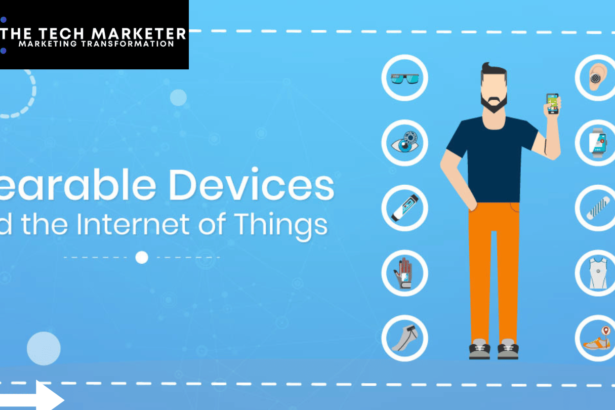
Wearable devices are becoming increasingly popular, with many people using them to track their fitness and monitor their health. These devices are just one example of the many ways that the Internet of Things (IoT) is changing the way we live our lives. In this blog, we will explore the basics of wearable technology and how it is transforming the world around us.

Contents
Oh hi there 👋It’s nice to meet you.Sign up to receive awesome content in your inbox, every week.

Wearable devices are electronic devices that can be worn on the body, either as an accessory or as a piece of clothing. These devices can track various health metrics, including heart rate, sleep patterns, and physical activity. They can also provide other features, such as notifications, music playback, and GPS tracking.

One of the main benefits of wearable devices is their ability to help people track their fitness and monitor their health. For example, fitness trackers can monitor steps taken, calories burned, and distance traveled, providing users with a better understanding of their physical activity levels. Wearable heart rate monitors can also provide valuable insights into cardiovascular health, helping people identify potential issues before they become serious.

Another benefit of wearable technology is its ability to make our lives more convenient. Smartwatches, for example, can be used to make payments, receive notifications, and control other devices in our homes. They can also be used to track our location and provide directions, making it easier to navigate unfamiliar areas.

Wearable technology is also being used in healthcare to monitor and track patient health. Wearable devices can track vital signs, such as blood pressure and heart rate, and transmit that data to healthcare professionals in real-time. This can help healthcare professionals provide more personalized care, and can also help patients better manage their health conditions.

As with any new technology, there are concerns around privacy and security when it comes to wearable devices. It is important to ensure that the data collected by wearable devices is secure and protected, and that users are aware of how their data is being used.

In conclusion, wearable devices are just one example of the many ways that the IoT is changing the world around us. They have the potential to transform the way we track our fitness, monitor our health, and make our lives more convenient. As the technology continues to evolve, we can expect to see even more advanced wearables that will further enhance our lives. However, it is important to remain vigilant about privacy and security, to ensure that our data remains safe and secure.


Oh hi there 👋
It’s nice to meet you.

Sign up to receive awesome content in your inbox, every week.

We don’t spam! Read our privacy policy for more info.

Check your inbox or spam folder to confirm your subscription.

You Might Also Like

Kalodata: Elevating TikTok E-Commerce with Advanced Data Analysis

Unlocking Marketing Potential with Hockeystack: The Future of Analytics and Attribution

Unlocking Sales Organization Insights: The Power of RepVue in Strategic Market Analysis

Transforming Wellness and Marketing Using Health Monitoring Rings as a Key to Business Strategy

From Fields to Pixels: How Designtemplate.io Became the Western IT Hub’s Premier Graphic Design Solution

Share This Article
Facebook LinkedIn Email Copy Link Print
Share
What do you think?
Love0
Sad0
Happy0
Sleepy0
Angry0
Dead0
Wink0
Previous Article Smart Home Technology and the Internet of Things
Next Article M2M Communications and the Internet of Things

Latest News

  • Gemini gets notebooks to help you organize projects

    Google's Gemini is getting a feature called "notebooks" to help you organize things about certain topics in a single place while using the AI chatbot, the company announced on Wednesday. You can pull in things like files, past conversations, and custom instructions into notebooks that Gemini can then use as context while you're talking with

  • Dyson made a handheld version of its iconic fans

    Nearly 17 years after Dyson first announced its Air Multiplier fans - one of its first big consumer products after vacuums - the company has miniaturized their design to create a handheld personal cooler called the HushJet Mini Cool. Like Dyson's larger Air Multipliers, humidifiers, air purifiers, and heaters, the HushJet Mini Cool doesn't have

  • OpenAI made economic proposals — here’s what DC thinks of them

    Happy ceasefire day and welcome to Regulator, a newsletter for Verge subscribers about Big Tech's rocky journey through the world of politics. If you're not a subscriber yet, you can do so here, but my only request is that you sign up before Donald Trump decides to revisit his previous threats toward Iran and kickstart

  • I finally get the iPhone Air

    I saw a lot of weird phones at Mobile World Congress last month: robot phones, cameras disguised as phones, phones for dogs. But the one that caught me most off guard was the one my friend (and Verge alum) Sam Byford brought to dinner: an iPhone Air. "Ha!" I said. "You actually use that thing?"

  • The AI RAM shortage is also driving up SSD prices

    I thought the WD Black SN850X 2TB SSD in my gaming PC was pricey when I bought it for $173 in 2024, but now that same SSD costs $649, more than what I paid for most of the parts in my PC combined. The price on my WD Black drive nearly quadrupled since November 2025,

- Advertisement -
about us

We influence 20 million users and is the number one business and technology news network on the planet.

Advertise

  • Advertise With Us
  • Newsletters
  • Partnerships
  • Brand Collaborations
  • Press Enquiries

Top Categories

  • Artificial Intelligence
  • Technology
  • Bussiness
  • Politics
  • Marketing
  • Science
  • Sports
  • White Paper

Legal

  • About Us
  • Contact Us
  • Privacy Policy
  • Affiliate Disclaimer
  • Legal

Find Us on Socials

The Tech MarketerThe Tech Marketer
© The Tech Marketer. All Rights Reserved.
Welcome Back!

Sign in to your account

Lost your password?
