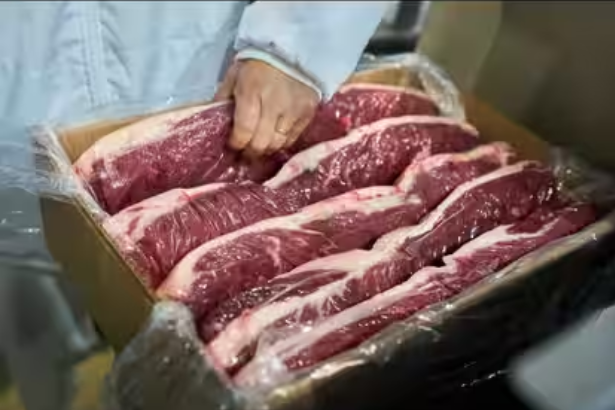
Nearly 30,000 pounds of raw beef imported from Argentina entered U.S. commerce without required federal import reinspection, prompting a USDA recall and renewed scrutiny of imported meat
The USDA Argentine beef recall involves approximately 29,628 pounds of raw beef products imported from Argentina and distributed in Texas and Florida. The U.S. Department of Agriculture’s Food Safety and Inspection Service, or FSIS, announced the recall after determining that the products entered the United States without the required federal import reinspection.
The recall was initiated by Corte Argentino USA LLC, an Aventura, Florida-based importer. The affected products were produced in Argentina between May 15 and May 20, 2026, and carry use-or-freeze-by dates ranging from September 15 through September 20, 2026.
No illnesses or injuries have been reported in connection with the recalled beef.
But the USDA’s classification of the recall as Class I, its highest risk category, has raised questions about why products that had missed a required inspection step were able to reach distributors and retailers in the first place.
Background and Context
Imported meat does not simply enter the U.S. food supply after arriving at a port.
According to the USDA’s FSIS, imported meat, poultry and egg products must undergo federal import reinspection after satisfying U.S. Customs and Border Protection and Animal and Plant Health Inspection Service requirements.
During that process, FSIS inspectors can review documentation, examine labeling and the general condition of shipments, and conduct additional inspections or laboratory analyses when assigned.
The agency describes this process as a second level of protection for American consumers because imported products have already gone through inspection in their country of origin.
That makes the issue behind the current recall significant.
The problem identified by USDA was not initially described as a confirmed bacterial or chemical contamination event. Instead, the products had entered U.S. commerce without receiving the required import reinspection.
That distinction is important when interpreting the recall.
Latest Update: USDA Argentine Beef Recall Affects Nearly 30,000 Pounds
The latest coverage of the recall has brought the issue back into the spotlight.
CBS Austin’s report on the USDA Argentine beef recall reports that nearly 30,000 pounds of raw Argentine beef sold in Texas and Florida are under recall.
The USDA recall was announced August 7, 2026. The products were imported by Corte Argentino USA LLC and originated from Argentine producer Frigorifico Gorina SAIC.
The affected products are boneless beef cuts sold in cardboard boxes bearing the Frigorifico Gorina SAIC branding.
They include:
- Top Sirloin Butt, or Cuadril Sin Tapa
- Eye Round, or Peceto
- Topside Cap Off, or Nalga AD S/Tapa
- Flat, or Carnaza Cuadrada
- Knuckle, or Bola de Lomo
The products carry Argentine establishment number EST. N° OF. 2025 and shipping mark 26644-AA.
The recalled beef was distributed in Texas and Florida, although officials have not identified every retailer or distributor that may have handled the products.
What Consumers Should Look For
Consumers who purchased Argentine beef should check their freezers and refrigerators for the affected products.
The recalled meat was produced between May 15 and May 20, 2026 and carries use-or-freeze-by dates between September 15 and September 20, 2026.
The USDA’s guidance is straightforward: consumers who have recalled products should not eat them and should either throw them away or return them to the place of purchase.
No illnesses or injuries associated with the recalled products had been reported in the sources reviewed for this article.
Why the USDA Argentine Beef Recall Happened
The central issue is import reinspection.
FSIS says that after imported meat meets Customs and APHIS requirements, it must be reinspected at an approved import inspection facility.
Inspectors review documentation to confirm that shipments are properly certified. They also examine general condition and labeling and can perform additional assignments, including examinations for product defects and laboratory analysis for microbiological contamination, residues and other concerns.
The recalled Argentine beef did not receive that required reinspection before entering U.S. commerce.
The USDA’s recall notice therefore addresses a failure in the import-control process rather than announcing a confirmed contaminant.
That difference should not be lost in the headlines.
What Does a Class I Recall Mean?
The term Class I can sound alarming because it is the highest USDA recall classification.
And it is important.
The FSIS defines a Class I recall as a health-hazard situation in which there is a reasonable probability that use of the product could cause serious adverse health consequences or death.
However, the classification does not automatically mean that a specific contaminant has been discovered in every recalled product.
In this case, the recall coverage states that the products were recalled because they entered the country without the required import reinspection. The recall notice did not identify a specific contaminant.
That is why consumers should follow the recall instructions even though no illnesses have been linked to the products.
The absence of reported illnesses does not eliminate the reason for removing products from commerce.
Expert Analysis: Why Reinspection Matters
The federal import inspection system is designed to provide multiple layers of protection.
The USDA explains that reinspection can involve everything from document and label verification to physical examination and laboratory testing, depending on the shipment and inspection assignment.
That means a missed reinspection is not simply a missing stamp on a box.
It represents a skipped checkpoint in the federal food-safety system.
The exact public-health implications of this particular shipment depend on information that has not been provided in the recall notice, including whether any contamination or other defect would have been detected had the shipment undergone its required inspection.
That is why it is important not to claim that the beef was contaminated when the available recall information does not establish that.
The Political Context Around Argentine Beef
The recall has also landed in a politically sensitive moment for U.S. beef imports.
As Wide Open Country’s report on the recall notes, the incident comes amid renewed attention on plans to increase meat imports from Argentina.
The publication reports that President Donald Trump had previously announced plans to increase Argentine meat imports as part of efforts to address high U.S. beef prices.
CBS Austin likewise reported that Trump had announced a plan allowing up to 300,000 pounds of foreign beef over a 90-day period, with the meat intended to be sold at prices below prevailing market levels.
The timing has generated political criticism from some U.S. cattle interests and political figures.
But the recall itself should not be presented as evidence that Argentine beef as a category is unsafe.
The documented problem is narrower: a shipment covered by the recall entered U.S. commerce without the required federal reinspection.
The Recall Does Not Mean All Argentine Beef Is Unsafe
This is an important distinction for consumers.
The recall applies to specific products from a specific importer and producer, with specific identification markings and dates.
It does not mean every Argentine beef product sold in the United States is affected.
It also does not establish that every product from Argentina poses a food-safety risk.
The USDA’s import system is specifically designed to verify imported products and foreign establishments before those products enter U.S. commerce.
Consumers should therefore focus on the recall identifiers rather than assuming that all imported Argentine beef needs to be discarded.
Broader Implications: Imported Meat Faces a New Trust Test
The USDA Argentine beef recall arrives at a moment when food prices, meat imports and domestic cattle supplies are already politically sensitive.
U.S. cattle inventories have been under pressure for years, while beef demand remains substantial. The resulting supply constraints have contributed to elevated beef prices.
That has made imported beef an increasingly important part of the conversation about affordability.
But cheaper meat only helps consumers if the supply chain maintains confidence.
The recall highlights the tension.
Importing more meat can potentially expand supply.
At the same time, every shipment needs to move through the regulatory system designed to ensure that imported products meet U.S. requirements.
Internal link suggestion: The Tech Marketer should link this article to a companion explainer on why U.S. beef prices remain high and whether increased imports can actually lower grocery costs.
The Bigger Question Is Supply-Chain Reliability
Food recalls are not unusual.
What makes this episode notable is that the recalled products reached U.S. commerce after missing a required federal inspection checkpoint.
That creates a straightforward policy question:
How did the shipment move through the system without receiving the required reinspection?
Texas Agriculture Commissioner Sid Miller publicly called for answers following the recall and said USDA should examine how the beef passed through the required inspection process.
The question is less about Argentina versus the United States and more about whether the import-control system is operating as intended.
Related History: How Imported Meat Is Checked
The United States has built multiple layers into its imported-meat inspection system.
FSIS says imported products are subject to document review, labeling checks, general-condition examinations and other inspection assignments.
The agency also uses its Public Health Information System to determine inspection assignments based partly on the compliance history of establishments and countries.
Products that pass the required reinspection can enter U.S. commerce with the appropriate USDA inspection status.
Products that fail to meet U.S. requirements can be refused entry and must be exported, destroyed or otherwise handled according to federal rules.
The system therefore depends on the inspection checkpoint actually occurring.
That is what makes the current recall different from a routine labeling correction.
What Happens Next?
The immediate priority is removing affected products from commerce and ensuring consumers do not eat them.
But the longer-term questions involve the import system itself.
1. Will USDA explain how the shipment bypassed reinspection?
That is likely to be one of the most important questions for regulators, importers and U.S. cattle producers.
2. Will more recalled product be located?
Because officials initially could not identify every retailer or distributor that handled the beef, additional tracing may be necessary.
3. Will additional inspections occur?
The incident could prompt closer scrutiny of imported meat shipments and the procedures used to verify that required reinspection has occurred.
4. Will the recall affect Argentina’s expanding role in the U.S. beef market?
The answer will depend partly on whether regulators identify a broader systemic problem or treat the episode as an isolated inspection failure.
5. Will consumers change their buying habits?
The recall could influence shoppers who are already paying close attention to the origin of their meat.
What Consumers Should Do Right Now
If you think you may have purchased the recalled beef:
Check the product. Look for the affected Argentine beef cuts, production information and use-or-freeze-by dates.
Do not eat it. The USDA recall remains the controlling guidance for affected products.
Throw it away or return it. FSIS says consumers who have recalled products should dispose of them or return them to the store.
Do not assume all Argentine beef is recalled. The recall concerns specific products and identifiers.
If you are concerned about illness, contact a healthcare professional. No illnesses or injuries had been reported as linked to the recalled beef in the sources reviewed.
Conclusion
The USDA Argentine beef recall involves nearly 30,000 pounds of raw beef that entered U.S. commerce without receiving a required federal import reinspection.
The affected products were imported by Corte Argentino USA LLC, originated from Frigorifico Gorina SAIC in Argentina, and were distributed in Texas and Florida. The products include several boneless cuts, with use-or-freeze-by dates from September 15 through September 20, 2026.
No illnesses or injuries have been reported in connection with the recalled beef.
But the Class I classification and the missed inspection checkpoint make the incident important beyond the individual products.
The recall is ultimately a test of the import system.
As the United States considers bringing more foreign beef into the market to address high prices, consumers and producers have a reasonable expectation that imported products will pass through the same required safety checkpoints.
The most important question now is not whether Argentine beef is inherently safe or unsafe.
It is whether the federal inspection system can reliably ensure that every shipment entering the U.S. food supply receives the scrutiny required by law.
FAQ
1. What is the USDA Argentine beef recall?
The USDA Argentine beef recall involves approximately 29,628 pounds of raw beef imported from Argentina that entered U.S. commerce without the required federal import reinspection. The affected products were distributed in Texas and Florida.
2. Which company recalled the Argentine beef?
The recall was initiated by Corte Argentino USA LLC, an importer based in Aventura, Florida. The recalled products originated from Frigorifico Gorina SAIC in Argentina.
3. What Argentine beef products are recalled?
The affected products include Top Sirloin Butt, Eye Round, Topside Cap Off, Flat and Knuckle cuts. They carry the Argentine establishment number EST. N° OF. 2025 and shipping mark 26644-AA.
4. Where was the recalled beef sold?
The recalled beef was distributed in Texas and Florida. Officials said it was not immediately clear which specific retailers or distributors sold all of the affected products.
5. Why was the beef recalled?
The beef was imported without receiving the required federal import reinspection. FSIS says imported meat shipments must undergo reinspection at an approved import inspection facility before entering U.S. commerce.
6. Is the recalled beef contaminated?
The available recall information does not identify a specific contaminant. The recall was triggered by the failure to complete the required import reinspection. No illnesses or injuries had been reported as linked to the products.
7. What does a Class I USDA recall mean?
A Class I recall is the USDA’s highest risk classification. FSIS defines it as a situation where there is a reasonable probability that consuming the product could cause serious adverse health consequences or death.
8. What should consumers do with recalled beef?
Consumers who have affected products should not eat them. FSIS advises consumers to throw the beef away or return it to the place of purchase.
Sources & References
- USDA Food Safety and Inspection Service: Corte Argentino USA LLC Recalls Raw Beef Products Imported Without The Benefit Of Import Reinspection
Read the USDA FSIS recall notice - CBS Austin: USDA recalls 30,000 pounds of Argentine beef sold in Texas and Florida
Read the CBS Austin report - Wide Open Country: Emergency Recall Declared for Beef Imported by Trump Administration
Read the Wide Open Country report - CBS Texas: Nearly 30,000 pounds of Argentine beef sold in Texas, Florida recalled by Miami-area company
Read the CBS Texas coverage - USDA FSIS: FSIS Import Reinspection
Read the USDA import-reinspection guidance