Introduction
US supply chain trends are sending businesses a mixed message. On one hand, record container volumes at the Port of Los Angeles show that goods continue to move into the United States at an extraordinary pace. On the other, shifting tariff policies, changing sourcing decisions and uncertainty over future costs are making it harder for companies to decide when to order, how much inventory to hold and which routes to use.
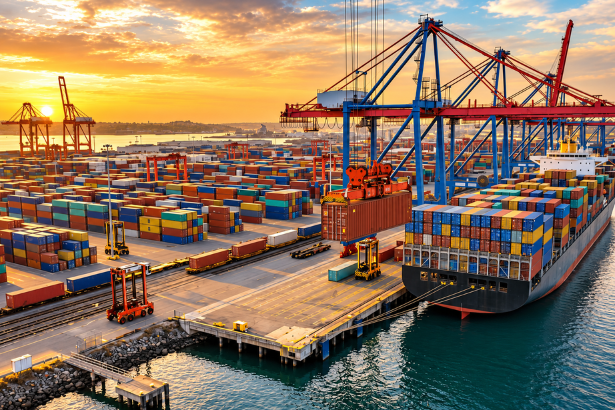
According to FreightWaves’ report on the Port of Los Angeles, the port handled 1,042,652 twenty-foot equivalent units, or TEUs, in September 2026. That made it the busiest month in the port’s 118-year history, surpassing the previous monthly record set in July 2025.
The milestone is significant, but the number tells only part of the story. A surge in imports does not automatically mean that supply chains are becoming more predictable. Some companies are bringing goods in early, others are adjusting orders as trade conditions change, and logistics teams must prepare for demand that can shift quickly from one month to the next.
For businesses that depend on international suppliers, the central challenge is no longer simply moving products efficiently. It is building a supply chain that can absorb sudden changes in trade costs, transit times and consumer demand without tying up too much cash in inventory.
Background and Context: Why Port Volumes Matter
The Port of Los Angeles is a major gateway for goods arriving from Asia. Its container volumes provide a useful signal of activity across retail, manufacturing and international freight, although port data alone cannot explain every change in the wider US economy.
Cargo is measured in twenty-foot equivalent units. One TEU represents the capacity of a standard twenty-foot container, while a forty-foot container generally counts as two TEUs. The measure helps ports and logistics companies compare cargo activity over time.
In 2025, the port experienced pronounced swings as importers responded to changing tariff expectations. In July, it processed 1,019,837 TEUs, an increase of 8.5% from July 2024. Port officials said retailers and manufacturers were bringing goods forward to get ahead of possible tariff increases.
The trend was not a straight line. In May 2025, the port handled 716,619 TEUs, down 5% year over year, while loaded imports declined 9%. By June, activity had rebounded to 892,340 TEUs, up 8% from the same month a year earlier.
The port’s own updates show how quickly the picture changed. Its July 2025 cargo announcement described the record month and the rush to bring cargo forward. Its May 2025 report documented a slowdown as tariff uncertainty affected imports and exports.
These changes illustrate a recurring feature of international trade: when businesses expect costs to rise, they may order sooner than usual. That can create a temporary surge in port traffic, followed by weaker volumes once the early orders have arrived.
Latest Update: Record US Port Imports Meet Tariff Uncertainty
FreightWaves reported that the Port of Los Angeles handled more than 1.04 million TEUs in September 2026, setting a new monthly record. Loaded imports reached 545,696 TEUs, up 19% from a year earlier. Loaded exports also increased, reaching 125,751 TEUs, while empty-container volumes reached a monthly record.
The report attributed the surge to resilient consumer demand, inventory replenishment and changes in shipping routes. Challenges affecting other global trade corridors, including the Panama and Suez Canal routes, have also influenced how carriers and importers allocate cargo.
The port’s September performance followed a strong summer. FreightWaves reported that the port handled nearly 3 million TEUs during the third quarter and nearly 4 million TEUs across the four months from June through September. Those figures point to a sustained period of high activity rather than an isolated monthly spike.
However, the same report highlights why record volumes should not be mistaken for certainty. Tariff policies can change purchasing decisions, while geopolitical events and shipping disruptions can alter routing options. Businesses may need to revise their plans even when consumer demand remains healthy.
The Port of Los Angeles’ official cargo statistics provide a useful baseline for tracking these changes. For a broader industry perspective, FreightWaves’ coverage of the September record explains how import demand, trade policy and shipping routes intersect.
What the record means for importers
A record month can be good news for retailers and manufacturers that need products on shelves or components in production. It can also create operational pressure across trucking, rail, warehousing and distribution networks.
The effect depends on how much cargo arrives, when it arrives and whether downstream partners can process it. A port may move containers efficiently while individual importers still face shortages, storage constraints or delays elsewhere in the logistics chain.
High volumes can also mask uneven performance across companies and product categories. One retailer may have ample inventory after placing orders early, while another may be waiting for a later shipment or reconsidering its sourcing strategy.
The practical lesson is to look beyond headline port totals. Businesses need to combine port data with supplier lead times, purchase orders, warehouse capacity, freight rates and actual customer demand.
Expert Insights and Analysis: Four Forces Reshaping Supply Chains
1. Tariff uncertainty is changing the timing of orders
Tariffs affect more than the price paid at customs. They can change the timing of purchase orders, the attractiveness of different suppliers and the amount of inventory a company wants to keep on hand.
When businesses expect an import duty to increase, they may accelerate shipments to bring goods into the country before a deadline. This is commonly called frontloading. It can protect a company from a potential cost increase on goods already imported, depending on the applicable rules and timing.
But frontloading is not free. Companies may pay for additional freight, storage, insurance and working capital. If demand later softens, the inventory brought forward can become an expensive burden.
The Port of Los Angeles has documented this pattern in its June 2025 cargo update, which described importers bringing forward holiday merchandise ahead of possible tariff changes.
For supply chain leaders, the question is not simply whether to order early. It is whether the expected tariff exposure justifies the extra cost and risk of holding inventory.
2. Inventory planning is becoming a financial decision
Inventory has always been a trade-off between availability and cost. The latest US supply chain trends make that trade-off more visible.
Holding more stock can help a company respond to demand spikes or disruptions. It can also tie up cash, increase warehouse expenses and leave the business exposed if products become outdated or sales fall short of expectations.
Holding too little stock creates the opposite risk: a company may save on storage only to lose sales when shipments are delayed or a supplier cannot meet demand.
A stronger approach is to segment inventory by importance and risk. Critical components, high-volume products and goods with long supplier lead times may justify larger buffers. Products with volatile demand, short life cycles or high storage costs may require tighter purchasing controls.
Businesses should also model multiple scenarios. What happens if a shipment arrives two weeks late? What if a tariff changes before the next order? What if demand drops after a large shipment lands? These questions help companies understand the cost of being wrong before a disruption occurs.
3. Sourcing decisions are becoming more flexible
Tariff changes can shift the economics of sourcing from one country to another. However, switching suppliers is rarely as simple as finding a lower quoted price.
Companies must consider production capacity, product quality, labor availability, supplier reliability, transport costs, customs requirements and the time needed to qualify a new manufacturer. Moving production can require months of preparation, and a new supplier may introduce risks that are not obvious in the initial quotation.
A diversified sourcing strategy can reduce dependence on a single supplier or region. That does not mean every company should abandon its existing suppliers. It means evaluating where concentration creates an unacceptable risk and determining whether alternative suppliers are commercially viable.
The strongest sourcing decisions account for total landed cost, not just factory price. Tariffs, freight, insurance, handling, compliance and potential delays can change which supplier offers the best overall value.
4. Shipping routes are part of the risk calculation
The route a shipment takes affects transit time, freight expense and exposure to disruption. Changes in canal conditions, security risks or carrier schedules can influence which ports and trade corridors companies use.
The latest Port of Los Angeles record shows how changes in global shipping patterns can coincide with stronger cargo volumes at a particular gateway. Yet companies should avoid assuming that one port’s record automatically means every route is operating smoothly.
Importers need contingency plans for missed sailings, route changes and inland transportation bottlenecks. That may involve evaluating alternate ports, booking flexibility, rail connections and the availability of truck capacity.
A backup route is useful only if it is operationally realistic. Companies should understand the additional costs, transit times and handling requirements before they need to use it.
Broader Implications: What Businesses Should Change Now
The implications extend beyond ocean freight. Procurement, finance, merchandising, operations and sales teams all make decisions that affect the supply chain. When those teams work from different forecasts, a company can over-order, under-stock or pay for expensive last-minute transport.
Businesses can improve resilience by making a few practical changes.
Build a shared view of risk. Procurement teams should communicate supplier exposure and tariff assumptions to finance and operations. Sales teams should provide timely updates on demand changes. A shared dashboard can bring together inventory levels, open purchase orders, supplier lead times, freight costs and shipment status.
Use scenario-based purchasing. Instead of relying on one forecast, model a base case alongside plausible upside and downside scenarios. Test how different tariff rates, demand levels and transit times would affect margins and service levels.
Review inventory more frequently. Volatile trade conditions may justify shorter review cycles for critical products. Replenishment rules should reflect actual demand, supplier reliability and the cost of running out of stock.
Evaluate suppliers using total landed cost. A lower unit price can be outweighed by freight, duties, quality issues or longer lead times. Purchasing decisions should reflect the full cost of getting a usable product to its destination.
Prepare alternatives before disruptions occur. Identify backup suppliers, alternate ports and escalation contacts in advance. A contingency plan created during a crisis is less likely to be cost-effective or fully tested.
For more coverage on the relationship between technology, operations and business strategy, The Tech Marketer could internally link this article to a relevant supply chain technology or logistics automation article at thetechmarketer.com.
Related History: Lessons From Previous Shipping Disruptions
The recent volatility follows a period in which global supply chains were forced to reassess the risks of relying on highly synchronized, low-inventory operations.
During the COVID-19 disruption, demand for goods, port congestion, equipment shortages and uneven factory output strained international logistics. Many companies discovered that a supply chain optimized only for low cost could struggle when several parts of the network were disrupted at once.
The lesson was not that every business should maintain enormous stockpiles. Excess inventory can be costly and can create waste. Instead, companies began paying closer attention to supplier concentration, critical components, transport alternatives and the financial impact of delays.
The tariff-driven frontloading seen in 2025 added another dimension. Instead of responding only to physical disruptions, businesses were also responding to the possibility of policy changes. The result was a different kind of volatility: cargo could surge because companies wanted to avoid a future cost, then decline when those purchases had already been made.
These episodes show why supply chain resilience requires more than a larger warehouse or a second supplier. It depends on reliable information, realistic contingency plans and a clear understanding of which risks the business can absorb.
What Happens Next?
The next phase of US supply chain trends will depend on several variables: tariff policy, consumer demand, shipping capacity, freight prices and the reliability of global trade routes.
Importers should watch monthly port statistics, but they should also compare those figures with their own booking data and inventory positions. Strong port traffic may indicate healthy demand, accelerated purchasing or both. Weaker volumes may reflect softer demand, earlier frontloading or a change in where cargo enters the country.
The most useful indicators will be those that help businesses make decisions rather than simply describe activity after the fact. These include supplier lead-time changes, order cancellations, freight-rate movements, customs costs, inventory turnover and the proportion of orders arriving on schedule.
Companies should also distinguish between a temporary response and a lasting structural change. A short-lived increase in imports ahead of a tariff deadline does not necessarily mean that long-term demand has strengthened. Likewise, one record month does not prove that congestion will follow or that every importer will face delays.
The goal is to stay prepared without overreacting. Businesses that connect trade intelligence to purchasing and distribution decisions will be better placed to respond when conditions change.
Conclusion
Record import volumes at the Port of Los Angeles underscore the continuing importance of trans-Pacific trade. They also reveal how difficult it can be to plan when tariffs, sourcing choices and shipping routes remain in flux.
The central message for business leaders is straightforward: high cargo volumes do not eliminate supply chain risk. They can coexist with rising costs, uncertain lead times and uneven inventory positions.
Companies that monitor trade policy, use scenario-based inventory planning, evaluate suppliers by total landed cost and prepare realistic logistics alternatives can respond more effectively to uncertainty. In a volatile trade environment, resilience is not about predicting every disruption. It is about making sure the business has options when forecasts change.
FAQ
1. What are the biggest US supply chain trends businesses should watch?
Key US supply chain trends include tariff uncertainty, changing import volumes, inventory frontloading, supplier diversification, freight-rate volatility and shipping-route disruptions. Companies should monitor these developments alongside their own supplier lead times and demand forecasts.
2. Why did the Port of Los Angeles set a record for imports?
FreightWaves reported that the port handled 1,042,652 TEUs in September 2026, its busiest month in its 118-year history. The report cited resilient demand, inventory replenishment and changes in global shipping routes among the factors contributing to the increase.
3. How do tariffs affect supply chain planning?
Tariffs can raise landed costs and change the relative economics of sourcing from different countries. When companies expect tariff increases, they may accelerate imports, renegotiate supplier terms, adjust prices or assess alternative sources. The best response depends on the product, timing and total cost of each option.
4. What is import frontloading?
Import frontloading is when a company brings goods into a market earlier than planned, often to get ahead of an expected tariff increase, disruption or seasonal deadline. It can reduce exposure to a future cost change but may increase freight, storage and working-capital expenses.
5. Should businesses hold more inventory during tariff uncertainty?
Not automatically. More inventory can provide a buffer against delays or price changes, but it also ties up cash and creates storage costs. Businesses should weigh the likelihood and impact of disruption against the cost of holding stock, using different rules for critical items and lower-risk products.
6. How can companies reduce supply chain risk?
Companies can diversify qualified suppliers, monitor lead times, evaluate total landed cost, maintain realistic safety stock for critical products, and prepare alternate shipping routes. Regular scenario planning can help teams understand how tariff changes or delays would affect service levels and margins.
7. Do record port volumes mean shipping delays are inevitable?
No. Record volumes indicate high activity, but delays depend on terminal performance, vessel schedules, labor, trucking, rail capacity, warehousing and the timing of arrivals. Businesses should assess conditions across the entire logistics network rather than assume that higher port traffic always causes congestion.
Sources & References
- FreightWaves: 1 million boxes set new Los Angeles port record
- Port of Los Angeles: Port of Los Angeles Posts Busiest Month Ever, Eclipsing 1 Million Container Units
- Port of Los Angeles: Tariff ‘Whipsaw Effect’ Boosts June Cargo to New Record at Port of Los Angeles
- Port of Los Angeles: Container Statistics
- FreightWaves: Import surge drives new Q2 record for busiest U.S. port