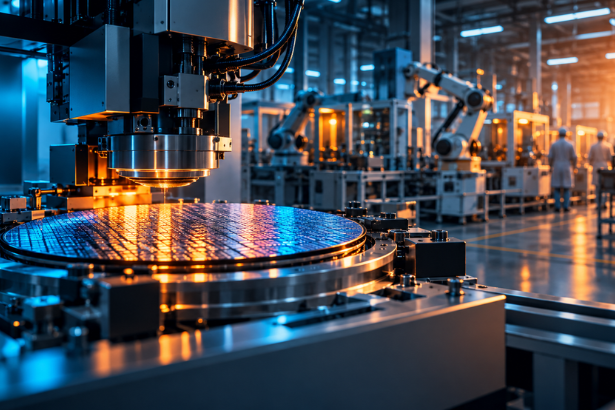
The latest US manufacturing trends 2026 data tell two stories at once. American factory production increased in September, supported by strong semiconductor output and demand associated with artificial intelligence infrastructure. Yet manufacturers are still navigating expensive energy, elevated borrowing costs and uneven demand across industries.
According to Reuters’ October 16 report on US manufacturing output, manufacturing output rose 0.3% in September after a revised 0.2% decline in August. Output was up 1.1% compared with September 2025.
The headline suggests a return to growth. The broader figures, however, are less straightforward. Factory production expanded at an annualized rate of just 0.7% in the third quarter, down from 5.6% in the second quarter. Semiconductor production provided a major source of strength, while motor vehicle and parts production fell 3% in September.
For manufacturers, suppliers and investors, the question is no longer simply whether production is growing. It is which industries are driving that growth, whether demand can support additional investment, and how companies can protect margins as operating costs remain elevated.
Background and Context: Where American Manufacturing Stands
Manufacturing remains an important part of the US economy, supplying products and components used in transportation, construction, healthcare, electronics, defense and countless other industries.
Its performance also reflects conditions across the wider economy. When businesses invest in equipment and consumers buy durable goods, factories can receive a boost. When financing becomes expensive, energy costs rise or customers delay purchases, manufacturers may slow production or postpone expansion.
The Federal Reserve’s September 2026 Industrial Production and Capacity Utilization report provides the underlying data behind the latest headlines.
The report shows that total US industrial production, which includes manufacturing, mining and utilities, increased 0.7% in September. Manufacturing output rose 0.3%, while mining production increased 0.2% and utilities output climbed 3.5%.
Those figures should not be confused with manufacturing alone. Industrial production covers a broader range of activities, and the distinction matters when evaluating the health of factories.
Capacity utilization offers another important measure. The Federal Reserve reported that manufacturing capacity utilization reached 75.9% in September, still 2.3 percentage points below its long-run average.
That suggests factories were operating below their historical average utilization rate. It does not necessarily mean every industry has spare capacity, since conditions differ considerably between sectors.
The central takeaway is that American manufacturing is expanding, but the data do not yet point to a uniform industrial boom.
Latest Update: What the September Manufacturing Numbers Reveal
Factory output returned to monthly growth
Manufacturing output increased 0.3% in September, recovering from August’s revised decline. On a year-over-year basis, output rose 1.1%.
The improvement matters because it shows factories continued to produce more than they did a year earlier. But the slowdown in quarterly growth indicates that the September increase should not be viewed in isolation.
Third-quarter manufacturing output grew at an annualized rate of 0.7%, according to the Federal Reserve. That compares with 5.6% in the second quarter.
In other words, production improved in September, but the broader pace of factory expansion had cooled.
Semiconductor production surged as AI infrastructure expanded
Semiconductors were among the strongest parts of the manufacturing picture.
The Federal Reserve reported that semiconductor and related electronic component output rose 28.4% at an annualized rate in the third quarter. Reuters connected the broader factory rebound to demand associated with AI infrastructure investment.
The distinction between monthly and quarterly figures is important here. The 28.4% increase refers to the annualized third-quarter change in semiconductor and related electronic component production, not a 28.4% jump in September alone.
AI infrastructure requires more than chips. Data centers also need servers, networking equipment, power systems, cooling equipment and electrical components. Investment in that infrastructure can support activity across several connected manufacturing industries.
Recent corporate reporting offers another signal of the connection. On October 20, Reuters reported that 3M raised its annual profit forecast, citing stronger demand in AI-related markets, including data centers and semiconductor equipment. Its report described growth in specialized electrical components used in data center infrastructure.
Read Reuters’ report on 3M’s outlook and AI-related demand for a company-level example of how investment in computing infrastructure can benefit industrial suppliers.
Still, strong semiconductor production does not automatically translate into equal growth across the manufacturing sector. AI-related demand is concentrated in particular technologies and supply chains, while other factories face different market conditions.
Motor vehicles and parts moved in the opposite direction
Motor vehicle and parts production declined 3% in September, according to the Federal Reserve.
That decline illustrates why a single headline manufacturing number can conceal important differences between industries. Semiconductor production was strong, while vehicle-related manufacturing weakened.
Automotive manufacturers operate in a market influenced by consumer financing, inventory levels, production schedules, component availability and the transition between vehicle technologies. Changes in any of those factors can affect output.
The September data do not, by themselves, establish a lasting downturn in automotive manufacturing. They do show that the sector was a drag on the monthly manufacturing picture while other industries expanded.
For suppliers serving automotive customers, the practical lesson is to watch sector-specific production schedules rather than rely exclusively on aggregate manufacturing indicators.
Energy costs and borrowing expenses remain concerns
Manufacturers also face cost pressures that can complicate investment decisions.
Reuters’ manufacturing report identified higher energy prices, supply-chain disruptions connected to conflict in the Middle East, trade tensions with Canada and rising borrowing costs among the risks facing factory production.
Energy matters because it affects the cost of running industrial equipment, heating and cooling facilities, processing materials and transporting finished products.
The pressure is not limited to factories. On October 15, Reuters reported that the US Producer Price Index rose 1.3% in September, its largest monthly increase in four and a half years. The report highlighted substantial increases in gasoline and diesel prices. These are broad producer-price figures, not a direct measure of manufacturing costs, but they provide useful context for the wider cost environment.
See Reuters’ report on US producer prices in September for further detail.
For manufacturers, the challenge is balancing the need to invest in productivity and capacity against the risk that energy, financing and material expenses will erode the return.
US Manufacturing Trends 2026: Four Forces Shaping the Outlook
1. AI demand is creating new industrial opportunities
AI is increasingly a manufacturing story as well as a software story.
The construction and operation of AI data centers requires large volumes of specialized computing hardware and supporting infrastructure. Semiconductor manufacturers are directly exposed to chip demand, while companies producing electrical systems, connectors, cooling equipment and related components can benefit indirectly.
This creates opportunities for suppliers that can meet technical specifications, deliver reliably and expand capacity without sacrificing quality.
However, demand for AI infrastructure is not a guarantee of broad-based industrial growth. Companies investing in new production capacity must still consider customer concentration, future demand, competition, supply constraints and the cost of financing expansion.
For manufacturers, the most useful question is not simply whether AI spending is increasing. It is whether their products are part of the supply chain serving that investment and whether the economics justify additional capacity.
2. Factory investment must deliver measurable returns
Modern manufacturing investment can involve robotics, automated inspection, predictive maintenance, connected production systems and advanced process controls.
These technologies can help manufacturers improve throughput, reduce defects and make better use of equipment. They can also require substantial upfront spending, systems integration and employee training.
The September capacity-utilization figure of 75.9% offers useful context. Since aggregate manufacturing utilization remained below its long-run average, manufacturers may not all need to add capacity immediately. For some, improving productivity in existing facilities could be more practical than building new plants.
That is an analytical implication of the data, not a claim that all factories have excess capacity. Individual facilities and industries can face very different constraints.
Before committing to a major investment, manufacturers should assess expected demand, current utilization, labor availability, maintenance requirements and the time needed to reach operational efficiency.
3. Energy and transportation costs can pressure margins
Manufacturing profitability depends on more than sales volume. Energy, freight, materials, labor and financing all influence how much revenue remains after production costs.
When costs increase, companies generally have several options: absorb the increase, negotiate with suppliers, improve operational efficiency, change sourcing arrangements or raise prices where the market allows.
None is universally easy.
A manufacturer operating in a highly competitive market may struggle to pass costs on to customers. A company with energy-intensive production may have limited flexibility to reduce consumption quickly. Businesses dependent on long-distance freight may also be exposed to changes in fuel and transportation prices.
Manufacturers can reduce some of this exposure through energy monitoring, preventive maintenance, production scheduling, supplier diversification and better forecasting. These steps cannot eliminate external price shocks, but they can help businesses identify waste and respond faster.
4. Trade and financing uncertainty can delay expansion
Manufacturing projects often require long planning horizons. Companies may need to commit capital months or years before a new facility or production line starts generating revenue.
Higher borrowing costs can change those calculations by increasing the cost of equipment financing and plant construction. Trade uncertainty can make it harder to estimate future input costs, market access and the economics of sourcing components from different countries.
Reuters identified trade tensions with Canada and rising borrowing costs among the headwinds facing US factory output.
For business leaders, the implication is that investment decisions need to account for more than current orders. They also need to consider the durability of demand, the flexibility of the supply chain and the cost of delaying or expanding a project.
Expert Insights and Analysis: Why the Recovery Is Uneven
The latest data point to a manufacturing sector in which technology-driven demand is helping some industries grow faster than others.
Semiconductors and related electronic components are benefiting from the investment cycle surrounding AI infrastructure. At the same time, motor vehicle and parts production declined in September, and the overall pace of third-quarter manufacturing growth was much slower than in the previous quarter.
That combination makes the quality of growth more important than the headline figure.
A short-term production increase can reflect stronger demand, inventory rebuilding, changes in operating schedules or temporary factors. Sustained industrial growth generally requires a more durable combination of orders, customer spending, investment and manageable costs.
Manufacturers should therefore track several indicators together:
- Monthly and quarterly factory output.
- New orders and customer demand in their specific industries.
- Capacity utilization and equipment performance.
- Energy, materials and transportation expenses.
- Borrowing costs and planned capital expenditure.
- Inventory levels and supplier delivery reliability.
The Federal Reserve’s data are particularly useful because they distinguish between manufacturing, mining and utilities. That helps businesses avoid drawing conclusions about factory conditions from a broader industrial production number.
The current evidence supports a cautious interpretation: US manufacturing is growing, but its momentum is uneven and concentrated in selected areas.
Broader Implications: What Manufacturing Growth Means for US Businesses
Manufacturing has connections to employment, logistics, industrial real estate, energy demand and the wider supplier economy. Changes in factory output can therefore affect companies that do not operate manufacturing facilities themselves.
For logistics providers, increased production of semiconductors, electronics or industrial equipment can change freight demand, inventory requirements and delivery schedules.
For suppliers, growth in one industry may create new opportunities while weakness in another reduces orders. Companies serving both AI infrastructure and automotive markets, for example, may experience different demand patterns across their customer portfolios.
For local economies, factory investment can support construction, maintenance, technical services and other business activity. But the benefits depend on the type of facility, the number and nature of jobs created, the timing of investment and the availability of skilled workers.
Energy costs also connect manufacturing to broader economic conditions. Higher fuel and electricity expenses can affect operating margins and, depending on market conditions, influence prices further along the supply chain.
These links matter because manufacturing should not be evaluated as an isolated sector. A change in factory output can travel through transportation networks, suppliers, industrial services and business investment.
For related coverage, The Tech Marketer could link this article to an existing report on AI infrastructure and the business economy. Replace the homepage link with a relevant published article URL if one is available.
Related History: Manufacturing Growth Has Often Been Uneven
Manufacturing cycles rarely affect every industry at the same time.
Capital-intensive industries can respond strongly to a new wave of investment, while consumer-facing sectors react to changes in household spending and financing costs. Supply-chain disruptions can also affect industries differently depending on their dependence on particular materials, components and transport routes.
The current data reflect that familiar pattern. Semiconductor production is expanding strongly, supported by demand connected to AI infrastructure, while motor vehicle and parts output declined in September.
The latest figures also show why monthly movements need context. Manufacturing output rose in September, but its annualized growth rate for the third quarter was substantially lower than in the second quarter.
Comparisons across periods can reveal whether a headline improvement represents a broad acceleration or a recovery from a weaker month. Businesses should use multiple indicators and industry-level data rather than extrapolate a single monthly change into a long-term forecast.
The present manufacturing cycle may create meaningful opportunities for companies tied to AI infrastructure, but it also leaves many businesses exposed to uneven demand and operating-cost pressures.
What Happens Next?
The next phase of the manufacturing story will depend on whether recent gains translate into sustained production growth.
Manufacturers and investors should watch several developments:
- Future Federal Reserve data: Subsequent industrial production releases will show whether September’s improvement continues.
- Semiconductor demand: Continued investment in AI infrastructure could support chip production and connected industrial suppliers, though demand and capital spending can change.
- Automotive output: Further production data will help determine whether September’s decline was temporary or part of a longer weakness.
- Energy prices: Changes in fuel and electricity costs will influence operating expenses and transport budgets.
- Borrowing conditions: Financing costs can affect equipment purchases, plant construction and automation projects.
- Factory utilization: Capacity-use data can help show whether production is approaching constraints or whether available capacity remains underused.
For individual companies, the right response depends on their customer mix and operating model. A semiconductor supplier may be weighing capacity expansion, while an automotive parts producer may be focused on inventory and cost management.
There is no single strategy for the entire sector. The useful starting point is to identify where demand is strengthening, which costs are most exposed to volatility and what investments can produce measurable operational benefits.
Conclusion
US manufacturing enters the final stretch of 2026 with a mixed set of signals. Factory output rose 0.3% in September, semiconductor production was a major source of strength, and AI infrastructure investment is supporting parts of the industrial economy.
But third-quarter manufacturing growth slowed to an annualized 0.7%, motor vehicle and parts production declined 3% in September, and energy and financing costs remain concerns.
The broader lesson is that a manufacturing rebound does not mean every factory is experiencing the same conditions. Some companies may find opportunities in semiconductors, electronics and AI-related equipment, while others need to protect margins and manage uneven customer demand.
For manufacturers, suppliers and investors, the most useful approach is to look beyond the headline. Track industry-specific output, capacity utilization, orders and operating costs together. Those indicators will provide a clearer picture of whether the September rebound becomes a more durable recovery.
FAQ
1. What are the biggest US manufacturing trends in 2026?
Recent trends include stronger semiconductor production linked to AI infrastructure, uneven performance across industries, rising attention to factory productivity, and pressure from energy costs, financing expenses and trade uncertainty.
2. Did US manufacturing output increase in September 2026?
Yes. The Federal Reserve reported that manufacturing output rose 0.3% in September after a revised 0.2% decline in August. Output was up 1.1% year over year.
3. Why is semiconductor manufacturing growing so quickly?
The Federal Reserve reported a 28.4% annualized increase in semiconductor and related electronic component output during the third quarter. Demand connected to AI infrastructure is one important factor supporting activity in the sector. The figure is quarterly and annualized, not a monthly September increase.
4. Why did motor vehicle and parts production decline?
Motor vehicle and parts production fell 3% in September. The monthly data establish the decline but do not, on their own, establish a lasting downturn or identify a single cause. Automotive production is influenced by vehicle demand, financing conditions, inventory levels, supply availability and manufacturers’ production schedules.
5. How are rising energy costs affecting US manufacturers?
Higher energy costs can increase expenses for operating machinery, processing materials and transporting goods. Their effect varies by industry and facility. Manufacturers may respond by improving energy efficiency, negotiating supply contracts, adjusting production schedules or passing some costs on to customers where possible.
6. What does manufacturing capacity utilization tell us?
Capacity utilization measures how much of the available production capacity is being used. The Federal Reserve reported manufacturing utilization of 75.9% in September 2026, which was 2.3 percentage points below its long-run average. The national figure does not mean every factory has unused capacity, because utilization varies by industry and facility.
7. Will US manufacturing continue to grow?
The September increase is encouraging, but it is not enough to guarantee continued growth. Future output, new orders, energy prices, financing costs and demand in major industries will help determine the trajectory. Any forecast should be treated as uncertain until more data are available.
Sources & References
- Reuters: US Manufacturing Output Rises in September. October 16, 2026. Reporting on manufacturing output, quarterly growth and the pressures facing US factories.
- Federal Reserve Board: Industrial Production and Capacity Utilization, G.17. Official source for manufacturing output, semiconductor production, motor vehicle production and capacity utilization.
- Reuters: US Producer Prices Post Largest Gain in 4-1/2 Years; Expensive Gasoline Boosts Retail Sales. October 15, 2026. Context on rising producer prices and fuel costs.
- Reuters: 3M Lifts Profit Forecast as AI Push Deepens. October 20, 2026. Company-level reporting on demand linked to AI infrastructure and semiconductor equipment.
- KPMG: Industrial Production Outperformed in September. October 16, 2026. Additional analysis of industrial production and the contribution of AI-related demand.