Uruguay vs Cape Verde at Miami Stadium on Sunday, June 22, 2026 delivered one of the stories of the tournament as the tiny island nation continued its extraordinary World Cup debut. Cape Verde, the island nation of approximately 500,000 people that stunned Spain with a scoreless draw in their opener, came from behind to earn a 2-2 draw against Uruguay, with Hélio Varela scoring his first international goal as a substitute to cancel out a two-goal Uruguayan advantage. Cape Verde, now unbeaten in their first two World Cup matches, have a legitimate chance of reaching the knockout stage.
Uruguay vs Cape Verde Final Score and Match Stats
Final Score: Uruguay 2, Cape Verde 2
Date: June 22, 2026 | Venue: Miami Stadium, Miami, Florida
Competition: 2026 FIFA World Cup, Group H, Matchday 2
Goals:
- Kevin Pina (CPV) — 21st minute, free kick past Muslera
- Maxi Araujo (URU) — late first half, equalizer
- Agustín Canobbio (URU) — late first half, put Uruguay ahead
- Hélio Varela (CPV) — second half substitute, equalizer catching Muslera off his line
Key Context:
- Cape Verde’s first-ever World Cup goal: Kevin Pina’s 21st-minute free kick
- Hélio Varela’s first-ever international goal
- First World Cup match with two starting goalkeepers aged 40 or over (Vozinha, 40; Muslera, 40)
- Uruguay’s second draw of the tournament (drew 1-1 with Saudi Arabia in opener)
- Cape Verde previously drew 0-0 with Spain in Matchday 1
Kevin Pina’s Free Kick: Cape Verde’s First-Ever World Cup Goal
Cape Verde’s historic first moment in World Cup competition came in the 21st minute, delivered with the precision and conviction of a team that had already proven on Matchday 1 it would not be overawed by the occasion.
Kevin Pina scored on a free kick for Cape Verde’s first-ever goal in the World Cup. Pina blasted a strike past diving goalkeeper Fernando Muslera for a 1-0 lead in the 21st minute. The goal was a genuine piece of quality, a direct free kick that gave Muslera no chance despite his attempt to get across, rather than a fortunate deflection or defensive error.
Cape Verdean fans who watched their team pull off one of the stunners of the tournament last week by holding Spain to a scoreless draw continued their celebrations when Pina’s strike found the net. The significance of the moment extended well beyond the single match, representing the first goal in the country’s entire World Cup history.
Uruguay Fight Back: Araujo and Canobbio First-Half Goals
Uruguay’s response to falling behind was swift and decisive, with two goals scored in quick succession late in the first half turning the match on its head before the break.
Maxi Araujo and Agustín Canobbio scored late first-half goals minutes apart to put Uruguay ahead. Araujo’s goal leveled the score, before Canobbio’s goal turned it around for La Celeste, giving Uruguay a 2-1 lead heading into the interval.
The rapid two-goal turnaround had the look of a team of Uruguay’s experience asserting the class differential that had always separated the two sides on paper, and offered the prospect of a comfortable second-half holding operation to secure what would have been a crucial three points in Group H.
Hélio Varela’s Stunning Equalizer: First International Goal
The second half produced the most dramatic moment of the match, as substitute Hélio Varela delivered the equalizer with his very first international goal to complete Cape Verde’s second successive shock result at the tournament.
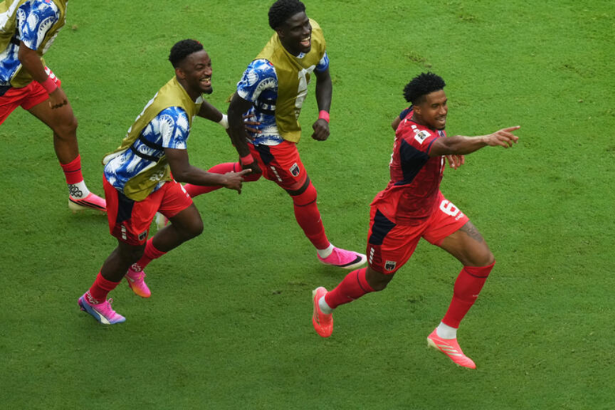
Varela, minutes after coming into the game, caught Muslera way off his line for the tying goal in the second half and his first international score. Varela celebrated by hopping into his teammates’ arms and flexing atop their shoulders as Muslera and other Uruguay players dropped their heads in disappointment.
The nature of the goal, a substitute spotting the goalkeeper off his line and executing the finish with the composure of an experienced scorer rather than a player netting his first international goal, captured something of the spirit Cape Verde have demonstrated throughout their debut tournament.
Vozinha: The 40-Year-Old Goalkeeper Making History
Beyond the goals themselves, Sunday’s match contained a statistical footnote that placed it in the context of World Cup history.
It was also the first World Cup match with two starting goalies age 40-plus. Muslera, who made his 18th World Cup appearance, turned 40 on June 16. Vozinha, Cape Verde’s own 40-year-old goalkeeper, had become one of the tournament’s breakout stars after shutting down Spain. The 40-year-old goalie had his mother in the stands for the match; she was unable to attend Cape Verde’s opening draw against Spain because she couldn’t obtain a visa.
Vozinha’s mother attending the Uruguay match after missing the Spain draw due to visa issues added a personal dimension to the occasion, connecting Cape Verde’s tournament story to the family and community emotions that often define small nations’ World Cup appearances more viscerally than those of established footballing powers.
Bielsa’s Verdict: “The Result Was Quite Deserved”
Uruguay coach Marcelo Bielsa’s post-match assessment offered the kind of direct accountability that has characterized his public communications throughout his coaching career.
“The result, I think, was quite deserved,” Bielsa said afterward through an interpreter. He also addressed the broader tactical issues underlying Uruguay’s failure to hold a lead: “The organizational mistakes that were made, that a squad makes, they always fall upon the driver. What I mean by that is the head coach. There is no magical recipe whatsoever to fix them. It goes without saying we paid a very high cost for those mistakes.”
Uruguay face Spain in their group stage finale with an uphill climb to reach the knockout stage after failing to capitalize on several late chances to take the lead. Bielsa’s self-critical, responsibility-accepting response to the result reflects a coach who understands exactly what went wrong and is unwilling to deflect blame toward his players.
Cape Verde’s Coach: “A Country May Be Small But Can Stand Shoulder to Shoulder”
Cape Verde coach Pedro Leitão Brito provided one of the tournament’s most eloquent postgame statements, connecting his team’s results to something larger than football.
“This is something we owe to other smaller national teams,” Cape Verde coach Pedro Leitão Brito said through an interpreter. “Teams that struggled to qualify for a world tournament. We’re also here to show that a country may be small, may struggle financially, but if they are resilient, if they can endure struggle, they can also stand shoulder to shoulder with other major teams and with players who are on another level.”
“Once you’re on the pitch, a lot of things become equal,” the coach added. The group of islands off Africa’s West coast have about 4,000 square meters of landmass and approximately a half million inhabitants, making Cape Verde the third-smallest nation by population to qualify for the World Cup.
Group H Standings: Cape Verde on Brink of Knockouts
The draw puts Cape Verde in a genuinely extraordinary position for a nation playing in its first-ever World Cup, with two points from their first two matches keeping the knockout stage firmly within reach.
It was Uruguay’s second draw after a 1-1 finish against Saudi Arabia in their opener. Cape Verde previously drew 0-0 with Spain in Matchday 1. The draw means Cape Verde now have two points from two matches, still mathematically in contention for qualification from Group H despite facing Spain and Uruguay, two of South America’s and Europe’s most established tournament nations, in their first two World Cup appearances.
Cape Verde’s squad has become one of the most surprising teams of the expanded 48-team tournament. Their group stage finale will determine whether the draw against Uruguay advances from storyline to genuine qualification.
What’s Next for Cape Verde and Uruguay
Both teams face decisive final group matches that will determine their knockout stage fate.
La Celeste face Spain in their group stage finale, with an uphill climb to reach the knockout stage after failing to capitalize on several late chances to take the lead. For Uruguay, the Spain match now looks like a must-win given the failure to secure three points against Cape Verde, a situation Bielsa acknowledged was the direct consequence of the organizational errors he described in his press conference.
For Cape Verde, the remaining fixture, regardless of opponent, will be approached with the confidence of a team that has earned draws against two of the tournament’s stronger sides. The coach’s framing of the team’s achievement as carrying significance for other small nations suggests Cape Verde view their World Cup presence as having meaning well beyond their own qualification aspirations.
Latest Updates
The match was played Sunday, June 22, 2026 at Miami Stadium in Miami. ESPN confirmed the full 2-2 final score, all four goals, Kevin Pina’s 21st-minute free kick as Cape Verde’s first-ever World Cup goal, Hélio Varela’s debut international goal, Bielsa’s post-match statement, and coach Leitão Brito’s wider speech about small nations. Fox Sports confirmed the official match date of June 21, 2026 and provided extended highlights commentary from JP Dellacamera and Lori Lindsey. The Guardian covered the match from a Group H perspective.
Full sources: ESPN | Fox Sports | The Guardian
Broader Implications
Cape Verde’s 2-2 draw with Uruguay, following their scoreless draw against Spain, is one of the genuine fairytale storylines of the 2026 World Cup, and one made possible specifically by the tournament’s expanded 48-team format. Under the previous 32-team structure, Cape Verde would not have qualified. Under the new format, they have not only qualified but navigated two matches against Spain and Uruguay without losing, placing themselves in genuine knockout contention.
The expanded tournament’s critics often argue that the inclusion of smaller and less-established footballing nations dilutes competitive quality. Cape Verde’s unbeaten start answers that argument directly: a team from a half-million-person island nation is playing competitive, organized, and occasionally brilliant football against South American and European footballing powers.
Uruguay’s situation reflects the other side of the same coin: a nation with two Copa América titles and a deep World Cup history now faces the real possibility of early elimination at a tournament they were expected to advance comfortably from, undone by tactical errors Bielsa himself identified and a goalkeeping mistake at the decisive moment.
For more World Cup coverage, visit The Tech Marketer.
Frequently Asked Questions
1. What was the final score of Uruguay vs Cape Verde?
The match finished 2-2. Kevin Pina gave Cape Verde the lead in the 21st minute with a free kick, Maxi Araujo and Agustín Canobbio scored late first-half goals to put Uruguay 2-1 ahead, and Hélio Varela equalized for Cape Verde with his first international goal shortly after coming on as a substitute.
2. Was Kevin Pina’s goal the first-ever World Cup goal for Cape Verde?
Yes. Kevin Pina’s 21st-minute free kick against Uruguay was Cape Verde’s first-ever goal in World Cup history, coming in only the nation’s second World Cup match after their scoreless draw against Spain in Matchday 1.
3. What was significant about the two goalkeepers in this match?
It was the first World Cup match with two starting goalkeepers aged 40 or over. Vozinha, Cape Verde’s 40-year-old goalkeeper, has been one of the tournament’s breakout stars. Uruguay’s Fernando Muslera, who made his 18th World Cup appearance in the match, turned 40 on June 16.
4. How did Marcelo Bielsa react after Uruguay drew with Cape Verde?
Bielsa said the 2-2 result “was quite deserved” and accepted personal responsibility for Uruguay’s organizational errors, saying “the organizational mistakes that were made… always fall upon the driver,” referring to himself as head coach.
5. What do Cape Verde need to qualify from the group stage?
Cape Verde have two points from two matches in Group H. Their final group match result, combined with the outcome of the Spain vs Uruguay match, will determine whether they advance to the knockout stage. An unbeaten record through two matches against Spain and Uruguay means Cape Verde are in genuine contention to qualify from the group despite it being their first-ever World Cup.