Introduction
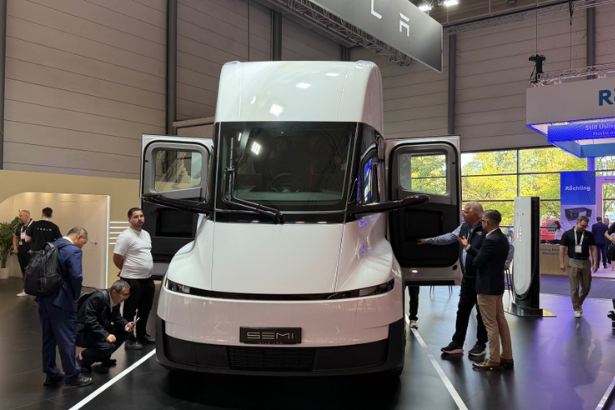
The market for Tesla electric trucks is entering a new phase as Tesla has been selected as the primary original equipment manufacturer for a 2,500-unit battery-electric Class 8 truck order in the United States. The order is being organized through ZET SCALE, a shipper and carrier alliance backed by organizations including Microsoft and PepsiCo.
The significance goes beyond Tesla.
The alliance is attempting something the U.S. freight industry has struggled with for years: turning electric trucks from relatively small pilot deployments into a coordinated commercial fleet strategy.
The initial trucks will be concentrated across 10 freight hubs, while ZET SCALE says it ultimately wants to scale the model to 10,000 or more electric trucks.
Background and Context
Heavy-duty trucking is one of the more difficult areas of transportation to electrify.
A Class 8 truck can travel long distances while carrying heavy loads, meaning fleet operators need to consider range, charging time, electricity costs, maintenance, financing, driver operations and vehicle utilization simultaneously.
That is why large-scale electric truck adoption has often developed through individual fleet pilots rather than enormous centralized orders.
ZET SCALE is taking a different approach.
The alliance combines freight demand from multiple shippers and then uses that aggregated demand to solicit competitive bids from truck manufacturers. According to Smart Freight Centre, all North American manufacturers offering Class 8 electric trucks were invited to participate in the request-for-proposals process.
The goal is straightforward: give manufacturers enough volume to improve pricing while giving fleets a financing and deployment structure that reduces some of the financial risks associated with switching from diesel.
Latest Update or News Breakdown
Tesla Was Selected as the Primary Supplier
Tesla won the lead supplier position following an independently conducted competitive request for proposals.
The initial order covers 2,500 battery-electric Class 8 trucks. ZET SCALE evaluated bids based on factors including price, range, charging capability and production capacity before selecting Tesla as the primary OEM.
That distinction matters.
Tesla is the primary supplier, but it is not necessarily supplying all 2,500 trucks.
ZET SCALE also named Kenworth, RIDE and Volvo as secondary OEMs. Carriers can use those manufacturers where their operational requirements call for different vehicle configurations.
FreightWaves also notes that the organizers have not specified exactly how many of the 2,500 trucks will be Tesla Semis.
So the most accurate description is that Tesla has won the lead role in a 2,500-truck electric Class 8 procurement program.
The Order Could Nearly Double the U.S. Electric Class 8 Fleet
The scale of the deal is particularly significant because the existing U.S. electric heavy-truck market remains relatively small.
FreightWaves reported that only 875 zero-emission heavy trucks were sold in the United States in 2025, representing approximately 0.3% of the market, citing the International Council on Clean Transportation’s August 2026 market monitor.
Against that backdrop, an initial order of 2,500 trucks represents a substantial increase in potential electric Class 8 deployment.
Smart Freight Centre and Catalyst Mobility describe the deal as the largest electric truck order to date in the United States and say it could nearly double the existing U.S. electric Class 8 fleet.
The trucks are not expected to appear everywhere at once.
The strategy is to concentrate them in locations where freight density and charging economics can support higher utilization.
Ten Freight Hubs Will Get the First Deployments
The first deployment areas include:
- Los Angeles and Southern California
- Stockton, California
- Bakersfield, California
- Seattle and Tacoma
- Houston
- Dallas
- San Antonio
- Chicago
- Atlanta
- Northern New Jersey and the New York City area
ZET SCALE says concentrating vehicles in these high-density freight hubs should increase utilization of both the trucks and the charging infrastructure required to operate them.
That approach is important because electric trucking economics depend heavily on how a vehicle is used.
A truck that repeatedly operates predictable routes from a depot can have a very different charging and operating profile from a truck that crosses multiple states with unpredictable schedules.
ZET Financial Is Taking on Part of the Financing Risk
Another important piece of the deal is the financing structure.
ZET Financial is issuing the purchase order for the initial 2,500 trucks and plans to place the vehicles with participating carriers through a fair-market-value lease program called ZET Lease.
According to ZET SCALE, the structure is intended to remove residual-value risk from fleet operators.
That is significant because a trucking company considering an electric vehicle has to think not only about today’s operating costs but also about what the truck will be worth several years later.
The lease structure attempts to move some of that uncertainty away from individual carriers.
ZET Financial also says it will evaluate fleet-specific factors such as financing, electricity versus diesel fuel, maintenance and operating patterns when assessing the economics of each deployment.
Tesla’s Semi Factory Is Also Moving Into Commercial Production
The order arrives as Tesla’s dedicated Semi manufacturing operation in Nevada moves into a new phase.
Tesla says its Semi is a Class 8 electric truck with an estimated range of up to 500 miles for the long-range configuration, with energy consumption listed at approximately 1.7 kWh per mile. Tesla also lists charging capability of up to 1.2 MW.
Tesla’s Nevada facility includes its first high-volume Semi factory. The company has said the plant is designed for annual production capacity of 50,000 trucks.
The timing is notable because today’s large fleet order creates additional demand just as Tesla is moving from limited production toward higher-volume manufacturing.
Expert Insights or Analysis
The most interesting part of this story may not be the number 2,500.
It is the purchasing model behind the number.
Electric trucks have historically faced a classic market problem. Fleets want lower costs and reliable vehicles, while manufacturers need enough demand to justify production scale.
ZET SCALE is attempting to connect the two sides.
Michael Berube, president and CEO of Catalyst Mobility, said the alliance organized demand so manufacturers could price vehicles at scale.
That approach changes the procurement equation.
Instead of one carrier approaching a manufacturer and asking for a relatively small number of electric trucks, multiple shippers collectively signal demand and create a larger purchasing pool.
For manufacturers, that potentially creates a clearer demand signal.
For carriers, it can potentially improve pricing and reduce some financial uncertainty.
For shippers, it provides a mechanism for incorporating electric freight into transportation networks without every company having to build an electrification strategy independently.
Why Microsoft and PepsiCo Matter
Microsoft and PepsiCo are among the founding shippers in ZET SCALE.
Their involvement is relevant because large corporate shippers influence transportation demand even when they do not directly own the trucks moving all of their freight.
Microsoft has said its participation is intended to turn sustainability commitments into operational demand for lower-carbon road freight.
This model could therefore create a connection between corporate freight procurement and truck manufacturing.
Instead of waiting for electric trucks to become widely available before ordering them, major shippers are signaling demand in advance.
Broader Implications
The growth of Tesla electric trucks could have consequences beyond Tesla itself.
If large fleets begin adopting electric Class 8 trucks at higher volumes, competing manufacturers will face pressure to offer vehicles with comparable economics, range and charging capabilities.
That does not necessarily mean every long-haul route will become electric.
The economics will vary by route, load, weather, electricity prices, charging access and utilization.
But a concentrated deployment strategy could help the industry identify where electric trucks work particularly well.
Charging Infrastructure Becomes the Next Bottleneck
The trucks are only one part of the equation.
Every electric truck needs access to charging infrastructure, and heavy-duty vehicles require significantly more energy than passenger EVs.
ZET SCALE says it will provide participating fleets with infrastructure and charging advisory services through ZET Financial. However, the alliance has not announced a single charging provider covering all 10 deployment hubs.
That leaves infrastructure planning as one of the biggest practical challenges.
A 2,500-truck deployment could require substantial investment in charging equipment, electrical capacity, site design and operational scheduling.
For more coverage of logistics technology and the changing transportation industry, visit The Tech Marketer.
Related History or Comparable Technologies
The transition to electric trucking follows a pattern already seen in passenger vehicles.
Early electric cars were often deployed in limited fleets before manufacturers developed larger production programs. Truck electrification is following a similar path, but with much more demanding operating requirements.
There are also important differences between electric trucks and passenger EVs.
A freight truck is an income-generating asset. If a truck spends several hours waiting to charge, the economic impact can be significant.
That makes charging speed and route planning central to the business case.
Tesla’s own Semi specifications list charging of up to 60% of range in 30 minutes under its stated conditions, while the company lists up to 1.2 MW charging capability.
Other manufacturers are pursuing their own approaches, which is one reason ZET SCALE’s decision to retain Kenworth, RIDE and Volvo as secondary suppliers is significant.
The industry is not settling on a single technical solution yet.
What Happens Next
The first question is when the 2,500 trucks will actually enter service.
The order has been announced, but the sources reviewed for this article do not provide a complete delivery schedule for all 2,500 vehicles. The deployments are expected to occur over the coming years.
The second question is how many will ultimately be Tesla Semis.
Tesla holds the primary supplier position, but ZET SCALE has also designated Kenworth, RIDE and Volvo as secondary OEMs.
The third question is whether ZET SCALE can reach its 10,000-truck target.
The alliance explicitly says it wants to expand beyond the initial 2,500 vehicles and is recruiting additional shippers and carriers.
The fourth question is whether the economics translate into daily freight operations.
The industry will be watching:
- Cost per mile
- Charging availability
- Vehicle uptime
- Maintenance costs
- Battery performance
- Driver acceptance
- Residual values
- Route compatibility
- Electricity costs compared with diesel
Those metrics will ultimately matter more than the size of the announcement.
Conclusion
The new 2,500-truck ZET SCALE order represents an important test for the U.S. electric freight market.
Tesla has been selected as the primary supplier, while Kenworth, RIDE and Volvo remain additional options for participating carriers. The trucks will be concentrated across 10 major freight hubs, and ZET SCALE wants to expand the program to at least 10,000 electric trucks.
The larger story is the purchasing model.
By combining demand from major shippers and adding a dedicated financing structure, ZET SCALE is trying to address two of the biggest barriers to electric trucking: vehicle economics and fleet risk.
Tesla’s Nevada Semi factory adds another piece to the story by providing a dedicated high-volume manufacturing operation for the company’s electric Class 8 truck.
Whether this becomes a turning point for U.S. freight will depend on what happens after the headlines.
The real test begins when these trucks start carrying commercial loads every day.
FAQ
How many Tesla electric trucks were ordered?
ZET SCALE announced an initial order for 2,500 battery-electric Class 8 trucks, with Tesla selected as the primary OEM. The complete order is not necessarily made up entirely of Tesla Semis because Kenworth, RIDE and Volvo were also named as secondary suppliers.
Are all 2,500 trucks Tesla Semis?
Not necessarily. Tesla is the primary supplier, but the alliance also includes Kenworth, RIDE and Volvo as secondary OEMs. The exact number of Tesla Semis within the 2,500-truck order has not been disclosed.
What is ZET SCALE?
ZET SCALE stands for the Zero-Emission Truck Shipper-Carrier Alliance Leading Electrification. It is operated jointly by Catalyst Mobility and Smart Freight Centre and aggregates freight demand from shippers to support larger-scale electric Class 8 truck deployments.
Which companies are supporting the electric truck order?
Founding shippers in ZET SCALE include Microsoft and PepsiCo, among others. The program is designed to combine demand from multiple cargo owners rather than relying on a single fleet purchaser.
Where will the electric trucks be deployed?
The first deployment areas include Los Angeles, Stockton, Bakersfield, Seattle-Tacoma, Houston, Dallas, San Antonio, Chicago, Atlanta and the Newark-New York City region.
How far can the Tesla Semi travel?
Tesla lists an estimated range of up to 500 miles for its long-range Semi configuration. Tesla also lists a standard-range configuration with an estimated 325-mile range.
When will Tesla Semi deliveries begin?
Tesla’s official Semi page says deliveries start in 2026. The company is also operating its first high-volume Semi factory at Gigafactory Nevada.
GOOGLE TRENDS SECTION
Google Trends Image Suggestion
Image: A Google Trends chart showing rising U.S. search interest around “Tesla electric trucks,” “Tesla Semi” and related freight electrification terms following the 2,500-truck ZET SCALE announcement and Tesla’s Nevada Semi factory rollout.
Trend Tags / Keywords
Tesla electric trucks · Tesla Semi · electric trucks · Class 8 electric trucks · Tesla Semi order · ZET SCALE · electric trucking · U.S. freight · freight electrification · zero-emission trucks