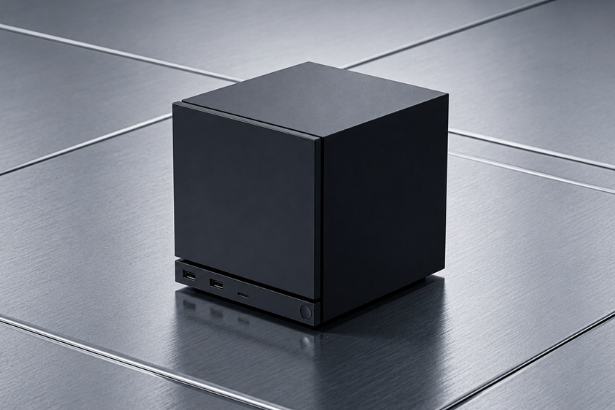
Steam Machine 2026 is closer to reality than it has ever been. Valve pushed out the SteamOS 3.8.9 Beta update this weekend that adds “initial support for upcoming Steam Machine hardware,” a signal the gaming community is reading as confirmation that launch is weeks away. Import records show 141 metric tons of game consoles have already arrived at Valve’s US warehouses since late April. Insider @HardwareSteam on X is pointing to June 23 as the announcement date with reservations opening June 30. The primary cloud over this launch is the price: internal reports from March suggested the Steam Machine’s target price had already topped the current $949 Steam Deck OLED, meaning the console is heading into a market at a price point higher than almost anyone anticipated.
SteamOS 3.8.9 Beta Adds Initial Steam Machine Hardware Support
The SteamOS 3.8.9 Beta Second Clutch update, pushed by Valve over the weekend, is the most official signal yet that the Steam Machine’s launch is approaching.
The most significant change for those waiting for the Steam Machine is the addition of initial support for upcoming Steam Machine hardware. Valve has not clarified what this initial support entails, but its inclusion in a beta that is actively being tested by existing Steam Deck users suggests that the codebase is being prepared for the hardware rather than the hardware waiting for software.
This addition follows the earlier discovery that a Steam Machine Welcome Tour was added to the Steam backend earlier in June, which had already prompted speculation that launch was only weeks away. The combination of backend Welcome Tour and SteamOS hardware support in the same week strengthens that timeline considerably.
141 Metric Tons of Game Consoles Already in US Warehouses
The import records are the most concrete evidence available that the Steam Machine is not simply approaching launch but has already arrived in Valve’s US distribution network.
Valve’s stockpile may now have grown to 141 metric tons of game consoles, which is roughly how much product labeled as “Game Consoles” has arrived in 12,600kg containers since April 23. This follows Valve’s pattern with the Steam Controller, which was spotted arriving via import records and launched approximately three weeks later.
For context, 141 metric tons of gaming hardware is a substantial inventory by any measure. If the Steam Machine weighs approximately the same as a compact mini-PC, this represents tens of thousands of units already stateside and ready for distribution. The pattern matches a company preparing for a major consumer launch rather than a limited early access program.
June 23 Announcement and June 30 Reservations: The Leaked Timeline
The most specific timing information available comes from leaker @HardwareSteam, whose account has been tracking Valve hardware developments throughout 2026.
According to the account: “Not 100% yet, but if I were to give an exact date off of what would make sense and what I was told, I’d say announcement Tuesday, June 23 at 10AM PT, and reservations Tuesday, June 30 at 10AM PT.”
The leaker also noted that reviewers are already receiving Steam Machine units, with the package including a Steam Controller, two mounting brackets, and the console itself. When asked about the price, the account replied that “it may be worth it to start and save up a good amount of money towards it,” declining to give a specific figure but suggesting the final price will be higher than many community members are hoping for.
The $950+ Price Problem: What RAMmageddon Did to Valve’s Console
The single biggest concern surrounding the Steam Machine launch is price. When Valve and its hardware partners announced the 2026 lineup in November 2025, the community received it with significant enthusiasm. That enthusiasm has been tempered month by month as component prices, particularly RAM, have risen sharply.
Back in March, the Steam Machine’s internal price target had already topped the current $949 Steam Deck OLED price, suggesting the system is going to launch at a very high price that will inevitably impact its appeal. The RAM price crisis, dubbed RAMmageddon by the gaming press, followed by price increases for SSDs and other components, affected Sony, Microsoft, and Nintendo in addition to Valve’s own Steam Deck, which received a significant price increase earlier in 2026.
The Steam Deck OLED sold out quickly even after its price increase, which provides some basis for optimism that the Steam Machine could succeed despite a premium price. However, the Steam Deck had years of established brand recognition and a clear value proposition before its price increased. The Steam Machine is asking consumers to evaluate a new platform at a price they did not anticipate when the announcement generated its initial excitement.
Steam Frame: 13 Tons of VR Headsets Land in Los Angeles
Alongside the Steam Machine, Valve’s VR headset, the Steam Frame, has reached the same “imminent launch” phase with a parallel set of import records.
On June 10, the German container ship Posen docked in Los Angeles after a two-week voyage from Shanghai. Import records show that Valve’s distribution partner Ceva offloaded nearly 32 metric tons of Virtual Reality Devices on Valve’s behalf, representing approximately 13 tons of actual product after subtracting the weight of five 40-foot shipping containers. VR analyst Brad Lynch flagged the import records and stated the units are almost certainly the first mass production shipments of the Steam Frame.
The import timeline is significant because when the new Steam Controller was spotted arriving via the same import tracking method, the product ended up launching just over three weeks later. If that pattern holds for the Steam Frame, the VR headset could be in consumers’ hands by early to mid-July.
Steam Frame Specs: Snapdragon 8 Gen 3, 2160×2160, Wi-Fi 7
The Steam Frame’s hardware specifications, confirmed at announcement, position it as a premium standalone VR headset competing directly with the Meta Quest line.
The Steam Frame runs a Snapdragon 8 Gen 3 processor built on 4nm manufacturing, with 16GB of RAM and storage options up to 1TB. The display delivers 2160 x 2160 pixels per eye. Connectivity includes Wi-Fi 7 as the primary wireless standard, with a wireless adapter for Wi-Fi 6E included for direct PCVR streaming from a gaming PC. The headset weighs 0.9 pounds including the headstrap, lighter than the Meta Quest 3’s 1.1 pounds.
The Steam Frame runs SteamOS and is both a standalone headset capable of running games natively and a PC streaming device. A Steam Frame Verified tag, analogous to the Steam Deck Verified tag, will identify games optimized for the headset. Valve has updated the minimum VR frame rate requirement for the Steam Frame Verified tag to 72fps, matching competing standalone headsets.
Mike Ybarra’s Take: Steam Machine Is PlayStation’s Biggest Rival
The Steam Machine has attracted attention from beyond the PC gaming community, including from former Xbox executive Mike Ybarra, who sees it as a direct competitive threat to Sony’s console business.
With former Xbox executive Mike Ybarra pointing to the system as PlayStation’s biggest upcoming console competitor, this hints at the beginning of a future market shakeup. Ybarra’s framing is significant because he is not simply commenting from a fan perspective but from a career spent inside the console wars.
The Steam Machine occupies a genuinely novel position in the market. It is not a handheld like the Steam Deck. It is not a traditional gaming PC. It is not a console in the Xbox or PlayStation sense because it runs a general-purpose Linux-based operating system. But it connects to a TV, it has a six-times-more-powerful-than-the-Steam-Deck chipset, it runs the entirety of Steam’s library, and it uses the Steam Machine Verified tag system to indicate which titles play best on the hardware. That is a value proposition PlayStation and Xbox cannot directly replicate.
The Steam Link 2 Question: What the Community Actually Wants
Alongside all the Steam Machine and Steam Frame excitement, a parallel conversation is happening in the community about a product Valve discontinued in 2018: the Steam Link.
Given the expected price of the Steam Machine, some fans now want Valve to bring back the Steam Link in a modernized form. The original Steam Link was a small box released in November 2015 that allowed users to stream PC games from a gaming PC to a TV. It was discontinued in 2018, with Valve shifting to a free Steam Link app for smartphones, smart TVs, and other devices.
The ideal scenario for fans would be a new Steam Link with up-to-date wireless technology, an Ethernet port, 4K support, low decoding latency, HDR, VRR, and ideally direct integration of the Steam Controller. Especially given current speculation about a potentially high Steam Machine price, such a solution could be more appealing to many gamers, particularly those who already own a powerful gaming PC and do not need a second computer under their TV.
The Steam Link 2 discussion reflects a real tension in Valve’s 2026 hardware strategy. The company is launching a premium Linux gaming console that may cost significantly more than a PlayStation 5. Users who already have gaming PCs are asking a reasonable question: why spend $950+ on a second machine when a $100 streaming box would serve the same living-room function for most of their library?
What the Steam Machine Is and Why It Matters
The Steam Machine is Valve’s living-room Linux gaming console, a six-inch cube designed to sit under a TV and run the entire Steam library on a hardware platform six times more powerful than the Steam Deck. It runs SteamOS, Valve’s Linux-based operating system, and uses the Steam Machine Verified tag to identify games that play optimally on the console.
Once you sign in with your Steam account, your entire library will be there waiting for you. That is the core value proposition that separates the Steam Machine from a gaming PC: the simplicity of a console experience with access to the breadth of Steam’s catalog rather than the curated, publisher-dependent library of Sony or Microsoft.
For the gaming industry as a whole, the Steam Machine represents the first serious attempt to bring Steam’s PC gaming ecosystem into the living room at console scale. Valve’s Steam Deck proved there is a significant market for PC gaming in a non-traditional form factor. The Steam Machine is the living-room iteration of that same bet.
Latest Updates
All Steam Machine and Steam Frame information is current as of June 15, 2026. WCCFtech confirmed that SteamOS 3.8.9 Beta Second Clutch added “initial support for upcoming Steam Machine hardware,” that the Steam Machine’s internal price target topped $949 in March, that former Xbox executive Mike Ybarra called the Steam Machine PlayStation’s biggest upcoming competitor, and that a queue system may be needed to prevent scalpers at launch. Notebookcheck confirmed the Steam Link 2 community movement on Reddit, the Steam Link’s original November 2015 to November 2018 lifecycle, and the specifications fans are requesting including 4K, HDR, VRR, and Wi-Fi. The Verge confirmed that Valve imported 141 metric tons of game consoles since April 23 and that VR analyst Brad Lynch flagged the 32-metric-ton Steam Frame import arriving at the Port of Los Angeles on June 10 via the container ship Posen.
Full sources: WCCFtech | The Verge | Notebookcheck
Broader Implications
The Steam Machine launch, whenever it formally arrives, will be one of the most significant events in gaming hardware in several years. Valve has not shipped a console-category product to living rooms since the original Steam Machines in 2015, which were broadly considered a failure. The 2026 iteration is a fundamentally different product built on a decade of SteamOS development, a proven Steam Deck form factor validation, and import records suggesting genuine mass production readiness.
The price question will be the defining factor. If the Steam Machine launches above $949, it is competing directly with a PlayStation 5, which has an established library, exclusive titles, and a decade of consumer trust. The value proposition of the entire Steam library is meaningful, but it requires PC gaming players who have not previously engaged with consoles, or console players willing to bet on a new platform with no console exclusives.
The Steam Frame is the more exciting story from a technology perspective. A Wi-Fi 7 standalone VR headset running SteamOS with access to the full Steam VR library, arriving at a moment when Meta is preparing Quest 4 and Apple is working on a lower-cost Vision Pro, could represent a genuine alternative in the premium VR space. Whether 13 tons of headsets represents enough supply for that ambition will become clear very soon.
For more gaming hardware, Valve, and Steam news, visit The Tech Marketer.
Frequently Asked Questions
1. When will the Steam Machine 2026 be announced?
Leaker @HardwareSteam on X reported that the Steam Machine announcement is expected on Tuesday, June 23, 2026 at 10AM PT, with reservations opening on Tuesday, June 30 at 10AM PT. This timeline has not been officially confirmed by Valve. WCCFtech confirmed that SteamOS 3.8.9 Beta added initial hardware support, suggesting the launch is only weeks away.
2. How much will the Steam Machine cost in 2026?
Valve has not officially announced a price. Internal reports from March 2026 indicated the Steam Machine’s target price had already exceeded the current $949 Steam Deck OLED price, meaning the console is expected to launch significantly above $949. Rising RAM prices throughout 2025-2026 pushed the price higher than the community anticipated when the hardware was announced in November 2025.
3. What is the Steam Frame and when is it launching?
The Steam Frame is Valve’s standalone VR headset, running a Snapdragon 8 Gen 3 processor with 2160×2160 resolution per eye, 16GB RAM, and Wi-Fi 7 connectivity. It weighs 0.9 pounds and supports both standalone gaming and PC streaming via wireless adapter. Import records from June 10 show approximately 13 tons of Steam Frame units arrived at the Port of Los Angeles. Based on Valve’s Steam Controller launch pattern, a late June or early July release is anticipated.
4. What is the Steam Machine and how is it different from a gaming PC?
The Steam Machine is a six-inch cube living-room gaming console running SteamOS, Valve’s Linux-based operating system. It is six times more powerful than the Steam Deck and runs the entire Steam library, with a Steam Machine Verified tag identifying optimized titles. It connects to a TV and offers a console-like experience with access to PC gaming’s full breadth of software, without requiring PC hardware management.
5. What is the Steam Link 2 and is it coming?
Steam Link 2 is a community-desired update to Valve’s original Steam Link streaming box, which was released in 2015 and discontinued in 2018. Following speculation about the Steam Machine’s high price, Reddit users and gaming communities have called for Valve to release a modern Steam Link with 4K support, HDR, VRR, Wi-Fi connectivity, and Steam Controller integration. Valve has not announced any such product.