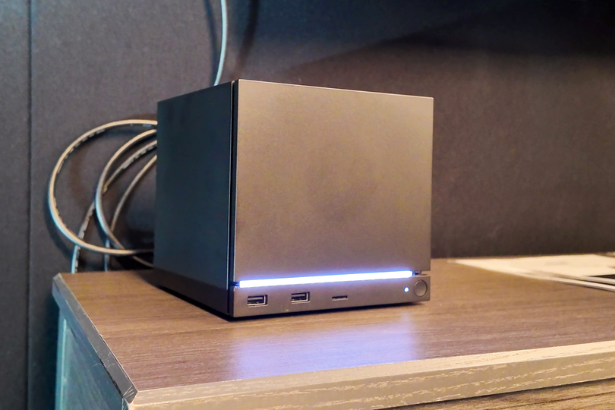
More than a decade after the original concept struggled to gain traction, Valve’s Steam Machine is back with a modern vision built around SteamOS
The Steam Machine is trending across Google Search after a wave of reviews and announcements reignited interest in Valve’s long-dormant gaming hardware initiative. New coverage from Digital Foundry, The Verge, and PC Gamer suggests Valve may finally be positioned to deliver the living-room gaming PC experience it originally envisioned years ago.
Unlike the fragmented first-generation Steam Machines that launched in 2015, the new approach centers around SteamOS, Valve’s Linux-based gaming platform that gained significant momentum through the success of the Steam Deck.
The result is a product that could reshape the relationship between consoles and traditional gaming PCs.
Background and Context
Valve first introduced the Steam Machine concept in 2013.
The idea was ambitious:
Create a console-like gaming PC powered by SteamOS that could compete directly with PlayStation and Xbox in the living room.
The original launch failed to achieve widespread adoption for several reasons:
- Limited game compatibility
- High hardware costs
- Consumer confusion
- Weak ecosystem support
- Competition from established consoles
Over time, most Steam Machine hardware disappeared from the market.
However, Valve never abandoned SteamOS.
The company’s focus shifted toward software development and eventually culminated in the enormously successful Steam Deck handheld gaming device.
The Steam Deck proved that Linux-based gaming could work at scale.
That success laid the groundwork for the Steam Machine’s return.
Latest Update: Steam Machine Returns With Modern SteamOS Support
The latest Steam Machine hardware arrives in a very different gaming environment than its predecessor.
According to recent reviews and industry reports, the system combines:
- SteamOS
- Modern AMD hardware
- Console-style interface
- Full PC gaming capabilities
- Expanded game compatibility
Perhaps the most significant development is Valve’s growing effort to make SteamOS available beyond its own hardware.
Recent announcements suggest broader support for desktop systems and potentially NVIDIA-powered configurations, a move that could dramatically expand SteamOS adoption.
This strategy shifts SteamOS from a device-specific operating system into a broader gaming platform.
Why the Steam Machine Is Trending
Steam Deck Changed Everything
The Steam Deck effectively served as a proof of concept.
Valve demonstrated that a Linux-based gaming ecosystem could deliver:
- Strong performance
- Excellent game compatibility
- User-friendly experiences
- Large-scale consumer adoption
That success has led gamers to revisit the Steam Machine concept with fresh optimism.
SteamOS Is More Mature
One of the biggest weaknesses of the original Steam Machine was software support.
Today, Valve’s Proton compatibility layer allows thousands of Windows games to run on SteamOS with minimal effort.
This dramatically reduces the compatibility issues that plagued earlier Steam Machines.
Console and PC Gaming Are Converging
The line separating consoles and gaming PCs continues to blur.
Gamers increasingly want:
- Console simplicity
- PC flexibility
- Open ecosystems
- Upgradeable hardware
The Steam Machine aims to combine those benefits into a single platform.
Expert Analysis
Digital Foundry’s Early Verdict
Reviewers praised the hardware design and overall engineering quality.
Performance results suggest the machine can comfortably handle modern AAA titles while maintaining the streamlined user experience many console gamers prefer.
However, reviewers also noted that pricing remains a challenge.
Unlike traditional consoles that are often sold near cost, gaming PCs must compete against highly optimized hardware from Sony and Microsoft.
PC Gamer’s Perspective
PC Gamer highlighted the value question.
While the Steam Machine offers flexibility and openness unavailable on traditional consoles, buyers must determine whether those advantages justify the premium price.
For experienced PC gamers, the answer may be yes.
For casual players, the decision is less obvious.
The Verge Focuses on SteamOS Expansion
The Verge’s reporting emphasized Valve’s broader strategy.
Instead of treating SteamOS as exclusive software, Valve appears interested in transforming it into a viable gaming operating system for a wide range of devices.
That could prove more important than any individual Steam Machine release.
Broader Implications
A New Challenge to Windows Gaming
For decades, Microsoft Windows has dominated PC gaming.
SteamOS represents the strongest alternative platform to emerge in years.
If adoption continues growing, developers may increasingly optimize games directly for Linux-based environments.
Increased Competition Benefits Gamers
More competition in gaming platforms often leads to:
- Better pricing
- Faster innovation
- Improved software support
- Greater consumer choice
Valve’s renewed hardware efforts could pressure competitors to improve their own ecosystems.
Expansion Beyond Dedicated Hardware
Perhaps the most interesting development is that SteamOS may ultimately matter more than the Steam Machine itself.
If Valve successfully creates a broad ecosystem of SteamOS-compatible devices, the operating system could become a major force in gaming regardless of hardware manufacturer.
Steam Machine vs Steam Deck
| Feature | Steam Machine | Steam Deck |
|---|---|---|
| Form Factor | Desktop/Living Room PC | Handheld Gaming Device |
| Upgradeability | Higher | Limited |
| Performance | Higher Potential | Portable Optimized |
| TV Gaming | Primary Focus | Secondary |
| Price | Higher | More Affordable |
| Expandability | Extensive | Moderate |
Rather than competing directly, the two products may ultimately strengthen the same ecosystem.
What Happens Next?
Several factors will determine whether the Steam Machine succeeds where its predecessor struggled.
SteamOS Adoption
Valve must continue improving compatibility and hardware support.
Hardware Pricing
The system must remain competitive against both gaming consoles and traditional PCs.
Developer Support
Continued optimization for SteamOS will be essential.
Ecosystem Growth
The broader SteamOS ecosystem may ultimately become the project’s most important success metric.
If Valve executes effectively, the Steam Machine could become more than a niche product.
It could represent the next phase of PC gaming’s evolution.
Conclusion
The Steam Machine is no longer simply a revived hardware experiment.
It represents Valve’s broader vision for an open gaming ecosystem powered by SteamOS.
Thanks to the success of the Steam Deck, dramatically improved game compatibility, and growing interest in alternatives to Windows gaming, the market conditions are far more favorable than they were a decade ago.
The biggest question is no longer whether Steam Machines can exist.
It’s whether SteamOS can become a legitimate platform capable of reshaping the future of PC gaming.
FAQ
What is the Steam Machine?
The Steam Machine is a gaming PC platform built around Valve’s SteamOS operating system and designed to deliver a console-like gaming experience.
Why is the Steam Machine trending?
New reviews and SteamOS announcements have renewed interest in Valve’s gaming hardware strategy.
Is the new Steam Machine better than the original?
Early reviews suggest major improvements in software compatibility, hardware performance, and overall usability.
Does the Steam Machine use Windows?
No. It primarily uses SteamOS, Valve’s Linux-based gaming operating system.
How does the Steam Machine compare to the Steam Deck?
The Steam Machine focuses on living-room desktop gaming, while the Steam Deck is designed for portable gaming.
SOURCES & REFERENCES
- Digital Foundry: Steam Machine Review: Beautiful Hardware, Console Performance at a Price
- The Verge: Valve Will Finally Let You Build Your Own Steam Machine With SteamOS
- PC Gamer: I’ve Tested the Steam Machine and at This Price, I Don’t Think It Makes Much Sense
- Valve SteamOS Documentation
- Steam Platform Developer Resources