


Introduction
The Steam Frame review conversation is revealing a familiar Valve pattern: a piece of hardware that feels both unconventional and genuinely exciting, even when its rough edges are impossible to ignore.
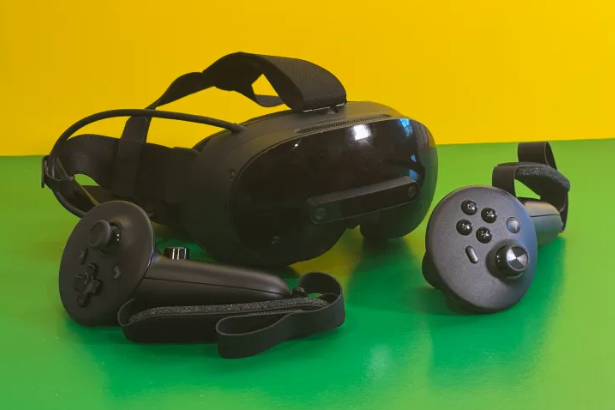
The company’s new headset is not simply another VR device competing with the Meta Quest 3. It is a wearable computer designed to run Steam games, stream demanding PC titles, and turn virtual reality into a private workspace.
At $1,059 for the 256GB model and $1,299 for 1TB, the Steam Frame is a significant investment. The question is whether its comfort, flexibility, and wireless gaming experience justify the premium.
Reviews from The Verge, IGN, and Ars Technica point toward a product with impressive hardware and a compelling long-term vision, but one that still has software instability, limited battery life, and a relatively high price.
Background and Context
Valve returns to virtual reality
Valve helped define modern PC virtual reality through its partnership with HTC and the development of SteamVR.
The company later released the Valve Index, a premium headset that became known for its tracking, controllers, and integration with Steam.
But the VR market changed. Meta’s Quest headsets made standalone wireless VR more accessible, reducing the need for expensive gaming PCs and external tracking hardware.
The Steam Frame represents Valve’s return to the market with a different approach.
Rather than requiring a headset to remain connected to a computer, the Frame can operate independently while also offering wireless streaming from a more powerful PC.
More than a conventional VR headset
The Verge describes the Steam Frame as an experimental spatial computer aimed at gamers who want to play both traditional flat-screen Steam games and VR titles.
That distinction is important.
The device can function as a virtual gaming screen, a VR headset, a Linux computer, and a multi-monitor workspace.
The result is a product that is difficult to classify using traditional VR categories.
It is not simply competing on resolution or game selection. It is also competing on the idea that a computer can become something you wear rather than something that sits on a desk.
Latest Update: Steam Frame Reviews Highlight Comfort and Ambition
Pricing and availability
The Steam Frame starts at $1,059 with 256GB of storage. The 1TB model costs $1,299.
The pricing places it well above the Meta Quest 3 and makes it a premium purchase for enthusiasts.
The Verge’s Steam Frame review argues that buyers should not dismiss the headset simply because it costs more than mainstream VR alternatives.
Instead, the central question is whether the device’s comfort and unique capabilities justify its price.
A headset designed for long sessions
Comfort is one of the strongest points in the early reviews.
The Verge reports that the headset weighs just over one pound with its optional top strap attached, while Ars Technica measures the full setup at approximately 440 grams.
The split design places the battery toward the back of the head, helping reduce the front-heavy feeling common among VR headsets.
Ars Technica describes the rear-mounted battery as a major improvement in balance, while The Verge’s reviewer says the Frame is comfortable enough to wear for extended periods without leaving the usual pressure marks.
That is more important than it might sound.
A headset can have excellent displays and powerful hardware, but if wearing it becomes uncomfortable after 20 minutes, the device will spend most of its life in a drawer.
Wireless PC gaming is a major strength
The Steam Frame can stream games from a desktop or laptop through Wi-Fi, including an included 6GHz wireless dongle designed to improve connection stability.
IGN’s Steam Frame review highlights the experience of streaming demanding games from a powerful gaming PC to a private virtual theater.
That is one of the headset’s most attractive use cases.
A user with a capable desktop can access demanding games without physically connecting a cable to the headset.
Ars Technica reports that its wireless streaming tests generally delivered 5 to 10 milliseconds of ping, although setup sometimes required restarting the stream or adjusting the desktop SteamVR application.
The experience is not entirely effortless, but the underlying technology appears promising.
Steam Frame Hardware and Specifications
| Specification | Steam Frame |
|---|---|
| Starting price | $1,059 |
| Storage options | 256GB and 1TB |
| Processor | Qualcomm Snapdragon 8 Gen 3 |
| Display resolution | 2160 × 2160 per eye |
| Maximum refresh rate | 144Hz |
| Field of view | Approximately 110 degrees |
| Battery | 21.6 Wh |
| Operating system | SteamOS on ARM |
| Connectivity | Wi-Fi and included 6GHz USB dongle |
| Controllers | VR controllers with gamepad-style controls |
| Eye tracking | Supported |
| Passthrough | Monochrome standard camera system |
| Optional camera | Arcturus Vision Camera with color passthrough |
Specifications and review findings are based on the published coverage from The Verge and Ars Technica.
Expert Insights and Analysis
The Verge: An exciting early-access experience
The Verge’s Sean Hollister gives the Steam Frame a score of 5 out of 10.
That score reflects a split verdict.
The headset is described as exceptionally comfortable and capable of playing games in several different ways. But it also suffers from crashes, bugs, inconsistent controls, and a battery that can last as little as one hour during demanding use.
The review’s broader argument is that the Frame is best understood as early-access hardware.
Valve is effectively building a new platform while users test it.
That approach has precedent. The Steam Deck launched with its own limitations, then improved through software updates.
The question is whether the Steam Frame can follow a similar path.
Ars Technica: Excellent comfort, serious limitations
Ars Technica’s review presents a similar picture.
The headset’s weight distribution is a major advantage, and the displays offer strong specifications on paper.
However, the review reports noticeable tracking judder, limited battery life, fan noise, and software compatibility issues.
In Performance mode, battery life was generally around 90 minutes for VR games. Playtime mode extended sessions beyond two hours, but at the cost of lower resolution and a 72Hz refresh rate.
That creates a difficult trade-off.
Users must choose between better graphics and shorter sessions or longer battery life with a visible reduction in quality.
IGN: The appeal of a private gaming theater
IGN’s review emphasizes the Steam Frame’s ability to make almost any Steam game feel like a large-screen gaming experience.
Streaming a demanding PC title to a virtual theater can offer a level of flexibility that traditional handhelds and televisions cannot easily match.
For players who already own a powerful gaming PC, the Frame may be more compelling than it is for someone buying their first VR device.
The hardware becomes an extension of an existing gaming setup rather than a standalone replacement for everything else.
Broader Implications
Is the Steam Frame a Steam Deck moment?
The Steam Deck succeeded because it made PC gaming more convenient without requiring users to understand the complexity of a traditional gaming PC.
The Steam Frame is attempting something similar, but the challenge is harder.
The device must manage VR rendering, wireless streaming, battery consumption, input tracking, and a new ARM-based software environment.
It also requires users to wear a computer on their face.
That creates a higher barrier to adoption than a handheld console.
The Steam Frame may not become a mass-market product, but it could still influence the direction of future gaming hardware.
ARM compatibility is a major technical challenge
The Frame uses a Qualcomm Snapdragon 8 Gen 3 chip and runs SteamOS on ARM architecture.
That is a significant departure from the x86-based hardware used in the Steam Deck.
The transition creates compatibility challenges for existing games.
Ars Technica reports that some SteamVR titles failed to launch, suffered graphical glitches, or crashed the headset.
The Verge similarly found that the list of verified games remains limited and that even a verified title may still have problems.
Valve’s software work will therefore be crucial.
If the company can improve compatibility and make the process seamless, the Frame could become a much more attractive platform.
Modular hardware could extend the product’s lifespan
Valve has designed the Frame with modular components.
The compute core can be removed, and the company plans additional accessories, including a future enthusiast kit with expanded battery capacity and upgraded audio.
The Verge also tested an optional Arcturus camera that adds color passthrough and spatial video recording.
This modular approach could help the device remain useful as accessories and software improve.
It also offers a possible alternative to the traditional cycle of replacing an entire headset to gain a few new features.
Related History and Comparable Technologies
Valve Index
The Valve Index helped establish Valve’s reputation for premium PC VR hardware.
Its tracking system and controllers were major selling points, but the headset required a gaming PC and external hardware.
The Steam Frame removes much of that friction by combining computing, tracking, and wireless connectivity in one device.
Meta Quest 3
The Meta Quest 3 remains a major comparison point.
It offers standalone VR at a substantially lower price and benefits from a more mature software ecosystem.
The Steam Frame’s advantages are its Steam integration, virtual desktop capabilities, and wireless PC gaming experience.
The Quest 3’s advantages are affordability and a more established standalone VR platform.
For many buyers, the decision will come down to whether they value Steam’s ecosystem enough to justify the price difference.
Apple Vision Pro
Apple’s Vision Pro also treats spatial computing as more than gaming.
Its emphasis on virtual screens, productivity, and immersive media overlaps with some of the Steam Frame’s ambitions.
However, Valve is targeting a different audience.
The Frame is designed primarily around gaming and enthusiast computing, while the Vision Pro is positioned as a premium spatial computer.
The comparison highlights how the boundaries between gaming hardware and general-purpose computers are becoming less distinct.
What Happens Next
Software updates will determine the experience
Valve has a history of improving hardware through ongoing software support.
The Verge reports that developers are already responding to bug reports and working on improvements to streaming, controls, and system stability.
The Frame’s long-term success will depend on how quickly those fixes arrive.
A headset that feels unfinished at launch can improve substantially if updates address the problems users encounter most frequently.
Hand tracking could make the device more accessible
Valve is working toward hand tracking that would allow users to interact with the headset without relying entirely on its controllers.
That could make the Frame feel more natural as a computer and reduce friction when switching between gaming and productivity.
The feature is not yet available in the reviewed hardware experience.
Battery technology remains a constraint
The Steam Frame’s battery life is one of its clearest weaknesses.
The headset’s compact rear-mounted battery helps balance the device, but demanding VR use can drain it quickly.
Future accessories may improve endurance, but the underlying trade-off between weight, power, and performance will remain difficult.
The price may limit mainstream adoption
The Steam Frame is not positioned as an inexpensive entry point into VR.
Its price makes it a product for enthusiasts who already own a gaming PC and want a more flexible way to access their library.
That audience may be willing to tolerate early software issues.
Mainstream buyers may prefer a cheaper headset that offers a more polished experience out of the box.
Conclusion
The Steam Frame is one of Valve’s most ambitious hardware products in years.
It combines standalone VR, wireless PC streaming, traditional Steam gaming, and virtual multi-monitor computing in a headset that reviewers consistently praise for comfort.
But the experience is not without serious compromises.
Battery life is short, software compatibility remains uneven, and the $1,059 starting price makes experimentation expensive.
The most accurate way to view the Steam Frame is as a promising platform rather than a finished revolution.
For gaming enthusiasts who enjoy exploring new technology, the device could be an exciting purchase.
For everyone else, waiting for software updates, improved battery options, and a clearer value proposition may be the smarter move.
Frequently Asked Questions
1. What is the Steam Frame?
The Steam Frame is Valve’s wireless VR headset and wearable computer. It can run supported games locally, stream games from a PC, and provide virtual screens for gaming and productivity.
2. How much does the Steam Frame cost?
The Steam Frame starts at $1,059 for the 256GB version. A 1TB model costs $1,299.
3. Is the Steam Frame better than the Meta Quest 3?
It depends on what you value. The Steam Frame offers deeper Steam integration and strong wireless PC gaming capabilities, while the Meta Quest 3 is less expensive and has a more mature standalone VR ecosystem.
4. How long does the Steam Frame battery last?
Reviewers report roughly one to two hours of use, depending on the game, performance settings, and streaming conditions. More demanding VR games can reduce battery life further.
5. Can the Steam Frame play normal PC games?
Yes. The headset can stream flat-screen games from a PC and run some less demanding games locally through its ARM-based hardware and software compatibility layers.
6. Is the Steam Frame comfortable?
Comfort is one of its strongest features. The split design and rear-mounted battery reduce front-heavy pressure, making it easier to wear for extended sessions than many competing headsets.
7. Should you buy the Steam Frame?
It is best suited to gaming enthusiasts who own a powerful PC, want wireless VR and virtual screens, and are comfortable with early software limitations. Buyers seeking a cheaper, more polished VR experience may want to consider alternatives.