Introduction
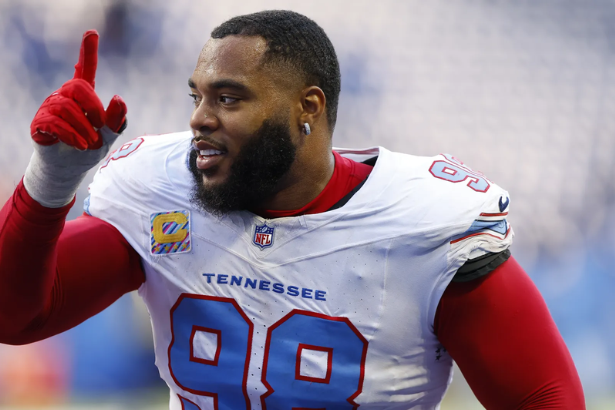
The Jeffery Simmons trade has become one of the defining NFL stories of the week, with the Chicago Bears acquiring the Tennessee Titans’ All-Pro defensive tackle in a blockbuster transaction that sends significant draft capital to Nashville.
According to reporting by ESPN and Sports Illustrated, Chicago is acquiring Simmons and a 2028 fifth-round pick in exchange for its 2027 and 2028 first-round selections and a 2027 fourth-round pick. The move gives the Bears one of the NFL’s most disruptive interior defensive linemen while handing Tennessee valuable resources for its ongoing rebuild.
The timing is significant. Chicago is attempting to turn a promising season into a legitimate championship run, while Tennessee is confronting the difficult reality of building a competitive roster after a disappointing start.
Simmons is not an ordinary midseason acquisition. He is an established defensive star with Pro Bowl experience, All-Pro recognition, and the ability to pressure quarterbacks while disrupting running plays. His arrival could change how opposing offenses approach Chicago’s defensive front.
But the price is substantial. Two first-round picks and a fourth-rounder represent a considerable investment in one player, particularly for a franchise trying to build a contender that can remain competitive over several seasons.
For the Bears, the calculation is straightforward: acquire a proven difference-maker now rather than wait for draft picks to develop. For the Titans, the challenge is turning those future selections into the depth and talent required to rebuild.
Background and Context: Who Is Jeffery Simmons?
Jeffery Simmons established himself as one of the NFL’s premier defensive tackles during his time with the Tennessee Titans.
Selected by Tennessee in the first round of the 2019 NFL Draft, Simmons developed into a cornerstone of the franchise’s defense. His combination of strength, explosiveness, and ability to disrupt plays in the backfield made him valuable against both the run and the pass.
Defensive tackles rarely receive the same public attention as quarterbacks, wide receivers, or edge rushers. Yet elite interior defenders can influence almost every offensive possession.
They collapse the pocket from the middle, occupy blockers, disrupt running lanes, and force quarterbacks to adjust their timing. A defensive tackle who can consistently win one-on-one matchups also creates opportunities for teammates to reach the quarterback.
Simmons brings those qualities to Chicago.
Sports Illustrated’s reporting on the transaction describes him as a proven All-Pro defender who had continued producing at a high level during the 2026 season. The publication also noted that Chicago had been looking for help on the defensive interior.
Why Simmons became so valuable
The appeal of Simmons lies in his versatility.
A defensive coordinator can deploy him to attack gaps, pressure the quarterback, disrupt screens, and challenge interior offensive linemen. His presence can also force offenses to commit extra blocking resources to the middle of the field.
That creates a tactical advantage.
When an offense double-teams an elite defensive tackle, another defender may receive a favorable matchup. When the offense chooses to block him with one lineman, the defender has an opportunity to create immediate pressure.
Simmons does not need to record a sack on every possession to influence a game. Consistently disrupting an offense’s structure can be just as valuable.
A major contract commitment
The financial side of the transaction is also important.
Sports Illustrated reported that Simmons signed a major contract extension with Tennessee in 2026, with the deal extending through the 2029 season. The published coverage cites a three-year extension worth approximately $106 million, although reports differ slightly on the total figure.
That commitment means Chicago is acquiring more than a short-term rental. The Bears have an opportunity to build their defensive plans around Simmons over multiple seasons.
However, the precise cap charges, guarantees, remaining obligations, and financial consequences of the trade should be checked against the final transaction documentation before publication.
Latest Update: Breaking Down the Jeffery Simmons Trade
The deal brings together two franchises with different immediate priorities.
Chicago is investing heavily in a proven defensive star. Tennessee is prioritizing future draft capital as it attempts to construct a more competitive roster.
The reported trade terms
According to reporting attributed to ESPN’s Adam Schefter and summarized by Sports Illustrated, the transaction is structured as follows.
| Chicago Bears Receive | Tennessee Titans Receive |
|---|---|
| Defensive tackle Jeffery Simmons | 2027 first-round draft pick |
| 2028 fifth-round draft pick | 2028 first-round draft pick |
| 2027 fourth-round draft pick |
The draft compensation is the most striking element.
Chicago is surrendering two future first-round selections, which could otherwise be used to draft young starters, trade for additional assets, or address several roster weaknesses.
In return, the Bears receive a player whose NFL production is already established.
Tennessee’s return offers a different kind of value. First-round picks provide opportunities to acquire premium young talent, and the team can potentially use those selections to address several positions rather than relying on one veteran star.
The deal also highlights how much NFL teams may be willing to pay for elite defensive talent when they believe a championship window is open.
How the deal came together
Sports Illustrated’s reporting on the transaction says the trade developed quickly.
Titans general manager Mike Borgonzi reportedly received a call from Bears general manager Ryan Poles late Wednesday, October 28. The two sides discussed the proposal, and the deal advanced after discussions involving the teams’ coaches and ownership. The transaction was reported on Thursday, October 29.
The relationship between the executives may have helped the negotiations.
According to Sports Illustrated’s account, Poles and Borgonzi had known each other for years through their work in professional football, including their time with the Kansas City Chiefs organization.
That history may have made it easier to conduct sensitive discussions quickly, although it does not independently establish why either side accepted the final terms.
The result was a transaction that immediately changed the outlook for both franchises.
Why Chicago was willing to pay the price
The Bears are making a clear statement about their ambitions.
A team can accumulate draft picks for years and still struggle to find the right combination of talent, coaching, and consistency. Acquiring an established star offers a more immediate path to improving a specific part of the roster.
Simmons addresses a premium defensive position and gives Chicago a player who can contribute immediately.
Sports Illustrated’s analysis noted that the Bears had pursued other defensive tackle options before completing the Simmons transaction. The team’s willingness to pursue a high-profile interior defender suggests that strengthening the defensive front was a meaningful priority.
The trade also places pressure on Chicago’s front office.
When a team gives up multiple first-round selections, the move creates an expectation that the acquired player will make a meaningful difference. The Bears are effectively betting that Simmons’ immediate and long-term contributions will outweigh the value of the draft picks they surrender.
That is a reasonable strategy for a genuine contender, but it is not without risk.
Expert Analysis: What Jeffery Simmons Brings to the Bears
The most important question is not how many headlines the transaction generates. It is whether Simmons makes Chicago a more difficult team to play against.
The answer depends on how the Bears use him and how the rest of the defensive line performs around him.
1. More pressure from the interior
Quarterbacks generally prefer to step forward in the pocket when edge rushers threaten from the outside.
A dominant interior defender can take that option away.
If Simmons consistently pushes offensive linemen backward, quarterbacks have less room to step into throws. That can disrupt passing mechanics, shorten the time available to read the field, and create opportunities for other defenders.
The effect extends beyond sacks.
Pressures, hurried throws, disrupted passing lanes, and forced movement can all influence the outcome of a possession.
Chicago’s defensive coaches will want Simmons to create those problems while coordinating his rushes with the team’s edge defenders.
2. A stronger response to the running game
Simmons also offers value against the run.
Interior defensive linemen must identify blocking schemes, maintain gap discipline, and prevent running backs from finding easy paths through the middle.
An effective defensive tackle can force running backs to redirect their runs, giving linebackers more time to react.
This matters particularly against offenses that rely on inside runs, play-action passes, and repeated attempts to establish physical control at the line of scrimmage.
Chicago does not need Simmons to make every tackle. It needs him to make the offense work harder for every yard.
3. More opportunities for teammates
One of the less obvious benefits of acquiring an elite defensive tackle is the attention he attracts.
Offensive coordinators may respond by assigning extra protection to Simmons or changing blocking schemes to prevent him from disrupting plays.
Those adjustments can create opportunities for edge rushers and linebackers.
The Bears will benefit most if the rest of the defense converts those opportunities into pressure, tackles for loss, and turnovers.
This is why the transaction should be evaluated as a defensive system investment rather than a simple player-for-picks exchange.
4. The risk of paying too much
The price remains the central concern.
Two first-round picks could become multiple starting-caliber players. Those players might be younger, less expensive during their rookie contracts, and better suited to a long-term roster-building strategy.
Chicago has chosen certainty over potential.
That does not automatically make the decision correct or incorrect. It means the team is prioritizing a proven contributor rather than distributing its investment across several future selections.
The calculation becomes more favorable if Simmons stays healthy, maintains his performance, and helps Chicago win playoff games.
It becomes more difficult to justify if injuries, declining production, or weaknesses elsewhere prevent the Bears from turning their investment into meaningful postseason success.
Broader Implications: What the Trade Means for the NFL
The Jeffery Simmons trade is about more than one player changing teams. It offers a window into how franchises evaluate draft capital, roster timelines, and the price of elite defensive talent.
For the Chicago Bears: A championship window opens wider
Chicago is betting that its current roster is good enough to justify an aggressive move.
Instead of waiting for future draft selections to produce results, the Bears are acquiring an established player who can improve their defensive front immediately.
The decision reflects a familiar NFL strategy: once a team believes it has a realistic chance to contend, it may be willing to exchange future flexibility for immediate impact.
But the move also increases the importance of the next several seasons.
Chicago must continue developing its young players, manage its salary cap, and address any weaknesses that Simmons cannot solve by himself.
A great defensive tackle cannot compensate for every coverage breakdown, missed tackle, or offensive inconsistency.
The Bears have made their intentions clear. The next step is to demonstrate that the roster can deliver on them.
For the Tennessee Titans: Draft capital becomes the priority
Tennessee is pursuing a different objective.
The Titans’ disappointing start to the 2026 season has raised questions about the team’s short-term prospects. By trading Simmons, the franchise has exchanged an established star for assets that can be used to reshape the roster.
Sports Illustrated reported that Tennessee was 1-6 entering the transaction and viewed the draft compensation as an opportunity to accelerate its rebuilding process.
The strategy is straightforward in theory.
The Titans can use the first-round picks to select young players, trade down to acquire additional selections, or package assets to pursue specific targets.
The challenge is execution.
Draft picks are valuable because of the possibilities they create, but they do not guarantee success. Tennessee must identify the right players, develop them effectively, and build a coherent roster around its emerging core.
The trade will be judged over several years, not merely by the number of selections involved.
For the wider NFL: The defensive tackle market gets more interesting
A blockbuster trade for an established defensive tackle can influence how other teams value players at the same position.
Sports Illustrated reported that the Simmons deal was part of a broader period of aggressive defensive-line transactions ahead of the 2026 trade deadline.
Teams evaluating their own rosters may now reconsider whether they should retain a veteran star, negotiate a contract extension, or explore the trade market.
However, Simmons’ price should not automatically become the benchmark for every defensive tackle.
Age, contract terms, production, injury history, and team control all influence a player’s value.
The deal does demonstrate that a franchise seeking an immediate competitive advantage may be willing to pay a premium for a proven defensive difference-maker.
For NFL fans and fantasy football audiences
The transaction also creates several storylines for fans.
Bears supporters will want to see how quickly Simmons integrates into the defensive scheme. Titans fans will focus on how the front office uses the draft capital and whether the remaining defense can stay competitive.
Fantasy football managers should be more cautious about drawing immediate conclusions.
Simmons’ arrival could improve Chicago’s defensive performance, but defensive tackles generally have less direct fantasy relevance than edge rushers, linebackers, and defensive backs in many standard formats.
The trade could influence individual defenders’ opportunities, but managers should rely on updated depth charts, snap counts, and scoring formats rather than assume every teammate benefits equally.
Suggested internal link: Publish a related explainer on The Tech Marketer about the data-driven side of NFL roster building, including how teams evaluate player performance, draft picks, and contract value.
Related History: Why NFL Teams Trade Multiple First-Round Picks
The Simmons deal belongs to a broader history of teams sacrificing significant draft capital to acquire established talent.
These trades often generate strong reactions because the immediate value of a proven player is easier to understand than the uncertain value of future selections.
Yet the long-term outcomes depend on the players involved, the teams’ competitive situations, and how effectively the assets are used.
The appeal of proven production
A first-round pick can become a franchise cornerstone, a useful starter, or a player who never fully develops.
An established veteran removes some of that uncertainty.
Teams can evaluate a player’s professional production, experience, physical capabilities, and fit with their existing roster.
That does not eliminate risk. A veteran can decline, suffer an injury, or struggle in a new scheme. But teams generally have more evidence about what an established player can contribute.
For a franchise that believes it is close to a championship, that certainty can be attractive.
The danger of sacrificing future flexibility
Draft picks also provide flexibility that extends beyond the players selected.
A team can trade a first-round pick for a veteran, exchange it for several later selections, or use it as part of a package to move up in the draft.
Giving up multiple first-rounders limits those options.
It can also make it harder to replace aging starters or address several weaknesses at once.
The Bears will therefore need to evaluate the Simmons trade within the context of their entire roster, rather than considering his individual production in isolation.
Why Tennessee’s approach could work
For Tennessee, the logic runs in the opposite direction.
A franchise that is not ready to contend may receive more value from accumulating draft assets than from retaining one expensive veteran.
Multiple premium selections can help the Titans address several positions and potentially accelerate the development of a younger roster.
The approach works only if the organization makes good decisions with those picks.
Poor drafting can turn a promising collection of assets into years of missed opportunities. Strong drafting can produce a deeper roster and create a sustainable competitive foundation.
The Simmons trade has therefore set up a long-term test of both franchises’ roster-building strategies.
What Happens Next: Three Questions That Will Define the Trade
The transaction is complete according to the cited reports, but its consequences will unfold over the coming weeks and seasons.
1. How quickly can Simmons contribute in Chicago?
The Bears need to integrate Simmons into their defensive scheme and establish how he will work alongside the team’s existing interior and edge defenders.
His effectiveness will depend on more than individual talent. Communication, assignments, conditioning, and the surrounding personnel will all influence the results.
Chicago will also need to manage his workload and monitor his health as the season progresses.
2. Can the Titans turn picks into starters?
Tennessee’s front office has acquired valuable draft assets, but the next phase requires patience and precision.
The team must determine which positions need immediate attention, how to balance young talent with experienced veterans, and whether the selections are best used directly or in further trades.
The quality of those decisions will ultimately determine whether trading Simmons was the right move for the franchise.
3. Will other teams follow Chicago’s lead?
The deal could encourage other contenders to explore aggressive moves before the trade deadline.
Teams with clear weaknesses may decide that an established veteran offers more immediate value than waiting for a rookie to develop.
Others may conclude that the price of premium talent is too high and focus on preserving their draft capital.
The market’s next moves will depend on which players become available and how strongly teams believe they can contend.
Conclusion
The Jeffery Simmons trade is a major gamble by the Chicago Bears and a strategic reset for the Tennessee Titans.
Chicago is acquiring a proven defensive star in exchange for two first-round picks and a fourth-round selection, along with receiving a future fifth-round pick. The move gives the Bears an opportunity to strengthen their defensive front immediately, but it also raises expectations for the team’s performance.
Tennessee, meanwhile, is choosing long-term roster construction over retaining one of its most accomplished players. The draft capital could help the Titans rebuild across multiple positions, provided the organization uses those assets effectively.
Neither team’s strategy is guaranteed to succeed.
The Bears must turn Simmons’ individual talent into better defensive results and meaningful postseason progress. The Titans must convert their new draft capital into a more competitive roster.
That is what makes this trade so compelling. It is not simply a transaction involving an All-Pro defensive tackle. It is a contest between two different timelines, two roster-building philosophies, and two definitions of value.
Chicago wants to win now. Tennessee wants to build for what comes next.
The coming seasons will determine which side made the better bet.
Frequently Asked Questions
1. What is the Jeffery Simmons trade?
The Jeffery Simmons trade sends the Tennessee Titans defensive tackle to the Chicago Bears in exchange for two first-round draft picks, a fourth-round pick, and a 2028 fifth-round pick going to Chicago.
2. Which team acquired Jeffery Simmons?
The Chicago Bears acquired Simmons from the Tennessee Titans, according to the reports published on October 29, 2026.
3. What did the Bears give up for Jeffery Simmons?
The Bears reportedly sent their 2027 and 2028 first-round picks and a 2027 fourth-round pick to Tennessee. Chicago also received a 2028 fifth-round selection as part of the transaction.
4. Why did the Titans trade Jeffery Simmons?
The reported rationale centers on Tennessee’s rebuilding strategy. By acquiring premium draft capital, the Titans gain more flexibility to add young players and address several roster needs.
5. How does Jeffery Simmons help the Bears’ defense?
Simmons can disrupt running plays, pressure quarterbacks from the interior, occupy multiple blockers, and create opportunities for other defenders. His impact will depend on his integration into Chicago’s defensive scheme and the performance of the surrounding unit.
6. Is the Jeffery Simmons trade a good deal for Chicago?
It could be, if Simmons helps the Bears improve defensively and compete deep into the postseason. However, surrendering two first-round picks and a fourth-rounder creates a substantial opportunity cost. The long-term outcome will depend on his performance, health, and the team’s results.
7. What does the trade mean for the Tennessee Titans’ rebuild?
The Titans gain multiple premium draft selections that can be used to acquire young players or pursue additional trades. The move provides flexibility, but its success depends on drafting and developing players who strengthen the roster.
8. When was the Jeffery Simmons trade reported?
The trade was reported on Thursday, October 29, 2026, according to the supplied news coverage and related reporting.
9. Will the trade affect other NFL teams?
Potentially. A transaction involving multiple premium draft picks can influence how teams evaluate elite defensive tackles and other established players. However, future deals will depend on each player’s contract, performance, age, and the needs of interested teams.
10. Where can readers follow updates on the Jeffery Simmons trade?
Readers can follow the original reporting from ESPN, analysis from Sports Illustrated, and the Cincinnati Bengals’ coverage of the Titans’ roster changes. Official team announcements should be used to verify any subsequent changes to the transaction details.
Sources & References
- ESPN: Sources: Bears Trade for All-Pro DT Jeffery Simmons. Primary supplied source for the reported transaction.
- Sports Illustrated: Albert Breer: How Two Former Roommates Put the Jeffery Simmons Trade Together. Background on the reported negotiations and the executives involved.
- Cincinnati Bengals: Quick Hits: Bengals Still Wary of Titans Despite Simmons Trade; ‘November Is What They Remember’. Coverage of the trade’s immediate implications for Tennessee and its upcoming opponent.
- Sports Illustrated: Jeffery Simmons Trade Grades: Bears Go All-In to Land Star Defensive Tackle, But at What Cost?. Analysis of the reported trade compensation, contract, and implications for both teams.
- Sports Illustrated: Details of Bears’ Rapid Jeffery Simmons Trade Timeline & How Deal Impacts NFL Deadline. Additional reporting on how the deal developed and its possible effect on the trade market.