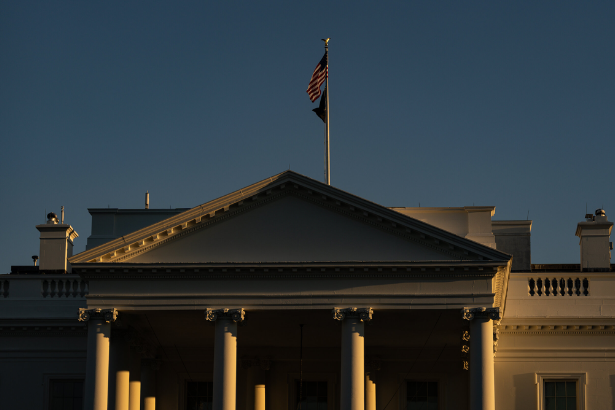
The Presidential Records Act ruling 2026 landed Wednesday as one of the most significant judicial checks on executive branch record-keeping in the 48 years since the law was enacted. U.S. District Judge John Bates issued a 54-page preliminary injunction ordering most White House employees to comply with the Presidential Records Act — the 1978 law enacted after Watergate that established public ownership of presidential records. The injunction takes effect at 9 AM on May 26 and was issued in direct response to a Justice Department Office of Legal Counsel memorandum opinion issued last month that claimed the Presidential Records Act is unconstitutional. Judge Bates rejected that argument, finding the law “likely constitutional,” and ordered named senior White House officials including chief of staff Susie Wiles and deputy chief of staff Stephen Miller to preserve records covered by the law.
What Triggered the Lawsuit: The DOJ OLC Opinion
The Presidential Records Act ruling 2026 would not exist without the event that preceded it by approximately one month. The Justice Department’s Office of Legal Counsel — the legal advisory arm of the executive branch that issues authoritative opinions on constitutional questions — released a memorandum opinion last month concluding that the Presidential Records Act is unconstitutional because it exceeds Congress’s power. The opinion stated that President Trump therefore was not required to comply with it.
That OLC opinion was not a fringe legal position internally debated within DOJ. It was a formal written determination of the executive branch’s official position on the constitutionality of a 48-year-old federal law. The practical implication was direct: the White House could argue, on the basis of its own legal counsel’s opinion, that it was not bound by a statute requiring the preservation and eventual public release of presidential records. Judge Bates found that argument wrong on the law.
The Ruling: Judge Bates’ 54-Page Decision
The decision granting a preliminary injunction was specific and substantive in its constitutional analysis. Judge Bates found the Presidential Records Act is “likely constitutional” and was validly enacted by Congress under the Property Clause, because Congress may prospectively designate presidential records as federal property and then regulate that property.
The judge quoted the inscription on the National Archives Building itself to make his point. “To adopt the government’s position that the Act is unconstitutional would disable Congress and future Presidents from reflecting on experience, in defiance of the very words engraved on the National Archives Building in Washington: ‘What is past is prologue,'” Bates wrote. He continued: “And while the presidency is a singularly important institution, that gravity does not free it from modest constraint. Quite the opposite. Each branch of government derives its authority from the trust placed in it by the People, and Congress has validly determined that this Act helps to maintain that trust by shining some light on the activities of the President and his aides.”
The Watergate Reference: Why Bates Invoked Nixon
Judge Bates did not simply note the Presidential Records Act’s historical origin. He used it as evidence that the law is working as intended.
The judge noted that there has not been another Watergate-level scandal since President Richard Nixon, which “suggests that the sunshine disinfectant of the Records Act is working as intended.” It is not for the Court, the Office of Legal Counsel, or the White House to second-guess Congress’s lawful determination — made pursuant to at least two different enumerated powers — that citizens ought eventually to have access to records of presidential activities carried out in their name.
The Watergate framing is deliberate and pointed. The Presidential Records Act was passed in 1974 specifically because Nixon’s recorded conversations became the central evidence of a constitutional crisis, and the law was designed to ensure that no future president could claim personal ownership of official records. Invoking that history in a ruling against an administration that challenged the law’s constitutionality is not a subtle judicial move.
Who Must Comply — and Who Is Exempt
The scope of Judge Bates’ preliminary injunction is precise. Among those required to comply with the order are White House chief of staff Susie Wiles, deputy chief of staff Stephen Miller, the National Security Council, the Council of Economic Advisers, and employees working within the Executive Office of the President.
President Trump and Vice President JD Vance are not covered by the judge’s directive. Bates noted that courts generally may not “enjoin the President in the performance of his official duties” — a long-standing principle of separation of powers that limits judicial authority to directly command the executive. The order also excludes the National Archives and Records Administration, the archivist, the Justice Department, and the attorney general. The injunction covers White House staff and key advisory bodies — the people who generate, handle, and preserve records — while stopping short of directly commanding the president himself.
The Plaintiffs: American Historical Association, American Oversight, Freedom of the Press Foundation
The Presidential Records Act ruling 2026 was produced by a lawsuit brought by three organizations with distinct but complementary stakes in the outcome.
The American Historical Association — the largest membership association of historians in the United States — brought the case as an organization whose members’ professional work depends on eventual access to presidential records. American Oversight, a nonprofit government watchdog group, brought it as an organization focused on executive branch transparency and accountability. The Freedom of the Press Foundation joined as an organization representing the interests of journalism and the public’s right to government information.
In their lawsuit, the groups warned there was “strong reason” to believe President Trump would attempt to keep presidential records when his term ends in January 2029. The groups pointed to his decision at the end of his first term in early 2021 to hold onto 15 boxes of records, which the Archives fought for months to retrieve. Those boxes contained thousands of documents, some marked classified, and Mr. Trump claimed the Presidential Records Act allowed him to keep them.
The First-Term Records Context: 15 Boxes, Jack Smith, and the Classified Documents Case
The background of the Presidential Records Act ruling 2026 cannot be separated from the documented history of Trump’s relationship with presidential records.
Trump was later indicted by former special counsel Jack Smith on more than three dozen charges for alleged mishandling of classified records. The case ended after Trump was reelected in 2024, with Smith moving to drop charges following the election. But the documented pattern — 15 boxes removed to Mar-a-Lago, months of Archives attempts to retrieve them, classified documents commingled with personal papers — is precisely the behavior the plaintiffs cited as evidence that the records preservation concern is not hypothetical.
The DOJ’s OLC opinion, and this ruling in response, arrive in an administration whose relationship with records law was already extensively documented before this legal fight began.
What American Oversight Said
The plaintiffs’ response to the ruling was immediate and direct. Chioma Chukwu, executive director of American Oversight, said in a statement: “Today’s ruling is an important victory for presidential accountability and for affirming what decades of law and practice already established — the constitutionality of the Presidential Records Act. The court recognized the serious danger posed by the administration’s attempt to cast aside longstanding federal law governing presidential records and replace it with a system dependent largely on presidential discretion and public trust.”
The phrase “system dependent largely on presidential discretion and public trust” is the operative characterization of what the DOJ OLC opinion would have enabled. Without the Presidential Records Act’s binding requirements, record preservation would depend entirely on each administration’s voluntary decision to comply with standards that the OLC opinion said the law could not legally require.
Broader Implications: What the Presidential Records Act Ruling Means for Government Accountability
The Presidential Records Act ruling 2026 is a preliminary injunction — not a final merits ruling. The constitutional fight over whether Congress can bind the executive branch to records preservation requirements will continue, and the administration may seek to stay the injunction or appeal to the D.C. Circuit. But the 54-page ruling represents the most detailed judicial analysis of the Presidential Records Act’s constitutional foundations since the law was passed, and its conclusion — that the law is “likely constitutional” under the Property Clause — gives future courts a substantial framework to build from.
For the public and for historians, the ruling means that the records being generated right now by Susie Wiles, Stephen Miller, the National Security Council, and the Executive Office of the President must be preserved — at least until a higher court says otherwise. For the administration, it means the DOJ OLC opinion that provided the legal basis for an alternative approach has been judicially blocked, effective May 26. For more on the biggest stories in law, politics, and government, visit The Tech Marketer.
Latest Updates
The Presidential Records Act ruling 2026 takes effect May 26. Here is where to follow the full legal and political coverage:
- The Washington Post has the full Presidential Records Act ruling coverage including the emergency order analysis, the historical context of the Watergate-era law, and what the injunction means for the administration’s broader records policy. Read more at Washington Post
- CBS News has the complete ruling breakdown by reporters Melissa Quinn and Jacob Rosen, including the full list of covered officials, the DOJ OLC constitutional challenge, the plaintiff organizations’ statements, and the first-term records removal context. Read more at CBS News
- CNN has the full analysis of how Judge Bates halted the White House’s rollback of presidential records retention policies, including the constitutional framework and what comes next in the litigation. Read more at CNN
FAQ: Presidential Records Act Ruling 2026
1. What did Judge Bates rule in the Presidential Records Act case? U.S. District Judge John Bates issued a 54-page preliminary injunction on May 20, 2026, ordering most White House employees to comply with the Presidential Records Act. He found the 1978 law “likely constitutional” under the Property Clause, directly rejecting a Department of Justice Office of Legal Counsel opinion that had claimed the law exceeded Congress’s authority and that President Trump was not required to comply with it.
2. Who must comply with the Presidential Records Act injunction? The injunction covers White House chief of staff Susie Wiles, deputy chief of staff Stephen Miller, the National Security Council, the Council of Economic Advisers, and employees working within the Executive Office of the President. The order specifically excludes President Trump, Vice President JD Vance, the Department of Justice, the attorney general, and the National Archives. The injunction takes effect at 9 AM on May 26, 2026.
3. Why did the DOJ say the Presidential Records Act was unconstitutional? The Justice Department’s Office of Legal Counsel released a memorandum opinion last month concluding that the Presidential Records Act exceeds Congress’s constitutional authority and that President Trump therefore was not required to comply with it. Judge Bates rejected this argument, finding the law was validly enacted by Congress under the Property Clause and that Congress may designate presidential records as federal property and regulate their preservation.
4. Who sued to enforce the Presidential Records Act? The lawsuit was brought by the American Historical Association, the nonprofit government watchdog American Oversight, and the Freedom of the Press Foundation. The groups argued there was strong reason to believe Trump would attempt to keep presidential records at the end of his term, citing his removal of 15 boxes of records at the end of his first term — including classified documents — that the National Archives fought to retrieve.
5. What is the Presidential Records Act and when was it enacted? The Presidential Records Act was enacted in 1978 in the wake of the Watergate scandal. It established that presidential records belong to the United States government, not to the president personally, and must be preserved and eventually transferred to the National Archives at the end of an administration. The law governs the records of the president, vice president, and certain parts of the Executive Office of the President including the National Security Council.