Introduction
OpenAI Dots are at the center of a much larger technology shift: AI companies are moving beyond chat windows and asking consumers to let software act on their behalf. In the latest episode of The Vergecast, The Verge’s Jacob Kastrenakes and co-hosts examine OpenAI’s new Dots, Meta’s Muse, the growing trust problem around autonomous AI, and a wave of hardware news ranging from Amazon’s refreshed Kindles to Apple’s rumored HomePad and Tesla’s Cybercab.
The common thread is not simply artificial intelligence or new gadgets. It is the question of what happens when technology starts doing things without waiting for every individual instruction.
That makes this week’s tech news unusually connected. OpenAI wants Dots to handle work in the background. Apple is reportedly preparing a new smart-home interface built around Siri AI. Amazon is refining a mature reading device rather than reinventing it. Tesla is putting autonomous vehicles into limited real-world service.
The technology industry is increasingly moving from products that users operate to systems that increasingly operate around the user.
Background and Context
For years, the dominant consumer AI experience was straightforward: open an app, type a question, receive an answer.
The latest generation of AI products is built around a different model.
Instead of waiting for a prompt, an agent can receive a broader objective, access tools, navigate websites or applications, and return with progress or a completed task.
That is the territory OpenAI is entering with Dots.
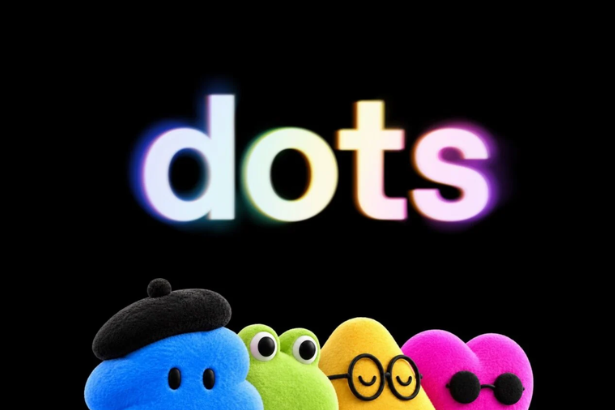
The company introduced Dots at its 2026 DevDay event as always-on AI assistants capable of working across connected applications. The Verge reports that Dots are powered by OpenAI’s GPT-6 Astra model and can use a cloud computer, web browser and more than 4,000 supported apps.
Users can communicate with a Dot through a messaging-style interface, voice calls and integrations such as Microsoft Teams and Slack. OpenAI also says Dots can learn preferences over time and continue working after a task has been assigned.
That puts Dots in direct competition with Meta Muse, another customizable AI agent designed to carry out tasks rather than simply answer questions.
The timing matters because AI agents are moving into areas where mistakes have consequences. An assistant that writes a draft is one thing. An assistant that sends an email, changes an account setting, purchases something or publishes content is another.
The Vergecast discussion focuses heavily on that distinction.
Latest Update or News Breakdown
OpenAI Dots are designed to work in the background
OpenAI’s Dots are not positioned simply as another chatbot persona.
The company describes them as persistent assistants that can take on longer-running assignments. A developer, for example, could ask a Dot to analyze customer feedback and work on software updates. A content creator could ask one to review an interview, identify useful clips, prepare show notes and create social posts.
The Dot can send updates and ask questions while working.
Users can also watch its cloud computer as it completes tasks, creating a visible record of what the agent is doing.
That visibility could become important as AI agents gain more authority.
OpenAI has introduced customizable rules that determine when Dots can act independently and when they should request permission. The company also describes an auto-review system designed to check whether an action follows the user’s rules and safety requirements.
For now, Dots are available to ChatGPT Pro, Business Premium and Enterprise users. OpenAI has also said it plans to expand Dots to its broader consumer base.
Read The Verge’s full report on OpenAI Dots
Dots versus Muse is really a trust competition
The Vergecast’s discussion of Dots quickly circles back to Meta Muse.
The two products have similar ambitions. Both give users customizable AI characters that can interact with digital services and perform tasks.
But the important difference is what happens when the assistant gets something wrong.
The Vergecast hosts describe using Muse for practical jobs such as Facebook Marketplace listings and email organization. Those experiences illustrate both the promise and discomfort of giving an AI system access to parts of everyday digital life.
The concern is not necessarily that an AI agent will fail every time.
It is that a system capable of acting autonomously only needs to make one consequential mistake for users to question whether the convenience is worth the risk.
That makes permissions, auditability and user control central product features rather than technical footnotes.
The AI safety conversation is moving with the agents
The Vergecast also discusses a new AI safety compact involving technology leaders and the White House.
The agreement is presented as an effort by companies to establish voluntary safeguards around increasingly capable AI systems. The Vergecast hosts question how effective voluntary commitments will be in practice.
That skepticism is relevant to the Dots story because the two developments are connected.
As AI systems become more autonomous, safety increasingly depends on controlling what they are allowed to do, not just what they are allowed to say.
A chatbot can generate an incorrect answer.
An agent can potentially turn that incorrect answer into an action.
Amazon is refreshing the Kindle rather than reinventing it
The Vergecast then moves from AI agents to hardware, including Amazon’s latest Kindle updates.
Amazon’s new-generation Kindle, Kindle Paperwhite and Kindle Colorsoft models receive relatively restrained changes. The Verge reports that the devices are thinner and faster, receive new color options and offer aluminum variants. The power button has also moved to the right side near the top.
The company says its refreshed Kindle lineup uses a flat-front design across models, while some versions receive additional storage and hardware improvements. Amazon’s official announcement also lists new configurations and color options for the updated family.
The strategy is notable because Amazon is not trying to turn Kindle into a radically different computing platform.
Instead, it is refining a product whose fundamental purpose remains reading.
Read Amazon’s official Kindle announcement
Apple HomePad remains a reported product
Apple’s rumored HomePad is another story discussed on the podcast.
According to The Verge, Bloomberg’s Mark Gurman reported that Apple could reveal the long-rumored smart-home hub on October 13 alongside a new HomePod mini and an upgraded Apple TV. The reported device would feature a roughly six-inch display that could sit on a countertop or be mounted on a wall.
The important caveat is that HomePad remains a reported product, not an officially announced Apple device.
The rumored hardware is particularly interesting because Apple has been rebuilding Siri and Apple Intelligence across its software ecosystem. Apple announced its next-generation Siri AI at WWDC26 and began rolling out the new software generation in September.
That creates a potentially important connection between software and hardware.
If Apple places an intelligent assistant on a dedicated home display, the company’s AI strategy could extend beyond phones and computers into a persistent household interface.
Tesla’s Cybercab moves autonomous driving into the real world
The Vergecast’s Lightning Round also touches Tesla’s Cybercab.
Tesla’s own event material says more than 40 purpose-built, two-seat Cybercabs without steering wheels or brake pedals have been deployed for autonomous taxi service in limited areas of Austin through the Robotaxi app. Tesla says the vehicle was launched at an Austin event on September 3, 2026.
Cybercab therefore represents a different version of the same broader technology question.
OpenAI is asking whether people will trust an AI system to operate software on their behalf.
Tesla is asking whether people will trust an autonomous system to operate a vehicle.
The consequences are obviously different, but the product challenge is familiar: autonomy only becomes useful when people are comfortable handing over control.
Expert Insights or Analysis
The most important idea emerging from the Vergecast is that AI agents are changing the definition of an assistant.
Traditional assistants respond.
Agents execute.
That sounds like a small linguistic difference, but it changes almost everything about product design.
A chatbot can be evaluated primarily by the quality of its answers. An agent needs to be evaluated by its behavior over time.
Did it understand the objective?
Did it use the correct application?
Did it ask before taking a consequential action?
Did it protect private information?
Did it recover when something went wrong?
And perhaps most importantly, can the user understand what happened afterward?
OpenAI’s Dots approach addresses some of these questions with permission controls and auto-review mechanisms.
But the technology is entering a difficult territory where capability and reliability have to advance together.
An agent that cannot do much is not particularly useful.
An agent that can do almost anything but cannot reliably understand when it should stop can become a liability.
This is why the Dots and Muse competition is more significant than a simple rivalry between two AI products. It is a test of whether consumers are ready to delegate meaningful digital work to software.
Broader Implications
The move toward AI agents could eventually reshape how people interact with applications.
Today, users often learn the interfaces of dozens of services. They know where to click, which settings to open and which application contains a particular piece of information.
An effective agent could sit above those interfaces.
Instead of asking which app to open, a user could describe the outcome they want.
That has major implications for software companies. If agents become the primary interface, applications could increasingly compete on how effectively they expose their capabilities to AI systems rather than only on their human-facing interfaces.
The same principle could extend into the home.
Apple’s reported HomePad concept suggests a future in which an AI assistant is physically present in a room rather than buried inside a smartphone. Apple’s broader Siri AI rollout provides the software foundation for that possibility, although the HomePad itself remains unconfirmed by Apple.
For more coverage of how AI is reshaping consumer technology, an internal article suggestion for The Tech Marketer would be: “How AI Agents Are Changing the Future of Software Interfaces.”
Related History or Comparable Technologies
The current agent wave has plenty of predecessors.
Voice assistants such as Siri, Alexa and Google Assistant attempted to make computers more conversational. Their limitations were often less about speech recognition than about what they could actually do after understanding a request.
The next phase added generative AI.
ChatGPT demonstrated that AI could produce flexible responses across an enormous range of subjects. Copilot products integrated similar capabilities into productivity software.
AI agents now attempt to connect those conversational abilities with actions.
Meta Muse represents one branch of that movement. OpenAI Dots represents another.
Meanwhile, autonomous vehicles represent a physical-world version of the same concept. Tesla’s Cybercab is designed around a vehicle that can operate without conventional driver controls in its intended autonomous configuration.
The progression is clear:
Voice assistants: Understand commands.
Generative AI: Understand and generate information.
AI agents: Understand objectives and execute multi-step tasks.
Autonomous physical systems: Apply similar concepts to the physical world.
The technology is not evolving in a straight line, but the direction is increasingly toward delegated action.
What Happens Next
The next stage of the AI agent race will likely be determined by three factors.
1. Reliability
Users will tolerate occasional mistakes from a chatbot.
They will be less tolerant of mistakes from software that can act independently.
Agents therefore need better error handling, confirmation systems and recovery mechanisms.
2. Permissions
The most important interface for an agent may eventually be a permissions screen.
Users will need understandable controls for what an agent can read, change, purchase, publish or delete.
OpenAI’s Dots already includes customizable rules designed to constrain autonomous actions.
3. Distribution
OpenAI currently limits Dots to paid business and professional tiers, although the company has indicated that consumer availability is part of its longer-term vision.
Meta’s Muse and other competitors create a different challenge because consumers can encounter autonomous AI experiences outside enterprise software.
Meanwhile, Apple could bring AI further into the home if its reported HomePad arrives alongside the company’s newer Siri AI platform.
That means the agent competition may eventually move from apps into homes, workplaces and vehicles.
Conclusion
The latest Vergecast is really a snapshot of technology moving toward delegation.
OpenAI Dots are the clearest example. Instead of asking AI to produce an answer and stopping there, OpenAI wants its agents to continue working, use connected services and learn how individual users operate.
Meta Muse is pursuing a similar direction, while Apple’s rumored HomePad could bring persistent AI interaction into the home. Amazon is refining the hardware people already use for reading, and Tesla is testing a much more consequential form of autonomy on the road.
The interesting question is no longer whether AI can generate useful output.
It is whether people are willing to let AI take action.
That distinction will define the next phase of consumer technology.
FAQ
What are OpenAI Dots?
OpenAI Dots are always-on AI assistants designed to perform tasks across connected applications. OpenAI says they can use a cloud computer, web browser and more than 4,000 supported apps while providing users with updates as they work.
How are OpenAI Dots different from ChatGPT?
ChatGPT generally responds to individual interactions, while Dots are designed to work on longer-running assignments in the background. They can continue performing tasks, communicate progress and operate across connected services.
Are OpenAI Dots available to everyone?
Not yet. The initial rollout is for ChatGPT Pro, Business Premium and Enterprise users. OpenAI has indicated that it intends to bring Dots to its broader consumer base in the future.
What is Apple HomePad?
HomePad is the reported name for Apple’s long-rumored smart-home hub. The Verge reported that it could feature a roughly six-inch display, support countertop or wall mounting and serve as a central interface for Apple’s AI-powered Siri. Apple has not officially announced the product.
What is new about the latest Kindle models?
Amazon’s refreshed Kindle family introduces thinner designs, faster performance, new colors and aluminum options on selected models. The Verge also reports that the updated devices use user-replaceable batteries to comply with European Union regulations.
What is Tesla Cybercab?
Tesla Cybercab is a purpose-built autonomous taxi designed without a conventional steering wheel or brake pedals. Tesla says more than 40 Cybercabs have been deployed for limited autonomous taxi service in Austin through its Robotaxi app.
Sources & References
- The Verge, “Dots get up in Muse’s business”
The Vergecast episode and full story - The Verge, “OpenAI launches Dots, its Muse competitor”
OpenAI Dots details and availability - The Verge, “Amazon is launching colorful new Kindles”
Kindle hardware updates - The Verge, “Apple’s ‘HomePad’ will reportedly launch on October 13th”
Apple HomePad reporting - Tesla, Cybercab event information
Tesla Cybercab information