


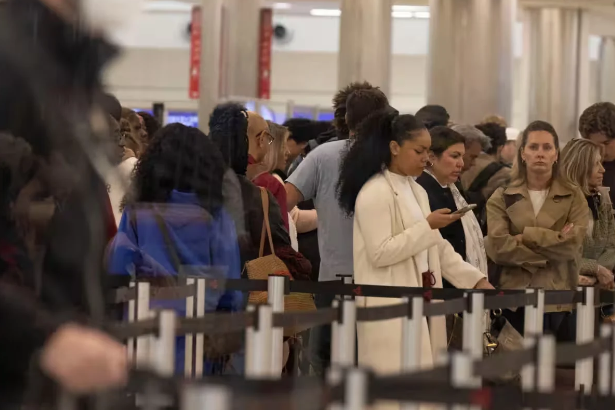
The FAA Line Up and Wait rule landed at the worst possible moment for travelers, taking effect on November 24, just as the Thanksgiving travel rush hit its peak. The timing has drawn pointed questions from aviation experts, even as the FAA insists the change is purely about safety.
Line Up and Wait, known in air traffic control circles as LUAW, is not a new concept. It is an air traffic control procedure that lets a pilot taxi onto a departure runway and line up while waiting for takeoff clearance, though it does not authorize the takeoff itself. What changed this week is how tightly controlled that procedure now has to be inside air traffic control towers. www.newsweek.com
What the New Rule Actually Requires
FAA Notice JO 7210.979 was issued on October 9, 2026, and took effect on November 24, 2026, with the rule scheduled to remain active through June 9, 2027, though the FAA could extend or replace it before then. The notice itself frames the goal plainly: the core purpose of the change is to elevate the safety standard for Line Up and Wait operations by removing ambiguity in staffing requirements. www.newsweek.comfaa
In practical terms, towers that conduct LUAW operations must now staff a stand-alone watch-supervision position, filled by an operations supervisor or controller-in-charge, that cannot be combined with another duty, and local control cannot be combined with nonlocal positions such as ground control, clearance delivery, flight data, or watch supervision during LUAW operations. The FAA also tightened the language around this requirement, since the agency changed the supervision wording from “should” to “must,” making the requirement mandatory rather than optional. www.newsweek.com
Why Aviation Experts Are Questioning the Timing
Not everyone is convinced the rollout was handled well. Sheldon Jacobson of the University of Illinois Urbana-Champaign questioned the timing, asking “The oddest part is why now?” and argued the rule should have been enforced during quieter traffic, noting that LUAW only saves a few seconds per takeoff, which could add a few extra takeoffs per hour in good weather. www.newsweek.com
The bigger concern is staffing. Anton Radchenko, CEO of AirAdvisor, said LUAW lets departures go out back to back, but warned that towers already short on controllers may not be able to staff the new position, which could lead to longer takeoff queues, with the most likely passenger effect being more time sitting on the plane before takeoff or later knock-on delays. www.newsweek.com
What It Means for Thanksgiving Travelers
For passengers, the practical upside is simple: no special action is needed, since the rule does not change security screening, check-in, or boarding. The impact instead shows up quietly on the tarmac. Any effects would occur in airport departure operations, possibly causing longer waits on board or later delays. www.newsweek.com
Travelers hoping for compensation if that happens shouldn’t expect much help from airlines. Radchenko noted that air traffic control delays are generally outside airline control, so travelers shouldn’t expect meal vouchers or hotels for them, and advised booking early-morning flights, avoiding tight connections, and asking airlines in writing whether a delay is caused by air traffic control or by the airline itself. www.newsweek.com
Existing protections do still apply, though. Federal tarmac-delay rules remain in place, meaning airlines at U.S. airports generally must begin moving a departing aircraft to a deplaning location before a tarmac delay reaches three hours for domestic flights or four hours for international flights, with exceptions for safety, security, and certain air traffic control circumstances, and airlines must provide snacks and drinking water within two hours of a tarmac delay starting. That said, federal law generally does not require cash compensation for a delay alone, and meals or hotel coverage depend on the cause of the disruption and the individual airline’s policies. www.newsweek.com
A Rule Landing During Record Travel Volume
The timing couldn’t be more pressure-tested. The rule took effect as a record 81.8 million Americans were expected to travel at least 50 miles from home over Thanksgiving, including six million by air, according to AAA. www.newsweek.com
It also arrives in the shadow of a recent, unrelated system failure. The rule follows a separate November 13 nationwide ground stop, when the FAA said a telecommunications problem flooded its network with about 1,000 connection attempts every four to five seconds, with the ground stop beginning around 3:30 p.m. ET and air traffic resuming at 8:15 p.m. ET, affecting 17 of 22 en route centers using older routers. Transportation Secretary Sean Duffy said a router installed at an Arkansas site triggered the overload, and U.S. intelligence agencies determined it was not a cyberattack, after which the FAA paused installations of the same routers. www.newsweek.com
Together, the two incidents paint a picture of an air traffic system under real strain right as holiday demand peaks, which is exactly why a staffing rule with good intentions is getting this much scrutiny instead of a quiet rollout.
FAQ
1. What is the FAA Line Up and Wait rule?
It’s an air traffic control procedure, formalized under FAA Notice JO 7210.979, that lets a pilot taxi onto a departure runway and line up while waiting for takeoff clearance, with new mandatory staffing requirements for the controllers managing it.
2. When did the FAA Line Up and Wait rule take effect?
The notice was issued October 9, 2026, and took effect November 24, 2026, with a scheduled cancellation date of June 9, 2027.
3. Will the FAA Line Up and Wait rule cause flight delays?
It could. Experts warn that towers short-staffed on controllers may struggle to fill the new mandatory supervision position, potentially leading to longer takeoff queues and more time spent waiting on the plane before takeoff.
4. Do travelers need to do anything differently because of this rule?
No. The rule does not change security screening, check-in, or boarding procedures for passengers.
5. Can I get compensation if my flight is delayed because of this rule?
Generally no cash compensation is required for air traffic control delays alone, though existing federal tarmac-delay protections, like food and water after two hours, still apply.
SOURCES AND REFERENCES
- Newsweek: “New ‘Line Up and Wait’ FAA Rule: What It Means for Travelers”
- FAA: Notice JO 7210.979 — Line Up and Wait (LUAW) Operations Watch Supervision Requirement
- Note on sourcing: the submitted CNN link could not be fetched (robots_disallowed) and the submitted Washington Post link also could not be fetched (client_error). Both are listed here for reference, but their specific content was not used in this article.