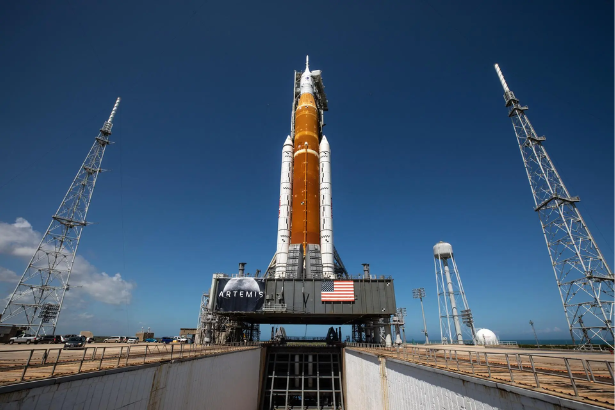
At 12:20 a.m. on Friday, March 20, the 322-foot-tall SLS rocket began its 4-mile crawl toward the pad for the second time in three months. After high winds delayed the start by more than four hours, the crawler-transporter finally moved. Four astronauts are already in quarantine. The target date is April 1.
The NASA Artemis rocket launch picture came into sharp focus on Friday morning as the Space Launch System and its Orion crew capsule began rolling back to Launch Complex 39B at Kennedy Space Center in Florida. The rollout started at 12:20 a.m. EDT on March 20, roughly four and a half hours later than planned after high winds held the operation. The 4-mile trek along the crawlerway, carried by Crawler-Transporter 2 at a top speed of about one mile per hour, is expected to take up to 12 hours.
If all continues as planned, the mission will launch on April 1. That is the earliest opening of the next launch window, and NASA is targeting it specifically.
What Delayed the Mission and What Was Fixed
The Artemis II stack first rolled to Launch Pad 39B on January 17, 2026, reaching the pad in the evening after an 11-plus-hour crawl. NASA completed a wet dress rehearsal, the full fueling and countdown test, on February 21. That test went well enough that engineers felt good about the vehicle’s readiness. But a subsequent fueling test on February 19 revealed a helium flow problem in the rocket’s upper stage, specifically in the Interim Cryogenic Propulsion Stage.
That issue forced a rollback to the Vehicle Assembly Building on February 25, erasing the March 6 launch window entirely. Inside the VAB, engineers spent several weeks working through a full list of repairs and system refreshes. They activated a new set of flight termination system batteries. They replaced other batteries on the upper stage, the core stage, and the solid rocket boosters. They charged Orion’s launch abort system batteries. They replaced a seal on the core stage liquid oxygen feed line. They reassembled and retested the oxygen tail service mast umbilical plate to confirm a tight seal.
That work took longer than expected, then concluded faster than expected in the final stretch. Initially, NASA targeted March 19 for rollout, postponed it to March 20, then pulled it back to March 19 evening when technicians wrapped up ahead of schedule. The official start came just after midnight on March 20, delayed only by weather.
The Crew, the Mission, the Stakes
The four astronauts who will fly on Artemis II entered quarantine at Johnson Space Center in Houston on Wednesday, March 18, at 6 p.m. EDT. NASA said the crew will remain in quarantine for about a week in Houston before flying to Kennedy Space Center approximately five days before launch to continue their health protection in the astronaut crew quarters there.
The crew: Commander Reid Wiseman, NASA. Pilot Victor Glover, NASA. Mission Specialist Christina Koch, NASA. Mission Specialist Jeremy Hansen, Canadian Space Agency. If they launch on April 1, they will spend approximately 10 days on a mission around the Moon, traveling farther from Earth than any humans have since the final Apollo missions in the early 1970s.
The mission does not include a lunar landing. The Orion spacecraft will carry the crew out to a high lunar orbit, around the far side of the Moon, and back to Earth. The purpose is to validate every crewed system under real deep-space conditions before Artemis III attempts a surface landing with a crew. Everything that has to work flawlessly on a landing mission must first prove itself without the margin for error that a non-landing mission provides.
NASA published its daily mission agenda for Artemis II in the week leading up to rollout, and made a real-time tracking tool available on its website. The mission has been watched closely enough that an ISS crew member photographed the rocket on the pad from orbit during the first pad stay.
What It Takes to Get a Rocket to the Pad
The logistics of a crewed lunar launch are worth understanding. The SLS stack is 322 feet tall and weighs approximately 11 million pounds combined with its mobile launch platform. Crawler-Transporter 2, which has been doing this job since the Apollo era and also carried Space Shuttles, moves at a maximum speed of about one mile per hour. It slows further on turns and on the incline up to the pad. The full journey takes up to 12 hours for four miles. The math is intentional: the load is too valuable and too dangerous to rush.
Once the rocket reaches Pad 39B, teams will begin connecting it to pad infrastructure and running systems checks in preparation for launch. The pad stay involves integrated countdown testing, crew rehearsals, and weather evaluations that will ultimately determine whether April 1 holds or the mission shifts to a backup opportunity.
Launch Director Charlie Blackwell-Thompson leads the countdown team. NASA Administrator Jared Isaacman has been publicly supportive of the mission throughout its rolling delays and repairs, thanking the team across social media during the process.
For readers following the Artemis program and the broader technology and infrastructure story behind human deep-space exploration, The Tech Marketer covers how major engineering programs intersect with technology and innovation.
FAQ
Q1: What is the Artemis II mission and who is on the crew? Artemis II is NASA’s first crewed mission in the Artemis program. It will carry four astronauts on approximately a 10-day trip around the Moon and back to Earth, validating crewed systems for future lunar landing missions. The crew consists of NASA Commander Reid Wiseman, Pilot Victor Glover, Mission Specialist Christina Koch, and Canadian Space Agency Mission Specialist Jeremy Hansen. The crew entered quarantine at Johnson Space Center in Houston on March 18.
Q2: When is the NASA Artemis rocket launch currently targeted? NASA is targeting April 1, 2026, for the Artemis II launch from Launch Complex 39B at Kennedy Space Center in Florida. The Artemis II SLS rocket and Orion spacecraft began rolling to the pad at 12:20 a.m. EDT on March 20, following a delay of about four and a half hours caused by high winds. The 4-mile crawl to the pad is expected to take up to 12 hours. If conditions support it, April 1 is the opening of the next launch window.
Q3: Why was the Artemis II rocket rolled back to the Vehicle Assembly Building in February? After a wet dress rehearsal on February 21 that went well, a subsequent fueling test on February 19 revealed a problem with helium flow in the rocket’s upper stage Interim Cryogenic Propulsion Stage. The helium flow interruption prompted NASA to roll the rocket back to the VAB on February 25 for repairs, eliminating the March 6 launch window. Engineers spent several weeks repairing and retesting systems including batteries across multiple rocket stages, seals on the liquid oxygen feed line, and the oxygen tail service mast umbilical plate.
Q4: What does the Artemis II mission actually do, and how does it differ from a Moon landing? Artemis II will not land on the Moon. It is a crewed test flight that will take four astronauts out to a high lunar orbit, around the far side of the Moon, and back to Earth. The mission validates all crewed life support systems, communication and navigation systems, and Orion spacecraft performance in real deep-space conditions. A successful Artemis II clears the way for Artemis III, which is planned to attempt the first crewed lunar landing since 1972.
Q5: How does the SLS rollout process work and why does it take so long? The Space Launch System stack, including the rocket, Orion capsule, and mobile launch platform, weighs approximately 11 million pounds in total. Crawler-Transporter 2, originally built for Apollo-era Saturn V rockets, carries the stack at a maximum speed of about one mile per hour over a 4-mile crawlerway from the Vehicle Assembly Building to Launch Pad 39B. The full journey takes up to 12 hours. The slow pace exists because the load is too large and too critical to risk at higher speeds, particularly on turns and the incline to the pad.
Sources & References
- NASA Missions Blog, Jason Costa, Artemis II Moon Rocket Heads Back to Launch Pad, March 20, 2026
- NASA Missions Blog, NASA Finalizes Artemis II Rollout, Crew Begins Quarantine, March 18, 2026
- Space.com, Josh Dinner and Tariq Malik, Artemis 2 Rocket Rollout Latest News: NASA’s Giant Moon Rocket Returns to Launch Pad March 19
- Space.com, NASA Says Its Artemis 2 Moon Rocket Is All Fixed Up. It Could Launch Astronauts to the Moon on April 1
- The Guardian, NASA Returns Moon Rocket to Pad, Targets April Launch