


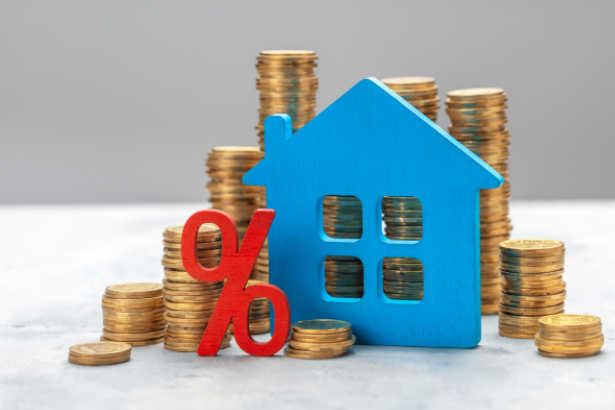
Mortgage interest rates have taken an unexpected turn in November 2026, ending a four-week period of gradual declines and delivering a significant setback to America’s housing market.
On November 10, the average top-tier 30-year fixed mortgage rate jumped 12 basis points to 7.30%, according to Mortgage News Daily.
The increase followed a hotter-than-expected October Consumer Price Index (CPI) report, which showed broader inflationary pressure than financial markets had anticipated.
The sudden movement reversed some of the optimism that had developed among homebuyers after several weeks of falling borrowing costs.
The development is particularly important because mortgage rates had recently moved closer to levels that offered some relief to buyers struggling with affordability.
According to CNBC’s November 11 report, mortgage applications had increased 6.2% in the previous week, while purchase applications climbed 8%.
However, purchase applications remained 18% lower than the same period a year earlier.
The latest increase raises fresh questions about whether homebuyers will continue benefiting from lower borrowing costs or whether persistent inflation will keep mortgage rates elevated.
For homeowners considering refinancing, the situation is equally important.
A higher mortgage rate can reduce potential savings, increase monthly payments and make refinancing less attractive.
The key issue now is how inflation, Treasury yields and Federal Reserve policy will influence mortgage interest rates over the coming weeks.
Background and Context: Why Mortgage Interest Rates Matter in 2026
Covid suburban dash comes to an end as US home sales drop for third straight month | The Independent
Mortgage interest rates determine how much borrowers pay to finance a home over time.
Even a relatively small movement in rates can significantly change the total cost of purchasing property.
For American households, the difference between a 6.5% and 7.3% mortgage rate can translate into hundreds of dollars in additional monthly payments, depending on the loan amount.
Mortgage rates also influence the wider housing market.
When borrowing becomes more expensive:
- First-time buyers may delay purchasing homes.
- Existing homeowners may postpone moving.
- Refinancing becomes less attractive.
- Housing affordability deteriorates.
- Home sales can slow.
- Buyers may look for less expensive properties.
Why mortgage rates have been closely watched
The US housing market has experienced affordability challenges for several years.
Many homeowners secured mortgages at historically low interest rates during the pandemic.
As borrowing costs subsequently increased, millions of households became reluctant to sell their homes and take on new mortgages at substantially higher rates.
This phenomenon is commonly called the mortgage rate lock-in effect.
It can reduce the number of properties entering the market and make it more difficult for new buyers to find affordable homes.
The recent four-week decline had offered some relief, but the November inflation report has introduced renewed uncertainty.
Latest Update: Mortgage Rates Jump to 7.30% on November 10, 2026
Crédit immobilier : l’OAT grimpe, effet possible sur les taux – Meilleurtaux
The latest major development came on November 10, when Mortgage News Daily recorded a significant increase in average mortgage rates.
The average top-tier 30-year fixed mortgage rate rose from approximately 7.18% to 7.30%.
That represented a 12-basis-point increase in a single day.
It was the largest daily increase in more than a month, according to the rate provider.
The movement also ended a relatively stable period during which mortgage rates had gradually declined for four consecutive weeks.
Current mortgage rates: November 10, 2026
The following figures are from Mortgage News Daily’s daily rate index.
| Mortgage type | Average rate | Daily change |
|---|---|---|
| 30-year fixed | 7.30% | +0.12 percentage points |
| 15-year fixed | 6.92% | +0.09 percentage points |
| 30-year jumbo | 7.40% | +0.03 percentage points |
| 30-year FHA | 6.89% | +0.07 percentage points |
| 30-year VA | 6.90% | +0.07 percentage points |
| 7/6 SOFR ARM | 6.80% | +0.31 percentage points |
Source: Mortgage News Daily, November 10, 2026. These are market index averages, not guaranteed lender offers. mortgagenewsdaily.com+1
Why the latest numbers matter
The 30-year fixed mortgage rate is particularly important because it is one of the most widely used home financing products in the United States.
A rise to 7.30% increases the borrowing cost for households taking out new mortgages.
The 15-year fixed rate also increased, potentially affecting homeowners who prefer shorter repayment periods.
Adjustable-rate mortgages experienced an even larger daily increase in the reported 7/6 SOFR index.
However, individual mortgage offers vary according to credit scores, down payments, loan-to-value ratios, property types and lender pricing.
The headline average should therefore be treated as a market indicator rather than a personal borrowing quote.
What Triggered the Mortgage Rate Increase? October Inflation Data Explained
Fed Rate Cut What It Means For You
The main trigger behind the sudden increase was the latest US inflation report.
Investors received October Consumer Price Index data showing stronger-than-expected price increases.
The report suggested that inflationary pressure remained broader than financial markets had hoped.
Mortgage News Daily’s analysis explained that the bond market reacted quickly because inflation is particularly important when determining longer-term borrowing costs.
Why inflation affects mortgage interest rates
Mortgage rates are closely linked to movements in the bond market, especially yields on longer-term US Treasury securities and mortgage-backed securities.
When inflation rises unexpectedly, investors may demand higher yields to compensate for the possibility that their money will lose purchasing power.
Higher bond yields can push mortgage rates upward.
The process generally works like this:
- Inflation data comes in hotter than expected.
- Investors reconsider their expectations for future interest rates.
- Treasury and mortgage-backed security yields adjust.
- Mortgage lenders revise their pricing.
- New borrowers face potentially higher mortgage costs.
This explains why mortgage rates can increase even when the Federal Reserve has not announced a new policy decision on the same day.
Why the CPI report mattered so much
The Federal Reserve’s preferred inflation measure is the Personal Consumption Expenditures price index, or PCE.
However, CPI is released earlier and provides an important indication of broader inflation trends.
Mortgage News Daily noted that the October CPI report showed price pressures across several categories, including areas beyond fuel-related expenses.
The market reaction reflected concern that inflation might remain persistent enough to limit the scope for monetary policy easing.
Read the full analysis: Mortgage News Daily: Mortgage Rate Sharply Higher After Inflation Data. mortgagenewsdaily.com+1
Four-Week Mortgage Rate Decline Comes to an End
Home sales accelerate in February ahead of busy spring season with lower rates
Before the latest increase, mortgage rates had been moving in a more favorable direction.
For four consecutive weeks, borrowers had benefited from a gradual decline in average mortgage rates.
That improvement helped revive some activity in the housing market.
According to CNBC, the average 30-year fixed mortgage rate had reached approximately 7.21% the previous week, its lowest level since mid-September.
The lower borrowing costs contributed to an increase in mortgage applications.
However, the latest inflation report quickly changed the outlook.
Mortgage application activity before the increase
The Mortgage Bankers Association reported that total mortgage applications increased 6.2% week over week.
The figures included:
| Mortgage activity | Weekly change |
|---|---|
| Total mortgage applications | +6.2% |
| Purchase applications | +8% |
| Refinance applications | +5% |
Despite the improvement, purchase applications remained 18% below their level a year earlier.
Refinance applications were also approximately 57% lower than the same period last year, according to CNBC’s reporting.
This suggests that lower rates had encouraged some borrowers to return to the market, but affordability challenges remained substantial.
The sudden increase to 7.30% could make it harder to sustain that recovery. CNBC+2
How Much More Will Homebuyers Pay at a 7.30% Mortgage Rate?
BIM and Facility Management Handover: The Role of COBie and Asset Tagging
One of the easiest ways to understand the impact of rising mortgage rates is to examine monthly payments.
Consider a homeowner borrowing $400,000 through a 30-year fixed mortgage.
At different interest rates, the monthly principal and interest payment changes considerably.
Mortgage payment comparison
Illustrative calculations for a $400,000 loan over 30 years, excluding property taxes, homeowners insurance, mortgage insurance and other costs.
| Interest rate | Monthly payment |
|---|---|
| 6.50% | $2,528 |
| 6.75% | $2,594 |
| 7.00% | $2,661 |
| 7.21% | $2,716 |
| 7.30% | $2,744 |
| 7.50% | $2,797 |
Illustrative monthly principal and interest payments on a $400,000, 30-year fixed mortgage.
$0$750$1.5K$2.2K$3K6.50%6.75%7.00%7.21%7.30%7.50%
At 7.30%, the monthly payment is approximately $216 higher than at 6.50%.
Over a full year, that represents roughly $2,592 in additional principal and interest payments.
The difference becomes even more significant over the life of a 30-year mortgage.
This is why mortgage interest rates are such an important consideration for households planning to purchase property.
Even when home prices remain unchanged, higher financing costs can reduce the amount buyers can comfortably afford.
Mortgage Refinancing Rates: Is November 2026 a Good Time to Refinance?
Mortgage Refinance: Complete Guide for Homeowners in 2026 – Standard Financial
The latest rate increase also matters for homeowners considering refinancing.
Refinancing allows borrowers to replace an existing mortgage with a new loan, potentially obtaining a lower interest rate, changing the repayment period or accessing home equity.
However, refinancing only makes financial sense when the potential benefits justify the associated costs.
Fortune’s November 11 refinancing report provided the following average rates based on Mortgage Research Center data available November 10.
Current refinance mortgage rates
| Mortgage type | Average refinance rate |
|---|---|
| 30-year conventional | 7.160% |
| 20-year conventional | 6.984% |
| 15-year conventional | 6.269% |
| 10-year conventional | 6.085% |
| 30-year jumbo | 7.324% |
| 15-year jumbo | 6.397% |
| 30-year FHA | 6.472% |
| 30-year VA | 6.712% |
Source: Fortune, November 11, 2026. These refinance averages use a different methodology from Mortgage News Daily’s daily purchase-rate index. Fortune
Should homeowners refinance now?
There is no universal answer.
Homeowners should consider several factors before refinancing.
1. Existing mortgage rate
If the current mortgage rate is already below available refinance offers, replacing the loan may not make financial sense.
2. Closing costs
Refinancing can involve lender fees, appraisal costs, title expenses and other charges.
These costs should be compared against the potential monthly savings.
3. Remaining loan term
A new 30-year mortgage may lower monthly payments but extend the repayment period.
Borrowers should examine the total interest paid rather than focusing only on the monthly amount.
4. Credit profile
Credit scores, income, debt-to-income ratios and home equity can influence the interest rate offered by lenders.
5. Break-even period
Homeowners should calculate how long it will take for monthly savings to recover refinancing costs.
For example, if refinancing costs $5,000 and saves $250 per month, the break-even period is 20 months.
If the homeowner expects to sell before that point, refinancing may not be worthwhile.
For more details, read Fortune’s November 11 mortgage refinancing report.
Federal Reserve Policy: Why Mortgage Rates Do Not Always Follow Fed Rate Cuts
What is the Federal Reserve and what does it do? | The Week
One common misconception among homebuyers is that mortgage rates automatically decline whenever the Federal Reserve cuts its benchmark interest rate.
That is not how the mortgage market works.
The Federal Reserve directly influences short-term borrowing conditions through monetary policy.
However, long-term mortgage rates are heavily influenced by bond-market expectations, inflation outlooks, economic growth and investor demand.
What happens when the Federal Reserve changes interest rates?
When the Fed cuts its benchmark rate, borrowing conditions across parts of the economy can become more favorable.
But mortgage lenders also consider the expected direction of inflation and longer-term bond yields.
If investors believe inflation will remain elevated, longer-term yields may rise even while the Fed lowers short-term rates.
This can prevent mortgage rates from declining.
Why inflation remains the bigger concern
The latest inflation report suggests that investors are still concerned about persistent price pressures.
Mortgage News Daily noted that the Federal Reserve has been particularly focused on inflation.
If price increases remain elevated, policymakers may have less flexibility to ease monetary conditions.
For homebuyers, this means mortgage rates could remain volatile even if broader financial markets expect future policy adjustments.
The important distinction is between the Federal Reserve’s short-term policy rate and the longer-term market rates that influence home financing.
Expert Analysis: What the Latest Mortgage Rate Increase Means for the Housing Market
美國房市買賣方認知差距擴大 賣家多買家 44% 創歷史新高 – 火報
The November increase creates several challenges for the US housing market.
Although a single daily movement does not determine the direction of the entire market, the reversal in mortgage rates could affect buyer confidence.
1. First-time buyers may face affordability pressure
First-time homebuyers are particularly sensitive to mortgage costs.
Many have limited savings for down payments and must carefully manage monthly housing expenses.
When interest rates rise, buyers may need to consider less expensive properties or postpone purchasing.
2. Homeowners may remain locked into existing mortgages
Many homeowners secured mortgages at significantly lower interest rates during previous years.
Selling a property and purchasing another home at today’s rates could increase monthly payments substantially.
This can discourage homeowners from moving, limiting housing inventory.
3. Home sellers may need to adjust expectations
If higher mortgage costs reduce buyer purchasing power, sellers may find it harder to achieve their desired asking prices.
In some markets, this could result in longer selling periods or greater negotiation.
4. Refinancing demand could weaken
When mortgage rates rise, fewer homeowners may qualify for refinancing that produces meaningful savings.
This can reduce activity for lenders that depend on refinance applications.
5. Housing market recovery could become uneven
Some regional markets may remain resilient because of strong employment, limited housing supply or continued population growth.
Other markets could experience slower demand as buyers become more cautious.
The overall impact will depend on local housing conditions, income growth, inventory and future borrowing costs.
What Happens Next? Five Mortgage Market Developments to Watch
U.S. Treasury Yields Climb Amid Upcoming Inflation Data
The coming weeks will be important for determining whether the November rate increase is temporary or the beginning of another upward movement.
Here are five developments worth monitoring.
1. Upcoming inflation data: Investors will examine whether price pressures continue to remain elevated.
2. Treasury yields: Movements in longer-term Treasury yields can influence mortgage-backed securities and lender pricing.
3. Federal Reserve decisions: Policymakers’ assessment of inflation and economic growth will influence expectations for monetary policy.
4. Mortgage applications: Weekly data from the Mortgage Bankers Association will indicate whether buyers continue entering the market.
5. Housing market activity: Home sales, inventory and affordability trends will help determine whether higher borrowing costs are slowing demand.
The next PCE inflation release is particularly important because it is the Federal Reserve’s preferred inflation measure.
However, mortgage rates can move before official policy decisions as bond markets react to new economic information.
Conclusion: Mortgage Interest Rates Face a New Test After Inflation Reverses Market Optimism
The latest increase in mortgage interest rates has delivered a setback to America’s housing market.
After four weeks of gradual declines, the average 30-year fixed mortgage rate jumped to 7.30% on November 10, following stronger-than-expected inflation data.
The increase highlights how quickly borrowing costs can change when economic expectations shift.
For homebuyers, higher rates mean larger monthly payments and potentially reduced purchasing power.
For homeowners, refinancing opportunities may become more limited.
The broader housing market could also experience renewed pressure if buyers postpone purchases and existing homeowners remain reluctant to sell.
However, one daily rate increase does not necessarily signal a permanent upward trend.
Future inflation readings, bond yields and Federal Reserve policy will determine whether mortgage rates stabilize or move higher.
The biggest challenge for American homebuyers in November 2026 is no longer simply finding an affordable property. It is securing financing at a rate that makes long-term homeownership financially sustainable.
Frequently Asked Questions
1. What are mortgage interest rates today in November 2026?
According to Mortgage News Daily, the average top-tier 30-year fixed mortgage rate reached 7.30% on November 10, 2026, following a 12-basis-point daily increase.
2. Why did mortgage rates suddenly increase?
Mortgage rates increased following a hotter-than-expected October inflation report. Investors reacted to broader price pressures, pushing bond yields and mortgage borrowing costs higher.
3. What is the current 30-year fixed mortgage rate?
Mortgage News Daily reported an average top-tier 30-year fixed rate of 7.30% on November 10, 2026.
4. What is the current 15-year mortgage rate?
The Mortgage News Daily index reported an average 15-year fixed rate of 6.92% on November 10, 2026.
5. Are mortgage rates expected to fall in 2027?
Future mortgage rates will depend on inflation, Treasury yields, Federal Reserve policy and economic conditions. A reliable prediction cannot be made from the latest increase alone.
6. Is now a good time to refinance a mortgage?
It depends on your existing interest rate, credit profile, closing costs and remaining loan term. Borrowers should calculate the break-even period before refinancing.
7. Why don’t mortgage rates automatically fall when the Fed cuts interest rates?
Mortgage rates are influenced by longer-term bond yields and inflation expectations, not just the Federal Reserve’s short-term benchmark rate.
8. How much does a 7.30% mortgage cost monthly?
For a $400,000, 30-year fixed mortgage, the estimated monthly principal and interest payment is approximately $2,744, excluding taxes and insurance.
9. What is the difference between a 30-year and 15-year mortgage?
A 30-year mortgage generally offers lower monthly payments but involves more interest over the life of the loan. A 15-year mortgage typically has higher monthly payments but allows borrowers to repay the debt sooner.
10. Will higher mortgage rates affect home prices?
Higher borrowing costs can reduce buyer purchasing power and housing demand. However, the impact on property prices varies by location, inventory and local economic conditions.
Sources & References
1. CNBC: Mortgage Rates Jump Sharply Higher After Easing for Four Straight Weeks
2. Mortgage News Daily: Mortgage Rates Sharply Higher After Inflation Data
3. Fortune: Current Mortgage Rates Report for November 11, 2026
4. Fortune: Current Refinance Mortgage Rates Report for November 11, 2026
5. Mortgage Bankers Association: Mortgage Applications and Weekly Market Data
6. Freddie Mac: Primary Mortgage Market Survey
7. Federal Reserve: Monetary Policy and Federal Funds Rate Information