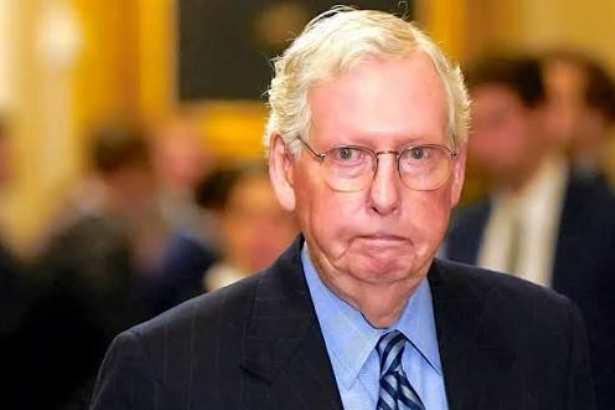
Mitch McConnell health 2026 has become one of Washington’s most urgent unanswered questions. The 84-year-old Kentucky Republican senator has now been hospitalized for more than three weeks, his last Senate vote was cast on June 11, and his office has still not explained what put him in the hospital or when he might return. What is publicly known is fragmentary and alarming: police scanner audio captured paramedics responding to a cardiac arrest call at an address matching McConnell’s Washington, D.C., home on June 14, the same day he was admitted to a local hospital by Advanced Life Support ambulance. His spokesperson has said he is “continuing to improve” and working with staff. Neurologists who reviewed footage from an earlier appearance have separately suggested he may have experienced seizures rather than the “lightheadedness” his office previously cited. And in Kentucky, a 2024 law change means that if McConnell cannot complete his term, the governor does not fill the vacancy.
What Happened on June 14: CPR, Cardiac Arrest, and Hospitalization
The events of June 14 are the factual foundation of everything that follows, and they are both documented and disputed.
Sen. McConnell was found unconscious the morning of June 14 and transported to a local hospital in an Advanced Life Support ambulance. Paramedics performed CPR on an individual experiencing a “cardiac arrest” at a known address for McConnell, according to police scanner audio obtained by NBC News and public radio dispatch records shared by journalist Desiree Townsend. McConnell’s office has not confirmed that the CPR call was related to the senator’s hospitalization, and technically the unconscious individual in the dispatch call has not been officially identified.
However, as Slate’s reporting noted directly: “We don’t know for sure that the police audio was about McConnell, though it’d be a tremendous coincidence if he happened to be hospitalized the same day that someone else in his house got CPR for cardiac arrest.” Senate Majority Leader John Thune told reporters on Capitol Hill the day after the hospitalization that after speaking with McConnell by phone, the senator “sounded good.” Beyond that, the official information has been almost entirely absent.
A McConnell spokesperson said the senator “appreciates the outpouring of support he’s receiving while he continues his recovery in the hospital.” No diagnosis, no timeline, no medical explanation of any kind has been made public.
Three Weeks Later: “Continues to Improve,” Still No Answers
As the hospitalization extends into its fourth week, the information vacuum has generated increasing public and press concern.
McConnell has been hospitalized for more than three weeks, and his office still will not say what sent the 84-year-old Kentucky Republican there, his latest condition, or when he might return. McConnell, who has served in the Senate since 1985 and led Senate Republicans from 2007 until 2025, has not cast a vote since June 11.
About a week after the initial admission, McConnell’s office said he was “still working closely with staff on Senate business and Kentucky matters as he continues his recovery.” On July 2, after significant press inquiry, the office finally provided another update: McConnell remains hospitalized but “continues to improve.”
That phrase, “continues to improve,” is the entirety of what McConnell’s staff has communicated about the medical situation over three weeks. No hospital name has been confirmed publicly, no attending physician has spoken to the media, and no details about the nature of his condition have been provided.
The Neurologist Dispute: Seizures, Not Lightheadedness?
The June 14 hospitalization did not occur without prior context. McConnell’s health has been a recurring subject of public concern since his widely watched freezing episodes in 2023.
Neurologists have suggested McConnell suffered seizures, disputing earlier “lightheadedness” claims from his office. In 2023, McConnell twice froze during press conferences, stared into space, and had to be assisted by colleagues. His office said at the time he had felt “lightheaded.” Independent neurologists who reviewed footage of those episodes publicly and in media appearances said the episodes were more consistent with seizure activity than with simple lightheadedness, a diagnosis his staff never formally addressed.
McConnell’s documented health history in recent years includes a March 2023 concussion and fractured rib from a fall at a Washington dinner, additional falls in 2024 and 2025 that his office attributed to lingering effects of childhood polio, a February 2026 hospitalization for over a week for “flu-like symptoms,” and the June 14 emergency admission now approaching four weeks.
A congressional reporter who visited the Capitol in April observed aides navigating McConnell around in a wheelchair. McConnell announced last year that he would not be seeking reelection, and his seventh Senate term concludes in January 2027, when Kentucky’s Senate race between Republican Andy Barr and Democrat Charles Booker will have produced a successor.
Kentucky’s Succession Law: What Happens If McConnell Cannot Finish His Term
The political implications of McConnell’s absence are directly connected to a state law change that was made specifically with this kind of scenario in mind.
If unable to finish his term, snap elections would be called to replace McConnell for the remainder of his term. The state’s Republican-dominated legislature changed the law in 2024 so that any Senate vacancy gets filled not by the governor, who happens to be a Democrat, but via special election. This was a deliberate preemptive measure taken precisely because of the political dynamics Kentucky faced: a Republican senator reaching the end of his term with a Democratic governor who would otherwise hold appointment power.
The practical consequence of the 2024 law change is that if McConnell’s seat becomes vacant before January 2027, no single political figure would have the authority to appoint his successor. A special election would need to be held, adding a further layer of complexity to an already narrowly divided Senate majority navigating major legislative priorities under the current Congress.
Elaine Chao’s China Appearances: A Separate Story
While Mitch McConnell’s health dominates the conversation, a related but separate news thread involves his wife, former Transportation Secretary Elaine Chao.
Elaine Chao has been making several reported appearances in China, appearing as Vice President of some Chinese organizations. Her public presence in China while her husband is hospitalized has drawn attention from both political commentators and press outlets, including WLKY in Louisville, which covered the story as part of its McConnell health reporting. The Chao-China connection has long been a point of political sensitivity in McConnell’s career, given the extensive business ties her family’s shipping company has maintained in China, a subject that was explored at length in reporting throughout the 2020 election cycle.
Her specific role in the organizations she is associated with in China has not been fully detailed in available reporting, and neither Chao’s office nor McConnell’s office has commented publicly on her activities during McConnell’s hospitalization.
The Broader Pattern: Aging Lawmakers and Health Transparency
McConnell is not the only member of Congress currently managing significant health challenges, and his situation reflects a broader pattern in American political life that observers across the political spectrum have noted.
Hiding infirmities from the public is a recurring theme in American politics. Politicians up to the president have done so almost since the beginning of the republic. But things have arguably gotten worse in recent years. The last three presidents have been the oldest ever elected, and the share of Congress members who are in their 70s and 80s has skyrocketed.
Rep. Neal Dunn, a 73-year-old Florida Republican, has an undisclosed terminal illness and has announced he will not cast votes unless House leaders need him to. Rep. Tom Kean Jr., a New Jersey Republican, just returned to the Hill after a nearly four-month absence he attributed to depression. Five House members have died in office in the current Congress.
McConnell, who began serving in the Senate in January 1985, will have served 42 years when his term ends in January 2027. His absence at this stage of his career, in this health context, arriving during a narrow Senate majority’s most consequential legislative session, carries a weight that extends beyond any individual senator’s medical situation.
Latest Update: Three Weeks, No Explanation, and Counting
The Mitch McConnell health 2026 story is continuing to develop with no resolution in sight as of July 6, 2026.
McConnell’s office confirmed on July 2 that he remains hospitalized but “continues to improve.” His last Senate vote was June 11. The police scanner audio capturing CPR at his home on June 14 has not been officially addressed by his office or his family. Senate Majority Leader John Thune’s brief comment that McConnell “sounded good” after a phone call remains the most substantive third-party characterization of his condition.
For ongoing coverage, follow The New York Times, The Washington Post, and WLKY Louisville.
Broader Implications: What McConnell’s Silence Costs the Senate
The Mitch McConnell health 2026 story is ultimately a story about accountability, transparency, and the rights of voters and fellow senators to know the condition of an elected official who holds an active Senate seat.
McConnell is not a private citizen. He is a sitting senator whose presence or absence affects legislation, committee work, and the majority math of the narrowest Senate majority in recent history. His constituents in Kentucky are entitled to know whether their senator is capable of serving in the role for which they elected him. His colleagues on both sides of the aisle make legislative calculations every day based on whip counts that include his vote. Three weeks of hospitalization with zero medical information provided is an extraordinary level of opacity for a sitting member of the United States Senate.
Whether the motivation is privacy, political calculation, protection of a legacy, or simple institutional habit, the information gap around Mitch McConnell’s health in the summer of 2026 represents one of the clearest current examples of the tension between a public official’s right to medical privacy and the public’s right to know the fitness of its elected representatives.
For more breaking political news, visit The Tech Marketer.
What Happens Next
McConnell’s office has not provided a timeline for his return or his prognosis. The Senate is currently out of session, which has reduced the immediate legislative impact of his absence, but the chamber returns in the coming weeks with major business still pending. Kentucky’s special election law means the Senate seat itself is not in immediate political jeopardy from a single appointment. The medical and political community will be watching for any further updates from McConnell’s office, and for any additional reporting on the nature of his current hospitalization.
FAQ
Why was Mitch McConnell hospitalized in 2026?
McConnell’s office has not publicly explained the reason for his hospitalization. He was admitted to a Washington, D.C., hospital on June 14, 2026. Police scanner audio from that same morning captured a CPR call responding to a cardiac arrest at an address matching McConnell’s home, though his office has not confirmed the two events are connected. His last Senate vote was June 11.
How long has Mitch McConnell been in the hospital in 2026?
As of July 6, 2026, McConnell has been hospitalized for more than three weeks, since June 14. His office released a statement on July 2 saying he remains hospitalized but “continues to improve” and is working with staff on Senate matters. No diagnosis, prognosis, or discharge timeline has been provided.
What is Mitch McConnell’s current health condition in 2026?
McConnell’s office has confirmed only that he is “continuing to improve” and is working with staff from the hospital. Independently, neurologists who reviewed footage of McConnell’s freezing episodes in 2023 have disputed his office’s claim that he was merely lightheaded, suggesting the episodes were more consistent with seizure activity. His documented recent health history includes a 2023 concussion and fractured rib from a fall, additional falls in 2024 and 2025, and a February 2026 hospitalization for flu-like symptoms.
What happens to Mitch McConnell’s Senate seat if he cannot finish his term?
Kentucky changed its Senate vacancy law in 2024 so that if McConnell’s seat becomes vacant before his term ends in January 2027, it would be filled via special election rather than gubernatorial appointment. This change was made specifically because Kentucky’s current governor is a Democrat who would otherwise have held appointment authority.
What is Elaine Chao doing while Mitch McConnell is hospitalized?
Former Transportation Secretary Elaine Chao, McConnell’s wife, has been making public appearances in China and is reportedly associated with several Chinese organizations in a vice presidential capacity, according to WLKY in Louisville. Neither her office nor McConnell’s office has publicly commented on her activities or her whereabouts during her husband’s hospitalization.
Sources and References
- New York Times (original submission, blocked): https://www.nytimes.com/2026/07/06/us/politics/mitch-mcconell-health-hospitalization.html
- Washington Post (original submission, blocked): https://www.washingtonpost.com/politics/2026/07/06/heres-what-we-know-about-sen-mitch-mcconnells-health/
- WLKY Louisville (original submission, blocked): https://www.wlky.com/article/elaine-chao-china-vice-president-mitch-mcconnell-kentucky/71823757