


Introduction
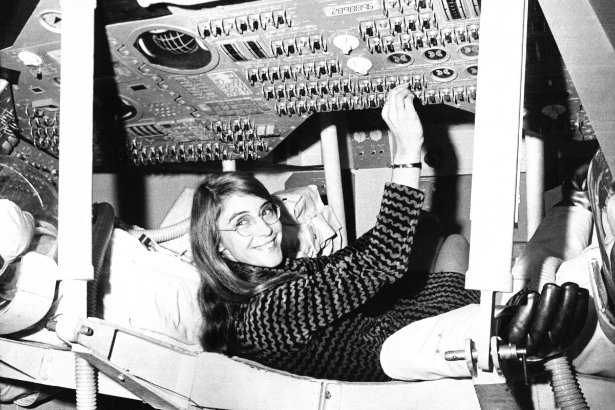
Margaret Hamilton has died at 90, leaving behind a legacy that stretches from the Apollo program to the modern software engineering industry.
Hamilton died September 30, 2026, according to MIT, which announced her death on October 7. She spent more than two decades at MIT and became one of the central figures in developing the onboard software that helped NASA’s Apollo missions navigate and land on the Moon. MIT News
Her name became synonymous with a famous photograph of her standing beside stacks of Apollo source code. But the photograph only hints at the scale of her contribution. Hamilton led the software teams responsible for the Command and Service Module and Lunar Module flight software, overseeing work involving more than 400 people. MIT News
Her most consequential moment came during Apollo 11, when the spacecraft’s computer began issuing alarms just minutes before the lunar landing. The software Hamilton and her team had designed allowed the computer to prioritize critical tasks and continue operating despite the overload. MIT News
Background and Context
Hamilton arrived at MIT in 1959, initially working in meteorology and developing weather-prediction software. She later joined MIT Lincoln Laboratory, where she worked on the SAGE air-defense system. That experience helped shape her interest in software reliability at a time when programming was still a relatively young field. MIT News
In 1965, Hamilton joined MIT’s Instrumentation Laboratory after it won NASA’s contract to develop onboard flight software for Apollo.
She was the first programmer hired for the Apollo project at MIT and became the first female programmer on the project, according to MIT’s account. She initially worked on software for uncrewed Apollo missions before moving into leadership of the software effort for crewed missions. MIT News
By 1968, Hamilton was assistant director in charge of the Command and Service Module software team, with more than 400 people involved across the Apollo software effort. MIT News
At the time, software did not have the institutional status it has today.
Hamilton helped change that.
She popularized the term “software engineering”, arguing that software development deserved the same seriousness and engineering discipline applied to hardware and other technical fields. NASA’s biography of Hamilton credits her with helping popularize the concept. NASA Science
Latest Update: Margaret Hamilton’s Death and the Apollo Legacy
MIT announced Hamilton’s death on October 7, saying she died on September 30 at age 90. The university described her as a computing pioneer whose work included leading the team that programmed the first computers to take humans to the Moon. MIT News
Her career was unusually long.
After leaving MIT, Hamilton founded Higher Order Software in 1976. A decade later, she founded Hamilton Technologies, where she continued developing approaches to software reliability, systems engineering and error prevention. MIT News
She accumulated major honors throughout her career.
President Barack Obama awarded Hamilton the Presidential Medal of Freedom in 2016, recognizing her contributions to software engineering and the Apollo program. MIT News
NASA also recognized her with the NASA Exceptional Space Act Award, while later honors included the Computer History Museum Fellow Award and induction into the National Aviation Hall of Fame. MIT News
MIT News: Margaret Hamilton, computing pioneer who led software development for Apollo, dies at 90
The Apollo 11 Moment That Changed Software History
Hamilton’s legacy is inseparable from one of the most famous moments in spaceflight.
On July 20, 1969, Apollo 11’s Lunar Module, Eagle, was approaching the lunar surface when the onboard computer began producing 1202 alarms.
The computer was overloaded. Yet the mission did not stop.
Hamilton’s team had designed the software around a priority system. When the computer became overloaded, lower-priority tasks could be discarded while critical guidance and navigation work continued. MIT News
That architecture gave NASA the confidence to continue the landing.
The result was history: Neil Armstrong and Buzz Aldrin reached the lunar surface while Michael Collins remained in lunar orbit.
The significance of Hamilton’s work was not simply that she wrote code that functioned under ideal circumstances.
It was that her software was designed with failure in mind.
That idea now sounds obvious. In the 1960s, it was revolutionary.
Expert Insights or Analysis
The most important part of Hamilton’s legacy may be the philosophy behind the Apollo software rather than any single line of code.
Hamilton emphasized defensive programming, a method of designing systems that anticipate errors rather than assuming users or hardware will always behave perfectly.
MIT describes one early example involving Hamilton’s daughter Lauren. While playing with an Apollo simulator, Lauren accidentally activated a program that caused the simulator to crash. Hamilton proposed safeguards to prevent the same situation during flight. Her recommendation was initially rejected because astronauts were considered too highly trained to make that mistake. During Apollo 8, an astronaut accidentally triggered the same program, demonstrating the weakness of that assumption. MIT News
Hamilton and her team subsequently incorporated changes to prevent the problem.
That episode captures the central idea behind her approach:
Good software does not merely assume that people will behave correctly. It anticipates what could go wrong.
That principle now sits at the heart of safety-critical computing.
It applies to spacecraft, aircraft, medical equipment, industrial systems, autonomous vehicles and modern infrastructure.
Broader Implications
Margaret Hamilton Helped Give Software an Engineering Identity
Before Apollo, software development was not widely regarded as an engineering discipline in the way mechanical or electrical engineering was.
Hamilton deliberately pushed against that perception.
She used the term “software engineering” to distinguish the discipline while still treating software as part of a larger systems-engineering process. MIT News
That language survived.
Today, software engineering is one of the world’s largest technical professions.
Her Apollo Principles Still Matter in Modern Space Computing
NASA’s current work makes the connection especially clear.
The agency says modern space missions increasingly require computing systems with greater processing power, autonomy and resilience. NASA also traces the origins of space computing back to the Apollo Guidance Computers of the 1960s. NASA
The hardware has changed enormously.
The underlying problem has not.
Spacecraft still have to operate far from Earth, cope with unexpected conditions and make decisions when communication delays or hardware limitations prevent humans from intervening instantly.
Hamilton’s emphasis on reliability therefore remains relevant to spacecraft computing more than half a century after Apollo.
A New Generation Knows Her Through the Code Photograph
Hamilton’s famous photograph, showing her next to the printed Apollo source code, became one of the defining images of early software engineering.
NASA notes that the Apollo software was eventually placed in its entirety on GitHub, making the historical code accessible to a modern generation of programmers. NASA Science
That creates an unusual bridge between two eras.
The same software that helped guide humans to the Moon can now be examined by people growing up in an age of cloud computing, smartphones and artificial intelligence.
Internal link suggestion: Link this article to The Tech Marketer’s technology and AI coverage and related stories about software engineering, space computing and the history of computing.
Related History or Comparable Technologies
Hamilton’s career sits within a larger history of computing pioneers who transformed computers from specialized machines into essential infrastructure.
The Apollo Guidance Computer was extraordinarily limited by modern standards. Yet it performed mission-critical calculations aboard spacecraft where reliability mattered more than raw processing power.
That constraint encouraged a different approach to computing.
Efficiency mattered. Prioritization mattered. Predictability mattered.
Modern systems have vastly more computational capacity, but many of the same engineering principles remain essential.
The comparison becomes particularly relevant as NASA develops higher-performance space computers for increasingly complex missions. NASA says future exploration systems will benefit from greater onboard computing power, autonomy and resilience. NASA
In that sense, Hamilton’s work was not merely a historical achievement.
It established a set of engineering ideas that remain relevant to the next generation of spacecraft.
What Happens Next
Hamilton’s immediate legacy will be marked through memorials and retrospectives. MIT says a memorial service will take place in Cambridge, Massachusetts, in spring 2027. MIT News
But the larger legacy will continue through the systems and disciplines she helped shape.
Software engineers still build systems around fault tolerance.
Aerospace engineers still prioritize mission-critical functions.
Spacecraft designers still have to anticipate failures that cannot be repaired remotely.
And NASA continues to invest in increasingly capable onboard computing as missions become more autonomous and complex. NASA
Hamilton’s work also remains an important part of the history of women in computing.
She entered a field that was still defining itself and eventually became one of its most recognizable figures.
Her influence reached far beyond Apollo.
Conclusion
Margaret Hamilton helped establish a fundamental truth about modern technology: software is not merely instructions for a machine. In critical systems, software is part of the machinery that keeps people alive.
Her Apollo teams demonstrated that principle under extraordinary pressure.
When the Apollo 11 computer became overloaded during the Moon landing, the software did not simply fail. It recognized priorities, discarded less important work and continued supporting the functions that mattered most. MIT News
Hamilton went on to spend decades advancing the ideas of software engineering, reliability and error prevention.
She became an icon because of Apollo.
But her deeper legacy is the engineering philosophy she left behind.
Modern spacecraft, aircraft, medical systems and autonomous technologies all depend on the same basic lesson: design for what can go wrong, not merely for what you hope will happen.
FAQ
Who was Margaret Hamilton?
Margaret Hamilton was a computer scientist who led software development for NASA’s Apollo program at MIT. She later founded software companies and became a major figure in the development of software engineering. MIT News
Did Margaret Hamilton write the Apollo 11 software?
Hamilton led the teams responsible for Apollo’s onboard flight software rather than working alone. MIT says she led both the Lunar Module and Command and Service Module software teams, involving more than 400 people. MIT News
How did Margaret Hamilton’s software help Apollo 11?
Her team’s priority-driven software allowed the Apollo Guidance Computer to continue handling critical tasks when it became overloaded shortly before the Apollo 11 lunar landing. MIT News
What happened to Margaret Hamilton?
Margaret Hamilton died on September 30, 2026, at age 90. MIT announced her death on October 7. MIT News
Did Margaret Hamilton invent software engineering?
Hamilton is widely credited with popularizing the term “software engineering.” She argued that software development should be treated as a rigorous engineering discipline integrated with broader systems engineering. NASA Science
What awards did Margaret Hamilton receive?
Hamilton received numerous honors, including the Presidential Medal of Freedom in 2016, the NASA Exceptional Space Act Award, the Computer History Museum Fellow Award and induction into the National Aviation Hall of Fame. MIT News
What did Margaret Hamilton do after Apollo?
She founded Higher Order Software in 1976 and later founded Hamilton Technologies. Her later work continued to focus on software reliability, systems engineering and error prevention. MIT News
Sources & References
- MIT News, “Margaret Hamilton, computing pioneer who led software development for the Apollo program, dies at 90.” Read MIT News MIT News
- NASA Science, “Margaret Hamilton.” Read NASA’s biography NASA Science
- The Guardian, “Margaret Hamilton, trailblazer whose software powered Apollo 11 moon landing, dies at 90.” Read The Guardian The Guardian
- CNN, “Margaret Hamilton, whose software helped land Apollo astronauts on the Moon.” Read CNN