Introduction
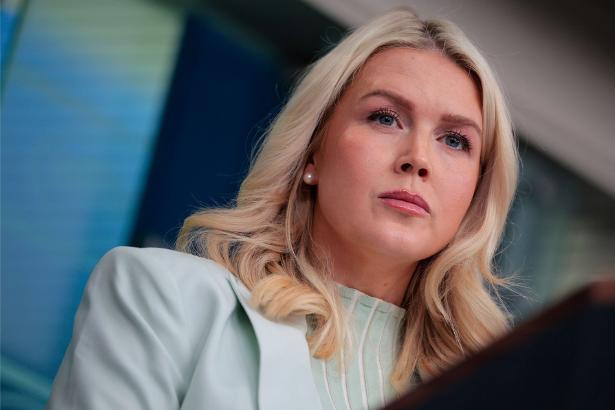
Karoline Leavitt is leaving her position as White House press secretary at the end of August, ending a high-profile tenure that made her the youngest person ever to hold the role. President Donald Trump said she would remain a top outside adviser after leaving the administration.
The political news quickly picked up an unexpected technology angle.
Leavitt’s lengthy farewell post on X was briefly marked with a “Made with AI” label. The label later disappeared, and neither X nor the White House publicly explained what triggered it. That has turned an ordinary question about a politician’s departure into a much broader debate over AI detection, digital provenance and whether people can reliably tell when online writing has been generated or altered by machines.
The timing is particularly interesting because AI companies are simultaneously moving toward more aggressive systems for identifying AI-generated material.
Background and Context
Leavitt became White House press secretary in January 2025 and quickly became one of the most visible communicators in President Trump’s administration.
At 28, she became the youngest person to hold the position. Before taking the podium, she worked in Trump’s first administration, served as communications director for Rep. Elise Stefanik and later became national press secretary for Trump’s 2024 campaign.
Her tenure also reflected a changing media environment inside the White House.
The administration expanded access for conservative outlets and independent creators and introduced a new media seat in the briefing room for nontraditional media organizations. Reuters reported that Leavitt and communications director Steven Cheung helped reshape the administration’s approach to the press, while Leavitt often appeared on conservative media and other alternative outlets.
Her departure comes shortly after she returned from maternity leave following the birth of her second child.
Leavitt said the demands of the job made it difficult to give her two young children the time and attention she believed they deserved. She described the decision as bittersweet.
Latest Update: Karoline Leavitt Will Leave at the End of August
President Trump announced that Leavitt would leave her position at the end of August.
Reuters reported that Trump praised her as one of his most trusted aides and said she would continue working as an outside communications adviser and supporting his political movement.
Read CNN’s report on Karoline Leavitt leaving the White House
No successor has been announced yet. The change therefore creates a potentially important communications transition for the administration only months before the November midterm elections.
But the political transition is only half of this story.
The AI Label That Appeared on Her Farewell
After Leavitt posted her goodbye message on X, users noticed that the platform had attached a “Made with AI” label.
The post contained a lengthy written statement and two photographs. According to Business Insider, the label was visible for a period of time before disappearing. X and the White House did not respond to requests for an explanation.
The crucial point is that an AI label does not necessarily mean an AI system wrote Leavitt’s entire statement.
X’s labeling system can identify media that it determines to have been generated or manipulated using AI. A label can therefore raise questions without proving exactly how a particular piece of content was produced.
That distinction matters.
An AI-assisted editing process is not the same thing as having an AI model write an entire political statement. And an automated detector is not necessarily capable of explaining the origin of every sentence or photograph it flags.
Expert Analysis: Why the AI Label Matters
The Leavitt episode lands at an awkward moment for the AI industry.
Companies are increasingly trying to establish mechanisms that tell users whether content came from an AI system. But the technology is still imperfect, and the social expectations surrounding AI-assisted work are still developing.
Anthropic recently announced that newer Claude models would embed an imperceptible watermark into generated text.
The company says the watermark can survive copying, pasting and some editing, although heavy rewriting, translation or mixing AI output with other material can remove the signal. Anthropic also cautions that detecting its watermark would not prove that Claude wrote an entire document because AI assistance with proofreading or translation can leave a mark too.
That is essentially the problem highlighted by Leavitt’s post.
A label can tell users that an automated system detected something. It does not necessarily tell them what happened.
Was the text generated by AI?
Was it edited by AI?
Was a photograph manipulated?
Was an AI tool used only for proofreading?
Or did the platform make a false positive?
Those questions become increasingly important as automated labeling spreads across social media.
The Bigger Technology Story: AI Provenance Is Becoming Infrastructure
For years, the AI industry focused on generating content.
Now it is increasingly focused on identifying it.
That represents a major change.
Platforms such as YouTube, Pinterest and Substack have introduced tools or policies designed to help users identify AI-generated material. Anthropic’s new watermarking system pushes the idea further by attempting to place a persistent signal directly into generated text.
The goal is straightforward: make AI-generated material easier to trace.
The implementation is much harder.
Text can be copied, rewritten, translated and combined with human writing. Images can be edited. Screenshots can remove contextual information. A piece of content can also move between multiple platforms before anyone attempts to identify its origin.
That makes AI provenance one of the next major infrastructure problems of the internet.
Why False Positives Could Become a Problem
The Leavitt incident illustrates a particularly sensitive issue.
A public figure can post an entirely legitimate statement and suddenly find an automated AI label attached to it. Even if the label disappears later, screenshots and headlines can preserve the association indefinitely.
For journalists, politicians, businesses and ordinary users, that creates a new reputational risk.
The problem becomes even more complicated when people use AI as an editing assistant rather than a ghostwriter.
Someone might write a statement themselves, use an AI tool to correct grammar and then publish the finished version. If an automated system identifies the text as AI-assisted, what exactly should the label say?
“Written by AI” would be misleading.
“Edited with AI” would be more accurate.
But even that distinction could become difficult to verify.
Broader Implications
The End of the Simple AI Label
The phrase “Made with AI” sounds straightforward, but modern AI workflows are anything but simple.
A single document may contain human-written material, AI-generated passages, human revisions, machine translation and automated proofreading.
One binary label cannot capture all of that.
The industry may therefore move toward more detailed provenance systems that distinguish between generation, editing, translation and manipulation.
AI Watermarking Could Change Online Trust
If watermarking becomes widespread, users may start expecting digital content to carry some form of origin information.
That could benefit publishers, schools and businesses attempting to verify authenticity.
But it could also create a new category of digital suspicion.
People may begin treating an AI label as evidence that content is untrustworthy even when AI was used only for minor editing.
That would be a mistake.
AI assistance and AI authorship are not synonymous.
The Political Dimension
The Karoline Leavitt story also demonstrates why AI provenance will become particularly sensitive in politics.
Political statements, campaign advertisements, speeches and social media posts can influence public opinion. If platforms automatically label questionable material, those labels could themselves become part of the political story.
That makes accuracy critical.
A false label can become misinformation about the content it was supposed to clarify.
Internal Link Opportunity
The Tech Marketer can connect this story to broader coverage of AI regulation, AI watermarking and the emerging battle over digital content authenticity.
Suggested internal link: The Tech Marketer’s AI and emerging technology coverage.
Related History and Comparable Technologies
The internet has been dealing with questions of digital authenticity for decades.
Photoshop created early debates over manipulated images. Deepfakes later made realistic synthetic video a mainstream concern. Generative AI expanded the problem to writing, images, audio and video simultaneously.
The next stage is provenance.
Instead of asking only whether something looks artificial, platforms increasingly want to know where it came from.
Google DeepMind has already developed SynthID technology for identifying AI-generated content, including images, video, audio and text in supported contexts. Anthropic’s move toward text watermarking represents another step in the same direction.
The challenge is making those systems accurate enough that users trust them.
If labels appear randomly or cannot explain what they detected, people may eventually ignore them.
What Happens Next
Leavitt is expected to leave the White House press secretary position at the end of August.
Trump has not yet announced her successor. Reuters and AP report that Leavitt will remain an outside adviser, meaning her political influence is not necessarily ending with her White House position.
On the technology side, the AI labeling controversy is unlikely to disappear.
Anthropic’s watermarking system, Google’s SynthID and platform-level labeling tools suggest that provenance technology will become increasingly common.
The next challenge will be making those systems more precise.
Platforms need to distinguish between content that is entirely AI-generated and content that simply received some AI assistance.
That difference could determine whether AI labels become useful trust signals or just another source of online confusion.
Conclusion
Karoline Leavitt is leaving the White House, but the unexpected AI label on her farewell message has given the story a second life in the technology world.
Her resignation is primarily a political and personal decision. She says she wants to spend more time with her young family, and Trump says she will remain an outside adviser.
The AI controversy is different.
It raises a question that will become increasingly difficult for every major platform to answer: What does it actually mean to say something was “made with AI”?
As AI becomes embedded in everyday writing, editing, translation and communication, the line between human-created and AI-assisted content will become increasingly blurry.
The technology industry’s next challenge may not be teaching machines to create convincing content.
It may be teaching the internet how to accurately explain where that content came from.
FAQ
Why is Karoline Leavitt leaving the White House?
Leavitt says she is stepping down at the end of August because she wants to spend more time with her young family. She recently returned from maternity leave after having her second child.
Was Karoline Leavitt’s farewell statement written by AI?
There is no confirmed evidence that AI wrote Leavitt’s entire farewell statement. X briefly displayed a “Made with AI” label, but the platform did not publicly explain what triggered it, and the label was later removed.
What does the “Made with AI” label mean?
The label indicates that X’s system determined that media associated with a post was AI-generated or manipulated. It does not necessarily prove that AI wrote the entire text of a post.
When will Karoline Leavitt leave?
Leavitt is expected to leave her position as White House press secretary at the end of August 2026.
Who will replace Karoline Leavitt?
As of August 13, 2026, no successor has been publicly announced.
Will Karoline Leavitt continue working with Trump?
Yes. Trump said Leavitt will remain one of his top outside advisers after leaving the White House.
Why is AI watermarking becoming important?
AI watermarking is intended to help identify content generated or processed by AI. Anthropic recently introduced an imperceptible watermark for generated text, while Google has developed its SynthID system for several forms of AI-generated media.
Can AI watermarks prove who wrote something?
Not necessarily. Anthropic says its watermark can indicate that Claude was involved with text, but it cannot prove that Claude authored an entire document. Heavy editing, translation and mixing with other material can also affect detection.
SOURCES & REFERENCES
- CNN, “Karoline Leavitt is leaving the White House”
Read CNN’s report - CNBC, “Trump says Karoline Leavitt is resigning as White House press secretary”
Read CNBC’s report - Business Insider, “A ‘made with AI’ label on Karoline Leavitt’s departure message on X intensifies the AI watermark debate”
- Reuters, “Trump says press secretary Leavitt to leave job at month’s end”
- Associated Press, “White House press secretary Karoline Leavitt is leaving the Trump administration”