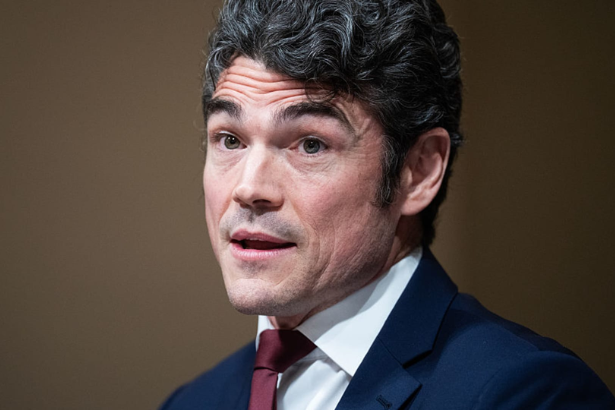
The National Counterterrorism Center director posted his resignation on X Tuesday morning, becoming the highest-ranking Trump official to publicly break with the administration over the Iran conflict. The letter was a wrecking ball aimed directly at the legal and political foundations of the war.
Joe Kent’s resignation landed like a grenade. In a letter posted to X on Tuesday, the 45-year-old director of the National Counterterrorism Center told President Trump he could not “in good conscience support the ongoing war in Iran,” saying the country “posed no imminent threat to our nation.” He went further, accusing high-ranking Israeli officials and members of the American media of running a “misinformation campaign” that deceived Trump into believing a quick victory was possible. And he closed by telling the president directly: “You hold the cards.”
Trump responded within hours during an Oval Office meeting with Irish Prime Minister Micheal Martin, telling reporters: “I always thought he was a nice guy, but I always thought he was weak on security.” He added: “It’s a good thing that he’s out.”
That exchange captures the collision at the heart of the Joe Kent resignation story. A decorated veteran who Trump himself appointed to run the country’s top counterterrorism agency has concluded, publicly and on the record, that the war he was appointed to help prosecute was started under false pretenses.
Who Joe Kent Is and Why the Letter Hit Hard
Kent is not a disgruntled bureaucrat. He is a retired Army Green Beret and former CIA paramilitary officer who completed 11 combat deployments to the Middle East over 20 years. His wife, U.S. Navy officer Shannon Kent, was killed by a suicide bomber while deployed to Syria in 2019, leaving behind two boys. When Kent wrote that he cannot send “the next generation off to fight and die in a war that serves no benefit to the American people,” it was not rhetoric. It was personal history.
Trump nominated Kent to lead the National Counterterrorism Center in February 2025. The Senate confirmed him in July 2025, 52 to 44, with every Democrat voting against him, citing his ties to far-right figures including Proud Boys member Graham Jorgensen, Christian nationalist group Patriot Prayer founder Joey Gibson, and a phone call with Nick Fuentes, a neo-Nazi who has praised Hitler and called Jews a hostile presence in American politics. Kent later disavowed those ties and stated he rejected all “racism and bigotry.”
As NCTC director, Kent served as the president’s principal counterterrorism adviser and led counternarcotics efforts. He worked directly under Director of National Intelligence Tulsi Gabbard. An administration official confirmed Tuesday that Kent was not involved in the intelligence briefings on Iran that preceded the decision to strike.
What the Resignation Letter Actually Said
The letter is worth reading carefully because it goes well beyond a standard policy disagreement.
Kent accused “high-ranking Israeli officials and influential members of the American media” of deploying a misinformation campaign that “sowed pro-war sentiments to encourage a war with Iran.” He called the promise of a swift victory “a lie” and said it was “the same tactic the Israelis used to draw us into the disastrous Iraq war.” He also called the Syrian civil war “a war manufactured by Israel,” a line that drew immediate accusations of antisemitism from several Republicans. Rep. Don Bacon of Nebraska posted “Good riddance. Anti-Semitism is an evil I detest, and we surely don’t want it in our government.” He also blamed Israel for drawing the U.S. into Iraq.
Kent praised Trump’s 2020 assassination of Iranian General Qassem Soleimani as an example of the president knowing “how to decisively apply military power without getting us drawn into never-ending wars.” The current conflict, he wrote, is something different. He argued that before June of last year, when U.S. and Israeli forces first struck Iran’s nuclear facilities, Trump understood that Middle East wars were a trap.
The word “imminent” runs through the entire letter, and its legal weight is intentional. Under U.S. law, “imminent threat” is considered a threshold requirement for a president to launch military action without congressional authorization. Under international law, it is central to the justification for striking a sovereign nation. By stating plainly that Iran posed no imminent threat, Kent was not just registering a policy complaint. He was challenging the legal foundation of the war itself.
The Administration Fights Back, Gabbard Goes Quiet
White House press secretary Karoline Leavitt issued a lengthy statement calling Kent’s claims about Israel’s influence on Trump “both insulting and laughable.” She said his assertion that Iran posed no imminent threat was “the same false claim that Democrats and some in the liberal media have been repeating over and over” and said Trump “had strong and compelling evidence that Iran was going to attack the United States first.”
House Speaker Mike Johnson pushed back hard from the congressional side. “I got all the briefings. We all understood there was clearly an imminent threat that Iran was very close to the enrichment of nuclear capability,” Johnson said. “I don’t know where Joe Kent is getting his information, but he wasn’t in those briefings, clearly.”
The most striking non-response came from Gabbard. The director of national intelligence, Kent’s own boss, posted on X Tuesday afternoon without directly addressing him or the substance of his letter. “After carefully reviewing all the information before him, President Trump concluded that the terrorist Islamist regime in Iran posed an imminent threat and he took action based on that conclusion,” she wrote. She did not say she herself believed Iran posed an imminent threat. Her scheduled testimony before the House Intelligence Committee was postponed from Tuesday to Thursday.
Gabbard spent years publicly opposing war with Iran before joining the Trump administration. Her silence on the substantive question is being watched closely.
The Broader Fracture in Trump’s Coalition
The Joe Kent resignation did not come from nowhere. Tucker Carlson has been among the most prominent right-wing voices opposing the war, often coupling that criticism with pointed commentary about Israel. Megyn Kelly and former Rep. Marjorie Taylor Greene have taken similar positions. Kent’s letter reads like a document from the same intellectual tradition, and Trumpworld was already bracing for a Carlson interview with Kent, according to three sources who spoke to Axios.
What the polling shows is that the coalition is not as unified as the public messaging suggests. An NBC News survey taken after the conflict began found 77% of Republicans and 90% of self-described MAGA Republicans supported the strikes. But a CNN poll from earlier in the war found 23% of Republicans disapproved of the decision to take military action at all, and much of the reported support was described by pollsters as soft rather than firm. When defense officials briefed Capitol Hill, they reportedly told lawmakers that Iran was not planning to attack the United States unless it was struck first, a version of events that contradicts the administration’s public justification. Secretary of State Marco Rubio offered one version of the imminent threat rationale early in the conflict that the administration later quietly walked back.
Senator Mark Warner, the top Democrat on the Senate Intelligence Committee, said he has long disagreed with Kent’s record but was direct about the substance of the letter. “On this point, he is right: there was no credible evidence of an imminent threat from Iran that would justify rushing the United States into another war of choice in the Middle East,” Warner said.
Kent’s departure leaves the National Counterterrorism Center without a director during a war. For analysis of how the U.S.-Iran conflict is reshaping intelligence accountability, foreign policy debate, and the political landscape, The Tech Marketer covers the intersection of policy, technology, and national security reporting.
FAQ
Q1: Why did Joe Kent resign from the Trump administration? Joe Kent, director of the National Counterterrorism Center, resigned on March 17, 2026, saying he could not “in good conscience” support the ongoing war with Iran. In his resignation letter, posted publicly on X, he argued that Iran “posed no imminent threat” to the United States and accused high-ranking Israeli officials and members of the American media of running a misinformation campaign that deceived President Trump into believing a swift victory was possible. Kent also drew comparisons between the current conflict and the Iraq War, which he said was similarly engineered through Israeli pressure.
Q2: What is the significance of Kent’s claim that Iran posed no imminent threat? The phrase “imminent threat” carries legal and constitutional weight. Under U.S. law, presidents are generally required to cite an imminent threat to justify launching military action without congressional authorization. Under international law, the same standard applies to justify striking a sovereign nation. By stating directly that no such threat existed, Kent was not just registering a policy objection. He was challenging the legal basis for the war, a challenge that several Democratic senators, including Intelligence Committee Vice Chairman Mark Warner, said was warranted.
Q3: How did the Trump administration respond to the Joe Kent resignation? President Trump called Kent “very weak on security” during an Oval Office meeting with Irish Prime Minister Micheal Martin and said it was “a good thing that he’s out.” White House press secretary Karoline Leavitt issued a formal statement calling Kent’s claims about Israeli influence “both insulting and laughable” and defending the intelligence behind the decision to strike. House Speaker Mike Johnson said he had received all the classified briefings and that Iran was clearly close to nuclear enrichment capability. An administration official confirmed Kent had not been involved in the intelligence briefings on Iran.
Q4: What did Tulsi Gabbard say about Kent’s resignation? Gabbard, the director of national intelligence and Kent’s direct superior, posted on X Tuesday afternoon without mentioning Kent by name or addressing the substance of his letter. She wrote that Trump “concluded that the terrorist Islamist regime in Iran posed an imminent threat and he took action based on that conclusion,” but she notably did not state her own view on whether the threat was real. Her scheduled testimony before the House Intelligence Committee was postponed from Tuesday to Thursday. Gabbard was a vocal opponent of war with Iran for years before joining the administration.
Q5: Is the Joe Kent resignation a sign of wider Republican opposition to the Iran war? It reflects a genuine tension within Trump’s coalition, though the polling shows rank-and-file Republicans still broadly support the war. An NBC News poll taken after the conflict began found 77% of Republicans supported the strikes, and 90% of self-described MAGA Republicans. A CNN poll found 23% of Republicans disapproved. The soft nature of Republican support, combined with high-profile critics like Tucker Carlson, Megyn Kelly, and Marjorie Taylor Greene opposing the war publicly, creates the conditions for further fracturing if the conflict drags on. Trumpworld was already bracing for a Tucker Carlson interview with Kent after the resignation.
Sources & References
- CNN, Aaron Blake, The Significance of Trump Appointee Joe Kent Resigning Over the Iran War
- CNN Breaking News, Joe Kent Resigns Iran War
- Axios, Joe Kent Resigns Trump Iran Israel Threat
- CBS News, Top Trump Counterterrorism Official Joe Kent Resigns Over Iran
- CNBC, Joe Kent Resigns Trump Iran War
- NPR, Joe Kent Counterterrorism Official Resigns Trump
- Al Jazeera, Joe Kent Resigns Iran War
- Washington Post, Joe Kent Resigns Iran War
- The New York Times
- USA Today Opinion