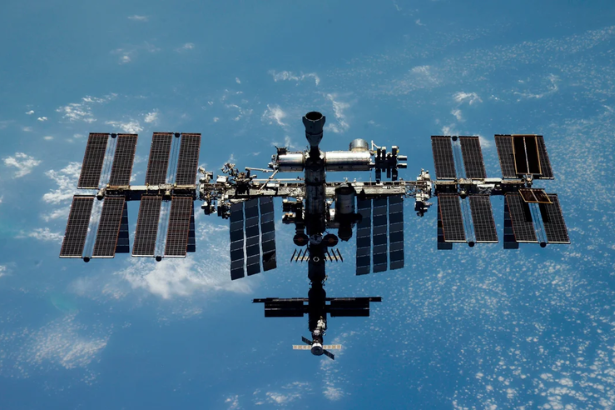
ISS Russia drill tension reached a genuinely alarming peak on June 5, 2026, when NASA directed five astronauts aboard the International Space Station to shelter inside a docked SpaceX Dragon capsule as Russian cosmonauts prepared to drill and saw into the station’s aging Zvezda module in an attempt to fix a persistent air leak. NASA officials objected strongly to the repair method, warning it could create unpredictable structural risk, but Roscosmos proceeded with its plan before ultimately calling it off. Now, sources tell multiple outlets that Russia may abandon repair attempts altogether and simply seal off the leaking compartment for good, a move that would solve the immediate leak problem while creating new operational complications for the remainder of the station’s lifespan.
What Happened on June 5: NASA’s Emergency Shelter Order
Tensions between NASA and Russia’s Roscosmos space agency flared on June 5 when NASA directed five astronauts aboard the International Space Station to shelter in a Crew Dragon spacecraft as Russian cosmonauts prepared to use a saw and drill to repair persistent cracks in the station’s aging Zvezda module, a move NASA officials opposed.
NASA press secretary Bethany Stevens noted in an update that five astronauts would be taking shelter in a docked Dragon spacecraft “out of an abundance of caution” due to Russia’s “mitigation measures” to repair “cracks.” The SpaceX Crew-12 astronauts and NASA astronaut Chris Williams were forced to shelter in the Crew Dragon spacecraft following a sharp increase in the rate of air leakage from the orbiting outpost.
The situation escalated Friday morning when Russian cosmonauts Sergey Kud-Sverchkov and Sergei Mikaev approached the PrK module with a saw and the intent to remove a load-bearing bracket, according to officials who later spoke to Ars Technica and The Register on condition of anonymity.
The PrK Module: Seven Years of Persistent Leaks
The dispute centers on a small but consequential piece of the ISS architecture that has caused recurring headaches for both space agencies since it was first identified as a problem nearly a decade ago.
For seven years, tiny cracks in the International Space Station have been leaking air. Roscosmos first reported a leak on board the ISS in September 2019, tracing it to the vestibule, named PrK, that connects a docking port to the Russian Zvezda module. The dispute centered on the PrK module, a small transfer tunnel connecting the Russian segment to a docking port that has suffered persistent air leaks since 2019 due to microscopic structural cracks caused by corrosion.
Russian cosmonauts have made several attempts to seal the leak, but air continues to escape the space station at a growing rate. The Zvezda module itself, launched in 2000, has components dating back to the 1980s when it was originally built as a backup for the Mir space station, meaning the structure at the center of this dispute has endured decades of cumulative stress.
Why Russia Wanted to Drill and Saw Into the Station
The specific repair method Roscosmos proposed reflected an attempt to gather more precise information about a leak source that had resisted previous, less invasive fixes.
On June 4, Russian officials informed NASA of plans to attempt physical repairs using a drill and a “drill stop” device designed to prevent drilling through the module’s structure. Russia’s plan was to use the tool to learn more about the extent of the crack, with NASA describing the revised approach as involving “cutting a bracket to access better an area identified as a possible leak source for further inspection, using a method that could have resulted in elevated risk to the structure in the area.”
The reasoning behind such a drastic step reflects the limits of what previous mitigation efforts had accomplished. While more epoxy patches might address the problem in the short term, the fact that additional cracks have appeared suggests Zvezda has wider structural problems, not unexpected given the module’s age and origin.
NASA’s Objection: “They Didn’t Care”
NASA’s response to the proposed drilling and cutting plan reflected genuine alarm about the structural risk such an intervention could pose to a module that remains critical to the station’s continued operation.
NASA officials, lacking detailed analysis from Roscosmos about the repair procedure, grew deeply concerned about the approach. “We threatened we would put astronauts in suits, in Dragon, to send a message to the world that we disagreed,” one NASA official told Ars Technica. “They didn’t care.”
That stark characterization, an American space agency official describing Russian counterparts as indifferent to a safety objection serious enough to warrant emergency astronaut shelter, underscores just how significant the disagreement had become by the time the crew was moved into the Dragon capsule on June 5.
The Plan Called Off: What Happened After the Standoff
Despite the tense buildup and the emergency shelter procedure, the actual drilling and cutting operation that prompted NASA’s concern did not ultimately proceed as planned.
We may never know the exact nature of the behind-the-scenes communication that went on between the two space agencies, but in the end the Russians abandoned their plan and NASA’s personnel were told to resume their normal duties. NASA astronauts returned to the ISS after Russia paused repairs indefinitely, with NASA instructing crew members inside the Dragon spacecraft to end the safe haven procedures.
Eventually, the plan was called off in favor of more measurements and data gathering, suggesting that whatever disagreement occurred behind closed doors resulted in Roscosmos opting for a more cautious, lower-risk path forward rather than the aggressive cutting approach that had initially alarmed NASA.
The New Proposal: Sealing the PrK Permanently
In the days following the June 5 incident, reporting based on anonymous sources from both agencies has pointed toward a different, more conservative long-term solution that would avoid further invasive repair attempts entirely.
At this point there hasn’t been any official word from either agency, but sources that wish to remain anonymous have been dropping hints, and that’s got the rumors swirling. With the understanding that anything is still possible, at this point it looks like Russia is going to abandon any further attempts to repair the leak and instead seal off the crippled compartment of the Zvezda module.
ESA astronaut Andreas Mogensen had suggested back in 2024 that one option for dealing with the cracks was to seal off the module once and for all, telling The Register at the time: “The lucky point is that the cracks are confined to that chamber at the very end.” That earlier proposal now appears to be the direction both agencies are converging toward, two years later, after the failed attempt at a more invasive fix.
What Sealing the Module Would Mean for ISS Operations
Permanently closing off the PrK passage would solve the immediate air leak problem, but it would also create a set of new logistical complications that both agencies would need to manage for the remainder of the station’s operational life.
The good news is, the easiest and most immediate way to stem the loss of air is to simply close the hatch leading into the PrK. Of course, that means abandoning the docking port on the other side of it. The Russian section of the Station has multiple docking ports which can be used to transfer crew and cargo, so while having to abandon one of them is hardly ideal, it’s a survivable scenario.
It’s not as if they would have to stop using the port entirely. While sealing off the PrK passage means crew and cargo will no longer be able to pass between a visiting spacecraft and the Zvezda module, the same isn’t true for deliveries of gasses and liquids, since the plumbing that moves water, oxygen, and propellants over from Progress resupply spacecraft runs on the outside of the structure and is linked up automatically through connectors in the docking port.
The Reboost Problem: Why This Matters for Keeping the Station in Orbit
Beyond crew and cargo transfer, the proposed sealing creates a more technically significant question about how the station maintains its orbit going forward.
A Progress cargo ship linked to Zvezda’s rear usually handles reboosts, the engine burns that keep the station from slowly falling back toward Earth due to atmospheric drag. This maneuver must be done from the rear docking port of Zvezda, as that allows the visiting spacecraft to push along the center line of the Station.
While these reboosts could still be performed without opening the PrK hatch, there’s a question about whether or not it’s safe to continue putting so much stress on the surrounding structure, with some believing that the repeated stress of performing reboost maneuvers from that specific docking port could be one of the factors that led to the cracks forming in the first place. If NASA and Roscosmos determine that continuing to push the entire mass of the ISS through this structure is no longer safe, their only alternative is to do it from the US side, a role a specially modified Cargo Dragon carrying additional propellant has already demonstrated it could fill.
This Isn’t the First Time: A Familiar Pattern Since 2024
The current proposal to seal the PrK is not an entirely new idea, but rather an escalation of a more limited precautionary measure that has already been in place for roughly two years.
Going back to at least 2024, the official procedure was for the crew to keep the hatch closed unless they were actively loading or unloading a docked vehicle. That greatly reduced how much air was leaking out, but as long as crews were occasionally opening up the PrK and moving through it, there was a risk of something going catastrophically wrong.
Should the rumors prove true, the difference this time is that the door would stay shut and the PrK would remain undisturbed for as long as the ISS remained in orbit. It’s not exactly a fix, but it’s good enough for an aging space station that’s only got a few more years on the clock, given the station’s scheduled retirement around 2030.
Latest Updates
The June 5 shelter incident and subsequent reporting on Russia’s potential decision to seal the PrK module were confirmed across multiple outlets through June 18, 2026. Hackaday confirmed the full technical breakdown of the PrK’s location and function, the reboost implications of sealing the module, and the historical precedent of the partial-closure procedure used since 2024. Gizmodo and The Register confirmed the specific June 4-5 timeline, including Russia’s announced drill and “drill stop” plan, NASA’s described objections, and the eventual decision to abandon the cutting attempt in favor of further data gathering. Fox Weather and TS2.tech confirmed NASA’s official statements from spokesperson Bethany Stevens, the involvement of Crew-12 astronauts and NASA astronaut Chris Williams, and the broader context of NASA’s 2027 deadline to decide on commercial ISS successors ahead of the station’s planned 2030 retirement.
Full sources: Yahoo News | Ars Technica | Hackaday
Broader Implications
The June 5 ISS incident, in which NASA judged a Roscosmos repair plan risky enough to warrant moving astronauts into an emergency escape vehicle, represents one of the more visible recent examples of operational friction between the two longtime ISS partners. The American official’s characterization that Russian counterparts “didn’t care” about the safety objection reflects a level of institutional frustration that goes beyond routine technical disagreement, even as both agencies ultimately avoided the worst-case outcome by abandoning the cutting plan.
The apparent convergence toward simply sealing the PrK module permanently, an option first floated by ESA astronaut Andreas Mogensen back in 2024, suggests both agencies may be recognizing the practical limits of continuing to repair infrastructure that has been generating problems for seven years running. For a station with a defined retirement window around 2030, accepting a permanent loss of one docking port and shifting reboost responsibilities to the US segment may simply be the most rational remaining option, even if it represents a less elegant solution than a genuine repair.
For the broader future of low Earth orbit infrastructure, the episode underscores the operational complexity of maintaining international partnerships on aging hardware as that hardware approaches the end of its design life, a dynamic that will only become more relevant as NASA works toward its 2027 deadline for determining what, if anything, replaces the ISS after 2030.
For more space exploration and NASA news, visit The Tech Marketer.
Frequently Asked Questions
1. Why did NASA astronauts shelter in a Dragon capsule on June 5, 2026?
NASA directed five astronauts aboard the ISS to shelter inside a docked SpaceX Dragon capsule as a precaution while Russian cosmonauts prepared to drill and saw into a load-bearing bracket near a persistent air leak in the station’s Zvezda module. NASA officials objected to the repair method, citing structural risk concerns, but Roscosmos proceeded with the plan before ultimately calling it off.
2. What is the PrK module and why has it been leaking?
The PrK is a small transfer tunnel connecting Russia’s Zvezda service module to the ISS’s aft docking port. It has been leaking air since Roscosmos first reported the issue in September 2019, due to microscopic structural cracks attributed to corrosion in the aging module, parts of which date back to the 1980s.
3. Is Russia going to permanently seal the leaking ISS module?
Anonymous sources cited by multiple outlets suggest Russia may abandon further repair attempts and instead permanently seal off the PrK passage. As of this report, neither NASA nor Roscosmos has made an official announcement confirming this plan.
4. What would sealing the PrK module mean for the ISS?
Sealing the PrK would mean abandoning one of the station’s docking ports for crew and cargo transfer, though fluid deliveries like water, oxygen, and propellant could continue through external plumbing. It would also raise questions about how the station performs reboost maneuvers, which currently rely on spacecraft docked at that specific port.
5. When is the International Space Station scheduled to retire?
The ISS has a scheduled retirement date around 2030. NASA faces a 2027 deadline to determine whether commercial partners can provide a successor platform or whether the station’s operational life needs to be extended.
Sources and References
- Yahoo News: Tension Flared on Space Station as Russia Threatened to Drill and Saw Into Wall, Prompting NASA Astronauts to Take Shelter
- Ars Technica: Russia Appears Set to Finally Address Long-Term, Serious Space Station Cracks
- Hackaday: What Happens If Russia Shuts the Door on Their Leaky ISS Module?