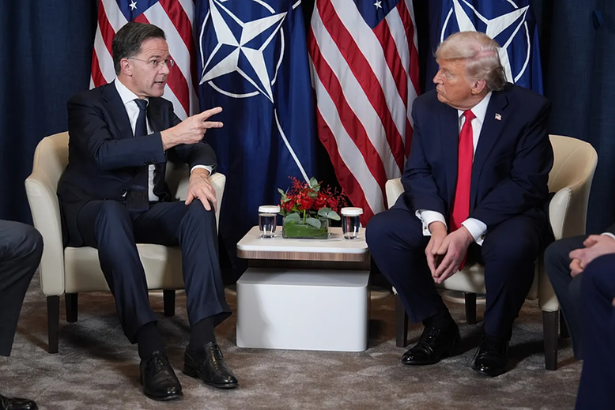
A claimed framework, swift denials, and renewed tension across NATO as Greenland becomes the latest flashpoint in Arctic geopolitics.
Introduction
Greenland deal searches spiked globally after President Donald Trump claimed at the World Economic Forum in Davos that a “framework” existed for a future agreement involving Greenland, triggering immediate pushback from NATO officials, Denmark, and members of the U.S. Congress.
Why Greenland Matters
Greenland is the world’s largest island and a self-governing territory within the Kingdom of Denmark. While it controls its domestic affairs, Copenhagen retains authority over defense and foreign policy.
The island’s strategic value has grown rapidly due to Arctic shipping routes, rare earth mineral deposits, and its proximity to Russia and North America. The United States already maintains a military presence at Pituffik Space Base, formerly Thule Air Base, making Greenland central to Arctic defense planning.
Trump first floated the idea of acquiring Greenland during his first term, a proposal Denmark famously rejected. His renewed rhetoric in 2026 immediately revived diplomatic sensitivities that never fully disappeared.
What Trump Said at Davos
Speaking in Davos, Trump said the United States had reached a “framework for a future deal” related to Greenland and framed the issue as one of global security rather than territorial expansion.
However, multiple parties swiftly contradicted that claim.
NATO officials indicated the alliance has no authority to negotiate sovereignty or territorial status. Danish leaders reiterated that Greenland is not for sale and that no negotiations over ownership or control are taking place, according to the BBC. U.S. lawmakers expressed concern that Trump’s language could destabilize NATO unity and create unnecessary friction with European allies, The Hill reports.
Trump later walked back earlier threats involving tariffs and explicitly ruled out the use of military force, suggesting the remarks were part of a broader pressure campaign rather than a concrete diplomatic agreement.
What Experts Are Saying
Foreign policy analysts describe the Davos remarks as strategic ambiguity, a tactic designed to elevate U.S. leverage in Arctic negotiations without committing to a specific outcome.
Experts note that while a literal “purchase” of Greenland is politically impossible, expanded agreements covering U.S. military access, mineral extraction partnerships, and Arctic surveillance and infrastructure are all plausible and already under discussion in quieter diplomatic channels.
The controversy stems less from substance and more from presentation. Announcing an alleged framework without allied consensus undermines trust within NATO, particularly at a time when alliance cohesion is already strained, The New York Times notes.
What This Means Beyond Davos
For Global Security
Greenland sits at the center of emerging Arctic competition involving the U.S., Russia, and China. Any perception of unilateral action risks escalating tensions in an already fragile region.
For NATO
The episode highlights fault lines over decision-making authority and alliance governance. NATO’s role is collective defense, not territorial negotiation.
For Technology and Resources
Greenland’s rare earth potential is increasingly important for semiconductors, defense systems, and clean energy technologies, making it strategically relevant beyond military considerations.
How This Compares to Past U.S. Strategy
The situation mirrors past U.S. efforts to secure strategic geography through influence rather than ownership, such as long-term base leases, exclusive defense agreements, and resource access treaties.
Unlike historical land acquisitions, modern geopolitics relies on control of infrastructure, data, and supply chains, not flags on maps.
What Happens Next
Short term, diplomatic cleanup is underway as U.S. officials reassure allies that no sovereignty negotiations are occurring.
Longer term, expect expanded U.S. investment in Arctic defense and surveillance, increased European focus on Greenlandic autonomy, and continued political flashpoints whenever Arctic strategy intersects with domestic politics.
The Greenland deal rhetoric is unlikely to disappear, but it will almost certainly evolve into quieter, more conventional diplomacy.
Why This Controversy Matters
The so-called Greenland deal is not a deal at all, but a reminder of how strategic geography, technology supply chains, and alliance politics now collide in the Arctic.
Trump’s Davos remarks reignited a sensitive debate, not because of what they promised, but because of how they challenged established diplomatic norms. Greenland remains Danish, NATO remains defensive in scope, and any future agreements will depend on multilateral consent, not unilateral declarations.
FAQ
Did Trump actually reach a Greenland deal?
No. There is no binding agreement or negotiation over Greenland’s sovereignty.
Can NATO negotiate territory?
No. NATO has no mandate to negotiate national borders or ownership.
Why is Greenland so important?
Its Arctic location, military significance, and rare earth resources make it strategically vital.
Is Greenland for sale?
No. Danish and Greenlandic officials have repeatedly said it is not.
Could the U.S. expand its role in Greenland?
Yes, through defense cooperation, investment, and resource partnerships, not ownership.