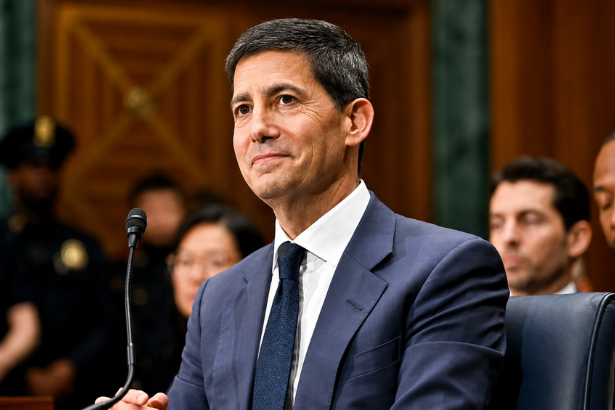
Markets are focused on more than interest rates as new Federal Reserve Chair Kevin Warsh prepares to deliver his first major policy decision.
The FOMC Meeting taking place this week may become one of the most consequential Federal Reserve gatherings in recent years. While Wall Street broadly expects policymakers to leave interest rates unchanged, investors are paying close attention to a potentially larger story: how newly appointed Federal Reserve Chair Kevin Warsh plans to reshape the central bank’s communication strategy.
According to multiple reports, Warsh is expected to break with recent Fed tradition by withholding his own interest-rate projection from the central bank’s famous “dot plot.” If confirmed, the move would represent a significant shift in how the Federal Reserve signals future policy expectations and could alter how markets interpret rate guidance going forward.
Background and Context
The Federal Open Market Committee, commonly known as the FOMC, is responsible for setting U.S. monetary policy and determining benchmark interest rates.
The June 2026 meeting marks Kevin Warsh’s first major test as Federal Reserve Chair following his appointment earlier this year. Warsh inherits an economy that remains surprisingly resilient despite elevated borrowing costs, persistent inflation pressures, and growing political scrutiny surrounding monetary policy.
For more than a decade, investors have relied heavily on the Fed’s quarterly Summary of Economic Projections and accompanying dot plot to gauge policymakers’ expectations for future rate movements. Each dot represents an individual official’s outlook, collectively providing a roadmap for where interest rates may head over the coming years.
However, recent criticism suggests the dot plot may be creating more confusion than clarity.
Why the Dot Plot Matters
Since its introduction in 2012, the dot plot has become one of the most market-moving elements of every major Fed meeting.
Investors use it to:
- Forecast future interest-rate cuts or hikes
- Estimate borrowing costs
- Evaluate recession risks
- Price Treasury bonds
- Determine stock market valuations
Reports indicate Warsh may decline to include his own projection, signaling concern that individual forecasts often become mistaken for promises rather than economic estimates.
If true, this would mark the first major communication shift under his leadership and could indicate a broader effort to focus markets on economic data rather than speculative forecasts.
Latest Update: Markets Expect Rates to Stay Put
Economists overwhelmingly expect the Federal Reserve to maintain its benchmark interest rate at current levels during this meeting.
Several factors are influencing that expectation:
Inflation Remains Sticky
Although inflation has cooled substantially from its post-pandemic highs, core price growth remains above the Fed’s long-term 2 percent target.
Recent economic data continues to show:
- Strong consumer spending
- Stable labor markets
- Resilient wage growth
- Moderating but persistent inflation
These conditions give policymakers little urgency to begin aggressive rate cuts.
Economic Growth Continues
Despite years of elevated borrowing costs, the U.S. economy has largely avoided recession.
Business investment remains healthy, consumer demand remains strong, and unemployment continues to hover near historically low levels.
For the Federal Reserve, this creates a difficult balancing act between supporting growth and preventing inflation from reaccelerating.
Kevin Warsh’s Challenge
Warsh enters the role facing pressure from multiple directions.
Some investors argue rates remain too restrictive and risk slowing economic momentum. Others warn that premature easing could reignite inflation.
Political pressure has also intensified. President Donald Trump has repeatedly advocated for lower rates, arguing that monetary policy should support faster economic expansion.
Warsh has historically emphasized central bank independence, making this meeting an important test of how he balances political expectations with economic realities.
His communication style may ultimately prove just as important as the rate decision itself.
Expert Analysis
The significance of this meeting extends beyond whether rates move today.
Markets are increasingly focused on three questions:
1. Will the Fed Change Its Communication Strategy?
A reduced emphasis on the dot plot could make future meetings less predictable but potentially more data-driven.
Some economists argue the move would reduce market overreaction to individual projections.
2. How Soon Could Rate Cuts Begin?
Most analysts still expect some form of policy easing later in 2026 if inflation continues to moderate.
The timing remains uncertain.
3. What Does Warsh’s Leadership Mean?
Investors are looking for clues about how Warsh will differentiate himself from previous Fed chairs.
His first press conference could establish the tone for years of monetary policy ahead.
Broader Implications
For Investors
Equity markets generally favor lower interest rates because borrowing becomes cheaper and future earnings become more valuable.
Any indication that cuts are approaching could boost:
- Technology stocks
- Growth companies
- Consumer discretionary sectors
For Businesses
Companies continue facing elevated financing costs.
Future guidance from the Fed could influence:
- Hiring plans
- Capital expenditures
- Expansion strategies
- Debt refinancing decisions
For Consumers
Mortgage rates, auto loans, and credit card borrowing costs remain closely tied to broader interest-rate expectations.
A shift toward easing later in the year could eventually reduce financing costs for households.
Historical Perspective
The Federal Reserve has rarely undergone major communication changes without creating market volatility.
Past examples include:
- Ben Bernanke’s introduction of forward guidance
- Janet Yellen’s expanded transparency initiatives
- Jerome Powell’s pandemic-era policy communication
If Warsh modifies or deemphasizes the dot plot, historians may eventually view this meeting as the start of another significant evolution in central banking.
What Happens Next?
Investors should focus on three key developments:
- The official interest-rate decision
- The updated economic projections
- Kevin Warsh’s press conference
While the rate decision itself may be largely expected, the messaging surrounding future policy could drive market reactions over the coming weeks.
Any indication regarding inflation progress, future cuts, or changes to Fed communications will likely dominate headlines long after the meeting concludes.
Conclusion
The June 2026 FOMC Meeting is shaping up as far more than a routine rate announcement. It represents the first major opportunity for Kevin Warsh to define his leadership of the Federal Reserve and potentially reshape how the world’s most influential central bank communicates with investors.
Whether rates remain unchanged or future projections evolve, markets are preparing for what could be the beginning of a new chapter in U.S. monetary policy.
For traders, businesses, and consumers alike, the implications could extend well beyond today’s decision.
FAQ
What is the FOMC Meeting?
The FOMC Meeting is a gathering of Federal Reserve policymakers who determine U.S. interest-rate policy and broader monetary strategy.
Who is Kevin Warsh?
Kevin Warsh is the current Chair of the Federal Reserve and is presiding over his first major FOMC meeting.
Will the Fed cut interest rates in June 2026?
Most economists expect rates to remain unchanged at this meeting.
What is the Fed dot plot?
The dot plot is a chart showing individual policymakers’ expectations for future interest rates.
Why is the dot plot important?
Investors use it to estimate future Fed actions and assess economic conditions.
Why are markets watching Kevin Warsh closely?
His approach to communication and policy guidance could significantly influence market expectations and future Federal Reserve strategy.
Sources & References
- CNBC – Fed Chair Warsh Expected to Withhold Dot From Central Bank’s Interest Rate Outlook
- CNN – Federal Reserve Interest Rate Meeting Live Coverage
- Politico – Trump Demands Rate Cuts as Warsh Faces First Major Fed Challenge