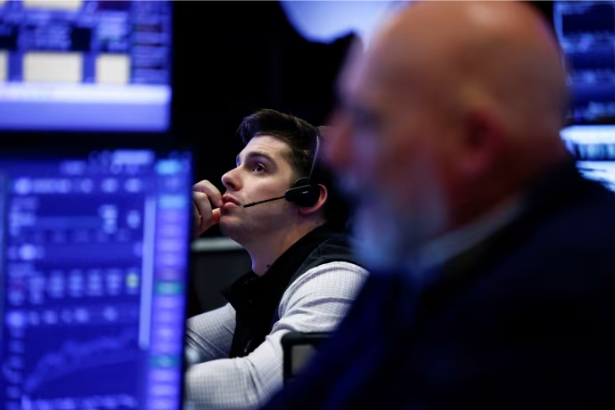
Dow futures swung sharply on Wednesday, November 4, as investors processed two major developments: Democrats winning control of both chambers of Congress in the 2026 US midterm elections and chipmaker AMD reporting stronger-than-expected quarterly results.
The first market reaction was negative. Dow futures fell around 0.8% in early trading, while S&P 500 futures dropped 1.3% and Nasdaq 100 futures lost 2.2%, according to Fox Business. Investors were weighing what a change in congressional control could mean for taxes, government spending, financial regulation and the technology sector.
But the decline did not last at the same intensity. By early Wednesday morning, futures had recovered. Reuters reported Dow futures up 0.46%, with S&P 500 and Nasdaq 100 futures also turning positive. Investing.com later recorded a 0.55% rise in Dow futures in its premarket snapshot.
AMD provided a separate catalyst. The chipmaker reported record third-quarter revenue of $13.4 billion, while its data-center business nearly doubled year over year. Its shares rose sharply in premarket trading, giving technology investors a counterweight to concerns about the election’s potential policy implications.
The result was a market session shaped by competing forces: political uncertainty on one side and strong corporate earnings on the other.
Background and Context: Why Dow Futures Reacted to the Midterm Elections
Stock futures trade outside regular US market hours and offer an early indication of how investors are positioning ahead of the next session. They can move quickly when political results, company earnings or economic data change expectations.
The 2026 midterm elections became a major market event because Democrats secured control of both the House of Representatives and the Senate. That outcome changes the political environment for the remainder of President Donald Trump’s term.
Investors are now considering how a Democratic-controlled Congress could affect legislation, taxes, spending priorities and regulatory oversight. Technology companies, particularly those building artificial intelligence infrastructure, are among the businesses facing questions about the direction of future policy.
The concern is not simply that Congress will pass a completely different economic agenda overnight. A divided government can also make major legislation harder to enact, increase the likelihood of investigations and create uncertainty around regulatory decisions.
That uncertainty was reflected in the first reaction from futures markets.
The initial market reaction
| Index futures | Initial reported move |
|---|---|
| Dow Jones futures | Down 0.8% |
| S&P 500 futures | Down 1.3% |
| Nasdaq 100 futures | Down 2.2% |
These figures were reported by Fox Business during the initial post-election selloff. They are snapshots from a specific point in overnight trading, not the final performance of the indexes on November 4. <Cite refs={[“turn531158search0”]}/>
The Nasdaq’s larger decline suggested that technology shares were particularly exposed to investor concerns about regulation and the future economics of AI infrastructure.
Latest Update: Dow Futures Recover as AMD Earnings Change the Mood
The market story changed as Wednesday’s premarket trading developed.
Reuters reported that futures had initially fallen as much as 1.4% for the S&P 500 and 2.4% for the Nasdaq 100. By 3:13 a.m. Eastern time, Dow E-minis were up 237 points, or 0.46%. S&P 500 E-minis had gained 0.15%, while Nasdaq 100 E-minis were up 0.26%. <Cite refs={[“turn364635view2”]}/>
Investing.com reported a later premarket snapshot showing Dow Jones futures up 0.55%, S&P 500 futures up 0.26% and Nasdaq 100 futures up 0.18%. The same report said AMD had climbed more than 7% in premarket trading after its earnings announcement. <Cite refs={[“turn943368view0”]}/>
The reversal is important. It shows why a headline describing futures as simply tumbling does not capture the full trading session. Futures prices move continuously, and the direction can change as investors digest new information.
AMD becomes a key market counterweight
AMD’s November 3 earnings report gave investors a strong company-specific development to consider alongside the election.
The company reported:
| AMD financial measure | Q3 2026 result |
|---|---|
| Revenue | $13.4 billion |
| GAAP gross margin | 54% |
| GAAP operating income | $2.8 billion |
| GAAP net income | $2.4 billion |
| GAAP diluted earnings per share | $1.46 |
| Non-GAAP diluted earnings per share | $2.09 |
| Data-center revenue | $8.5 billion |
AMD said revenue increased 45% year over year on a non-GAAP basis, while data-center revenue reached a record $8.5 billion, up 97% from the prior-year quarter. The company also forecast fourth-quarter revenue of approximately $17 billion, plus or minus 3%. <Cite refs={[“turn943368search0”]}/>
That performance matters because data centers have become one of the biggest sources of demand for advanced processors and AI accelerators. AMD’s results offered evidence that demand for AI infrastructure remains substantial, even as investors question whether the enormous spending commitments made by technology companies will generate adequate returns.
The company’s earnings did not eliminate broader concerns about the technology sector. They did, however, provide a positive company-specific catalyst during a politically uncertain trading session.
What the supplied market reports show
The three news links in the Google Trends screenshot capture different parts of the story:
- Fox Business: US Stock Futures Tumble as Democrats Score Key Midterm Election Wins covers the initial overnight decline and investor concerns about the election outcome.
- Investing.com: Democrats Seize Congress; AMD Shares Surge, What’s Moving Markets connects the political result with AMD’s earnings and the changing futures picture. The page’s live market coverage should be checked for the latest timestamp before publication.
- CNBC: Stock Market Today Live Updates provides the broader trading-day context around the election and AMD’s earnings.
The distinction between the initial decline and later recovery should remain clear in any market recap. A futures quote is a time-specific observation, not a settled closing result.
Expert Analysis: Why Investors Are Watching AI Regulation and Data Centers
The election’s potential impact on technology companies is one of the main reasons the Nasdaq futures reaction was more pronounced than the Dow’s.
AI infrastructure requires enormous investments in computing hardware, electricity, cooling systems, land and data-center construction. Companies building that infrastructure depend on a policy environment that allows projects to move forward and energy supplies to expand.
A change in congressional control could bring additional scrutiny to data-center development, energy consumption, environmental impacts and the market power of large technology companies.
Reuters reported that investors were considering the possibility of tougher regulation and greater oversight of AI and cryptocurrency businesses. It also noted that Democratic gains in Texas and Georgia brought renewed attention to data-center expansion and concerns about energy costs and environmental pressures. <Cite refs={[“turn364635view2”]}/>
That does not mean every AI project will face new restrictions, or that Congress can immediately change the rules governing the industry. The policy process involves legislation, regulatory agencies, state governments and courts. Investors are reacting to the possibility of changes, not to a fully implemented set of new rules.
The AI investment debate is already influencing markets
Technology stocks were under pressure before election night. Investors had been questioning whether the capital being committed to AI infrastructure would translate into sustainable earnings growth.
The concern is straightforward: building AI data centers requires significant spending today, while the financial returns may take longer to materialize.
AMD’s results offered a contrasting signal. Its data-center revenue nearly doubled year over year, demonstrating strong demand for its processors and accelerator products. The company’s outlook also pointed to further growth.
But one company’s results cannot settle the broader debate. Investors still need to assess whether AI-related spending across the industry will produce returns that justify the cost of infrastructure, power and hardware.
Broader Implications: What the Election Could Mean for the Stock Market
The change in congressional control creates a new political environment for companies and investors. Its market implications may develop over months rather than in a single trading session.
1. Technology companies face closer policy scrutiny
Large technology businesses could face additional congressional attention around competition, AI safety, consumer privacy, data-center power demand and environmental impacts.
The extent of any change will depend on legislative priorities, committee investigations, agency decisions and the ability to secure support for specific proposals.
2. Data-center investment remains a major market issue
The expansion of AI infrastructure has made data centers an important part of the investment outlook for chipmakers, cloud providers, utilities and construction companies.
If new policies make projects more expensive or slower to approve, investors may reassess the growth outlook for some businesses in the supply chain. On the other hand, continued demand for computing capacity could support investment even in a more closely scrutinized regulatory environment.
3. Fiscal policy and taxes return to focus
Investors will also watch how the new Congress approaches government spending, taxation and the federal budget.
Changes to tax policy can affect corporate earnings, household spending and the relative attractiveness of different investments. However, the election result alone does not establish which proposals will become law.
4. Volatility may continue as policy expectations change
Markets do not wait for every law to pass before responding. Investors continuously update their expectations as political leaders announce priorities, companies adjust investment plans and regulators signal possible action.
That can produce sharp moves in futures and individual stocks, particularly in sectors where valuations depend heavily on future growth.
For more coverage of technology companies, AI infrastructure and the business impact of policy changes, readers can explore The Tech Marketer.
Related History: How Markets Have Reacted to Midterm Elections
US midterm elections have often been followed by changes in investor expectations, but the market response is not determined by election results alone.
Investors also consider interest rates, inflation, corporate earnings, economic growth, international developments and valuations. A political shift can influence the market without becoming its only driver.
The November 4 trading pattern illustrates that point. Futures first fell as investors considered the implications of a Democratic congressional majority. They then recovered as traders reassessed the result and AMD delivered strong earnings.
The technology sector has also experienced similar tensions during previous periods of regulatory uncertainty. Companies can continue to report strong revenue growth even while investors debate the rules under which they will operate.
The current AI cycle adds another dimension. Data-center investment is now tied to semiconductor demand, cloud computing, electricity infrastructure and the competitive strategies of major technology companies. That makes regulatory questions relevant to a wider range of stocks than just chipmakers.
What Happens Next: What Investors Will Watch
The next stage of the market reaction will depend on both political developments and corporate results.
Investors are likely to focus on several areas:
- Congressional priorities: Market participants will watch which policy issues Democratic leaders put first, particularly taxation, technology regulation and government spending.
- AI and data-center rules: Any proposals affecting energy use, data-center approvals, AI oversight or competition could influence technology and infrastructure valuations.
- AMD’s forward guidance: Investors will assess whether the company’s projected fourth-quarter growth is supported by continuing demand for data-center processors and AI accelerators.
- Other technology earnings: Results from major chip, cloud and software companies will help show whether AMD’s performance reflects a broader industry trend.
- Treasury yields and the dollar: Changes in bond yields and currency markets can affect equity valuations and international investment flows.
- The regular US market session: Futures are an early indicator. The cash-market opening and subsequent trading will show whether the overnight recovery holds.
Investors should also remember that futures quotes are not guarantees of where the market will close. They can change rapidly as new information reaches traders.
Conclusion: Dow Futures Show How Quickly Market Sentiment Can Shift
Dow futures began Wednesday under pressure as investors reacted to the Democratic takeover of Congress. The initial decline reflected uncertainty about future policy, including potential changes affecting taxes, technology regulation and AI infrastructure.
But the market picture shifted as the session progressed. Futures recovered, and AMD’s strong earnings gave technology investors a positive company-specific development to weigh against the political uncertainty.
The broader lesson is that markets rarely respond to one headline in isolation. The election changed expectations about Washington, while AMD’s results offered fresh evidence about demand for AI hardware. Both developments mattered, and investors were trying to price them at the same time.
For now, the key question is not simply whether Dow futures rise or fall after the election. It is how the new political environment, AI investment cycle and corporate earnings outlook interact over the coming weeks.
This article is for informational purposes and is not investment advice. Futures prices and market conditions can change rapidly.
Frequently Asked Questions
1. Why are Dow futures moving after the 2026 midterm elections?
Dow futures initially fell as investors reacted to Democrats winning control of both chambers of Congress. Traders were assessing possible changes to tax policy, government spending, financial regulation and technology oversight. Futures later recovered during Wednesday’s premarket session.
2. How much did Dow futures fall after the election results?
Fox Business reported an initial decline of approximately 0.8% in Dow futures. That was an overnight snapshot. Reuters later reported Dow futures up 0.46%, showing that the initial decline had reversed by its reported premarket update.
3. Why did AMD shares rise?
AMD reported third-quarter 2026 revenue of $13.4 billion, with data-center revenue reaching $8.5 billion, up 97% year over year. The company also forecast fourth-quarter revenue of approximately $17 billion, plus or minus 3%.
4. What does a Democratic majority in Congress mean for technology stocks?
Investors may expect greater congressional scrutiny of AI, data centers, energy use, competition and other technology issues. The actual effect on companies will depend on the proposals introduced, the legislative process and regulatory decisions.
5. Why did Nasdaq futures fall more sharply than Dow futures?
The Nasdaq has a heavier concentration of technology and growth companies. Concerns about AI regulation, data-center investment and technology valuations can therefore have a larger effect on Nasdaq-linked futures.
6. Do rising Dow futures mean the stock market will close higher?
No. Futures reflect trading expectations outside regular market hours. They can change before the opening bell and do not guarantee the direction of the Dow Jones Industrial Average during the regular session.
7. What should investors watch after the election?
Investors will monitor congressional policy priorities, AI and data-center regulation, corporate earnings, Treasury yields, the US dollar and upcoming economic data. These factors can influence market sentiment alongside the election result.
8. What is the difference between Dow futures and the Dow Jones Industrial Average?
The Dow Jones Industrial Average is a stock index tracking 30 major US companies. Dow futures are derivative contracts that allow market participants to trade based on expectations for the index’s future value.
Sources & References
- Reuters, “US Stock Index Futures Steady as Democrats Seize Congress.”
https://www.reuters.com/business/us-stock-index-futures-steady-democrats-seize-congress-2026-11-04/ - Associated Press, “World Shares Are Mostly Higher as Democrats Gain Majorities in Both the US House and Senate.”
https://apnews.com/article/stock-markets-ai-earnings-oil-4d12764c0b3ce38ffde3077712811182 - AMD Newsroom, “AMD Reports Third Quarter 2026 Financial Results.”
https://newsroom.amd.com/news/amd-reports-third-quarter-2026-earnings/ - Fox Business, “US Stock Futures Tumble as Democrats Score Key Midterm Election Wins.”
https://www.foxbusiness.com/markets/us-stock-futures-tumble-democrats-score-key-midterm-election-wins - Investing.com, “U.S. Stock Futures Turn Positive as Dems Sweep Congress; AMD Rises.”
https://www.investing.com/news/stock-market-news/us-stock-futures-steady-with-midterms-in-focus-amd-rallies-on-strong-earnings-4997029 - CNBC, “Stock Market Today Live Updates.”
https://www.cnbc.com/2026/11/03/stock-market-today-live-updates.html