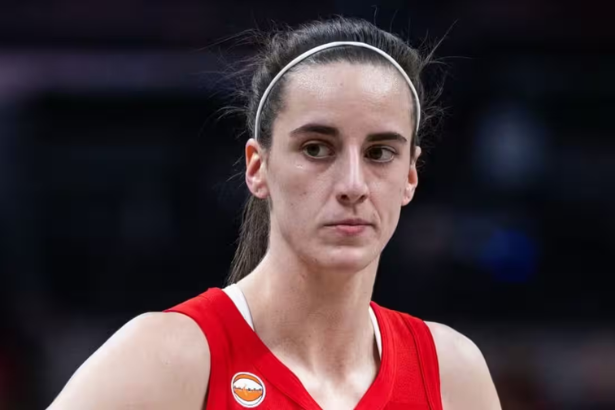
Caitlin Clark WNBA reactions 2026 in the wake of the Fever’s 88-75 loss to the Golden State Valkyries on July 15 have generated more conversation than the game itself. Clark finished with 13 points in 26 minutes on a minutes restriction for her back injury, but it was a non-call in the second quarter that dominated her post-game press conference. A defender kneed her in the quad during a play at the rim, leaving her briefly limping and playing through a contusion for the remainder of the game. “That hurts. The ref can’t miss that. And then I have to play with a contusion in my leg the rest of the game. It’s ridiculous,” Clark told reporters, an unusually pointed public criticism of an official. Simultaneously, NBA legend Kareem Abdul-Jabbar entered the ongoing debate about Clark’s place in the league with a Substack post arguing that calling her the “face of the WNBA” is “an insult to an awful lot of great players.”
The Non-Call: What Happened and What Clark Said
The specific play that drew Clark’s frustration occurred in the second quarter, before her brief second-half return during Indiana’s comeback push.
Clark was kneed in the quad on a play at the rim that was not called as a foul. She briefly limped after the contact and was subsequently removed from the game, returning in the second half where she scored four consecutive points during Indiana’s third-quarter run before the Valkyries pulled away. She played through the leg contusion for the remainder of her 26 minutes.
Her comments at the post-game podium were among the more direct officiating criticisms she has made publicly in her three seasons. “That hurts,” she said, explaining she was kneed in the quad on the specific play. “The ref can’t miss that. And then I have to play with a contusion in my leg the rest of the game. It’s ridiculous.” Bleacher Report’s Timothy Rapp noted that the contact on Clark seemed fairly innocuous on review, and that her explosive reaction toward the referee very easily could have led to a technical foul. Clark has now accumulated five technical fouls this season and is three away from an automatic one-game suspension.
The Broader Officiating Context: A Season of Flashpoints
The Valkyries non-call is the latest in a series of officiating controversies that have defined Clark’s 2026 season.
The most significant prior incident occurred weeks earlier when Phoenix Mercury forward Alyssa Thomas struck Clark in the throat during a game without being called for a foul. The WNBA later punished Thomas with a retroactive Flagrant 2 and a one-game suspension after widespread backlash. The incident sparked online harassment directed at Thomas, which Clark publicly condemned. “As I’ve stood here and said before, the harassment, the hate, none of that is OK,” Clark said. “That goes for the opposing team we play. That goes for my teammates. That goes for my coaches.”
That sequence led directly to a congressional intervention. A group of 11 Republican members of Congress, led by Rep. August Pfluger, sent a letter to WNBA commissioner Cathy Engelbert asking the league to explain its handling of excessive physical play. In that letter, they referred to Clark as “the face of the league,” a phrase that caught the attention of Kareem Abdul-Jabbar.
ESPN’s Rebecca Lobo had offered nuanced analysis of the officiating question earlier in the season. “I think Caitlin Clark is a really hard player to officiate,” Lobo said on SportsCenter. She cited three reasons: Clark is regularly picked up full-court, she gets blitzed more than any player in WNBA history, and she creates some contact herself on offense. “That being said, I was in contact with a number of WNBA coaches yesterday about this topic and all of them said it needs to get better. Specifically, the consistency.”
Kareem Abdul-Jabbar’s Substack: The Face of the WNBA Debate
The parallel conversation running alongside Clark’s officiating complaints involves one of basketball’s greatest-ever players and his pushback on a specific phrase.
Kareem Abdul-Jabbar, the NBA’s all-time leading scorer before LeBron James, published a Substack post responding to the congressional letter and its description of Clark as “the face of the league.” His comments became one of the most discussed takes in women’s basketball this week.
“My first reaction to this letter was to check the calendar and make sure it wasn’t April Fools’ Day,” Abdul-Jabbar wrote. “Don’t get me wrong: Clark is a very good, possibly even a great, player. But calling any one player the face of the league, absent the sort of on-court and cross-platform dominance of a Michael Jordan or a LeBron James, is an insult to an awful lot of great players.”
Abdul-Jabbar argued that the description overlooks accomplished veterans including A’ja Wilson, a four-time WNBA MVP, three-time Defensive Player of the Year, and three-time league champion; Breanna Stewart; Napheesa Collier; Chelsea Gray; and Alyssa Thomas. His central argument was that Clark, entering her third WNBA season, has not yet compiled the on-court resume to be compared to the singular face designations those specific NBA players earned.
The Counterarguments: What Abdul-Jabbar Is Leaving Out
Abdul-Jabbar’s argument has both supporters and critics, and the counterarguments deserve representation.
OutKick’s coverage noted a logical tension in Abdul-Jabbar’s comparison to Jordan and LeBron. Both of those players were also not called the “face of the league” at LeBron’s current career stage or Jordan’s peak solely based on on-court resume; they achieved that designation partly through their commercial and audience-expanding impact. Clark’s impact on WNBA viewership, attendance, and commercial revenue since her 2024 rookie season has been documented as unprecedented. Average attendance at Fever home games has risen dramatically. National television ratings for WNBA games featuring Clark consistently rank among the league’s highest-viewed broadcasts.
USA Today’s coverage positioned the debate as having two genuinely separate conversations happening simultaneously. One centers on Clark’s undeniable impact on the league’s popularity and business growth. The other focuses on whether that impact should automatically make her the singular face of a league filled with championship-caliber veterans and former MVPs. Abdul-Jabbar is engaging primarily with the second conversation while critics say he is undervaluing the first.
What Players Have Said About the Physicality
The officiating and physical play debate has drawn responses from current and former players who offer perspectives that are worth hearing without editorial framing.
Retired point guard Layshia Clarendon, speaking on her No Offseason podcast, offered a perspective generally in favor of the current physical style of the game. “There’s a celebration to being like, ‘I’m bigger than you,'” Clarendon said. “And I don’t want that to be shied away from because we’re women and it’s a women’s league. Being big and being stronger is a part of competitive advantage. It’s a big girls’ league.”
Elena Delle Donne, whose own career was marked by physical play, came down differently. “Trust me, my back wishes I had had a little more of that,” Delle Donne said of modern officiating that prioritizes more freedom of movement. “It’s more fun to watch, and there are such skilled players out there. We want to see them do what they can do. We don’t want to just see them get beat up.”
Clark’s Dual Injury Picture: Back and Now Quad
The physical toll on Clark heading into the All-Star break is now documented across two separate areas.
Clark has been managing a back injury that required a minutes restriction in the Valkyries game and caused her to miss two prior games entirely. She is now also dealing with a quad contusion from the unrefereed contact in the second quarter. She confirmed to reporters that she played through the contusion for the remainder of her 26 minutes after the non-call.
The All-Star break follows this game week, giving Clark additional recovery time before the second half of the season. Coach Stephanie White’s ongoing management of both the back injury and now the quad contusion will be a key story heading into August’s schedule. Clark confirmed she would sit out Thursday’s back-to-back second game against the Phoenix Mercury, with Aliyah Boston returning for that game.
Latest Update: Clark Sitting Out Thursday, Technical Foul Watch Continues
The Caitlin Clark WNBA reactions 2026 story spans three intersecting issues heading into the All-Star break: the quad contusion from Wednesday’s non-call, the ongoing back management, and the technical foul count now at five with an automatic suspension threshold at eight.
Clark will not play Thursday against the Phoenix Mercury. Her next scheduled appearance will depend on how both injuries respond during the break period.
For full coverage, follow ESPN, USA Today, and Bleacher Report.
Broader Implications: The Caitlin Clark Discourse Has Become Its Own Phenomenon
The Caitlin Clark WNBA reactions 2026 cycle reflects something genuinely unusual about this particular player’s position in American sports culture: she generates more conversation about the conversations about her than almost any athlete in any sport.
The non-call and quad contusion are real events with specific facts. Kareem Abdul-Jabbar’s Substack post is a real opinion from a real person with genuine standing to opine on basketball greatness. The congressional letter is a real piece of political theater that reflects how far outside the sports media ecosystem the Clark storyline has penetrated. The harassment of Alyssa Thomas is a real and documented harm that Clark herself condemned.
What is unusual is that all of these separate events, the injury, the officiating, the historical player comparisons, and the congressional intervention, coexist in the same news cycle and are all genuinely about the same 27-year-old basketball player in her third professional season. No other WNBA player, and few athletes in any American sport, generate this level of concurrent storyline volume. Whether that is a function of her talent, her marketing appeal, her race, the political environment, or some combination of all of them is itself a debate that does not have a clean resolution.
For more WNBA coverage and sports analysis, visit The Tech Marketer.
What Happens Next
Clark sits out Thursday against the Mercury. The All-Star break follows. Clark’s technical foul count stands at five, with three more producing an automatic one-game suspension. Her back and quad will be monitored during the break. Kareem Abdul-Jabbar’s Substack post will continue generating responses across the basketball commentary ecosystem through the break period.
FAQ
Why did Caitlin Clark call out the ref after the Valkyries game?
Clark called out the referee because she was kneed in the quad on a play at the rim in the second quarter that was not called as a foul. She briefly limped after the contact and played through a quad contusion for the remainder of her 26 minutes. “That hurts. The ref can’t miss that. And then I have to play with a contusion in my leg the rest of the game. It’s ridiculous,” she told reporters in her post-game press conference.
What injury does Caitlin Clark have after the Valkyries game?
Clark is dealing with two injuries simultaneously: a back injury that has been managed with minutes restrictions all season and caused her to miss two prior games, and a new quad contusion from the unrefereed contact in Wednesday’s second quarter against the Valkyries. She confirmed she played through the quad contusion for the remainder of the game after the non-call.
What did Kareem Abdul-Jabbar say about Caitlin Clark?
In a Substack post, Kareem Abdul-Jabbar pushed back against calling Clark the “face of the WNBA,” a phrase used by 11 Republican members of Congress in a letter to WNBA commissioner Cathy Engelbert about Clark’s physical treatment. Abdul-Jabbar wrote: “Calling any one player the face of the league, absent the sort of on-court and cross-platform dominance of a Michael Jordan or a LeBron James, is an insult to an awful lot of great players.” He praised Clark as “a very good, possibly even a great, player” but said veterans like A’ja Wilson, Breanna Stewart, and Napheesa Collier deserve recognition.
What is Clark’s technical foul situation in the 2026 WNBA season?
Clark has accumulated five technical fouls in the 2026 WNBA season. Under league rules, a player who reaches eight technical fouls in a season receives an automatic one-game suspension, with additional suspensions following at every other technical thereafter. Clark is three technical fouls away from a mandatory suspension.
What are the different perspectives on Caitlin Clark and WNBA officiating?
ESPN analyst Rebecca Lobo noted Clark is difficult to officiate because she gets picked up full-court, gets blitzed more than any player in WNBA history, and creates some contact herself on offense, but said all coaches she spoke to agreed officiating consistency needs to improve. Layshia Clarendon offered that physical play reflects competitive advantage and should not be reduced simply because it involves women. Elena Delle Donne said more freedom of movement is better for the sport and allows skilled players to show what they can do without being beaten up.
Sources and References
- ESPN (original submission, redirect only — confirmed via search): https://www.espn.com/wnba/story/_/id/49373763/fever-star-caitlin-clark-sounds-missed-call-loss-valkyries
- USA Today (original submission, blocked): https://www.usatoday.com/story/sports/wnba/2026/07/16/kareem-abdul-jabbar-caitlin-clark-debate-explained/90941149007/
- Bleacher Report (fully accessed): https://bleacherreport.com/articles/25455438-caitlin-clark-calls-out-ref-reveals-injury-after-fever-loss-valkyries