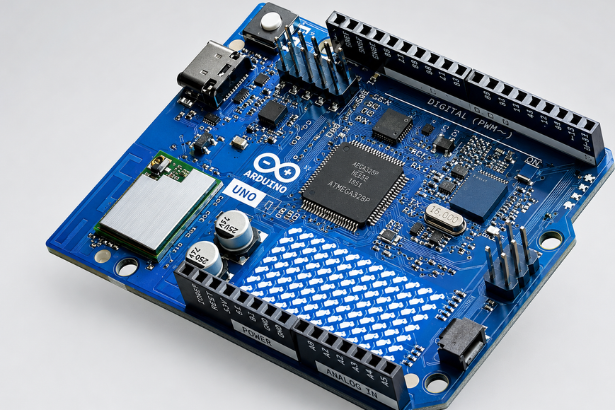
Arduino UNO Q price increase 2026 has become an unavoidable conversation in the maker community as the global RAM and NAND flash crisis that has already devastated laptop, smartphone, and gaming hardware pricing works its way into single-board computers. The Arduino UNO Q, the company’s first Qualcomm-powered Linux-capable board in the iconic UNO form factor, launched in October 2025 at $44 for the 2GB variant and $59 for the 4GB model. Those prices were already ambitious for a maker-focused single-board computer. Now, with LPDDR memory prices up as much as 89% quarter-over-quarter in Q2 2026 alone, the economics behind those price points are being severely tested, and the maker community is taking notice.
What Is the Arduino UNO Q?
To understand why the RAM crisis threatens this board specifically, it helps to understand what makes it unusual in the single-board computer market.
The Arduino UNO Q was unveiled late last year along with the news that the company had been acquired by embedded computing giant Qualcomm. While sharing the same footprint as earlier Arduino UNO microcontroller boards, complete with the iconic staggered header pin-out, the UNO Q is a full-fat single-board computer powered by a Qualcomm Dragonwing QRB2210 quad-core Arm Cortex-A53 chip with an STMicroelectronics STM32U585 coprocessor. The Washington Post
The board can be used either as a development target connected to a host PC, or as a standalone single-board computer running Debian Linux. The 2GB of RAM and 16GB of eMMC storage somewhat limit its standalone capabilities, making the 4GB variant the recommended choice for users planning to connect a monitor, keyboard, and mouse and run a graphical desktop environment. The Washington Post
The Arduino UNO Q 4GB board with 4GB RAM and 32GB storage became available for $59 in January 2026, the second SKU in the lineup after the 2GB model launched at $44 in October 2025. aol
The dual-brain architecture, combining a Linux-capable Qualcomm application processor with a real-time STM32 microcontroller, is what sets this board apart from both traditional Arduino boards and competitors like the Raspberry Pi 5.
The RAM Crisis: How Bad Has It Gotten?
The memory market conditions that now threaten the Arduino UNO Q’s pricing are the most severe in years.
Consumer-focused DRAM saw a major spike in prices in Q2 2026 versus Q1, with DDR4 memory floating at a 50% increase and LPDDR around 80% due to persistent shortages. A 16 Gb DRAM module now costs an average of $28.50 versus $19.20 in the previous quarter, marking a 49% bump. A 16 GB DDR4 stick, which used to cost $137 in the previous quarter, is now selling for $207.10, marking a 51% bump. aol
Momentum intensified in the first quarter of the new year. Counterpoint Research confirmed that memory prices surged up to 80 to 90% quarter-over-quarter from Q4 2025 into Q1 2026 across most segments. With DDR4 supply plummeting, suppliers held firm to end-of-life strategies. CBS News
In Q1 2026 alone, the industry saw massive baseline jumps, with consumer RAM prices inflating by up to 110% and SSDs surging by 147%, triggering a desperate stockpiling race among PC manufacturers. AI will consume 20% of total DRAM production in 2026, and this figure could increase further as AI buildout scales. LAist
16 GB eMMC 5.1 flash, the exact type of storage used in the Arduino UNO Q, is also up 69% quarter-over-quarter, sitting at $22.60 versus $13.40 in the previous quarter. aol
Why the Arduino UNO Q Is Directly Exposed
The two components that make the RAM crisis most dangerous for the Arduino UNO Q are LPDDR4 RAM and eMMC flash storage. These are precisely the components the board relies on.
The Arduino UNO Q 4GB features 4GB of LPDDR4 RAM for multitasking, multiple Linux containers, Python scripts, and AI model execution. The built-in 32GB eMMC ensures fast OS boot times and secure data logging, replacing the unreliable SD cards common on competing boards. abc7
LPDDR4 is among the hardest-hit memory categories in the current crisis, with prices up as much as 89% in Q2 2026 according to SigmaIntel research. For a board like the UNO Q, where LPDDR4 is a primary component rather than an optional addition, that price surge feeds directly into bill-of-materials costs.
Buyers dependent on legacy platforms for industrial systems, embedded designs, and automotive platforms had nowhere to pivot. The inversion logic that has made DDR4 more expensive than DDR5 persisted, with most manufacturers unwilling to extend production capacity even as mounting pressure built in the supply chain. CBS News
The Arduino UNO Q was designed at a moment when component costs were more favorable. The pricing structure it launched with reflected those conditions, and that environment no longer exists.
What Jefferies’ Analyst Is Forecasting for the Rest of 2026
The bad news for makers and developers is that relief is not coming soon.
A report from Jefferies, an investment banking firm, includes the expectation that memory pricing will increase in a big way as 2026 rolls onwards, with a 40% to 50% hike in Q3 compared to Q2, and a further 30% to 40% rise in the last quarter of 2026. Price hikes are likely to continue through 2027, with potentially a 40% to 45% increase year-on-year, which would leave RAM prices at a staggering level come the close of next year. Only then will an easing of pricing arrive in 2028, with memory prices potentially falling by up to 20% due to a combination of slowing demand and more production capacity coming online. CNN
Nvidia CEO Jensen Huang has observed that the RAM crisis will be around for “quite a few years,” hinting that it is a problem the industry will live with for the rest of the decade. CNN
Micron’s VP confirmed in an exclusive interview that fab buildouts, such as those in Idaho, will not have a meaningful impact by 2028, given the time required to set up plants and bring in newer production lines. Vendors like Lenovo have previously relied on DRAM inventory to sustain market pricing; however, given that shortages are expected to continue for several quarters ahead, manufacturers have no choice but to raise product prices. LAist
The Maker Community’s Dilemma: Buy Now or Wait?
The RAM crisis is creating the same urgent consumer calculus for Arduino UNO Q buyers that it has already created for laptop and PC purchasers.
CEO Wallace Santos of MAINGEAR told Wccftech that consumers should not wait for their PC upgrades, as the situation is expected to deteriorate further in 2026. “We’ve already seen DRAM prices skyrocket due to the shortages and are holding off those price changes for our customers as long as we can. For consumers that are interested in getting a new PC or upgrading their current system’s GPU, SSD or RAM, they should consider shopping now and looking for offerings that have not seen price increases yet.” LAist
For single-board computer buyers, the same logic applies. The Arduino UNO Q at $44 for the 2GB model and $59 for the 4GB model represents pricing that was established before the sharpest phase of the LPDDR and eMMC cost surge. Future inventory priced against Q2 and Q3 2026 component costs could carry meaningfully higher price tags.
The $44 Arduino UNO Q is considered the most interesting product in the Arduino versus Raspberry Pi market since the original Pi 3. It is nearly as cheap as a 4GB Raspberry Pi 5 but keeps UNO shield compatibility, a crucial advantage for anyone with an existing Arduino ecosystem. Wikipedia
Arduino’s Dual-Brain Architecture and Why It Matters for Edge AI
Beyond the price pressure, understanding why the Arduino UNO Q matters helps clarify why the maker community is invested in its long-term viability.
Most developers reach for a single-board computer, only to discover they still need a microcontroller for real-time I/O. Then they need eMMC and extra storage. Then a separate AI accelerator. Then comes the custom wiring nightmare just to make everything talk to each other. As the application grows, they find themselves stacking extra boards, external controllers, and shaky communication links. The UNO Q starts where that frustration ends: one board, Qualcomm Dragonwing QRB2210 Linux-capable processor, real-time STM32 MCU, Qualcomm Adreno GPU 3D graphics accelerator, and built-in 32GB eMMC. aol
The Arduino UNO Q represents a significant moment in the maker ecosystem. Born from Qualcomm’s acquisition of Arduino, this dual-brain board brings artificial intelligence capabilities to the familiar Arduino platform while maintaining the development experience that millions of makers know and love. cbssports
The board’s dependency on LPDDR4 and eMMC is therefore not incidental. It is fundamental to the product’s entire value proposition, making it uniquely vulnerable to the current memory market conditions.
Latest Update: Where the Arduino UNO Q Stands Today
The Arduino UNO Q price increase 2026 story is still developing, with no official announcement from Arduino or Qualcomm about price adjustments as of late June 2026.
Laptop and smartphone makers have already raised prices across the board. Gaming consoles have also gone up, and Valve’s recent Steam Machine also faced negative reception due to its higher prices, which are primarily driven by memory and storage shortages. aol
As The Verge reports, Valve also just underlined how hard it is to buy RAM at anything approaching a reasonable price, with no room for negotiation whatsoever with memory suppliers, which impacted the cost of the Steam Machine. CNN
For full coverage of the RAM crisis and its impact on maker hardware, follow The Verge, TechRadar, and Wccftech.
Broader Implications: What the RAM Crisis Means for Open Hardware
The Arduino UNO Q price increase 2026 situation is a microcosm of a larger structural problem that the entire open hardware ecosystem is now facing.
The Raspberry Pi Foundation built its reputation on relentlessly affordable pricing, and the Pi 5 is now selling at $205 for the 16GB model, a 70% premium over the original $35 MSRP. Arduino launched the UNO Q at prices calibrated to compete with that ecosystem. If LPDDR4 and eMMC costs continue rising through 2027 as Jefferies analysts forecast, those competitive price points become increasingly difficult to defend.
The deeper risk is to the educational and hobbyist community that both platforms serve. When single-board computers cross certain price thresholds, they become inaccessible to the school budgets, maker spaces, and individual hobbyists who have historically driven ecosystem growth. That is the outcome the maker community is most worried about as the RAM crisis deepens.
For more tech hardware and consumer electronics coverage, visit The Tech Marketer.
What Happens Next
The Q3 2026 memory market data, expected later in summer, will determine whether Jefferies’ 40 to 50% additional price hike forecast materializes. Arduino and Qualcomm have not announced any price adjustments to the UNO Q lineup as of publication. Makers considering a purchase should note that current $44 and $59 pricing may represent a structural floor before component cost increases flow through to retail. Arduino has also announced a higher-tier board, the Arduino VENTUNO Q, featuring 16GB of RAM and an M.2 NVMe slot, though pricing for that product will face even greater LPDDR exposure.
FAQ
Why is the Arduino UNO Q facing a price increase in 2026?
The Arduino UNO Q uses LPDDR4 RAM and eMMC flash storage, two of the memory categories hardest hit by the 2026 global RAM crisis. LPDDR prices surged up to 89% quarter-over-quarter in Q2 2026 alone, and eMMC 5.1 flash rose 69% in the same period, meaning the components that power the Arduino UNO Q now cost dramatically more than when the board launched at $44 and $59 in 2025.
What is the Arduino UNO Q and how much does it cost in 2026?
The Arduino UNO Q is Arduino’s first Qualcomm-powered single-board computer, launched in October 2025. It combines a Qualcomm Dragonwing QRB2210 quad-core Arm Cortex-A53 application processor with an STM32U585 real-time microcontroller in the classic UNO form factor. The 2GB RAM and 16GB eMMC model launched at $44, and the 4GB RAM and 32GB eMMC model became available in January 2026 at $59.
How bad is the RAM crisis affecting maker hardware in 2026?
Extremely severe. Consumer DRAM prices surged up to 89% in Q2 2026 versus Q1 according to SigmaIntel research. A Jefferies analyst forecast a further 40 to 50% price increase in Q3 2026 and 30 to 40% in Q4 2026, with hikes continuing into 2027. Nvidia CEO Jensen Huang has said the RAM crisis will persist for “quite a few years,” and Micron has confirmed that new fab capacity will not have meaningful market impact until 2028.
Should I buy the Arduino UNO Q now before prices go up?
Based on current market forecasts from Jefferies and Micron, LPDDR4 and eMMC prices are expected to continue rising through the remainder of 2026 and into 2027, which makes the current $44 and $59 price points for the Arduino UNO Q potentially the lowest they will be for some time. MAINGEAR’s CEO has publicly advised consumers not to wait on hardware purchases during this period, and the same logic applies to single-board computers.
What makes the Arduino UNO Q different from a Raspberry Pi?
The Arduino UNO Q uses a dual-brain architecture that pairs a Linux-capable Qualcomm Dragonwing application processor with a real-time STM32 microcontroller on a single board in the classic UNO shield-compatible form factor. The Raspberry Pi 5 offers significantly more raw computing performance at up to 50x faster throughput, but lacks the real-time microcontroller integration. The UNO Q is designed for projects that need both Linux-level computing and deterministic hardware control on a single board.
Sources and References
- The Verge (original submission, blocked): https://www.theverge.com/tech/957751/arduino-q-microcomputer-price-increase-ram-crisis