

By using this site, you agree to the Privacy Policy and Terms of Use.
Accept
The Tech MarketerThe Tech MarketerThe Tech Marketer
  • Home
  • Technology
  • Entertainment
    • Memes
    • Quiz
  • Marketing
  • Politics
  • Visionary Vault
    • Whitepaper
Reading: AI-Driven Supply Chains: Moving From Visibility to Autonomous Decision-Making
Share
Notification Show More
Font ResizerAa
The Tech MarketerThe Tech Marketer
Font ResizerAa
  • Home
  • Technology
  • Entertainment
  • Marketing
  • Politics
  • Visionary Vault
  • Home
  • Technology
  • Entertainment
    • Memes
    • Quiz
  • Marketing
  • Politics
  • Visionary Vault
    • Whitepaper
Have an existing account? Sign In
Follow US
© The Tech Marketer. All Rights Reserved.
Supply Chain

AI-Driven Supply Chains: Moving From Visibility to Autonomous Decision-Making

thetechmarketer
Last updated:
thetechmarketer 2 hours ago
Share
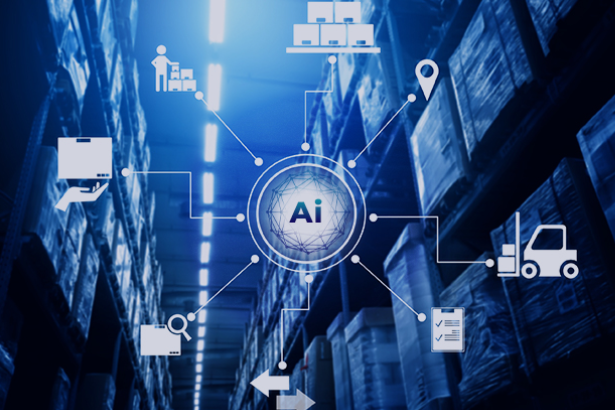
AI in supply chain management connecting global logistics and procurement operations.
AI-powered visibility platforms are helping companies coordinate complex supply networks.
SHARE

Introduction: The Supply Chain Visibility Problem

AI in Supply Chain Management: companies have invested in tracking platforms, dashboards and planning software, but visibility alone does not guarantee that businesses can respond quickly to disruptions.

Contents
Introduction: The Supply Chain Visibility Problem1. Why US Supply Chains Are Prioritizing Resilience2. From Supply Chain Visibility to Predictive Intelligence3. Intelligent Procurement and Supplier Risk Management4. Inventory Optimization Without Excess Stock5. Agentic AI: From Recommendations to Operational Execution6. Why Supply Chain AI Projects Struggle to Scale7. A Practical Roadmap for Supply Chain LeadersConclusion: The Next Supply Chain Advantage Is Better Decision-Making

Introduce the difference between knowing that a shipment is delayed and automatically coordinating the purchasing, inventory and transportation decisions required to address the delay.

Establish the central argument: the next phase of supply chain transformation is about connecting information to operational decisions.

1. Why US Supply Chains Are Prioritizing Resilience

Research to incorporate:

KPMG’s 2026 US Supply Chain Survey, covering 462 supply chain leaders at companies with at least $1 billion in annual revenue, found:

  • 94% are innovating in risk management and resilience now or plan to within three years.
  • 73% plan comprehensive operating-model transformation within three years.
  • 77% report a talent gap in procurement and supply chain functions.
  • Cybersecurity ranks as the top perceived supply chain risk.

Discuss how geopolitical uncertainty, tariffs, supplier concentration, cyber threats and shortages are changing procurement and network planning.

2. From Supply Chain Visibility to Predictive Intelligence

Explain how AI can combine supplier information, inventory records, transportation data and demand forecasts.

Examine practical applications:

  • Early identification of supplier delays.
  • Predictive demand forecasting.
  • Inventory shortage warnings.
  • Transportation disruption monitoring.
  • Supplier performance analysis.

Distinguish predictive intelligence from basic shipment tracking.

3. Intelligent Procurement and Supplier Risk Management

Explore how AI can help procurement teams evaluate suppliers beyond purchase price.

Discuss:

  • Supplier financial and operational risk.
  • Multi-tier supplier visibility.
  • Sourcing alternatives.
  • Contract and purchasing analysis.
  • Procurement document processing.
  • Supplier performance monitoring.

Explain why human approval remains necessary for major sourcing and contractual decisions.

4. Inventory Optimization Without Excess Stock

Discuss the balance between inventory availability and working-capital efficiency.

Explore AI applications in:

  • Demand sensing.
  • Replenishment planning.
  • Safety-stock calculations.
  • Inventory allocation.
  • Slow-moving stock identification.
  • Multi-location inventory coordination.

Emphasize that inventory optimization must account for service levels, lead-time uncertainty and supplier reliability.

5. Agentic AI: From Recommendations to Operational Execution

Use Gartner’s 2026 supply chain technology research to explain the emergence of agentic AI.

Illustrate a practical scenario:

A supplier delay is detected. An AI system identifies affected products, evaluates inventory availability, compares alternative suppliers and prepares a revised procurement or transportation plan.

Explain which actions can be automated and which require approval.

Highlight decision governance, auditability and accountability.

6. Why Supply Chain AI Projects Struggle to Scale

Discuss the practical barriers:

  • Fragmented enterprise systems.
  • Inconsistent supplier data.
  • Limited multi-tier visibility.
  • Cybersecurity exposure.
  • Legacy technology.
  • Workforce skill shortages.
  • Unclear ownership of automated decisions.

Emphasize that AI adoption requires operating-model changes, not simply software purchases.

7. A Practical Roadmap for Supply Chain Leaders

Recommend five implementation steps:

  1. Identify one high-value operational decision.
  2. Connect the relevant supplier, inventory and logistics data.
  3. Establish a measurable baseline.
  4. Pilot AI with clearly defined human approval boundaries.
  5. Scale only after measuring operational improvements.

Suggested KPIs:

  • Supplier on-time delivery.
  • Inventory turnover.
  • Stockout frequency.
  • Procurement cycle time.
  • Premium freight expenditure.
  • Forecast accuracy.
  • Supply chain exception resolution time.

Conclusion: The Next Supply Chain Advantage Is Better Decision-Making

Close with the argument that supply chain competitiveness will increasingly depend on the ability to connect data, people and decisions.

AI can improve prediction and execution, but resilience still requires accountable leadership, trusted suppliers and disciplined operational management.

You Might Also Like

Q4 2026 Supply Chain Outlook: 7 Critical Trends Shippers Need to Watch

AI in Supply Chain 2026: Why Intelligent Predictions Are Not Enough Without Real Execution

AI in Supply Chain Management 2026: How Predictive Analytics Is Changing Global Trade

Supply Chain Dive: Inside America’s Supply Chain News and Business Analysis Platform

Supply Chain Visibility: How AI Is Turning Shipment Data Into Real-Time Decisions

Share This Article
Facebook LinkedIn Email Copy Link Print
Share
What do you think?
Love0
Sad0
Happy0
Sleepy0
Angry0
Dead0
Wink0
Previous Article AI in manufacturing transforming American factory automation and production operations. From AI Pilot to Production: 5 Steps US Manufacturers Should Take Before Scaling Factory Automation
Leave a comment

Leave a Reply Cancel reply

You must be logged in to post a comment.

Latest News

  • YouTube found a new way to inflate view counts

    YouTube's view counts will now include the number of people that it estimates are watching a video together on TV. In an update on Monday, the platform says it's bringing "co-views" to public view counts across long-form videos, Shorts, and live content to provide a more "complete picture" of how people are using its platform.

  • The iPhone Duo feels far more intuitive with Apple’s new face unlock

    Apple is testing adding face unlock to the iPhone Duo - not true Face ID, but something a little simpler and less secure. So far, it works great, and even with a few Apple-imposed security limitations, it makes the Duo quicker and more comfortable to use than relying on Touch ID every time. That's one

  • Inside Microsoft’s giant Outlook outage

    At 9AM last Thursday, everything seemed normal. Microsoft employees were arriving on campus, ready for a regular day of emails and meetings. But barely an hour later, one of Microsoft's worst outages in history started to unfold, leaving employees, businesses, and many governments without access to Outlook emails for nearly 24 hours. It all started

  • The DOJ says it’s investigating Megaspeed

    The Justice and Commerce Departments said that they are investigating Megaspeed, the Singapore-based data center company intertwined with the resignation of Nvidia CEO Jensen Huang, after reporting suggested an investigation had been halted last year. "While we don't typically comment on ongoing investigations, it is in the public interest to provide the facts and address

  • Banning phones really does help kids learn, researchers say

    A new nationwide study found that in-school cellphone bans can lead to modest improvements in learning. Now, researchers want to understand whether kids' phone use outside the classroom might contribute to the rest of students' learning loss - using the conditions of Meta's multibillion-dollar settlement from earlier this year. Banning cellphones in schools has the

- Advertisement -
about us

We influence 20 million users and is the number one business and technology news network on the planet.

Advertise

  • Advertise With Us
  • Newsletters
  • Partnerships
  • Brand Collaborations
  • Press Enquiries

Top Categories

  • Artificial Intelligence
  • Technology
  • Bussiness
  • Politics
  • Marketing
  • Science
  • Sports
  • White Paper

Legal

  • About Us
  • Contact Us
  • Privacy Policy
  • Affiliate Disclaimer
  • Legal

Find Us on Socials

The Tech MarketerThe Tech Marketer
© The Tech Marketer. All Rights Reserved.
Welcome Back!

Sign in to your account

Lost your password?
