Introduction
AI grading homework is becoming a growing concern for universities as generative AI tools make it easier for students to complete assignments without necessarily understanding the underlying material.
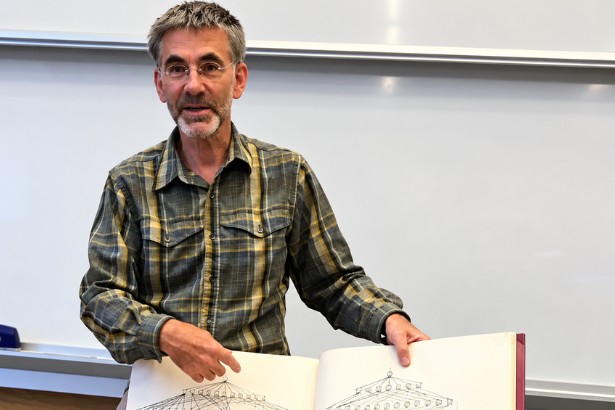
At the University of California, Berkeley, mathematician Richard Borcherds has reached a particularly striking conclusion. According to reporting by The Daily Californian and Inc., the Fields Medal-winning professor no longer considers traditional correctness-based homework grading useful in his current circumstances.
Instead, he has adopted an approach that rewards students for submitting their assignments on time, rather than relying on the correctness of their answers as the primary basis for grading.
His decision highlights a problem that universities can no longer ignore. When students can ask an AI system to solve mathematical problems, explain equations and produce polished solutions, a completed assignment may no longer provide reliable evidence of independent learning.
The question is not simply whether students are using AI. It is whether the assessment systems universities have relied on for decades can still measure learning effectively.
Borcherds’ experience offers a revealing case study in how educators are confronting that challenge, and why the future of education may depend less on preventing AI use and more on redesigning the way students demonstrate what they know.
Background and Context: Who Is Richard Borcherds?
Richard Borcherds is a British mathematician associated with UC Berkeley. He received the Fields Medal in 1998, one of the most prestigious awards in mathematics, recognizing his groundbreaking contributions to the field.
His research has covered areas including algebra, number theory and mathematical structures. His reputation makes his concerns about artificial intelligence particularly noteworthy.
For years, mathematics appeared relatively resistant to automation compared with activities involving writing, summarization or routine information processing. Solving advanced mathematical problems requires logical consistency, abstract reasoning and the ability to construct rigorous proofs.
But generative AI has rapidly improved at symbolic manipulation, mathematical explanation and multi-step problem-solving.
Although AI systems can still make errors, their ability to generate plausible solutions has changed the practical reality of take-home assignments.
Students no longer need to solve every problem independently to produce work that looks convincing. They can use AI to generate a solution, request revisions and obtain explanations that resemble conventional academic work.
That creates a difficult problem for instructors.
A correct answer might indicate genuine understanding. It might also indicate that a student knows how to use an AI tool effectively. Without additional evidence, the instructor may struggle to distinguish between the two.
Why traditional homework is under pressure
Homework has traditionally served several purposes:
- Reinforcing concepts introduced during lectures.
- Encouraging independent practice.
- Identifying misunderstandings before examinations.
- Providing instructors with evidence of student progress.
- Contributing to course grades.
Generative AI complicates each of these functions.
If students routinely delegate problem-solving to an AI system, completing an assignment may no longer require the intellectual effort the instructor intended.
This does not mean homework has become entirely useless. It means the relationship between submitted work and actual understanding has become more difficult to establish.
For Borcherds, the problem has become significant enough to reconsider the value of grading assignments for correctness.
Latest Update: Why a Berkeley Professor Stopped Grading Homework
Reporting published by The Daily Californian and Inc. on October 25, 2026, describes Borcherds’ decision to change how he evaluates homework.
The central issue is straightforward: if students can routinely obtain high scores using AI, paying graders to check whether each answer is correct may provide less useful information about what students have learned.
Rather than treating correctness as the primary measure, Borcherds has adopted a system in which students receive credit for submitting work on time.
The approach is not presented as an ideal solution. In his comments reported by Inc., Borcherds acknowledged that the arrangement was not a particularly good system, but said he did not have a better alternative at the moment.
That admission is important.
It suggests that the challenge is not simply a matter of individual teaching preferences. Educators are confronting a gap between the capabilities of readily available AI tools and the assessment methods used in many university courses.
The Daily Californian’s reporting
The student newspaper at UC Berkeley reported that AI use had led Borcherds to question the point of grading homework in the conventional way.
The story places his decision within a broader discussion about the effects of AI on mathematical education and academic work.
The reporting also highlights the uncertainty facing students who are considering careers in mathematics as AI systems become more capable.
What Inc. reported
In an article published October 25, 2026, Inc. described Borcherds’ approach as an example of the changes AI is bringing to education.
The publication reported that he had moved toward awarding credit for timely submission rather than evaluating every answer in the traditional manner.
The article also discussed his concerns about the future of mathematics as a profession.
Borcherds indicated that his views had changed considerably. Where he once considered mathematics relatively safe from AI-driven disruption, he now sees far greater uncertainty.
Why the story matters beyond Berkeley
Borcherds’ approach is not evidence that every university is abandoning homework grading.
It is a case study in the difficult choices facing instructors when assignments can be completed with substantial AI assistance.
Some educators may respond by restricting AI use. Others may permit it under explicit rules. Still others may redesign assignments so students must explain, defend or apply their work in settings where independent understanding is easier to assess.
The important point is that no single response has emerged as a universal solution.
Expert Insights and Analysis: What AI Is Changing About Education
Borcherds’ decision reveals a deeper problem than cheating.
The issue is whether an educational institution can continue to use a particular assessment method when the technology surrounding that method has changed dramatically.
1. A completed assignment is no longer sufficient evidence of understanding
Traditional homework assumes that the student performs most of the intellectual work required to produce the answer.
AI weakens that assumption.
A student can submit a polished mathematical solution without having independently developed the reasoning behind it.
This creates a measurement problem. Instructors may see a correct answer but lack sufficient evidence about how the student reached it.
The distinction matters because the purpose of education is not merely to produce correct outputs. Students are expected to develop the ability to reason, recognize mistakes and apply concepts to unfamiliar problems.
AI can help generate answers, but a course still needs a way to determine whether students can perform those tasks themselves when necessary.
2. AI detection is not a complete solution
One tempting response is to use software that attempts to identify AI-generated work.
However, detection tools cannot reliably resolve every case of AI assistance. Their results can be uncertain, and a detector’s assessment is not equivalent to direct evidence that a student did or did not understand an assignment.
A student may also combine their own work with AI-generated explanations, making the distinction harder to establish.
Universities therefore need assessment policies that do not depend entirely on identifying the origin of every sentence, equation or paragraph.
Clear rules about permitted AI use, disclosure and independent work remain important. But the design of the assignment itself may matter just as much.
3. Assessment may shift toward demonstrations of understanding
One possible response is to place greater emphasis on assessments where students must explain their reasoning.
Examples include:
- Short oral examinations.
- In-class problem-solving exercises.
- Follow-up questions about submitted work.
- Timed assessments with clearly defined AI restrictions.
- Projects requiring students to explain and defend their decisions.
- Assignments that include reflection on mistakes and alternative solutions.
These methods have limitations. Oral examinations can be expensive to administer at scale, and timed assessments do not necessarily capture every form of learning.
Nevertheless, they can provide evidence that a completed take-home assignment alone may not offer.
The goal should not be to make assessment impossible for AI to assist with. It should be to establish what students need to understand and how that understanding can be demonstrated.
4. AI literacy is becoming part of academic competence
Students will increasingly encounter AI systems in workplaces, research environments and professional education.
Universities therefore face a choice between treating AI primarily as a threat and teaching students to use it responsibly.
Effective AI literacy involves more than writing prompts.
Students need to know when an AI-generated answer is unreliable, how to verify claims, how to recognize unsupported reasoning and when independent analysis is essential.
In mathematics, this can mean checking whether each step in a proof follows logically from the preceding steps instead of assuming that a convincing-looking explanation must be correct.
The ability to evaluate AI output may become as important as the ability to produce it.
Broader Implications: The Future of Universities in the AI Era
The implications of AI-assisted homework extend beyond grading.
They affect how universities design courses, allocate teaching resources and communicate the value of a degree.
The economics of assessment are changing
Grading large classes has always required substantial time and resources.
If traditional homework no longer provides reliable evidence of independent understanding, universities may need to reconsider where those resources are spent.
An instructor might invest less time in marking repetitive exercises and more time in interactive teaching, feedback sessions or oral assessments.
However, these alternatives can also be expensive. Individual interviews require staff time, while carefully supervised examinations can create logistical challenges.
The result may be a shift in the balance between automated assessment, human feedback and direct demonstrations of learning.
Universities face a policy challenge
At UC Berkeley, AI-use policies have been left substantially to individual instructors, according to The Daily Californian’s reporting on campus practices.
The university has also developed resources to help faculty describe AI-use expectations in course syllabi.
This reflects a broader difficulty across higher education: a single policy may not suit every subject.
A programming course might explicitly teach students to use AI tools. A mathematics course may allow AI for exploration but require students to prove that they can solve foundational problems independently.
A writing course might permit brainstorming while restricting the submission of AI-generated prose as original work.
The appropriate rules depend on the learning objectives.
What matters is that students understand the expectations before they begin an assignment.
Academic integrity needs a clearer definition
AI complicates the traditional distinction between independent work and misconduct.
If a student uses AI to check an answer, is that different from asking it to generate the entire solution? What if the student studies an AI-generated explanation and then independently reconstructs the proof?
These questions cannot be answered solely by looking at the final submission.
Universities need explicit rules describing which uses are permitted, which require disclosure and which undermine the purpose of a particular assessment.
Clearer policies can reduce uncertainty for students and make enforcement more consistent.
What this means for The Tech Marketer’s readers
For readers following developments in AI and education technology, Borcherds’ experience offers a useful example of a broader transformation.
The debate is moving beyond whether AI can complete a task. It is increasingly about whether the systems built around that task still work when AI becomes widely available.
A related internal article for The Tech Marketer could explore how universities are redesigning exams and academic integrity policies for the generative AI era.
Related History: From Calculators to Generative AI
Education has repeatedly adapted to new technologies.
Electronic calculators changed mathematics education by reducing the need for students to perform every calculation manually. Search engines changed research by making information easier to find. Online learning platforms changed how educational materials are distributed.
In each case, institutions had to reconsider which skills students should develop independently and which tools they should learn to use.
Generative AI presents a more complicated challenge because it can produce not just an answer, but also an explanation, a proof-like argument or a complete written submission.
That makes it different from a calculator.
A calculator performs operations that a student selects. A generative AI system may also suggest the method, choose intermediate steps and explain the result.
This broader capability makes it harder to separate tool use from the underlying intellectual work.
The historical lesson is not that every technological development makes existing assessments obsolete. Rather, educational systems eventually have to adjust when the tools available to students change the skills required to complete an assignment.
What Happens Next?
The next phase of AI in education will likely involve experimentation rather than a single universal approach.
Universities will need to determine which assessment methods remain effective, how AI use should be disclosed and how students can demonstrate independent understanding.
Several developments deserve attention.
More oral and in-class assessments: Instructors may increase the use of short explanations, supervised exercises and follow-up questions to establish whether students understand their submissions.
Clearer AI-use policies: Course syllabi may distinguish between prohibited uses, permitted assistance and assignments where AI use is explicitly encouraged.
More emphasis on reasoning: Rather than evaluating only final answers, instructors may assess how students develop a solution, identify errors and justify their conclusions.
Changes to homework grading: Some courses may reduce the weight assigned to routine take-home exercises, while others may retain homework as a practice tool rather than a direct measure of mastery.
Continued uncertainty about mathematical careers: As AI becomes more capable, universities will need to consider how mathematics education should prepare students for research and professional work in which AI tools are increasingly common.
None of these developments guarantees that traditional homework will disappear.
Homework can still help students practice concepts and identify areas where they need assistance. Its value depends on how it is designed, how students use it and how instructors interpret the results.
The more important change may be that homework can no longer be treated as self-evident proof of independent learning.
Conclusion
Richard Borcherds’ decision to change how he grades homework illustrates the pressure generative AI is placing on higher education.
When students can obtain sophisticated solutions from AI tools, the conventional relationship between a submitted answer and a student’s understanding becomes less reliable.
That does not mean education has lost its purpose or that homework is no longer useful. It means institutions need better ways to distinguish practice, assistance and genuine mastery.
The answer may involve oral examinations, supervised problem-solving, clearer AI-use policies and assignments designed to reward reasoning rather than simply producing the correct output.
Borcherds has not offered a universal solution. His experience instead highlights the uncertainty educators face when technology advances faster than assessment practices can adapt.
For universities, the challenge is no longer simply deciding whether students may use AI. It is deciding what students should learn, what evidence demonstrates that learning and how education can preserve the intellectual skills that make the process worthwhile.
FAQ
1. Why did a UC Berkeley professor stop grading homework?
According to reports by The Daily Californian and Inc., mathematician Richard Borcherds concluded that traditional correctness-based homework grading had become less useful because students could obtain high scores with AI assistance. He adopted an approach that rewards timely submission.
2. Who is Richard Borcherds?
Richard Borcherds is a mathematician associated with UC Berkeley. He received the Fields Medal in 1998 for his contributions to mathematics.
3. Does AI grading homework mean traditional assignments are obsolete?
Not necessarily. Homework can still provide valuable practice. The challenge is determining whether a completed assignment reflects the student’s own understanding when AI assistance is readily available.
4. Can universities detect all AI-generated homework?
No detection method can establish the origin of every submission with certainty. Institutions need clear policies and assessment methods that provide direct evidence of learning rather than relying exclusively on AI detectors.
5. How can professors assess learning when students use AI?
Options include oral examinations, supervised problem-solving, follow-up questions, in-class exercises and assignments requiring students to explain and defend their reasoning.
6. Is UC Berkeley banning AI in classrooms?
The reporting cited here describes a system in which instructors have substantial discretion over classroom AI policies. Individual course rules can therefore differ.
7. Will AI replace mathematicians?
The long-term effect remains uncertain. AI systems are becoming more capable at mathematical tasks, but the implications for research, teaching and mathematical careers are still developing.
8. What does this story mean for the future of education?
It suggests that universities may need to redesign assessments to measure understanding, reasoning and independent competence rather than relying exclusively on take-home work that AI can complete.
Sources & References
- The Daily Californian: AI use leads UC Berkeley math professor to see ‘no point’ in grading homework. Reporting on Richard Borcherds’ approach to homework assessment and the effects of generative AI on mathematics education.
- Inc.: A Berkeley Math Professor Stopped Grading Homework. It’s Not Because Students Improved. Kevin Haynes, October 25, 2026. Coverage of Borcherds’ grading decision and his concerns about the future of mathematics.
- GIGAZINE: A Fields Medal-winning mathematics professor has changed his system to evaluate students simply for submitting their homework. October 26, 2026. Additional reporting on the assessment change and the broader implications of AI in academia.
- The Daily Californian: ‘On our own’: UC Berkeley professors share their AI policies. January 5, 2026. Background on the range of AI-use policies adopted by Berkeley instructors.