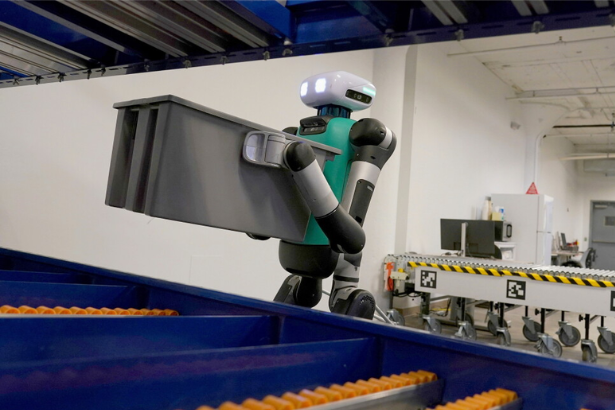
Agility Robotics public offering is set to reshape the landscape of humanoid robotics as the company prepares to go public via a $2.5 billion SPAC merger with Churchill Capital Corp XI. This move positions Agility Robotics as the first dedicated humanoid robotics company to hit the public markets. CEO Peggy Johnson, who previously held leadership roles at Microsoft and Magic Leap, emphasizes an industrial focus, with the company’s flagship robot, Digit, already operational in warehouses for high-profile clients like Toyota and Mercado Libre.
The Path to Public Offering
Agility Robotics’ decision to go public through a SPAC merger is both strategic and ambitious. By merging with Churchill Capital Corp XI, Agility aims to use the burgeoning interest and financial backing that SPACs can provide. This structure allows for a quicker and potentially more lucrative path to public trading. The deal, valued at $2.5 billion, is expected to raise over $620 million in gross proceeds, marking it as a historical capital raise within the humanoid robotics sector. But does this bold move signal a shift towards widespread deployment of robots like Digit?
Digit, designed specifically for industrial tasks, is already making waves in warehouses. It’s not just about moving heavy totes; the robot symbolizes a broader shift towards automation, particularly in sectors facing labor shortages. As industries grapple with the need to fill repetitive and hazardous roles, Agility Robotics positions its technology at the forefront of this transformation.
CEO Peggy Johnson is clear about the company’s current trajectory. According to Johnson, the complexity of home environments means that humanoid robots are at least a decade away from becoming household staples. This public offering, therefore, is not about over-promising futuristic fantasies but about scaling practical, industrial solutions now.
Industrial Focus Over Home Use
With the Agility Robotics public offering, the company is firm on continuing its industrial focus. As Johnson points out, the unpredictability of home settings presents unique challenges that current robotic technology isn’t ready to handle. Thus, the primary spotlight remains on enhancing capabilities in controlled, repetitive environments like warehouses.
Agility Robotics has been working with companies like Toyota and Mercado Libre to enhance their supply chain efficiency. The company’s robots are not intended for consumer markets at this stage. Instead, they are deployed to handle tasks that are either too dangerous or monotonous for human workers. This approach not only fills critical gaps in labor but also improves overall safety and productivity.
Still, the allure of a future where humanoid robots assist in homes can’t be completely ignored. While Johnson maintains a timeline of “10-plus years,” the groundwork laid by industrial applications could pave the way for eventual home use. This is part of why the public offering is pivotal—it provides the resources necessary to push technological boundaries further.
Challenges and Opportunities Ahead
Every innovative venture faces its own set of hurdles, and Agility Robotics is no exception. The challenge lies in scaling production while maintaining the quality and performance that early adopters like Schaeffler and Toyota have come to expect. The company must navigate these operational challenges while meeting financial targets set by its upcoming status as a publicly traded entity.
Agility’s CEO has acknowledged that their biggest current competitor is their own ability to execute and expand quickly. This self-competitive mindset is crucial as the company tackles the dual challenges of rapid innovation and market expectations. With the funds from the public offering, Agility Robotics aims to streamline its manufacturing processes and expand its market reach.
Opportunities also abound. As more industries realize the potential of automation to offset labor shortages and enhance productivity, the demand for versatile, reliable humanoid robots will rise. Agility Robotics is poised to capture a significant portion of this market, provided it can continue to innovate and scale effectively.
Agility Robotics Public Offering: Investor Sentiment
Investor interest in the Agility Robotics public offering is indicative of broader trends in technology investment, particularly in automation and AI. The SPAC route allows Agility Robotics to capitalize on this interest, offering investors a piece of a potentially significant industry. The capital raised will enable the company to expand its workforce, advance its technology, and explore new markets.
The public offering is not just about raising funds; it’s a vote of confidence from the market that Agility Robotics can pioneer humanoid robotics on a global scale. Investors are drawn to the promise of strong returns from a company that is tackling pressing issues such as labor shortages and industrial safety.
Still, the risks are inherent. Market sentiment can be volatile, especially for companies in emerging sectors like robotics. Investors will be keenly watching Agility’s financial performance and strategic decisions post-offering. With the spotlight firmly on them, Agility Robotics must deliver on its promises to maintain investor trust and market momentum.
Broader Implications
The Agility Robotics public offering is a significant milestone not only for the company but also for the robotics industry. It signals an evolution in how humanoid robots are perceived and used. As industries increasingly adopt robotic solutions, the ripple effects could redefine labor dynamics, safety standards, and productivity metrics across multiple sectors.
Such advances are crucial as we look towards a future where technology and human ingenuity coalesce to solve pressing global issues. This public offering might just be the catalyst that accelerates this integration. For more insights into how technology is reshaping industries, visit The Tech Marketer for the latest tech coverage.
As Agility continues to progress, their focus on industrial applications could serve as a blueprint for other companies aiming to bridge the gap between technological potential and practical implementation. This move could also spark increased interest in similar ventures, prompting further investment and innovation in the sector.
Latest Updates
TechCrunch highlights CEO Peggy Johnson’s pragmatic stance on the timeline for home robots, focusing instead on industrial applications where Agility Robotics is already making an impact. The article underscores the significance of the SPAC merger in rapidly advancing the company’s capabilities.
AP News reports on the operational success of Agility Robotics’ humanoid robot, Digit, in warehouses. This article emphasizes the growing demand for automation in repetitive and dangerous jobs, which Agility is well-positioned to address.
According to GeekWire, Agility Robotics is set to become the first publicly traded U.S. company focused solely on humanoid robots, marking a significant milestone for the industry. The piece provides insights into financial filings that reveal the company’s strategic plans post-merger.
FAQ
What is the Agility Robotics public offering?
The Agility Robotics public offering refers to the company’s plan to go public through a $2.5 billion SPAC merger with Churchill Capital Corp XI. This move aims to provide the company with the capital needed to expand its industrial applications and improve its robotic technology.
How much money is expected to be raised through the Agility Robotics public offering?
The Agility Robotics public offering is expected to raise over $620 million in gross proceeds. This represents the largest capital raise in the history of humanoid robotics, positioning the company to significantly scale its operations and innovation efforts.
What are the main applications of Agility Robotics’ technology?
Agility Robotics focuses primarily on industrial applications. Their flagship humanoid robot, Digit, is designed for warehouse tasks, such as moving heavy totes and automating repetitive or hazardous jobs for clients like Toyota, Schaeffler, and Mercado Libre.
When can we expect humanoid robots for home use from Agility Robotics?
According to CEO Peggy Johnson, humanoid robots for home use are expected to be at least a decade away. The complexity and unpredictability of home environments present significant challenges that current robotic technology has yet to overcome.
Who is the CEO of Agility Robotics?
The CEO of Agility Robotics is Peggy Johnson. She has a background in leadership roles at Microsoft and Magic Leap and is guiding the company through its public offering and expansion in industrial robotics.
Sources and References
AP News: Agility Robotics plans to go public via a $2.5 billion SPAC merger