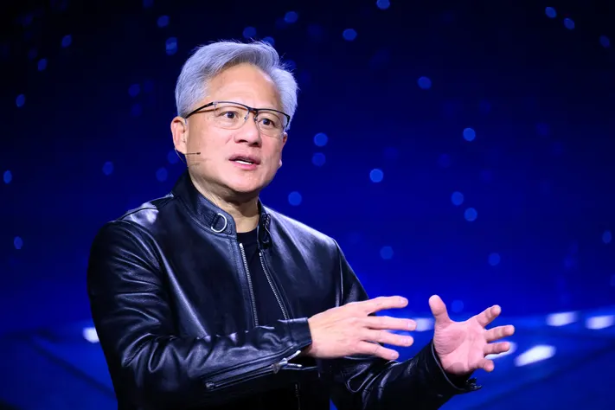
Jensen Huang’s latest comments suggest artificial general intelligence may already be here. The industry is not convinced.
Introduction
The idea that AGI achieved Nvidia could be more than hype is now dominating tech conversations. Nvidia CEO Jensen Huang has suggested that artificial general intelligence may already exist in some form, a statement that is triggering intense debate across the AI industry.
Background and Context
Artificial General Intelligence, or AGI, refers to AI systems capable of performing any intellectual task a human can do. Unlike narrow AI, which powers tools like chatbots and recommendation engines, AGI implies reasoning, adaptability, and autonomy across domains.
For years, AGI has been treated as a future milestone. Most experts believed it was decades away. That assumption is now being challenged as AI systems grow more capable.
Nvidia sits at the center of this shift. Its GPUs power much of the global AI infrastructure, making the company a key player in shaping how progress is measured and understood.
Latest Update or News Breakdown
According to Forbes (https://www.forbes.com/sites/antoniopequenoiv/2026/03/23/nvidias-jensen-huang-says-he-thinks-weve-achieved-agi/), Jensen Huang stated that he believes “we’ve achieved AGI,” though he acknowledged that definitions of AGI vary widely.
The Verge reports (https://www.theverge.com/ai-artificial-intelligence/899086/jensen-huang-nvidia-agi) that Huang’s claim is less about a single breakthrough and more about the cumulative capabilities of modern AI systems. He pointed to systems that can reason, generate content, and perform complex tasks across domains.
Meanwhile, The Wall Street Journal (https://www.wsj.com/tech/nvidia-ai-market-competition-9db60e4c) highlights Nvidia’s dominant position in the AI market, noting that its hardware underpins the rapid progress fueling these claims.
The key detail is nuance. Huang is not claiming a singular AGI system exists in a lab. Instead, he suggests that the threshold for what counts as general intelligence may already be met in practice.
Expert Insights or Analysis
The reaction from experts is mixed.
Some researchers argue that current AI systems still lack core elements of AGI, including true reasoning, long-term planning, and independent goal formation. They see Huang’s statement as premature.
Others believe the definition of AGI is evolving. If systems can perform a wide range of cognitive tasks at or above human level, the distinction between narrow AI and AGI becomes blurred.
There is also a strategic angle. Nvidia benefits from framing the current moment as a breakthrough. It reinforces the importance of AI infrastructure and justifies continued investment.
Still, even skeptics agree on one point. AI capabilities are advancing faster than expected, and the gap between narrow AI and AGI is shrinking.
Broader Implications
For the AI Industry
If AGI achieved Nvidia becomes a widely accepted idea, it could shift how companies position their products. AI would no longer be framed as emerging technology, but as a mature platform.
For more analysis on AI infrastructure and enterprise adoption, see https://thetechmarketer.com/category/artificial-intelligence/.
For Investment and Markets
The perception of AGI has direct financial implications. If investors believe AGI is near or already here, funding for AI companies could accelerate even further.
This aligns with Nvidia’s continued dominance, as demand for compute power remains central to AI development.
For Society
The broader question is what AGI actually means in practice. If machines can perform most cognitive tasks, the impact on jobs, education, and decision-making will be profound.
The debate is no longer theoretical. It is happening in real time.
Related History or Comparable Technologies
Claims of major AI breakthroughs are not new. In the past, milestones like Deep Blue defeating chess champions or AlphaGo beating Go masters were seen as steps toward general intelligence.
Each moment redefined expectations, but none fully met the definition of AGI.
What makes the current moment different is scale. Modern AI systems operate across language, vision, coding, and reasoning tasks simultaneously.
That convergence is what gives Huang’s statement weight.
What Happens Next
The industry will likely move toward redefining AGI rather than agreeing on a single definition.
Expect:
- Continued debate among researchers
- Increased marketing around “AGI-level” systems
- More benchmarks attempting to measure general intelligence
Nvidia will remain central to this conversation as long as its hardware powers the most advanced systems.
Conclusion
The AGI achieved Nvidia claim is less about a definitive milestone and more about a shifting narrative. What counts as intelligence is being redefined in real time.
Whether or not true AGI exists today, the direction is clear. AI is becoming more capable, more general, and more embedded in everyday life.
The real question is not whether AGI has arrived. It is how we recognize it when it does.
FAQ
Did Nvidia really say AGI has been achieved?
Yes. Nvidia CEO Jensen Huang said he believes AGI may already exist, though he noted that definitions vary.
What does AGI achieved Nvidia mean?
It refers to Huang’s claim that current AI systems may already meet the threshold for artificial general intelligence, depending on how it is defined.
Do experts agree that AGI has been achieved?
No. Many researchers argue that current AI lacks key features such as true reasoning and autonomy.
Why is Nvidia involved in the AGI debate?
Nvidia provides the hardware that powers most advanced AI systems, placing it at the center of industry developments.
What happens if AGI is actually achieved?
It could transform industries, reshape economies, and raise new ethical and regulatory challenges around AI use.
Sources & References
- Forbes, Nvidia’s Jensen Huang Says He Thinks ‘We’ve Achieved AGI’
https://www.forbes.com/sites/antoniopequenoiv/2026/03/23/nvidias-jensen-huang-says-he-thinks-weve-achieved-agi/ - The Verge, Jensen Huang says ‘I think we’ve achieved AGI’
https://www.theverge.com/ai-artificial-intelligence/899086/jensen-huang-nvidia-agi - The Wall Street Journal, How Nvidia Keeps Its Iron Grip on the AI Boom
https://www.wsj.com/tech/nvidia-ai-market-competition-9db60e4c