Introduction
The You Can See Everything trailer has arrived, and it offers a much closer look at the strange collision between comedian-filmmaker Nathan Fielder and former Theranos CEO Elizabeth Holmes. The new trailer, released September 23, comes after the documentary’s surprise premiere at the Telluride Film Festival earlier this month.
Directed by Fielder and Lance Oppenheim, the film was made largely in secret over several years. Its premise is already unusual: Holmes invited a skeptical film crew into her life shortly before she reported to prison, allowing Fielder to spend time with her, her partner William “Billy” Evans and their family.
The result is not being presented as another conventional Theranos retrospective. Instead, the filmmakers appear to be using Holmes’ own presence, her relationship with Fielder and the mechanics of documentary filmmaking as part of the story itself.
A24 has scheduled the film for theatrical release on October 16, 2026.
Background and Context
Elizabeth Holmes became one of Silicon Valley’s most recognizable figures through Theranos, the blood-testing startup she founded.
Theranos claimed its technology could conduct numerous medical tests using very small quantities of blood. The company’s valuation once reached billions of dollars before reporting and investigations brought intense scrutiny to its technology and business practices.
Holmes was convicted in 2022 on fraud-related charges connected to Theranos and began serving her federal prison sentence in 2023.
Her story has already been examined through documentaries, news investigations and dramatizations, including the HBO documentary The Inventor: Out for Blood in Silicon Valley and Hulu’s The Dropout.
That makes the premise of You Can See Everything particularly unusual.
Rather than simply reconstructing the Theranos story, Fielder and Oppenheim gained unusually direct access to Holmes herself.
The New York Film Festival describes the project as a film created in secret over four years, with Holmes inviting Fielder into her home 34 days before her incarceration.
Latest Update: The You Can See Everything Trailer Is Here
The new trailer is the biggest public look at the film since its surprise Telluride debut.
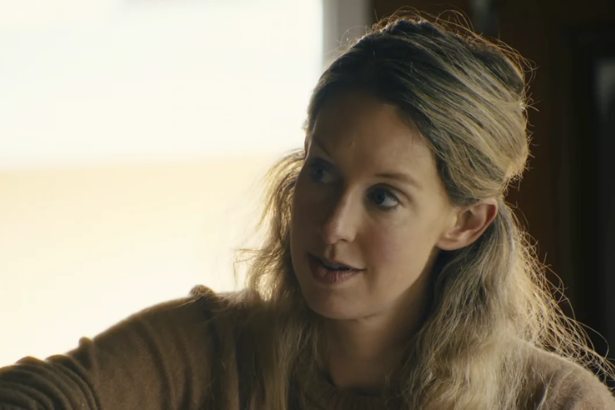
One of the central moments features Fielder directly questioning Holmes about whether she believes she did anything wrong. Holmes maintains that she did not, according to the trailer coverage from Esquire and TheWrap.
The trailer also shows Fielder questioning Holmes’ partner, Billy Evans, about their relationship and his understanding of Holmes.
That interaction is important because the documentary is not confined to Holmes and Fielder sitting across from each other.
The filmmakers appear interested in the environment surrounding Holmes, including her family life and the people who continued to believe in or support her.
The trailer closes on a markedly different emotional note, showing Holmes becoming tearful during a conversation with Fielder. The Independent reported that the footage includes Holmes reflecting on how long it took her to become comfortable with letting someone see her cry.
That juxtaposition is part of what makes the film difficult to categorize.
It begins with the familiar Holmes story but quickly moves into something more intimate and deliberately uncomfortable.
Why Nathan Fielder Is an Unusual Choice for This Story
Fielder is best known for projects that blur the boundaries between comedy, reality television and performance.
His work on Nathan for You, The Rehearsal and The Curse has repeatedly explored what happens when real people are placed inside carefully constructed situations.
That background matters here.
A conventional documentary might approach Holmes primarily as the subject of an investigation. Fielder’s filmmaking style introduces another layer: the filmmaker himself becomes part of the situation.
The question is no longer simply what Holmes says.
It also becomes what happens when Holmes knows she is being watched, what Fielder chooses to ask, what she chooses to reveal and how the resulting footage is constructed.
The New York Film Festival describes the movie as a work that interrogates the limits of objectivity in documentary filmmaking.
That framing may be more revealing than simply calling the movie an Elizabeth Holmes documentary.
Expert Insights and Analysis
The most interesting element of You Can See Everything is its approach to documentary truth.
A documentary camera is often treated as an observational tool. But once the person being filmed knows the camera is there, the relationship changes.
Holmes is not simply being observed.
She is participating.
Fielder is not simply asking questions.
He is also being observed by Holmes.
That creates a feedback loop in which both people are conscious of the other person’s intentions.
The trailer makes that tension visible.
Holmes repeatedly asserts her own interpretation of events, while Fielder continues to test that interpretation through direct questions.
The film’s premise therefore creates a different kind of investigation. Instead of relying primarily on archival footage and outside interviews, it places the filmmaker inside the subject’s personal environment.
That makes the relationship itself part of the evidence and part of the story.
It also explains why the film has attracted so much attention despite audiences already knowing the broad outlines of the Theranos case.
The Documentary’s Unusual Production
The production history is almost as intriguing as the movie itself.
The project was kept secret for years and was unveiled publicly at the Telluride Film Festival in September. The Los Angeles Times reported that Telluride treated the screening as a genuine secret, with attendees asked to keep phones secured before the screening.
That secrecy helped preserve the film’s central surprise.
Audiences arrived without the usual months of promotional material, interviews and plot summaries.
Then the movie appeared.
The festival screening also established the film’s approximate length. The New York Film Festival lists a runtime of 174 minutes, or 2 hours and 54 minutes.
That is considerably longer than a typical feature documentary, giving Fielder and Oppenheim room to explore the relationship and filmmaking process in considerable detail.
A24 Is Turning the Film Into a Theatrical Event
A24 has positioned You Can See Everything for a theatrical release on October 16.
The movie will also screen at the 64th New York Film Festival, with a September 30 screening at Alice Tully Hall featuring a Q&A with Fielder and Oppenheim.
That festival placement gives the documentary another opportunity to generate discussion before its wider theatrical release.
The timing also puts the film in the middle of the fall movie season, when studios traditionally bring major awards-oriented releases and prestige projects to theaters.
The movie’s unusual subject, recognizable filmmaker and secretive production make it a natural conversation piece for that period.
Broader Implications
The interest around You Can See Everything goes beyond Elizabeth Holmes.
It reflects a broader shift in nonfiction filmmaking toward projects that question the traditional boundary between documentary and performance.
Audiences have become increasingly familiar with true-crime documentaries, investigative series and dramatizations based on real events.
The Holmes story itself has already appeared in several formats.
Fielder’s approach asks a different question:
What happens when the subject of a famous story becomes an active participant in the filmmaking process?
That question has implications for documentary ethics as well as entertainment.
If a subject controls access, chooses what to discuss and understands the filmmaker’s presence, can the resulting film still function as an investigation?
Or does the relationship itself become the subject?
The New York Film Festival’s description explicitly highlights the film’s challenge to conventional ideas of objectivity.
For readers interested in the intersection of technology, startups and culture, The Tech Marketer’s technology and business coverage can provide additional context around how Silicon Valley stories move from business news into mainstream culture.
Related History and Comparable Technologies
Elizabeth Holmes’ story has already generated a substantial media ecosystem.
The Theranos saga has been covered through:
- Investigative journalism
- Documentary filmmaking
- Television dramatization
- Podcasts
- Books
- Court reporting
- Business and technology analysis
Hulu’s The Dropout, starring Amanda Seyfried, dramatized Holmes’ rise and the collapse of Theranos.
Alex Gibney’s The Inventor: Out for Blood in Silicon Valley approached the story as a documentary investigation.
You Can See Everything takes another route.
Instead of primarily reconstructing the past, it puts Holmes back in front of a camera and makes her relationship with the filmmakers part of the narrative.
That distinction could become the defining feature of the movie.
Why the Trailer Is Driving Search Interest
The supplied Google Trends screenshot shows a dramatic spike in searches for “you can see everything” during the past several hours.
The timing aligns with the release of the new full trailer and the resulting coverage from entertainment publications.
The search spike also demonstrates the unusual nature of the film’s marketing strategy.
For weeks, much of the public knew little about the project.
Then the movie appeared at Telluride.
The teaser followed.
Now the full trailer has arrived.
Each stage has added another layer of information without giving away the entire film.
That approach is particularly effective for a documentary whose central appeal depends on uncertainty.
What Happens Next?
The next major step is the film’s festival and theatrical rollout.
September 30: New York Film Festival
You Can See Everything is scheduled to screen at the New York Film Festival on September 30, with Nathan Fielder and Lance Oppenheim participating in a Q&A.
October 16: Theatrical release
A24 has set the film’s theatrical release for October 16, 2026.
More discussion around the filmmaking itself
As more viewers see the full film, much of the conversation is likely to focus not only on Holmes but also on Fielder’s methods.
The central questions will include how the filmmakers handled access, how much control Holmes had over the filming environment and where the documentary draws the boundary between observation and construction.
Those questions are especially relevant because the film’s premise makes the filmmaking process inseparable from the subject.
Conclusion
The You Can See Everything trailer turns one of the most familiar startup scandals of the past decade into something much less familiar.
Nathan Fielder and Lance Oppenheim are not simply revisiting the Theranos story. They are placing Fielder directly inside Elizabeth Holmes’ world, beginning with the 34 days before she reported to prison and extending into a three-year filmmaking process.
The result is a documentary that appears interested in more than what Holmes says.
It is interested in what happens when she says it to Fielder, when Fielder challenges her, and when both understand that the camera is recording the exchange.
The full film arrives in theaters October 16, following its New York Film Festival screening on September 30.
For a story that has already been told through investigations, documentaries and dramatizations, You Can See Everything is taking a very different route: putting the person at the center of the story back in front of the camera and making the act of watching part of the story itself.
FAQ
1. What is You Can See Everything?
You Can See Everything is a 2026 documentary directed by Nathan Fielder and Lance Oppenheim that follows Elizabeth Holmes and her family, beginning shortly before Holmes reported to federal prison. The film was made largely in secret over several years.
2. When does You Can See Everything come out?
The documentary is scheduled for a theatrical release on October 16, 2026.
3. Who directed You Can See Everything?
The film was directed by Nathan Fielder and Lance Oppenheim. The New York Film Festival lists both as directors.
4. Is Elizabeth Holmes in You Can See Everything?
Yes. Holmes is the central subject of the documentary and appears extensively in the film and its trailers.
5. How long is You Can See Everything?
The New York Film Festival lists the documentary’s runtime as 174 minutes, or 2 hours and 54 minutes.
6. Where did You Can See Everything premiere?
The film had a surprise world premiere at the Telluride Film Festival in September 2026.
7. When is the You Can See Everything New York Film Festival screening?
The New York premiere is scheduled for September 30, 2026, at 8 p.m., with a Q&A featuring Fielder and Oppenheim.
SOURCES & REFERENCES
- Variety, “Nathan Fielder Drops Weird Trailer for Secret Elizabeth Holmes Doc ‘You Can See Everything’”
Read the Variety report - Esquire, “Elizabeth Holmes Says She Did Nothing Wrong In the You Can See Everything Trailer”
Read the Esquire report - Rolling Stone, “Nathan Fielder Focuses on Elizabeth Holmes in ‘You Can See Everything’ Documentary Trailer”
Read the Rolling Stone report - New York Film Festival, “You Can See Everything”
View the NYFF film page - TechCrunch, “Here’s the trailer for Nathan Fielder’s Elizabeth Holmes documentary, in theaters October 16”
Read the TechCrunch report