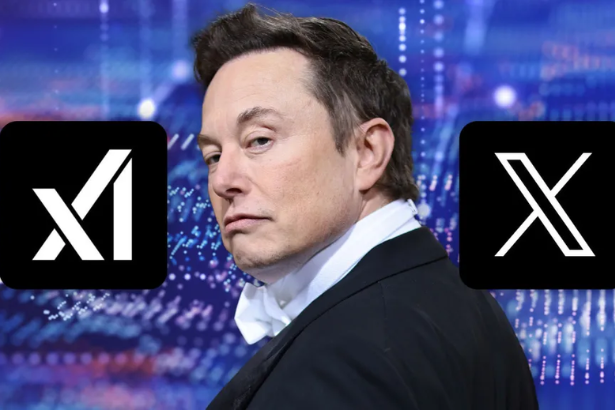
Elon Musk confirms SpaceX has acquired xAI, merging artificial intelligence with space infrastructure ambitions.
Introduction
xAI acquisition news surged across the tech world after Elon Musk confirmed that SpaceX has officially acquired his artificial intelligence startup, signaling a bold convergence of AI and aerospace strategy.
What xAI and SpaceX Are
xAI was founded by Elon Musk in 2023 with the stated goal of building artificial intelligence systems focused on understanding reality and scientific truth. The company quickly became known for its Grok chatbot and its close integration with the X platform.
SpaceX, meanwhile, has grown into one of the most influential private aerospace companies in the world, dominating satellite launches, reusable rockets, and global broadband through Starlink. While both companies were privately held, they shared leadership, talent pipelines, and long-term technological ambitions.
Industry observers have long speculated that Musk would eventually consolidate his AI efforts under a larger corporate umbrella.
What Just Happened
On February 2, 2026, Musk confirmed that SpaceX has acquired xAI, formally merging the AI company into SpaceX’s broader corporate structure.
According to CNN and CNBC reporting, the acquisition positions xAI inside SpaceX ahead of a potential future IPO, streamlining Musk’s technology portfolio and reducing cross-company complexity. Yahoo Finance reported that Musk described the move as a strategic alignment rather than a traditional takeover, emphasizing long-term innovation over short-term financial optics.
Financial terms of the acquisition were not publicly disclosed.
What Experts Are Saying
Technology analysts view the xAI acquisition as a significant shift in how artificial intelligence may be developed and deployed. By embedding AI research directly within SpaceX, Musk gains tighter control over data pipelines, compute infrastructure, and real-world deployment environments.
Experts note that AI systems trained using satellite imagery, space-based sensors, and global communications data could accelerate advancements in autonomous navigation, scientific modeling, and large-scale simulation.
From an investor perspective, folding xAI into SpaceX may simplify a future public offering by presenting a unified narrative centered on advanced infrastructure rather than fragmented startups.
What This Means for AI and Space
For Artificial Intelligence
The merger suggests a move toward vertically integrated AI development, where models are trained and deployed within proprietary hardware and data ecosystems rather than general-purpose platforms.
For the Space Industry
AI-driven optimization could enhance launch efficiency, satellite operations, and autonomous decision-making in orbit, reducing human intervention and operational costs.
For Markets and Policy
A SpaceX IPO that includes xAI assets could reshape how regulators evaluate AI governance, particularly when tied to critical infrastructure and national security considerations.
How This Compares to Other Tech Mergers
Major technology firms have increasingly integrated AI into core infrastructure rather than operating it as standalone units. Google embedded DeepMind across product teams, while Amazon built AI capabilities directly into AWS.
Musk’s approach mirrors this trend but applies it to space systems, creating a hybrid model that blends aerospace engineering with frontier artificial intelligence research.
What Happens Next
Industry attention now turns to whether SpaceX will formally pursue an IPO timeline and how xAI’s products will evolve under the SpaceX umbrella. Analysts expect deeper integration between AI systems and satellite networks, along with expanded compute investments.
Regulatory scrutiny is also likely to increase as AI becomes more tightly coupled with orbital infrastructure and global communications systems.
Why This Merger Matters
The xAI acquisition by SpaceX marks a pivotal moment in Elon Musk’s technology strategy. By merging artificial intelligence directly into his space company, Musk is signaling that AI will be foundational to the next phase of aerospace innovation rather than a separate venture.
Whether this consolidation accelerates breakthroughs or raises new regulatory challenges, it positions SpaceX at the intersection of AI, data, and physical infrastructure in ways few companies have attempted.
FAQ
Did SpaceX acquire xAI?
Yes. Elon Musk confirmed that SpaceX has acquired xAI.
Who owns xAI now?
xAI is now part of SpaceX’s corporate structure.
Why did Elon Musk merge xAI with SpaceX?
To align AI development with SpaceX’s infrastructure and long-term strategy.
Is this related to a SpaceX IPO?
Yes. Reports suggest the move simplifies SpaceX’s structure ahead of a potential IPO.
Will xAI still operate independently?
xAI will continue its work but under SpaceX’s organizational umbrella.