Introduction
US port container delays are becoming increasingly concentrated on the rail side of the freight network. August data from the San Pedro Bay ports show a clear split: truck-bound containers moved through marine terminals relatively quickly, while containers waiting for rail averaged substantially longer dwell times.
That distinction matters because Los Angeles and Long Beach are not simply coastal gateways. They are major entry points for cargo moving deep into the U.S. through intermodal rail networks.
In August, the two-port complex handled 1,875,899 TEUs, while rail-destined containers averaged 6.75 days at terminals. Truck-bound containers averaged 2.95 days, down from 3.03 days in July.
The numbers point to a logistics system that is still moving large volumes, but where the inland rail connection is facing more pressure than local drayage.
Background and Context
Container dwell time measures how long cargo remains inside a marine terminal before it moves to its next destination.
For truck-bound containers, that next move is generally local drayage to warehouses, distribution centers or transload facilities.
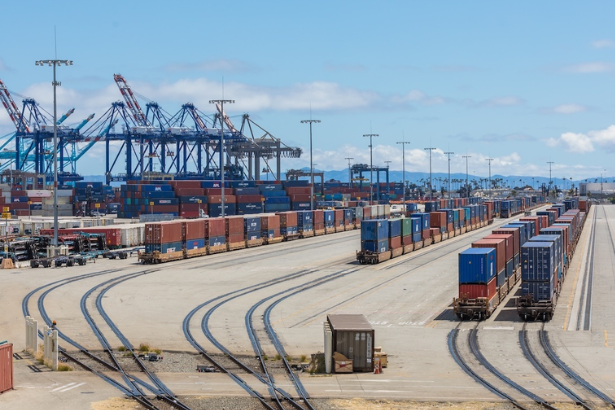
For rail-destined containers, the process is more complicated. Cargo has to move from the vessel to the terminal, then through the port’s rail infrastructure and ultimately onto an intermodal train headed inland.
That makes rail dwell a useful indicator of pressure building between the waterfront and the broader U.S. freight network.
The latest August data from the Pacific Merchant Shipping Association show:
| Metric | July 2026 | August 2026 | Change |
|---|---|---|---|
| Truck dwell | 3.03 days | 2.95 days | Down 0.08 day |
| Rail dwell | 6.34 days | 6.75 days | Up 0.41 day |
| San Pedro Bay volume | Strong | 1.876M TEUs | High volume |
PMSA described August as a mixed picture, with truck dwell remaining broadly stable while rail dwell moved higher.
That difference is the heart of the current US port container delays story.
Latest Update: Rail Container Delays Increase at Los Angeles and Long Beach
The latest FreightWaves report shows that rail-destined containers at the Los Angeles-Long Beach complex averaged 6.75 days in August, compared with 6.34 days in July. The publication described the August figure as a high point relative to the previous year.
At the same time, truck-bound dwell declined slightly to 2.95 days.
That means the issue is not a blanket breakdown of port operations.
Instead, the pressure is more concentrated in the intermodal portion of the supply chain.
Why the distinction matters
A container that spends nearly seven days waiting for rail departure can create downstream problems even if the marine terminal itself continues to process truck-bound cargo efficiently.
The delay can affect:
- Warehouse appointment schedules
- Inventory planning
- Distribution center labor
- Chassis availability
- Rail ramp capacity
- Inland transportation costs
- Importer delivery forecasts
- Container equipment circulation
The impact can become particularly important for importers whose distribution networks extend from Southern California toward the Midwest, Southwest and other inland markets.
Cargo volumes remain strong
The timing is significant because cargo volumes have remained elevated.
The Port of Los Angeles processed 955,907 TEUs in August, its busiest three-month stretch on record when combined with June and July. More than 2.9 million TEUs moved through the port during those three months.
The Port of Long Beach also reported a record August, handling 919,992 TEUs, according to FreightWaves.
So the rail dwell increase is happening against a backdrop of heavy cargo flows rather than weak demand.
Expert Insights and Analysis
The latest numbers suggest that US port container delays should not be viewed solely through the traditional lens of ships waiting outside ports.
The more important question may be what happens after containers leave the vessel.
1. Rail is carrying more freight
U.S. rail intermodal volumes have generally remained above 2025 levels during much of 2026.
For the week ending September 19, U.S. intermodal traffic reached 301,456 containers and trailers, up 6.9% from the same week a year earlier. Cumulative intermodal volume for the first 37 weeks of 2026 was up 4.1%.
That provides important context.
Higher rail demand can be beneficial for shippers seeking alternatives to long-haul trucking, but it also means rail networks and terminals have to absorb additional volume.
2. Truck and rail networks are behaving differently
The truck-side data are comparatively stable.
August local truck dwell of 2.95 days remained around the sub-three-day level seen over much of the previous year.
Rail, by comparison, moved in the opposite direction.
That suggests transportation managers should examine mode-specific performance rather than relying on a single port-congestion metric.
3. Importers are watching the inland leg more closely
For a company importing electronics, furniture, machinery or consumer goods through Southern California, the relevant delivery timeline does not end when the ship is unloaded.
The container still needs to reach its inland destination.
If rail dwell rises, the additional time can affect inventory buffers and distribution schedules even when vessel unloading and local truck movements remain relatively smooth.
4. The pressure is not necessarily permanent
The August data show a deterioration in rail dwell, but they do not establish that a prolonged rail capacity crisis is underway.
AAR data show that U.S. intermodal traffic has continued to fluctuate week to week. For example, weekly intermodal volume was up 6.9% year over year for the week ending September 19, after being down 4.1% for the week ending September 12.
That volatility makes subsequent September and October data important.
Broader Implications for U.S. Logistics
Rail delays can become warehouse delays
For importers operating just-in-time or lean inventory models, an extra few days in the transportation cycle can matter.
A container delayed at the port can eventually translate into a missed warehouse appointment, production scheduling changes or a need for temporary inventory adjustments.
Intermodal planning becomes more important
The current data also reinforce the importance of having alternatives.
Shippers may evaluate:
- Rail versus truck economics
- Transloading options
- Inland container yards
- Alternative West Coast gateways
- East and Gulf Coast routing
- Warehouse inventory buffers
- Multiple rail providers and service options
The objective is not necessarily to abandon rail. Instead, shippers can use more granular performance data to decide where rail makes economic and operational sense.
Southern California remains strategically important
Despite the rail pressure, the Los Angeles-Long Beach gateway continues to process enormous volumes.
The Port of Los Angeles said August volume was 6% above its five-year average for the month and that the June-through-August period represented its strongest three-month stretch in port history.
That scale means even relatively small changes in dwell can have meaningful effects across the broader freight ecosystem.
For more coverage of freight, supply chains and transportation technology, see The Tech Marketer logistics coverage.
Related History and Comparable Technologies
The current situation is part of a broader shift in how companies think about port congestion.
During earlier periods of severe congestion, the most visible problem was often vessels waiting offshore or containers accumulating inside terminals.
Today’s environment can be more complicated.
A port may appear relatively fluid for truck moves while rail-bound containers accumulate elsewhere in the system.
That is why modern supply-chain monitoring increasingly combines:
- Port dwell data
- Rail service data
- Truck tender data
- Container availability
- Terminal appointment information
- Warehouse utilization
- Freight rates
- Vessel schedules
- Inland transit times
Technology is also making these measurements more accessible.
Transportation-management systems and supply-chain visibility platforms can connect ocean, terminal, rail and trucking data to provide a more complete picture of where a shipment is actually spending time.
The important shift is from asking “Is the port congested?” to asking “Where exactly is the container spending time?”
What Happens Next
The next few months will provide a clearer picture of whether the August rail-dwell increase is temporary or part of a broader pattern.
September and October data will be critical
If rail dwell falls in subsequent months, the August increase could prove to be a temporary response to cargo flows.
If dwell remains elevated or rises further, logistics managers may need to reassess inland transportation assumptions for the fall shipping season.
Rail volumes will remain an important indicator
AAR’s latest data show intermodal traffic continuing to run above 2025 levels on a cumulative basis. Through the week ending September 19, U.S. intermodal volume was up 4.1% year over year.
That creates a key balancing act: rail needs to absorb demand without allowing terminal and network dwell to expand too far.
Shippers should monitor more than vessel arrivals
Companies moving containers through Los Angeles and Long Beach should track:
- Rail dwell by terminal
- Available train capacity
- Inland transit times
- Container availability
- Warehouse appointment capacity
- Truck and rail spot-rate movements
- Alternative routing costs
The goal is earlier detection of delays rather than reacting after cargo has already missed its expected delivery window.
Conclusion
The latest US port container delays data reveal a logistics network that is busy, but not uniformly congested.
Truck-bound containers at Los Angeles and Long Beach averaged 2.95 days of dwell in August, while rail-destined containers averaged 6.75 days. At the same time, the San Pedro Bay complex handled nearly 1.88 million TEUs during the month.
That divergence matters.
For shippers, freight brokers, importers and warehouse operators, the biggest lesson is that port performance needs to be measured beyond the waterfront. A container can move efficiently from vessel to terminal and still encounter significant delays before it begins its inland journey.
As fall freight volumes develop, rail dwell will be one of the key metrics to watch.
FAQ
1. What are US port container delays?
US port container delays refer to the amount of time containers spend waiting within or around the port system before moving to their next transportation stage. Dwell time is one important measurement.
2. How long did rail containers dwell at Los Angeles and Long Beach in August 2026?
Rail-destined containers averaged 6.75 days in August, up from 6.34 days in July.
3. How long did truck-bound containers dwell?
Truck-bound containers averaged 2.95 days in August, compared with 3.03 days in July.
4. Why are rail delays important for importers?
Many containers arriving through Southern California are destined for inland markets. Longer rail dwell can therefore extend total transit time between the port and the final distribution point.
5. Are Los Angeles and Long Beach experiencing an overall collapse in port operations?
The available August data do not show that. The ports processed very high cargo volumes, while truck dwell remained below three days. The more pronounced deterioration was on the rail-destined side.
6. Is U.S. intermodal rail demand increasing?
Cumulative U.S. intermodal volume was up 4.1% year over year through the week ending September 19, 2026, according to the Association of American Railroads.
7. What should logistics companies monitor next?
Companies should watch rail dwell, terminal throughput, train capacity, inland transit times, container availability and subsequent September and October cargo data.
Sources & References
- “Container delays by rail increase at busiest U.S. ports” by FreightWaves
- “San Pedro Bay Ports Container Dwell Times for August 2026” by Pacific Merchant Shipping Association
- “AAR Reports Weekly Rail Traffic for the Week Ending September 19, 2026”
- “Port of Los Angeles Posts Best Three-Month Cargo Stretch in Port History”
- “Almost 1 million TEUs in new record for this U.S. container gateway” by FreightWaves