Introduction
US on orbit space control capabilities have become the focus of international attention after Air Force Secretary Troy Meink confirmed that the United States has deployed weapons in space. The statement, made on September 14, 2026, at the Air and Space Forces Association’s Air, Space & Cyber Conference in Maryland, marked the first public acknowledgment of this capability by a senior US defense official, according to Associated Press reporting.
The announcement did not identify the weapons, their number, or their exact location. It did, however, describe them as “on-orbit space control weapons” capable of defending the Joint Force against hostile adversary action.
China has criticized the move, while Russia has called for space to remain free of weapons. The disclosure has placed renewed attention on the strategic importance of satellites and the limitations of existing space law.
Background and Context
Why space has become a military priority
Modern military operations depend heavily on satellites for communications, navigation, surveillance, and other functions.
The United States, China, and Russia have developed space and counter-space capabilities over many years. These include systems intended to protect satellites, interfere with opposing systems, or disrupt the services that military forces depend on.
The US Space Force was established in 2019 as a separate military service focused on space operations. Its responsibilities include protecting US space assets and supporting military activities that depend on space-based systems.
The latest disclosure provides a clearer public statement about the United States’ orbital weapons capabilities, although important technical details remain undisclosed.
Latest Update: US Confirms Weapons in Orbit
At the Air and Space Cyber Conference, Troy Meink said the United States now has on-orbit space control weapons designed to defend American forces against hostile actions.
The Associated Press reported that Meink did not specify the type of weapons or explain how they operate. The statement also did not establish when the systems were deployed.
A Space Force spokesperson described space control as a mission involving kinetic and non-kinetic means to affect adversary capabilities. Those terms can include physical actions against space systems as well as methods that disrupt or interfere with them.
The announcement therefore confirms the existence of deployed weapons, but it does not provide enough information to determine their specific technical capabilities.
Associated Press: US acknowledges for the first time that it has deployed weapons in space
What Are US On Orbit Space Control Capabilities?
Space control refers broadly to military activities intended to protect friendly space systems and affect an adversary’s ability to use space.
The United States has not publicly identified the newly acknowledged weapons. However, reporting from ABC News and other outlets describes several categories of space and counter-space technology that are relevant to understanding the issue.
1. Electronic warfare
Electronic warfare systems can interfere with communications and other radio-frequency signals.
In a space context, jamming may disrupt links between satellites and ground stations. Such activity can affect the transmission of data without necessarily physically destroying a satellite.
2. Directed-energy systems
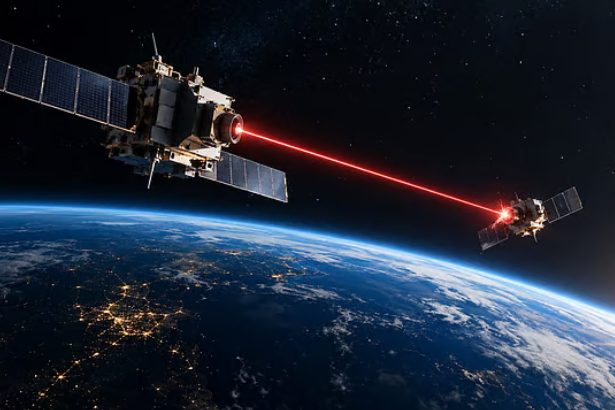
Directed-energy technology includes systems such as lasers that can affect sensors or other components.
The existence of a particular deployed US laser weapon has not been established by the announcement. Lasers are discussed here as an example of a broader category of counter-space technology, not as a confirmed description of the newly disclosed weapons.
3. Kinetic anti-satellite systems
Kinetic systems physically damage or destroy a satellite.
The United States, China, Russia, and India have demonstrated anti-satellite capabilities in different forms. However, the latest US announcement did not confirm that the newly deployed weapons are kinetic systems.
4. Cyber and other non-kinetic methods
Cyber operations and other non-kinetic techniques can affect satellite operations or supporting infrastructure.
These methods are part of the wider discussion around space control, but no specific cyber capability was identified as the weapon disclosed by Meink.
Why the United States Says These Weapons Matter
The US government has cited concerns about the space capabilities of China and Russia.
According to the Associated Press, US officials have previously raised concerns about Russian and Chinese anti-satellite developments and the vulnerability of satellite-dependent military infrastructure.
The stated purpose of the newly acknowledged weapons is defensive: protecting the Joint Force from hostile adversary action.
The disclosure also has a deterrence dimension. Publicly acknowledging a capability can communicate that a country has tools to respond to threats, although the practical effect of such a disclosure depends on what adversaries know about the systems and their limitations.
China Responds to the US Announcement
China’s foreign ministry criticized the US military buildup in outer space and urged Washington to stop expanding its space-based military capabilities.
Reuters reported that spokesperson Guo Jiakun opposed the weaponization of outer space and warned against turning it into a battlefield.
Chinese state media and military analysts also argued that the US announcement could encourage other countries to develop additional counter-space capabilities.
These statements represent China’s official response and its interpretation of the strategic consequences. They do not independently establish what the United States’ newly disclosed weapons can do.
Reuters: China warns US space weapons could fuel arms race
Russia’s Position on Weapons in Orbit
Russia also responded to the announcement.
Reporting from CBS News and AFP said Russia called for outer space to remain free of weapons.
The reaction reflects Moscow’s longstanding concerns about military activity in orbit. Russia has also developed anti-satellite capabilities and has been involved in international debates about space security and arms control.
The latest announcement has therefore renewed discussion about how the United States, Russia, and China define defensive and offensive space capabilities.
Expert Analysis: The Security Dilemma in Space
A central issue is the security dilemma.
A country may develop a weapon to protect its satellites or military forces. Other countries may interpret that same capability as a potential threat and respond by developing their own systems.
Reuters reported that Chinese analysts described the US announcement as potentially encouraging additional counter-space development.
The concern is not limited to the number of weapons in orbit. It also involves uncertainty about their purpose, operating methods, and intended targets.
When military systems operate in an environment where civilian and military satellites share orbital space, the consequences of interference or physical damage can extend beyond the immediate participants.
Broader Implications
Satellite security
Satellites support a wide range of civilian and military functions, including communications, navigation, weather observation, and scientific research.
Military conflict involving satellites could affect the availability or reliability of these services.
The US announcement does not establish that any satellite has been attacked. It does, however, highlight the importance of protecting space-based infrastructure.
International stability
The deployment of weapons in orbit raises questions about how countries communicate their military intentions.
Greater transparency could help clarify the purpose of space systems. At the same time, public disclosures may create uncertainty if the capabilities are described broadly without technical details.
The United States, China, and Russia have competing security interests in space. Their responses to this announcement will be important to future discussions about stability.
The future of space technology
Space technology is becoming increasingly connected to national security.
As satellite networks expand and military systems become more dependent on space-based services, governments are investing in technologies that can protect, disrupt, or otherwise influence space operations.
This development creates a growing intersection between aerospace engineering, cybersecurity, electronic warfare, and international law.
Related History: The Outer Space Treaty
The 1967 Outer Space Treaty is a central document in discussions about military activity beyond Earth.
The treaty prohibits placing nuclear weapons and other weapons of mass destruction in orbit around Earth. It also establishes principles concerning the peaceful use of celestial bodies.
However, the treaty does not explicitly prohibit every form of conventional weapon deployed in orbit.
This distinction has become increasingly important as countries develop new space-based military technologies.
ABC News Australia reported that the treaty’s limitations have contributed to debates about how conventional orbital weapons should be regulated.
ABC News Australia: The US has admitted deploying weapons in space and China is sounding the alarm
What Happens Next?
More details about the US systems
The immediate question is what the newly acknowledged weapons actually are.
The United States has not disclosed their design, number, deployment date, or specific operating capabilities. Further statements from the Pentagon or Space Force could provide additional context.
Diplomatic discussions
China and Russia have expressed concerns about the militarization of outer space.
The disclosure may contribute to further discussions at the United Nations and in other international forums about responsible military behavior, transparency, and restrictions on space weapons.
Continued development of space security technology
The strategic importance of satellites is likely to keep driving research into space security.
Future developments may include technologies for protecting satellites, improving communications resilience, and monitoring activity in orbit.
The balance between defensive capabilities and international concerns about weaponization will remain a central issue.
Conclusion
The US confirmation of weapons deployed in orbit marks a significant public disclosure about American space control capabilities.
The statement from Air Force Secretary Troy Meink confirms the existence of on-orbit weapons but leaves their technical details undisclosed. China has warned that the move could fuel an arms race, while Russia has called for space to remain free of weapons.
The development highlights the growing role of space technology in military planning and the challenges of regulating conventional weapons in orbit.
As governments continue to develop space-based capabilities, the future of space security will depend on both technological developments and international efforts to manage strategic competition.
Frequently Asked Questions
1. What are US on orbit space control capabilities?
US on orbit space control capabilities refer to military systems deployed in orbit to affect space operations and defend US forces against hostile actions. The United States has not publicly identified the newly acknowledged weapons.
2. Did the United States confirm weapons in space?
Yes. Air Force Secretary Troy Meink confirmed on September 14, 2026, that the United States has on-orbit space control weapons.
3. What types of weapons might be used in space?
Space control technology can include electronic warfare, directed-energy systems, cyber capabilities, and kinetic anti-satellite systems. The exact systems acknowledged by the United States have not been disclosed.
4. How did China respond to the announcement?
China urged the United States to stop expanding its military buildup in outer space and warned against turning space into a battlefield.
5. What did Russia say about the weapons?
Russia called for outer space to remain free of weapons, according to international reporting.
6. Does the Outer Space Treaty ban all weapons in orbit?
The treaty bans nuclear weapons and other weapons of mass destruction in orbit. It does not explicitly ban every type of conventional weapon deployed in space.
7. Why are satellites important to military operations?
Satellites support communications, navigation, surveillance, and other military functions. Their disruption could affect military operations and supporting infrastructure.
8. What remains unknown about the US weapons?
The United States has not publicly disclosed the weapons’ design, number, deployment date, or specific technical capabilities.
Sources & References
- Associated Press: US acknowledges for the first time that it has deployed weapons in space, September 15, 2026.
- Reuters: China warns US space weapons could fuel arms race, September 16, 2026.
- ABC News Australia: The US has admitted deploying weapons in space and China is sounding the alarm, September 16, 2026.
- CBS News: US confirms for the first time that it has deployed weapons in space, September 15, 2026.
- Ars Technica: For the first time, the US military confirms it has deployed weapons in orbit, September 14, 2026.