Introduction
The Tupac trial has reached its most consequential moment yet. On August 31, 2026, a Las Vegas jury found Duane “Keffe D” Davis guilty of first-degree murder with a deadly weapon in the 1996 killing of Tupac Shakur. The verdict came after less than three hours of deliberation following an 11-day trial.
Davis, 63, was the only person ever charged in Shakur’s killing. Prosecutors did not accuse him of pulling the trigger. Instead, they argued that he organized the attack, supplied the gun and directed the retaliation that culminated in the Las Vegas shooting.
The conviction closes one chapter of one of hip-hop’s most enduring mysteries, but it does not end the legal story. Davis faces a possible life sentence without parole, with sentencing scheduled for October 13, 2026, and he has said he intends to appeal.
Background and Context
Tupac Shakur was shot on September 7, 1996, while riding in a BMW driven by Death Row Records co-founder Marion “Suge” Knight near the Las Vegas Strip.
A white Cadillac pulled alongside the BMW at a red light and gunfire erupted. Shakur was struck multiple times and died six days later at age 25. Knight was also wounded but survived.
For decades, the killing remained unsolved.
The case changed dramatically after Davis began discussing his alleged role publicly. Prosecutors ultimately built their case around statements Davis had made in interviews, during recorded conversations and in his 2019 memoir, Compton Street Legend.
Davis acknowledged being in the Cadillac and said he obtained the firearm before handing it toward the back seat. Prosecutors argued those admissions established his role as the organizer of the attack, even though they did not claim he personally fired the fatal shots.
Latest Update: Tupac Trial Ends With Guilty Verdict
The jury returned its verdict Monday after hearing nine days of testimony.
The panel included 16 jurors, four of whom were alternates. Prosecutors called 24 witnesses, while the defense called three. After closing arguments, jurors deliberated for less than three hours before finding Davis guilty.
The charge was first-degree murder with a deadly weapon.
A gang enhancement that prosecutors had initially pursued was subsequently dismissed because of logistical problems involving a planned witness. The murder conviction itself remained intact.
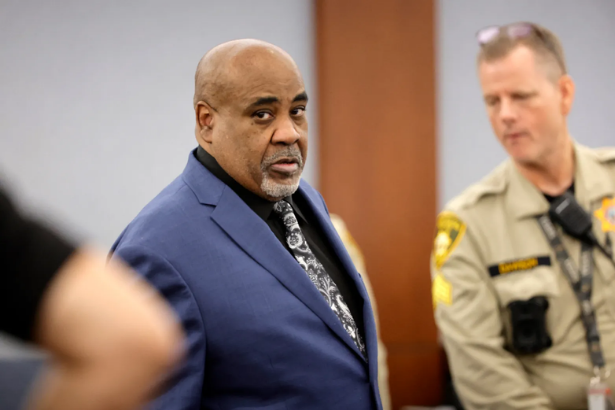
The courtroom reaction was emotional. Shakur’s sister, Sekyiwa “Set” Shakur, cried and hugged prosecutors after the verdict. Davis’ son was also present and covered his face as the verdict was announced.
Why prosecutors believed Davis was responsible
The prosecution’s case centered heavily on Davis’ own words.
Chief Deputy District Attorney Binu Palal argued that Davis and his associates went looking for Shakur after an earlier confrontation involving Davis’ nephew, Orlando “Baby Lane” Anderson.
Prosecutors pointed to several versions of Davis’ account over the years. While some details changed, they argued that the central elements remained consistent, particularly Davis’ repeated description of being inside the white Cadillac.
The prosecution also introduced Davis’ memoir and recorded interviews as evidence.
The defense took the opposite position, arguing that Davis had exaggerated or fabricated his involvement for money and notoriety. Defense attorney Michael Sanft emphasized the absence of physical evidence independently placing Davis inside the Cadillac or in Las Vegas at the time of the shooting.
That conflict became the central question of the trial: whether Davis’ own statements were credible enough to establish his responsibility beyond a reasonable doubt.
ABC7 Los Angeles and AP’s full verdict report
Expert Insights and Analysis
The legal significance of the verdict is that prosecutors did not need to prove Davis was the person who fired the gun.
Their theory was that Davis orchestrated the attack and therefore could be held criminally responsible for the murder. Nevada law allows someone who intentionally assists or orchestrates a killing to face murder liability even if another person physically commits the shooting.
That made Davis’ own historical statements unusually important.
In one sense, the prosecution faced a problem that comes with any decades-old case: physical evidence becomes harder to locate, witnesses disappear or die, memories deteriorate and investigative records may be incomplete.
But prosecutors also had something unusual for a cold case: extensive statements from the defendant himself.
The defense tried to turn that strength into a weakness. Sanft argued that Davis’ various accounts were inconsistent and motivated by commercial interests surrounding his memoir and media appearances. Prosecutors countered that the changes were largely peripheral while the central account remained intact.
The jury ultimately accepted the prosecution’s interpretation.
Broader Implications
A nearly 30-year-old murder case finally has a conviction
The conviction is historic because it represents the first successful criminal prosecution in Shakur’s killing.
For nearly three decades, the case occupied a unique place in popular culture. Tupac’s death became intertwined with questions surrounding the 1990s East Coast-West Coast rap rivalry, Death Row Records, Bad Boy Records and the violent tensions surrounding the era.
The verdict does not resolve every question surrounding the murder. But it establishes a legal finding that Davis was responsible for orchestrating the killing.
The case also illustrates the power and risk of public statements
Davis’ public discussions of the shooting helped revive the investigation and ultimately became central evidence at trial.
His memoir, interviews and recorded conversations gave prosecutors a narrative they could repeatedly present to jurors.
That creates an unusual lesson in modern criminal investigations: statements made for publicity or profit can eventually become evidence used against the person who made them.
What the conviction means for Tupac’s legacy
Tupac’s influence has long extended beyond music. His work addressed race, poverty, policing, violence, inequality and life in America’s urban communities.
The murder became inseparable from that legacy.
Now that a jury has formally determined criminal responsibility, the cultural conversation can begin shifting from speculation about who was responsible toward questions about accountability, the investigation’s failures and what the conviction means for Shakur’s family and fans.
For related technology, culture and digital-media coverage, The Tech Marketer can serve as an internal link destination.
Related History and Comparable Cases
The Tupac case is unusual because it remained unresolved for so long while simultaneously becoming one of the most heavily discussed murders in music history.
The shooting occurred in 1996, but authorities did not charge Davis until 2023. That gap created enormous challenges for investigators and prosecutors.
Several people connected to the Cadillac were already dead by the time the case reached trial. Davis was the only surviving person prosecutors identified as being inside the vehicle during the shooting.
The case also has a broader historical connection to the violent tensions surrounding 1990s hip-hop.
Shakur was associated with Death Row Records, while the broader rivalry between Death Row and Bad Boy Records became part of the cultural backdrop surrounding the murders of Shakur and The Notorious B.I.G.
The latter case remains unresolved.
That makes the Tupac conviction particularly significant. It is not simply the conclusion of one murder investigation. It represents one of the rare moments when a decades-old hip-hop murder mystery has reached a criminal verdict.
What Happens Next
Davis is scheduled to be sentenced on October 13, 2026.
He faces a possible sentence of life in prison without parole. He is being held without bail pending sentencing.
Davis also told the judge that he intends to appeal.
The appeal process could therefore keep the case in the courts for years after the verdict. Davis’ defense is expected to challenge aspects of the prosecution’s evidence and the legal basis for the conviction.
For now, however, the jury’s decision stands.
The immediate legal timeline is:
- August 31, 2026: Jury finds Davis guilty.
- October 13, 2026: Sentencing is scheduled.
- After sentencing: Davis can pursue an appeal.
- Longer term: Appellate courts will determine whether the conviction remains intact.
Conclusion
The Tupac trial has delivered the verdict fans and investigators waited nearly three decades to hear.
Duane “Keffe D” Davis was found guilty of first-degree murder with a deadly weapon for orchestrating the 1996 killing of Tupac Shakur. Prosecutors successfully argued that Davis’ role in organizing the attack made him criminally responsible even though he was not accused of firing the weapon himself.
The jury reached its decision in less than three hours.
That speed followed an 11-day trial built around Davis’ own words, including his interviews, recorded statements and memoir, while the defense challenged the reliability of those accounts and highlighted the absence of independent physical evidence.
The case now moves to sentencing and, likely, an appeal.
For Tupac’s family and millions of fans, however, August 31 marked something more fundamental: after almost 30 years of uncertainty, a jury has formally assigned criminal responsibility for one of the most consequential killings in music history.
FAQ
What happened in the Tupac trial?
A Las Vegas jury found Duane “Keffe D” Davis guilty of first-degree murder with a deadly weapon for orchestrating Tupac Shakur’s 1996 killing.
Is Duane “Keffe D” Davis guilty of killing Tupac?
Yes. Davis was convicted of first-degree murder with a deadly weapon. Prosecutors argued that he orchestrated the attack, rather than personally firing the shots.
Did Duane Davis shoot Tupac?
Prosecutors did not allege that Davis personally fired the gun. Their case was that he organized the attack and supplied the weapon, making him criminally responsible for the killing.
Why was Duane Davis convicted?
Prosecutors relied heavily on Davis’ own statements, including interviews, recorded conversations and his 2019 memoir. They argued that although some details changed over time, his central account consistently placed him inside the Cadillac involved in the shooting.
What sentence could Duane Davis receive?
Davis faces a possible sentence of life in prison without parole. His sentencing is scheduled for October 13, 2026.
Will Duane Davis appeal?
Yes. Davis told the judge after the verdict that he intends to appeal.
When was Tupac Shakur killed?
Tupac Shakur was shot on September 7, 1996, in Las Vegas. He died six days later at age 25.
Who was accused of pulling the trigger?
Prosecutors did not allege that Davis was the shooter. They linked the shooting to the group inside a white Cadillac and identified Orlando “Baby Lane” Anderson as the person believed to have fired the shots. Anderson died in 1998.
Sources & References
- Reuters, “Jury finds ex-gang leader guilty of murder in Tupac case”
Read Reuters coverage - Associated Press, “Live updates: Duane ‘Keffe D’ Davis convicted in 1996 killing of Tupac Shakur”
Read AP coverage - ABC7 Los Angeles / AP, “Jury convicts Duane Davis of first-degree murder for 1996 killing of Tupac Shakur”
Read ABC7’s report - CBS News / AP, “Guilty verdict in Tupac Shakur’s 1996 murder as jury convicts Duane Davis of orchestrating shooting”
Read CBS News coverage - The Washington Post / AP, “The Latest: Jury will hear closing arguments in Tupac Shakur murder trial”
Read The Washington Post report