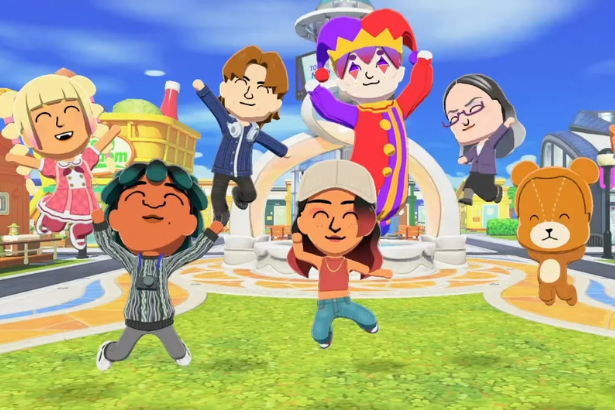
After more than a decade, Nintendo revives its cult-favorite life simulator with modern features, deeper relationships, and new guardrails.
Introduction
Tomodachi Life Living the Dream surged to the top of Google Trends after Nintendo officially revealed the long-awaited sequel during its January 2026 presentation, confirming the franchise’s return with weddings, babies, and a 2026 release window.
What Made the Original Special
The original Tomodachi Life launched on Nintendo 3DS in 2013 and quickly became one of Nintendo’s most unconventional hits. Instead of structured goals, it offered chaotic, semi-autonomous social simulation where Miis formed friendships, rivalries, marriages, and bizarre daily dramas.
Despite strong sales and cult status, Nintendo left the franchise dormant for over a decade. Fans repeatedly asked for a sequel during the Switch era, especially as Miis faded from Nintendo’s broader identity.
That silence ended this week.
What Nintendo Just Announced
Official Reveal at Nintendo Direct
Nintendo unveiled Tomodachi Life: Living the Dream during the January 29 presentation, confirming it is coming to Nintendo Switch later this year.
The reveal came via the January 2026 Nintendo Direct, marking the first new entry in the franchise since the 3DS era.
Weddings, Babies, and Expanded Relationships
According to early details reported by Game Informer, Living the Dream significantly expands relationship mechanics. Characters can now marry, have children, and form multi-generational family structures.
This shifts the game from short-form social comedy toward longer-term simulation, giving players a reason to maintain islands over months rather than weeks.
Nintendo Restricts Image Sharing
One unexpected announcement came from Polygon, which reported that Nintendo will restrict image sharing features in Living the Dream to prevent misuse of Miis and user-generated content.
This move reflects Nintendo’s increasing caution around online sharing, moderation, and platform safety as its games reach broader and younger audiences.
What This Means for Nintendo and Players
From a design perspective, Tomodachi Life: Living the Dream represents a careful modernization rather than a radical reinvention. Nintendo appears to be preserving the franchise’s defining unpredictability while adding systems that extend player engagement.
The inclusion of babies and generational progression aligns with modern life-simulation expectations set by games like The Sims, but Nintendo’s hands-off, humor-first philosophy remains intact.
The decision to limit image sharing also signals a more controlled ecosystem, likely shaped by lessons learned during the Switch generation around moderation and viral misuse.
What This Means for Gaming
For Nintendo
The revival suggests Nintendo sees renewed value in Miis as expressive avatars rather than legacy hardware artifacts. This could influence future first-party titles.
For Life Simulation Games
Nintendo’s return to the genre adds pressure on competitors, especially indie life sims that thrived in Tomodachi Life’s absence.
For Players
Fans who grew up with the original now receive a sequel designed for longer play cycles and modern consoles, without losing the absurdity that defined the franchise.
How This Compares to Other Nintendo Games
Tomodachi Life occupies a unique space between structured life sims and emergent storytelling games. Its closest comparison remains The Sims, though Nintendo’s version prioritizes humor over control.
Other Nintendo social experiments, such as Animal Crossing, evolved into global phenomena. Living the Dream appears positioned to test whether similar longevity can be achieved with Miis.
What Happens Next
Nintendo has confirmed a 2026 release window, with more details expected in upcoming Direct presentations. Key unknowns include exact release date, online features, save transfer or Mii integration, and depth of parental and aging systems.
Given Nintendo’s marketing cadence, a deep-dive presentation is likely before launch.
Why This Revival Matters
Tomodachi Life: Living the Dream marks the return of one of Nintendo’s most unconventional franchises at a time when life simulation games are more popular than ever.
By blending nostalgia with expanded systems and modern safeguards, Nintendo is betting that controlled chaos still has a place on the Switch. Early signs suggest fans agree.
FAQ
Is Tomodachi Life Living the Dream a sequel or remake?
It is a full sequel, not a remake.
What platforms will it release on?
Nintendo Switch.
Can Miis get married and have kids?
Yes, both features are confirmed.
Why is Nintendo limiting image sharing?
To prevent misuse of user-generated Mii content.
Does this mean Miis are back permanently?
It suggests renewed interest, but Nintendo has not confirmed broader plans.