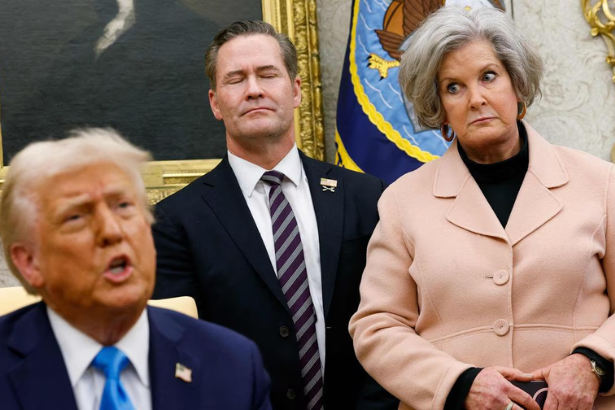
Susie Wiles just detonated the most candid White House chief of staff interviews in modern political history, and nobody saw it coming. The 68-year-old strategist who spent decades avoiding attention sat for 11 extraordinary on-the-record conversations with Vanity Fair over the past year, delivering brutally honest assessments of President Trump, Vice President JD Vance, Attorney General Pam Bondi, Elon Musk, and the chaotic machinery of Trump 2.0 that she manages daily.
Then she immediately called the resulting two-part profile a “disingenuously framed hit piece.” The whiplash triggered an all-hands defense from Trump’s inner circle, with 10 Cabinet secretaries, FBI Director Kash Patel, Donald Trump Jr., and Trump himself rushing to defend her. But the damage—or the revelation, depending on your perspective—was done. Wiles told Vanity Fair that Trump has “an alcoholic’s personality,” that Vance is “a conspiracy theorist,” that Bondi “completely whiffed” on the Epstein files, and that she’s “aghast” at how Musk shut down USAID. She even admitted the James Comey prosecution “does look vindictive.”
Susie Wiles Gave Access Nobody Expected
Chris Whipple, the Vanity Fair writer who conducted the interviews, told NPR that “every once in a while in the course of your career as a reporter, lightning strikes.” That’s an understatement. Wiles, who gained fame as the woman who could impose order on Trump’s chaotic campaigns and staff, rarely speaks publicly. She avoids cable news. She doesn’t do speeches. She manages from the shadows, earning loyalty through competence rather than visibility.
The decision to cooperate with Vanity Fair—11 interviews spanning nearly a year, with full White House support including a glossy photo shoot featuring Trump’s team—baffled even former administration officials. “I do not know what they were thinking,” one told NBC News on condition of anonymity. “You can’t trust Vanity Fair. I have full faith in the people around President Trump, but I’m not sure what they were thinking here.”
What they were thinking remains unclear. The interviews happened throughout 2025 as Trump’s second term unfolded, covering everything from the Epstein file controversy to Venezuela policy to internal White House power struggles. Wiles didn’t hold back. She criticized colleagues by name. She acknowledged retribution campaigns she’d previously denied. She described Trump’s personality using her father Pat Summerall’s alcoholism as a frame of reference, drawing on her experience growing up with the legendary NFL sportscaster who got sober later in life.
“Some clinical psychologist that knows one million times more than I do will dispute what I’m going to say,” Wiles told Whipple. “But high-functioning alcoholics or alcoholics in general, their personalities are exaggerated when they drink. And so I’m a little bit of an expert in big personalities.”
Trump himself embraced the comparison when asked about it, telling another news outlet: “She’s right. I do have an obsessive and addictive personality.” That self-awareness from a president who famously doesn’t drink alcohol underscores the unusual dynamic between Trump and his most trusted adviser.
The Tech Marketet has covered extensively how political operatives navigate media strategy when controlling access becomes impossible and transparency serves strategic purposes.
Susie Wiles’ Brutal Assessments of Trump’s Inner Circle
The candor that made headlines wasn’t about Trump—it was about everyone around him. Wiles delivered unflattering characterizations of some of the administration’s most powerful figures, assessments that will define relationships for months to come.
On Vice President JD Vance: Wiles called him “a conspiracy theorist for a decade” and suggested his pro-Trump conversion was “sort of political” rather than ideologically driven. Those comments could have poisoned their working relationship. Instead, Vance brushed them off during a Pennsylvania speech Tuesday: “Sometimes I am a conspiracy theorist, but I only believe in the conspiracy theories that are true. And by the way, Susie and I have joked in private and in public about that for a long time.”
Vance then defended her emphatically: “Susie Wiles—we have our disagreements, we agree on much more than we disagree. But I’ve never seen her be disloyal to the president of the United States, and that makes her the best White House chief of staff that I think the president could ask for.”
On Attorney General Pam Bondi: Wiles criticized Bondi’s handling of the Jeffrey Epstein files, saying she “completely whiffed on appreciating that that was the very targeted group that cared about this.” That assessment came after Bondi faced intense criticism for her public statements about the files, which contradicted Trump’s own claims about what they contained regarding former President Bill Clinton.
On Elon Musk: Wiles called Tesla’s CEO an “odd, odd duck” and specifically referenced his admitted ketamine use. She said she was “aghast” when Musk unilaterally shut down USAID, the foreign aid organization, though she tried softening the criticism by acknowledging his “get it done fast” philosophy. “Elon’s attitude is you have to get it done fast. If you’re an incrementalist, you just won’t get your rocket to the moon. And so with that attitude, you’re going to break some china. But no rational person could think the USAID process was a good one. Nobody.”
Musk left the White House in May after a very public falling out with Trump. Wiles’s comments suggest she watched that relationship deteriorate with mixed feelings about both Musk’s methods and his results.
On OMB Director Russell Vought: Wiles described him as “a right-wing absolute zealot,” one of the more pointed characterizations in interviews that didn’t lack for bluntness.
What Susie Wiles Revealed About Trump 2.0’s Internal Operations
Beyond the personality assessments, Wiles’s interviews pulled back the curtain on how Trump’s second term actually functions behind the carefully managed public messaging. The revelations paint a picture of controlled chaos where Wiles constantly negotiates between Trump’s impulses and institutional constraints.
She confirmed what many suspected: Trump is actively using criminal prosecution for political retribution. Wiles admitted the targeting of New York Attorney General Letitia James and former FBI Director James Comey constitutes revenge, though she insisted Trump isn’t “on a retribution tour.” That distinction without a difference reveals the impossible position chiefs of staff occupy when managing presidents who promised vengeance.
“I don’t think he wakes up thinking about retribution,” Wiles said. “But when there’s an opportunity, he will go for it.” She described a “loose agreement” she and Trump struck before his second term: the revenge campaign would end after 90 days. That timeline obviously expired, and the prosecutions continued.
She also acknowledged that Trump lied about Bill Clinton being documented in the Epstein files doing something “awful.” According to Wiles, Trump appears in the files but isn’t shown doing anything illegal, and Clinton’s alleged island visits that Trump claimed to have evidence of don’t exist in the documents. Trump’s fabrications about what the files contained put Bondi in an impossible position when she released them, hence Wiles’s assessment that the attorney general “whiffed” the situation.
The interviews also covered Venezuela policy, specifically Trump’s controversial boat strikes targeting ships allegedly connected to the Maduro regime. “The president believes in harsh penalties for drug dealers, as he’s said many, many times,” Wiles explained, trying to frame aggressive military action as consistent with Trump’s stated priorities.
On whether Trump would defy the 22nd Amendment and attempt a third presidential term, Wiles dismissed the speculation entirely. That answer matters because constitutional scholars have worried Trump might test limits on presidential power in ways no previous president attempted.
Why the Backlash Came So Fast and So Unified
Within hours of Vanity Fair publishing the interviews Tuesday morning, Trump’s entire operation mobilized to defend Wiles. The speed and unanimity of support suggests pre-planned crisis management rather than organic reaction.
Treasury Secretary Scott Bessent called Wiles “the single most effective operator whom I have ever met” in a career spanning 40 years on Wall Street meeting with hundreds of global leaders. “No one is more insightful, effective, and loyal.”
Press Secretary Karoline Leavitt issued a formal statement: “President Trump has no greater or more loyal advisor than Susie. The entire Administration is grateful for her steady leadership and united fully behind her.”
Donald Trump Jr., rarely one to defend staffers publicly, wrote: “I very rarely speak out about my father’s staffers, but there is no one on Earth more equipped to serve my father as Chief of Staff than Susie.”
Ten current Cabinet secretaries, plus FBI Director Kash Patel, posted similar tributes emphasizing Wiles’s competence, loyalty, and indispensability. The coordinated defense raised questions about whether Wiles’s first X post in over a year—calling the Vanity Fair piece a hit job—was her genuine reaction or White House damage control.
“Significant context was disregarded and much of what I, and others, said about the team and the President was left out of the story,” Wiles wrote. “I assume, after reading it, that this was done to paint an overwhelmingly chaotic and negative narrative about the President and our team.”
That framing allowed Trump world to claim Wiles was taken out of context while simultaneously confirming she said everything Whipple quoted. Wiles didn’t deny any specific quote. She just argued the overall portrait was unfair. NPR’s Terry Gross asked Whipple about that claim, and he played audio recordings proving Wiles said exactly what he reported, including the ketamine reference she later tried disputing.
Susie Wiles’ Career Built This Moment
The interviews matter not just for what Wiles revealed but for who she is—arguably the most successful Republican campaign strategist of the past two decades who nobody outside politics recognizes.
Born the daughter of Pat Summerall, Wiles grew up watching her father battle alcoholism before achieving sobriety. That childhood shaped how she manages high-ego personalities in high-pressure environments. She entered Republican politics in Florida, building a reputation for winning difficult races through disciplined operations rather than flashy tactics.
She helped Trump win Florida in 2016, a critical victory that put him in the White House. She ran Ron DeSantis’s successful 2018 gubernatorial campaign, then got fired post-election under murky circumstances. “I think he thought I was getting too much attention, which is ironic,” Wiles told Vanity Fair. “I don’t ever seek attention.”
After the DeSantis falling out, Wiles returned to Trump’s orbit. She managed his 2024 campaign, helping engineer his political comeback after the January 6 Capitol riot and multiple indictments. She assisted Glenn Youngkin’s surprise 2021 Virginia gubernatorial victory. She helped Trump-backed Harriet Hageman defeat Liz Cheney in Wyoming’s 2022 Republican primary. Every campaign she touched won.
When Trump named her White House chief of staff, political insiders viewed it as his smartest personnel decision. Chiefs of staff traditionally serve as institutional gatekeepers, managing access to the president and imposing order on competing factions. Trump’s first-term chiefs—Reince Priebus, John Kelly, Mick Mulvaney, Mark Meadows—all struggled with that role. Kelly reportedly called Trump “the most flawed person” he’d ever met. Their relationships deteriorated into public feuds.
Wiles succeeded where others failed by accepting Trump’s nature rather than trying to change it. Vance praised that approach in his own Vanity Fair interview: “There is this idea that people have that I think was very common in the first administration, that their objective was to control the president or influence the president, or even manipulate the president because they had to in order to serve the national interest. Susie just takes the diametrically opposite viewpoint.”
That philosophy—managing Trump’s impulses while respecting his authority—keeps Wiles in power when others wash out. It also requires extraordinary tolerance for chaos, contradictions, and ethical compromises that would drive most political operatives away.
What Happens Now That Everything’s Public
The Vanity Fair interviews created a problem nobody fully understands yet. Wiles can’t unsay what she said. The assessments of Vance, Bondi, Musk, and others are permanently on record. The admissions about retribution prosecutions undermine White House claims about justice rather than revenge. The acknowledgment that Trump lied about Clinton in the Epstein files contradicts the president’s own statements.
Normally, this level of candor from a sitting chief of staff would be career-ending. The rapid, unified defense from Trump world suggests otherwise. Either Wiles’s position is so secure that controversial interviews can’t touch her, or the White House recognized immediately that sacrificing her would cause more damage than defending her.
The latter seems more likely. Wiles manages Trump’s schedule, controls access to the Oval Office, oversees staff, coordinates with Cabinet secretaries, and maintains relationships with congressional Republicans. Firing her creates a vacuum nobody could fill. The administration would collapse into the kind of first-term chaos that defined Trump’s initial presidency.
So they circled wagons instead. The hit piece framing gives Trump world a narrative: Vanity Fair took Wiles’s words out of context to attack the president. Wiles remains loyal. The media distorts everything. Trust the team, not the reporting.
That strategy works only if the interviews don’t reveal patterns that insiders already knew existed. If Wiles’s assessments merely confirmed what everyone in Trump’s orbit already thought about Vance’s conspiracy theories, Bondi’s mistakes, and Musk’s erratic behavior, then the interviews just made private knowledge public.
The more interesting question: why cooperate with Vanity Fair at all? Chiefs of staff traditionally avoid extended media profiles. They work behind scenes, managing crises and relationships without drawing attention. Wiles spent her entire career following that model. The 11-interview commitment represents a dramatic departure from her standard operating procedure.
Possible explanations: Wiles wanted to shape her own legacy before someone else wrote it. The White House believed controlling the narrative through extensive access would produce better coverage than stonewalling reporters. Wiles felt confident enough in her position to speak candidly without fearing consequences. Or the interviews were a calculated move to put pressure on colleagues she’s feuding with privately.
None of those explanations fully satisfy. The backlash and defense felt too chaotic, too reactive, too similar to first-term Trump administration crises to be part of a sophisticated strategy. More likely, Wiles underestimated how candidly she was speaking and how starkly her words would read when aggregated into a single profile.
The shift Washington wasn’t expecting
Susie Wiles emerged from behind the curtain, said things chiefs of staff never say publicly, then retreated back into the shadows while Trump world insisted nothing significant happened. That sequence makes sense only if you understand Washington’s relationship with truth.
The interviews confirmed what insiders knew: Trump’s administration operates on retribution, personal loyalty, and managed chaos. Wiles’s job is making that dysfunction look intentional rather than accidental. Her candor revealed how exhausting that role becomes when the president lies about Epstein files, the vice president traffics in conspiracy theories, the attorney general mishandles sensitive cases, and tech billionaires unilaterally shut down federal agencies.
Understanding why these interviews matter requires recognizing that chiefs of staff traditionally protect presidents by never speaking this honestly. Wiles broke that rule comprehensively, then claimed the media twisted her words. Both things can be true simultaneously in an administration where truth itself has become negotiable.
Organizations watching Trump’s second term will spend months analyzing whether Wiles’s interviews represent strategic transparency or accidental honesty. The distinction matters less than the revelation: the most powerful political operator in Washington just described exactly how Trump’s White House actually works, and nobody can unsay it.
Quick Answers to What Everyone’s Asking
Who is Susie Wiles?
Susie Wiles is White House chief of staff and Trump’s most trusted political strategist. The 68-year-old Republican operative has managed winning campaigns for Trump (2024), Ron DeSantis (2018 Florida governor), Glenn Youngkin (2021 Virginia governor), and Trump-backed congressional candidates. She’s known for imposing discipline on chaotic campaigns and rarely speaking publicly, making her Vanity Fair interviews extraordinarily unusual.
Why is Susie Wiles trending now?
Wiles gave 11 extended on-the-record interviews to Vanity Fair over the past year that published Tuesday. She made shockingly candid assessments of Trump (“alcoholic’s personality”), Vance (“conspiracy theorist”), Bondi (“completely whiffed”), and Musk (“odd duck”). She also admitted Trump’s prosecutions of James Comey and Letitia James constitute retribution. The interviews triggered immediate backlash and unified defense from Trump world.
Did Susie Wiles call Trump an alcoholic?
Not exactly. Wiles said Trump has “an alcoholic’s personality,” drawing on her experience growing up with her father, legendary sportscaster Pat Summerall, who was an alcoholic who later got sober. Trump doesn’t drink alcohol but told another outlet, “She’s right. I do have an obsessive and addictive personality.” Wiles used the comparison to explain Trump’s exaggerated personality traits.
What did Susie Wiles say about JD Vance?
Wiles called Vance “a conspiracy theorist for a decade” and suggested his pro-Trump conversion was “sort of political” rather than ideologically sincere. Vance responded good-naturedly at a Pennsylvania rally: “Sometimes I am a conspiracy theorist, but I only believe in the conspiracy theories that are true.” He then defended Wiles emphatically, calling her the best chief of staff Trump could have.
Why did Susie Wiles call the Vanity Fair article a hit piece?
Wiles posted on X Tuesday (her first post in over a year) claiming “significant context was disregarded” and positive things she said about Trump and the team were “left out of the story.” She argued the piece was framed to “paint an overwhelmingly chaotic and negative narrative.” However, Vanity Fair’s Chris Whipple played audio recordings to NPR confirming Wiles said everything quoted.
Is Susie Wiles getting fired?
No. The unified, rapid defense from Trump, 10 Cabinet secretaries, Donald Trump Jr., and FBI Director Kash Patel signals Wiles’s position is secure. Treasury Secretary Scott Bessent called her “the single most effective operator” he’s ever met in 40 years on Wall Street. Trump himself defended her publicly. Firing Wiles would create chaos the administration can’t afford.
What did Susie Wiles say about Pam Bondi?
Wiles criticized Attorney General Bondi’s handling of the Jeffrey Epstein files, saying she “completely whiffed on appreciating that that was the very targeted group that cared about this.” The criticism came after Bondi’s public statements about the files contradicted Trump’s claims about what they showed regarding Bill Clinton, putting Bondi in an impossible position.
Did Susie Wiles admit Trump prosecutions are political revenge?
Yes. Wiles acknowledged the prosecutions of New York AG Letitia James and former FBI Director James Comey constitute retribution. She described a “loose agreement” with Trump that the revenge campaign would end after 90 days, though prosecutions continued beyond that timeline. She also admitted the Comey case “does look vindictive,” contradicting White House claims about justice over revenge.
Sources Vanity Fair: Trump and Susie Wiles Interview Exclusive, Part 1
CNN: Susie Wiles offered unflattering assessments of Trump colleagues
The New York Times: Late Night Thanks the White House for a ‘Dozy’ Interview