New decisions by the U.S. Space Force highlight a strategic shift toward contested space, AI-driven warfare, and geopolitical tension with China and Russia.
Introduction
Space Force operations surged into the spotlight this week as the U.S. military confirmed major changes to satellite programs, experimental spacecraft missions, and artificial intelligence systems designed to simulate orbital war.
What the Space Force Is and Why It Matters
Established in 2019, the United States Space Force was created to defend American interests beyond Earth’s atmosphere. Once viewed as speculative, space is now formally recognized as a contested warfighting domain alongside land, sea, air, and cyber.
Rival powers including China and Russia have tested anti-satellite weapons, electronic jamming systems, and orbital maneuvering capabilities, pushing the Space Force to accelerate modernization even as budgets tighten.
Three Major Developments This Week
Space Force Ends Resilient GPS Program
The Space Force confirmed it has terminated its “Resilient GPS” satellite program, a planned constellation intended to augment traditional navigation satellites with cheaper, rapidly deployable spacecraft. Officials cited cost concerns and technical complexity as reasons for the cancellation.
SpaceNews reports the decision reflects a shift toward alternative resilience strategies, including diversified launch options and defensive satellite architectures rather than parallel GPS systems.
X-37B Raises Alarm Abroad
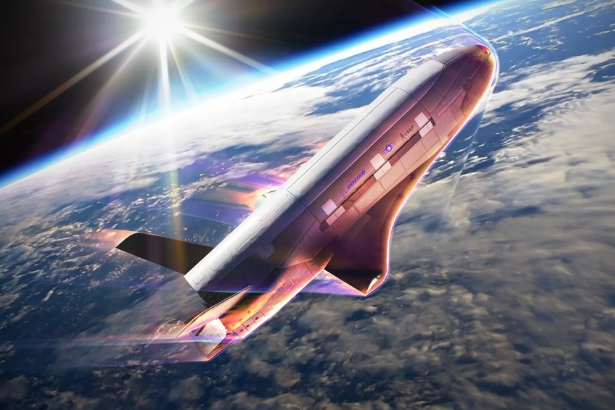
A separate analysis published by 19FortyFive reports that China and Russia increasingly view the U.S. military’s X-37B space plane as a potential strategic weapon. The autonomous spacecraft, capable of staying in orbit for years, has fueled speculation about payload testing, surveillance, and rapid-response orbital capabilities.
While U.S. officials describe X-37B as experimental, foreign analysts warn it could destabilize nuclear deterrence norms by enabling unpredictable space-based operations.
AI-Powered Orbital Wargames
In another major development, the Space Force announced it is working with Slingshot Aerospace to build artificial intelligence adversaries that simulate hostile satellites during orbital wargames. Breaking Defense reports the system allows Space Force operators to train against adaptive, learning opponents rather than static simulations.
Officials say this mirrors how modern cyber defense training evolved, acknowledging that future space conflict will be fast, automated, and algorithm-driven.
What Experts Are Saying
Defense analysts see these moves as interconnected rather than isolated. Ending the Resilient GPS program does not reduce focus on navigation security. Instead, it suggests the Space Force is prioritizing flexibility and survivability over duplication.
The growing emphasis on AI-driven simulations indicates recognition that human-only decision cycles are too slow for orbital conflict, where satellites travel at thousands of miles per hour and engagement windows are measured in minutes.
Meanwhile, international reaction to X-37B underscores how secrecy itself has become a strategic variable in space deterrence.
What This Means for National Security and Beyond
For National Security
Space is no longer a sanctuary. The Space Force’s posture reflects preparation for degraded GPS, disrupted communications, and contested orbital environments during future conflicts.
For Technology
AI, autonomy, and rapid satellite deployment are becoming core military capabilities. Advances pioneered for defense often migrate into commercial space operations over time.
For Global Stability
As space becomes militarized, the absence of updated international norms increases the risk of miscalculation. Orbital actions are difficult to attribute and easy to misinterpret, raising escalation risks.
How This Compares to Past Military Shifts
During the Cold War, nuclear submarines and intercontinental missiles introduced similar strategic uncertainty. Today, satellites occupy that role. Like early cyber warfare, orbital conflict is still poorly understood by the public but deeply consequential for global systems.
The Space Force’s evolution mirrors the early days of U.S. Cyber Command, when training, doctrine, and technology developed simultaneously under real-world pressure.
What Happens Next
Expect further consolidation of satellite programs rather than expansion, alongside heavier investment in AI, autonomy, and rapid-response launch capabilities. International scrutiny of X-37B will likely intensify, potentially driving calls for new space arms control frameworks.
The Space Force is expected to increase classified experimentation while publicly emphasizing defensive intent.
Why This Matters
The recent surge in Space Force activity signals a fundamental shift in how the United States views space. No longer just a support domain, orbit is becoming a frontline environment where GPS, satellites, and autonomous systems shape national power.
As rivals adapt and AI accelerates decision-making, the future of warfare may be decided hundreds of miles above Earth, long before conflict reaches the ground.
FAQ
Why did the Space Force cancel the Resilient GPS program?
Cost, complexity, and a strategic shift toward alternative resilience methods.
Is the X-37B a weapon?
The U.S. says no, but China and Russia believe it could enable strategic military missions.
What are orbital wargames?
Simulated space conflict scenarios used to train operators and test strategies.
Why use AI in space warfare training?
AI adapts faster than scripted simulations, reflecting real adversary behavior.
Is space officially a warfighting domain?
Yes. The U.S. military formally recognizes space as a contested domain.