


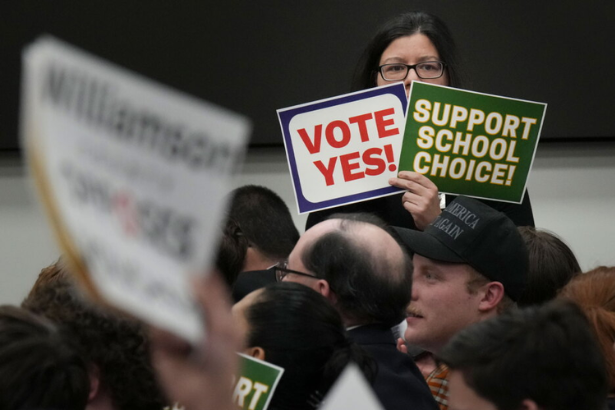
The school voucher tax credit debate is gaining momentum as federal policy moves toward implementation and states begin developing or approving related scholarship programs. Recent coverage from NPR, KREM and the Anchorage Daily News points to a policy shift that could influence how families access education funding, how nonprofits administer scholarships, and how public and private school systems interact.
The details matter. Tax-credit scholarships are not necessarily the same as traditional vouchers, and the practical impact depends on the program’s rules, state participation, eligible organizations and the families who can use the funds. As the federal framework develops, the central questions are how the program will operate and how its benefits and costs will be distributed.
Background and Context
What is the federal Education Freedom Tax Credit?
The federal program highlighted in recent coverage is commonly called the Education Freedom Tax Credit. Under Section 25F of the Internal Revenue Code, it is designed to encourage individual taxpayers to contribute money to eligible scholarship-granting organizations, which then fund qualifying K-12 education expenses.
According to the Internal Revenue Service’s October 1 announcement, the program is scheduled to begin on January 1, 2027. Eligible individuals may claim a nonrefundable federal tax credit of up to $1,700 for qualifying contributions. Married couples filing jointly may claim up to $3,400 combined, subject to the program’s requirements.

Internal Revenue Service
+1
A key distinction: the credit is for qualifying contributions to scholarship organizations, not a direct federal voucher automatically paid to every family. Scholarship organizations distribute funds under eligibility and program rules.
The IRS says states must elect to participate and identify eligible scholarship-granting organizations. The agency’s current Federal Scholarship Tax Credit page lists states that have made advance elections for 2027. Participation and the availability of eligible organizations are therefore important parts of the rollout.
Internal Revenue Service
+1
How tax-credit scholarships differ from traditional vouchers
The terms voucher, scholarship and tax credit are often used together in school-choice coverage, but they describe different mechanisms.
- Traditional school vouchers generally use public funding to help eligible families pay for approved schooling outside their assigned public school.
- Tax-credit scholarship programs encourage private contributions to qualifying organizations by offering donors a tax benefit.
- Direct education grants provide funding to eligible students or families under a defined public program.
The design of each program matters. Eligibility rules, eligible expenses, how money is distributed and whether participation is voluntary can differ significantly. The federal tax credit should therefore be evaluated according to its statutory and regulatory requirements, rather than treated as identical to every state voucher program.
Latest Update: Federal Rules and State Programs Move Into Focus
The three reports in the Google Trends screenshot point to the same broad development: the federal initiative is becoming more concrete, while state-level administrators and scholarship organizations prepare for implementation.
1. NPR examines the debate over public and private schools
In its October 20 report, NPR explores the federal voucher-style scholarship proposal and the political debate around it.
The central policy tension is familiar from previous school-choice debates. Supporters argue that scholarships can give families more options and help students access educational services that may not be available through their assigned school. Critics raise questions about oversight, fairness, the role of private education and possible consequences for public-school systems.
These positions should be assessed against program design and evidence. The existence of a tax credit alone does not establish how much funding schools may gain or lose, which students will benefit most, or how educational outcomes will change.
2. Washington focuses on the federal rollout
KREM’s October 20 coverage, U.S. Education Secretary urges Washington to adopt new education tax credit, brings the national initiative into a state-level discussion.
State participation is consequential because the federal program relies on states to elect to participate and identify eligible scholarship-granting organizations. Families and donors will need to understand which organizations qualify, what expenses scholarships can cover and which requirements apply to them.
Washington’s position and implementation details should be checked against current official state guidance. An appeal by a federal official to adopt a program is not, by itself, confirmation that a state has completed every step required for participation.
3. Alaska prepares voucher-style tax-credit scholarships
The Anchorage Daily News reports that Alaska’s voucher-style school tax-credit scholarships are coming closer to implementation as the first nonprofits are approved.
The approval of scholarship organizations is a practical milestone. A tax-credit framework needs qualified administrators that can receive eligible contributions, manage scholarship funds and ensure money is used for permitted education expenses.
The details to watch include which organizations have been approved, how families apply, which expenses qualify, and how scholarship awards will be monitored. The state-level program should be understood on its own terms, even where its goals overlap with the federal initiative.
What the official rules say
The IRS and Treasury published proposed regulations in October 2026 to explain how the federal credit would work. The Federal Register’s proposed rules describe requirements for taxpayers, participating states and scholarship-granting organizations. The proposal also sets out an opportunity for public comment, with comments due December 1, 2026.
Internal Revenue Service
+1
That matters because implementation is more than an announcement. States and organizations must translate the rules into working processes, while taxpayers need clear instructions about which contributions qualify.
Expert Insights and Analysis
The key question is not simply whether a tax credit exists. It is how the system works once donations, organizations, families and schools begin interacting with it.
Access depends on more than the headline credit
A tax credit can encourage donations, but the size and distribution of scholarships depend on how much eligible money is contributed and how organizations allocate it. Families also need to know whether they qualify and whether the available scholarship covers a meaningful share of their costs.
A scholarship may be useful for tuition, tutoring, books, supplies, certain technology purchases or other eligible education expenses. The IRS outlines a range of potential qualified expenses, but actual eligibility depends on the rules and circumstances. Families should verify current guidance before making financial decisions.
Internal Revenue Service
+1
The administrative burden is real
Scholarship-granting organizations will need reliable processes for handling contributions, maintaining required records, confirming student eligibility and documenting spending. Participating states must also establish lists and procedures consistent with federal requirements.
These tasks affect how quickly the program can operate and how easy it is for families to use. Clear guidance, accessible application processes and transparent reporting will be important indicators of implementation quality.
Public-school effects require evidence
One of the most contested questions is whether and how the program could affect public-school resources and enrollment. The answer cannot be established by the policy’s name or stated purpose alone.
Relevant evidence would include participation rates, the number of scholarships awarded, the types of schools students attend, the cost of administering the program and any changes in public-school enrollment or spending. Those outcomes will take time to measure, and results may vary by state and community.
Broader Implications
Families may face a more complicated education landscape
If more scholarship options become available, families may need to compare public schools, private schools, tutoring, specialized services and other qualifying expenses. That creates opportunities, but it also creates an information challenge: the value of a scholarship depends on its eligibility rules, restrictions and practical purchasing power.
Schools and nonprofits may also need to explain the program in plain language, particularly for families unfamiliar with tax credits or scholarship-granting organizations.
Education technology could be part of the picture
Technology is relevant where program rules permit scholarships to cover eligible learning tools, devices, software or tutoring services. The IRS has identified computers and certain other equipment among potentially qualified education expenses, subject to the applicable rules.
Internal Revenue Service
+1
That does not mean every education app, device or subscription will qualify. Providers and families should avoid assuming that a product is eligible without checking the program’s current requirements.
For The Tech Marketer’s broader coverage of how digital tools affect schools, consider an internal link to education technology and the future of learning. The specific article URL should be confirmed by the publisher before publication.
Accountability will shape public confidence
The program’s credibility will depend on whether money reaches eligible students and is spent as intended. Reporting on participating organizations, scholarship distribution, administrative costs and outcomes can help readers understand how the initiative works beyond political messaging.
Related History and Comparable Technologies
School-choice policies have taken several forms across the United States. State voucher programs, education savings accounts, tuition tax credits and scholarship donations all attempt to connect families with educational options, but they differ in who provides the money and how it can be spent.
Education savings accounts, for example, may allow eligible families to use funds for multiple approved education expenses rather than tuition alone. Tax-credit scholarship systems instead rely on contributions to designated organizations and the tax treatment of those contributions.
The new federal approach adds a national tax-credit mechanism while leaving important implementation decisions to participating states and approved organizations. Its practical effects will depend on the interaction between federal rules and state-level administration.
Technology is another comparable area of change. Online tutoring, digital curriculum and learning-management platforms have expanded the ways students can access instruction. Whether scholarship funds can be used for a particular service, however, is a question of program eligibility, not simply whether the service is educational.
What Happens Next?
Several milestones will help clarify how the school voucher tax credit develops.
- Final guidance and implementation rules: Proposed regulations and public comments may clarify requirements for donors, states and scholarship organizations.
- State participation: States will need to complete the relevant election and organization-listing processes.
- Scholarship organization approvals: Families will need accurate information about which organizations are eligible and how to apply.
- First-year participation: The number of donors, total contributions and scholarships awarded will show how widely the program is used.
- Evidence on outcomes: Over time, researchers and policymakers can assess who benefits, how funds are distributed and whether there are measurable effects on schools and students.
The federal tax credit is scheduled to begin in 2027, but the precise experience will vary according to state participation and the availability of qualifying organizations. Readers should rely on current IRS and state guidance for practical decisions rather than assuming that every state or family will have the same options.
Conclusion
The growing attention around the school voucher tax credit reflects a larger argument over how education should be funded and how much choice families should have. The federal Education Freedom Tax Credit offers a new way to encourage donations for K-12 scholarships, while state-level activity shows the administrative work needed to turn policy into an operating program.
The most useful next step is to look beyond the headline. Eligibility, approved organizations, scholarship availability, oversight and measurable effects on schools will determine how the program works in practice. As implementation approaches, those details deserve as much attention as the political debate surrounding it.
FAQ
1. What is the school voucher tax credit?
The term is often used to describe the federal Education Freedom Tax Credit, which allows eligible taxpayers to claim a nonrefundable federal tax credit for qualifying contributions to scholarship-granting organizations that fund K-12 education expenses.
2. When does the federal Education Freedom Tax Credit begin?
The federal credit is scheduled to begin January 1, 2027. Taxpayers should check the latest IRS guidance and confirm that the relevant state and scholarship-granting organization meet the requirements.
Internal Revenue Service
+1
3. How much can a taxpayer claim?
The IRS says eligible individuals may claim up to $1,700 in a year for qualifying contributions. Married couples filing jointly may claim up to $3,400 combined, subject to program rules and limitations.
Internal Revenue Service
+1
4. Is the tax credit the same as a direct school voucher?
No. The federal credit is tied to qualifying contributions to scholarship-granting organizations. It is not automatically a direct payment from the federal government to every family. The way funds are distributed depends on the program’s rules and the participating organizations.
5. Do all states participate?
No. Participation is voluntary under the federal framework. States must make the required election and identify eligible scholarship-granting organizations. The IRS maintains information about state participation and the program’s requirements.
Internal Revenue Service
+1
6. Can scholarship money pay for computers or tutoring?
Potentially. The IRS identifies certain tutoring, computers, supplies and other education-related costs among qualifying expenses. Whether a specific purchase is covered depends on the current rules and the scholarship’s terms. Families should confirm eligibility before spending.
7. Will the program reduce public-school funding?
That outcome cannot be determined from the existence of the tax credit alone. The effects will depend on participation, state policy, how scholarships are used and any related changes in enrollment or funding. Reliable assessment will require evidence collected after implementation.
Sources & References
- NPR: Public-school and private-school debate over the federal voucher-style scholarship plan
- KREM: U.S. Education Secretary urges Washington to adopt new education tax credit
- Anchorage Daily News: Alaska voucher-style school tax-credit scholarships coming soon as first nonprofits are approved
- Internal Revenue Service: The Trump administration advances the establishment of America’s first nationwide school choice program
- Internal Revenue Service: Federal Scholarship Tax Credit
- Federal Register / U.S. Government Publishing Office: Federal Scholarship Tax Credit, proposed regulations