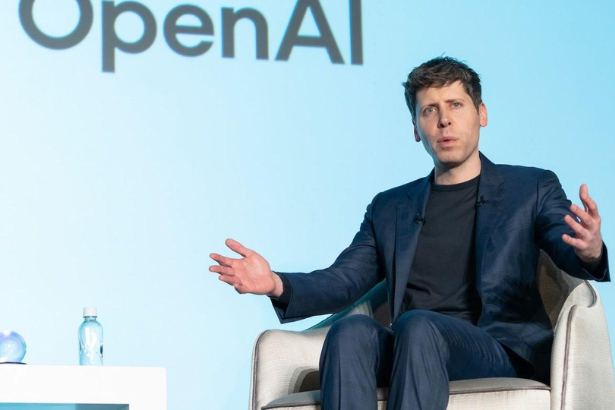
Sam Altman is at the center of two conversations that increasingly overlap: how dangerous advanced artificial intelligence could become, and how much public trust the people building it deserve. Recent coverage has placed OpenAI’s chief executive in the middle of a debate over AI safety arguments, competition and regulation, while films and documentaries about Silicon Valley’s most powerful figures are drawing fresh attention to their influence.
The latest Google Trends screenshot shows a sharp rise in searches for “Sam Altman” over the past 24 hours. The accompanying stories point to two distinct but connected developments. In one, AI pioneer Andrew Ng argues that some warnings about catastrophic AI risks are exaggerated and could be used to justify rules that favor established companies. In the other, Hollywood is examining technology billionaires through dramas, documentaries and increasingly critical portrayals.
These are not the same debate. One concerns the evidence behind AI risk assessments and policy proposals. The other concerns cultural portrayals of influential technology leaders. Together, however, they highlight the scrutiny surrounding the people shaping the AI industry.
Background and Context: Why Sam Altman Is a Central Figure in AI
As CEO of OpenAI, Sam Altman has become one of the most recognizable figures in the development and commercialization of generative AI. OpenAI’s products have helped bring conversational AI into mainstream use, while the company’s work on increasingly capable models has contributed to a wider debate about how such systems should be developed and governed.
That prominence comes with competing expectations. Supporters of rapid AI development see powerful models as potential drivers of scientific progress, productivity and new products. Others warn that more capable systems may introduce risks involving cybersecurity, misinformation, economic disruption and, in some scenarios, loss of human control.
Altman has publicly engaged with the need to develop AI responsibly, while other industry leaders have called for stronger safety measures or more cautious deployment. The disagreement is not simply whether AI has risks. It is about which risks are credible, how likely they are, what evidence supports them, and what restrictions governments or companies should adopt.
The result is an industry debate in which technical research, business incentives and public policy are increasingly difficult to separate.
Latest Update: Andrew Ng Challenges AI Safety Arguments
The argument over existential risk
In a report published by The Times of India, Andrew Ng, co-founder of Google Brain and founder of DeepLearning.AI, criticized what he sees as exaggerated warnings about AI posing an existential threat to humanity.
Ng argued in an interview on The Economist’s Inside Tech podcast that some catastrophic-risk claims are being used to support restrictive AI regulation. In his view, such rules could protect established companies by making it harder for open-source competitors and smaller developers to participate.
His position is a pointed challenge to AI leaders who emphasize the possibility of severe future risks. It does not mean that all AI safety concerns are unfounded. Rather, Ng is arguing that regulation should be grounded in credible evidence and specific problems instead of speculative worst-case scenarios.
That distinction matters because policy choices can shape who is able to build, distribute and audit AI systems.
What does this mean for Sam Altman?
The Times of India report names Altman alongside Anthropic CEO Dario Amodei and Elon Musk as figures associated with public warnings about AI safety. Ng’s criticism puts pressure on the broader argument for precautionary measures, although it should not be interpreted as proof that any particular executive is deliberately misleading the public.
The underlying disagreement is about both risk and incentives. Some researchers believe advanced AI capabilities could create dangers that justify preventive safeguards. Critics such as Ng worry that broad claims about existential threats could become a rationale for rules that entrench the market power of large AI companies.
Both issues deserve separate scrutiny. A policy can be motivated by genuine safety concerns and still have anti-competitive effects. Conversely, concerns about competition do not automatically disprove the underlying technical risks.
The most useful question is therefore not which side has the more dramatic headline. It is which claims can be supported by evidence, and whether proposed safeguards address identifiable harms without unnecessarily limiting competition.
Hollywood’s Tech-Billionaire Moment: Why Sam Altman Is Part of the Story
A second strand of recent coverage concerns how entertainment is portraying technology leaders.
In its October 15 opinion coverage, The New York Times examines Hollywood’s growing interest in powerful technology figures and the wider social questions surrounding their influence. The broader wave of films and documentaries includes stories about Sam Altman, Elon Musk and Mark Zuckerberg, whose companies and decisions have become part of public debates over technology’s role in everyday life.
The trend is not entirely new. The 2010 film The Social Network turned Facebook’s founding into a mainstream cultural story. Newer projects are arriving in a different environment, where social media’s influence, AI’s rapid development and the power of technology companies have become much more visible political and cultural issues.
The question is no longer simply whether a founder is brilliant or difficult. It is how much power technology companies should have, what responsibilities accompany that power, and whether the public can trust the people controlling systems used by millions.
Altman’s response to his screen portrayal
In Forbes’ October 10 coverage, reporter Conor Murray describes the growing wave of billionaire-focused movies and documentaries and the varied reactions from the people depicted.
Altman suggested that the film Artificial was not aiming for strict accuracy, according to the report. That reaction illustrates a familiar tension between creative storytelling and the expectations of real people whose lives inspire films.
Dramatizations may draw on public events and reporting, but they also compress timelines, construct dialogue and shape characters to serve a narrative. Viewers should not treat every scene in a drama as a verified account of what happened.
At the same time, fictional portrayals can prompt audiences to revisit real questions about leadership, governance and accountability. Their cultural impact can extend beyond the accuracy of individual scenes.
Expert Insights and Analysis: Separate the Safety Debate From the Reputation Debate
The recent attention around Sam Altman becomes easier to understand when the two conversations are examined separately.
1. AI safety needs evidence, not just confidence or fear
Warnings about AI risks should be assessed according to their evidence, assumptions and time horizons. Some concerns involve existing problems, such as fraud, privacy violations, cybersecurity vulnerabilities and harmful generated content. Others involve possible future systems whose capabilities and risks remain uncertain.
It is reasonable to debate how much weight policymakers should give to longer-term scenarios. It is also reasonable to argue that uncertainty should not be used as an excuse to ignore potentially serious risks. Good policy should explain what is known, what remains speculative and which interventions are proportionate.
2. Competition is part of the safety conversation
The AI market includes companies with vast computing resources, access to capital and the ability to deploy products at scale. Regulation can create important protections, but compliance costs can also affect smaller developers differently from large firms.
Ng’s criticism draws attention to that potential conflict. A rule designed to improve safety may have unintended consequences if only the largest organizations can afford to satisfy it. That possibility deserves scrutiny, even when the stated goal of the rule is legitimate.
A more durable approach would evaluate safety requirements based on measurable risks and apply them proportionately, rather than assuming that either more regulation or less regulation is always the answer.
3. Public image affects trust, but it is not a technical assessment
A film’s depiction of Altman or another technology leader cannot establish whether a particular AI model is safe. Likewise, a positive public image does not prove that a company’s governance is effective.
Cultural narratives can influence how people interpret the technology industry, especially when the underlying systems are complicated and difficult to assess directly. But public trust is best supported by transparent practices, independent scrutiny, clear accountability and evidence of how companies handle failures.
Broader Implications: Who Gets to Shape AI’s Future?
The stakes extend well beyond one executive.
If policymakers accept broad AI safety claims without examining their evidence, rules could restrict competition without delivering the protections they promise. If they dismiss all future-facing risks because some predictions are uncertain, they could leave society unprepared for serious problems as systems become more capable.
The challenge is to create a framework that can distinguish present-day harms from uncertain future scenarios, while remaining flexible enough to respond to new evidence.
The cultural debate matters, too. Films about technology leaders can help bring difficult questions to a wider audience, but they can also turn complicated institutional problems into stories about individual heroes and villains. The decisions that shape AI are not made by one person alone. They emerge from company leadership, research teams, investors, regulators, customers and public institutions.
For readers following the wider industry, The Tech Marketer could connect this story to an internal explainer on AI governance, regulation and responsible development, examining how safety standards can protect users while preserving room for competition and open research.
Related History: From The Social Network to AI-Era Biopics
Hollywood has long used prominent business figures to explore larger anxieties about power and social change. The Social Network dramatized Facebook’s founding at a moment when social media was becoming a defining force in public life. Subsequent films about technology entrepreneurs, financial figures and corporate scandals have continued to examine the tension between innovation and accountability.
The current wave of projects arrives as AI companies occupy a more visible place in education, work, media and public policy. The people leading these companies have become recognizable public figures, and their decisions are increasingly treated as matters of general interest rather than simply internal business affairs.
Still, there is a difference between a compelling story and a comprehensive account. A film may capture public frustration with concentrated power without explaining every technical, commercial or governance issue behind it. Audiences should distinguish documented events from creative interpretation.
The same discipline applies to the AI safety debate. A forceful argument from a prominent researcher deserves attention, but it should be assessed on its reasoning and evidence rather than on the speaker’s reputation alone.
What Happens Next: The Questions to Watch
Several developments could shape the next phase of the debate around Sam Altman and the AI industry:
- More detailed safety proposals: Watch for specific rules and standards, rather than broad claims about AI being either harmless or existentially dangerous.
- Competition and open-source access: Policymakers will need to consider whether safety requirements unintentionally favor the largest AI developers.
- Independent evaluation: Third-party testing, transparent reporting and clear accountability can help assess claims made by both AI companies and their critics.
- Public reaction to technology films: Audience responses may influence how the public understands Silicon Valley, although box-office performance alone cannot measure trust.
- OpenAI’s governance and communication: The company’s public statements, product decisions and approach to safety will continue to shape how its leadership is judged.
The most consequential changes are likely to come from concrete decisions about product deployment, regulation, transparency and oversight, not from search trends or film publicity alone.
Conclusion: Sam Altman Represents a Bigger Debate About AI Power
Sam Altman’s prominence reflects the unusual position AI executives now occupy. They are business leaders, technology spokespeople and participants in debates over risks that could affect society at large. That makes their public statements, corporate decisions and cultural portrayals matters of wider interest.
Andrew Ng’s criticism challenges the use of catastrophic AI warnings in policy debates. Meanwhile, the latest wave of films and commentary raises questions about how technology billionaires are represented and held accountable. Neither conversation provides a complete verdict on Altman or the AI industry.
The central issue is how to evaluate powerful technologies and the institutions behind them. That requires evidence-based safety policies, meaningful competition, clear accountability and a willingness to separate fact from speculation. As AI develops, those standards will matter far more than any single headline or screen portrayal.
FAQ
1. Why is Sam Altman trending?
The supplied Google Trends screenshot shows a sharp rise in searches for Sam Altman. The linked coverage focuses on Andrew Ng’s criticism of AI safety arguments and on Hollywood’s growing attention to technology billionaires and their public images.
2. What did Andrew Ng say about AI safety?
According to The Times of India, Ng argued that some catastrophic AI-risk claims are exaggerated and may be used to support regulation that disadvantages open-source competitors. His comments represent his position in an ongoing debate, not a settled consensus among AI researchers.
3. Does Andrew Ng believe AI has no risks?
The reporting emphasizes Ng’s rejection of catastrophic or existential-risk arguments as he sees them. That should not be simplified into a claim that all AI-related risks are nonexistent. Current issues such as cybersecurity, privacy and harmful content remain distinct questions.
4. What is the movie Artificial about?
The film is a dramatized account centered on OpenAI and events surrounding Sam Altman’s removal and return as CEO in 2023. As with other biographical dramas, viewers should distinguish creative interpretation from independently verified facts.
5. Why is Hollywood making more films about tech billionaires?
Technology leaders have growing influence over communication, work, media and AI development. Their decisions raise questions about concentrated power and accountability, making them subjects for documentaries, dramas and public commentary.
6. Could AI safety regulation hurt smaller companies?
It could, depending on how rules are designed and implemented. Compliance requirements may be easier for large firms with substantial resources to absorb. That is one of the competition concerns raised by critics such as Ng, although the effects depend on the specific policy.
7. What should readers watch next in the AI safety debate?
Look for evidence behind risk claims, concrete regulatory proposals, independent model evaluations, transparency commitments and policies that address genuine harms without unnecessarily restricting competition.
Sources & References
- Google Brain Co-Founder Andrew Ng to Dario Amodei, Sam Altman and Elon Musk: “You Are Making Up Safety Arguments”, The Times of India, October 15, 2026.
- Hollywood Thinks the Tech Oligarch Must Be Stopped, The New York Times, October 15, 2026.
- Hyped Billionaire Movie Phenomenon Kicks Off: Musk Blasts “Hit Piece” and Altman Suggests “Inaccuracy”, Forbes, October 10, 2026.